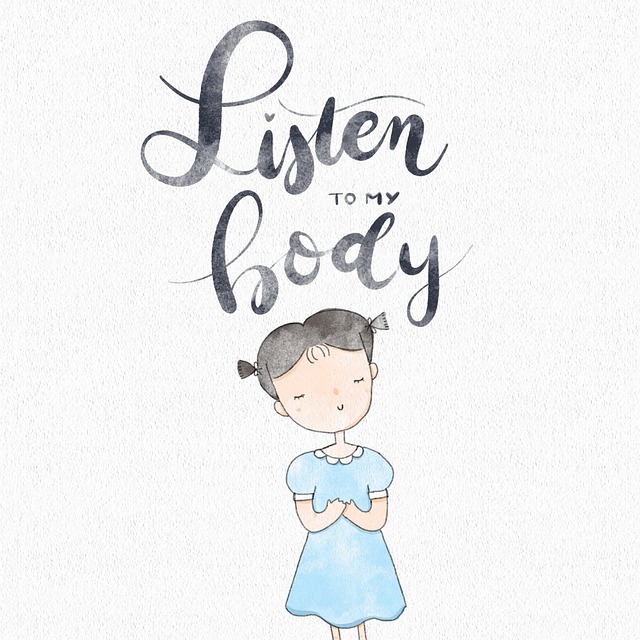
1 Thing your body deserves

Image by Anna Pham from Pixabay

I stepped on the scales this morning and was mildly disappointed at the number it presented back to me.  I shouldn’t have been.  I’d had a really lovely three course meal, with wine on Saturday, and a roast dinner on Sunday.  Of course, I was going to have put on a few pounds.  Sometimes, we can look at our bodies and think why is it such a mess?  This morning was one of those moments for me.

I’ve struggled with my weight for many years now, since having my daughter 24 years ago.  I’ve never lost that post baby bulge.  I’m not laying all the blame there, several other things all happened. I got married, settled down, stopped cycling to work, stopped regular exercising.  I did manage to lose nearly four stone about 8 years ago for step daughter #1’s wedding, but that all crept back on. I managed to lose a few pound every now and then and even half a stone, but because I like food and wine and I’m fundamentally lazy now, it doesn’t stay off for long.  With that in mind, why should I be punishing myself for the way my body looks and my weight, if I’m not really doing something about it? It’s doing the best it can under the circumstances and I enjoy relatively good health.

Life is too short to fight with our bodies.  It’s easy to lover your body when its doing what you think it should be, but the scales of doom, a slightly cosier fitting outfit or a new wobbly bit can sent us off into a self-loathing spin.

If we extend ourselves the same kind of love we do to our children, partner or pets, even when a few extra pounds find their way to the scales, even when we’re sick, or new laughter lines start to show, perhaps we’d start to listen to what our bodies need, nourish it with the best foods possible, be gentle and kind to the reflection we see in the mirror.  It’s doing the best it can.

I’m hoping that I’ll have several more years, if not decades ahead of me and I’m conscious of the physical demands that would place on my body as I age.  It is therefore my role to look after it as best I can, whilst not punishing myself and enjoying life.

The scales of doom may not have been my friend this morning, but my attitude is.  I’ve put my elasticated wasted trousers on and my lunch bag is full of all sorts of yummy treats: blueberries, plums, grapefruit, fat free Greek yoghurt, apple and I’m trying a fresh fig for the first time.  I’m balancing that out with my diet friendly Biscoff pancakes for breakfast and a homemade chicken, rice and vegetable salad for lunch.   I’m hoping that will keep me away from the shops and temptation of chocolate, cake or biscuits.

I’m in a good motivated place today.  Let’s see how long that lasts.
How to date your spouse

We have been married for nearly 25 years.  We’ve had a child together who is now a grown up, independent adult, living away from (our) home. We’ve had demanding day jobs, and demanding hobbies. We’ve gone through good times and bad times.  We talk.  We don’t talk.  We seem to be busy all the time. We rarely make time just for us.  Just to spend time in each others’ company without having to be anywhere, do anything, or be with others.  Obviously, due to Covid going out on date nights has been severely hampered even if we did get round to organising it.

So, this weekend we had an opportunity to use some vouchers to go out for dinner.  Just the two of us.  We both had things going on during the day, so it was a nice to think that neither of us had to worry about cooking dinner.  We could enjoy something out of the ordinary.

It can be hard however to reconnect with each other when there’s so much demand on our time and thoughts.  We’re not chatty sorts particularly, and because we usually do things together (outside of work) small talk can be quite hard sometimes.  There’s nothing new to talk about. We end up talking about the kids, the household needs or renewing life insurance! 

According to an article by Jamie C Williamson the desire to recreate date night intimacy may be related to primal urges for survival.  They state connections between the support that comes from a well-functioning intimate relationship and the personal wellbeing of the participants.  Lack of marital intimacy and satisfaction can cause harm to the marriage and tend to be unsatisfying, unstable and conflictual. So creating space for “date nights” can provide that fun element that protects a marriage from deterioration and can keep your relationship healthy, happy and able to manage life’s stressors.

We are comfortable and stable in each others’ company but we do need to make sure that we make time for us before we get swept up in the everydayness of life.

So here’s Williamson’s top tips on how to make date night with your spouse a success:

  1. Make it affordable – don’t allow date night to add to financial stress.  Decide how much you can afford and how often.  It needn’t be an extravagant affair, a data night dinner at home, a picnic somewhere picturesque.
  2. Schedule it in – find time when date night can be scheduled in and don’t let other things get in the way of this time, make sure it gets priority.  If you want to schedule a regular (say once a month) date night, get it in the calendar and only change it for extremely urgent and important things. It doesn’t need to be an evening thing if schedules don’t work.  Make it a lunch rather than dinner, or afternoon tea or cinema visit.
  3. Agree who’s planning – work together to generate a list of places or things you’d both like to do, set your budget and any other parameters and then decide who’s going to arrange it.  It doesn’t have to be the same person all the time, unless you’re rubbish at organising.  If you’re having date night at home agree the menu, background music, mood and make it seem that you’ve invited your spouse over to your place and take the lead.
  4. Make it special – put effort into getting ready.  It’s a date after all, you got dressed up when you were dating, so why not now?  Present your best self and have fun with it. Preparation can add to the anticipation of a great night ahead.
  5. Turn off you mobile phone – its date night.  Be present with the person you are with. 
  6. Plan your conversation – this isn’t an opportunity to offload all the domestic conversations you’ve not had time for.  Write down a list if it helps. You can actually get date night conversation starter cards now.  But try asking questions that allow for a deeper understanding of your spouse’s values and beliefs, or asking those random questions that may seem a bit odd, but allow you to explore thoughts, or sharing memories of good times you’ve enjoyed together.

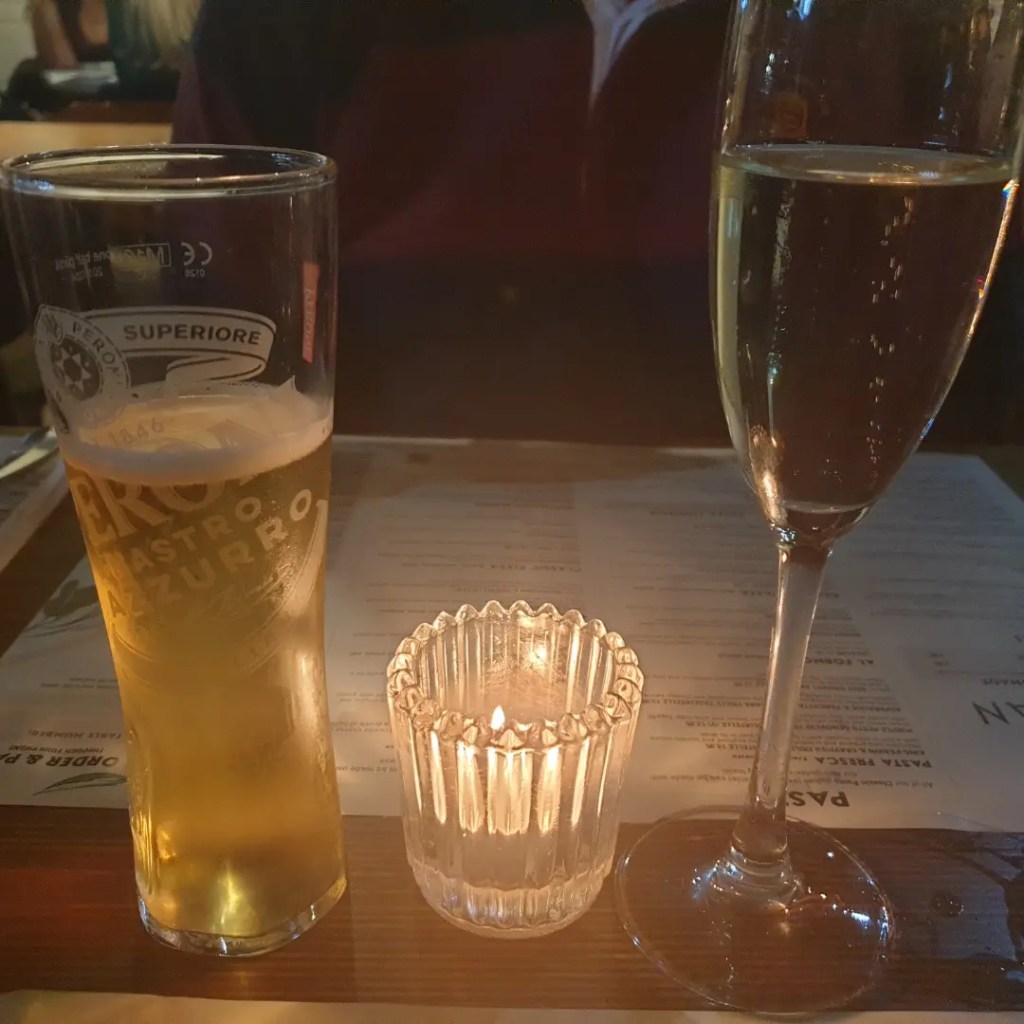
We had a lovely dinner out at an Italian restaurant with a bottle of wine.  It wasn’t expensive because we’d got vouchers to use.  C had organised it.  I did make a bit of an effort to get dressed up but it wasn’t a very dressy up kind of place, but I felt great in what I was wearing even if he didn’t notice.  The mobiles fidnt make an appearance other than to take some photos, that’s got to be a first. Conversation flowed well on a variety of subjects.

It was a lovely night out, and it had come out of the blue having been proposed and booked on Wednesday.  The fact the vouchers were due to expire probably had something to do with that, but I was grateful anyway.

What’s your favourite date night (keep it clean people!)?

Can feeling jealous be a good thing?

Image by mohamed Hassan from Pixabay

I’m sure we’ve all experienced feelings of jealousy at some point in our lives.  A friend who doesn’t have money worries and can buy that expensive jumper without a second thought, a family member who lands the perfect job, a colleague who gets all the praise, a stranger wearing the most perfect outfit.

Understanding the life you desire can really help to eliminate unnecessary jealousy, according to my current podcast fave Tonya Leigh.  When jealousy strikes we can turn it around into something more beautiful and constructive.  Jealousy can be a killer emotion when we act out on it harbouring resentment and fear, making nasty comments on social media about others, creating unnecessary drama in relationships, gossiping about others because our envy goes unchecked.  It’s hurtful to others but also to ourselves.

However, feeling jealous can make you feel alive, knowing you’re being pulled towards a desire and longing.

TL suggested when we live in a state of gratitude it can be rewarding but we’re human with human emotions.  We can use those emotions to discover more about ourselves and what’s holding us back.  Feeling jealous does not make us bad people, it’s only when we act on that emotion and hurt others and ourselves it becomes damaging.

The key is to understand jealously has nothing to do with the other person, TL said, but everything to do with what we deeply desire and what’s holding us back from creating it for ourselves.  Using jealousy as a guide can be wonderful in waking us up to a deep longing.  Jealousy can show us the way.

I don’t usually get hooked up on feeling jealous about material things, like seeing someone in a big, beautiful house, or wearing the latest trends, or having the flashy car; those sorts of things don’t bother me, that person has probably worked really hard for that and good luck to them.  I tend to feel more jealous of how people interact with me versus other people.  Not that I think I need to be the centre of attention all the time, but more along the lines of how come that person gets all the praise for doing one simple thing once, yet I’ve been working my butt off for years without recognition.  It’s not about rewards as such, although that might be nice, but recognising my hard work and in some cases dedication to the cause. 

I wonder whether if I stopped doing what I do, would anyone notice?  Would anyone care?  Would anyone recognise what contribution I had made?  Sometimes I think it has a lot to do with the people around you.  They expect.  They don’t see what you do, just expect it to happen.  Maybe it’s my personality that doesn’t endear me to others therefore they’re not interested in what I do and don’t think I should have the same rewards as others.

My jealousy mostly comes from when I see others rewarded for very little and I think what the hell else do I have to do to get the same? I agree with TL that that has absolutely nothing to do with others but how I feel about it.  Perhaps there’s some deep seated need for me to feel seen and appreciated. 

When was the last time you felt envious?  What is it showing you that you want for yourself?

Transformation doesn’t happen overnight

Image by John Hain from Pixabay

I remember a former Director of mine having a go at me for not being an instant success at leadership when I’d only been on the course for a few weeks of the year long programme.  I asked how did she expect me to be expert at it after only a few weeks and that it would take time for new learning to seep in and become second nature.

You’ll know if you read my blogs regularly that I am on a journey of self-discovery and improvement and that I am trying to navigate my way to becoming an improved version.  I’ve been on this journey for a few months now, and I have noticed a few things changing.  Most noticeably, my emotional responses to events and people and my expectations of others. But again, this is something that hasn’t happened overnight and that I still have to work at as it’s not yet second nature.

Julian Hayes offered five must-do steps for a successful personal transformation:

  1. Find your why – your why ignites your spirits, giving you motivation to chase your goal, to go in search of an improved version of you.
  2. Get guidance – it would be difficult to navigate all this on your own, so seek guidance to avoid being led astray and avoid or diminish setbacks that can be demotivating. Ask for help in becoming who you want to be or getting where you want to go.  Save yourself time and trouble by benefiting from those who went before you. Choose from resources such as mentors who have done a similar thing, a community that can give you support, books, tutorials etc that provide wisdom and knowledge.
  3. Leave your comfort zone – learning about yourself can be uncomfortable as you start to face some home truths, expand your mind set and skills.  You don’t have to make gigantic leaps though, but start with incremental steps and daily improvements.  Improving 1% each day has a big impact months and years down the line if you are able to stick with it.  Challenge yourself every day and reflect on how far you’ve come.
  4. Trust the process – overnight success doesn’t happen.  We don’t tend to hear about the years and years of hard slog behind the scenes that get us to even the first rung of the ladder.  The process shouldn’t be rushed, it can be messy and may not proceed in the direction you first thought or hoped for.  Think of the longer term success, which happens through consistency, daily habits, repetition, time and patience.
  5. Choose yourself – If you don’t believe in yourself how do you expect others to?  Be your biggest fan, value yourself.  When you’re trying to transform yourself, own it and claim whatever it is you’re going after.  Fear of failure is often a deterrent to people chasing their goes, but failure only is only failure when you give up.

I’ve found guidance in a number of areas.  You’ll know that I’m currently listening my way through Tonya Leigh’s podcast back catalogue.  I also starting reading appropriate magazines and books like Psychologies Magazine, Platinum etc.

I have discovered things about myself that I’m not so proud of and I’m working hard to improve them.  I’m more considered when I speak with others, but I’m also still shut down and not saying my piece in some scenarios.  I’ve been at this for several months now and I’m seeing glimmers of change but it’s still very much a work in progress and I’m always open to advice, comment and feedback (even if I may not like it) and even coaching. 

I have become less bothered by what people say or think and try to tell me that’s their business not mine.  Whilst not going out of my way to antagonise, should it happen, it’s a result of others’ responses and that’s up to them to be able to handle.  I don’t have to take feeling I’m the bad person all the time especially when that’s not the intention.

So, what have you noticed change in me?  What do you think I still need to work on?

3 Words to lighten up

Image by Kranich17 from Pixabay

Are you someone who is always serious about everything? I know I am. But lightening up isn’t always that easy. Guilt and fear can put us off having fun; when you’re out with friends are you thinking about the chores you haven’t completed, or what if something disastrous happens whilst you’re out daring to have fun?

When we were children we know instinctively how to laugh, play games, sing and dance like no one’s watching.  There was no guilt or fear, we just enjoyed ourselves.

Podcast fave Tonya Leigh suggested that as we grow we start to hear messages like “you can play when you’ve got your work done”.  This causes us to think of fun as a forbidden and almost impossible feat.  In modern life our work is never done, so where is there time for fun?  Responsibilities and expectations start to replace our nature desire to have fun.

Is there correlation between how much fun we have in our lives versus its overall quality? Is it really as simple as lightening up and having more fun?  When you commit to having more fun in your life, you’ll feel fear, scepticism or doubt.

What is stopping you having more fun?  Excuses like not enough time, too many responsibilities, not knowing how to have fun, not knowing what fun feels like anymore, there are more important/worthy things to do.

TL suggested three reasons people have told her for avoiding fun:

  1. Need to please others.  Not wanting to upset everyone else, so end up giving everything to others whilst denying yourself.  Make yourself a priority and stop people pleasing.
  2. Fear of what others will think.  People who aren’t having fun  in their lives try to bring you back into misery or boredom by telling you you need to grow up, or you have responsibilities. They’re going to judge you whether you are sitting at home bored, or out having fund dancing on table tops.
  3. Fear of it all falling apart.  In an effort to keep it all together with busy diaries and seriousness, the world about us starts to crumble into mediocrity and overwhelm.  Do you feel a pang of envy when you see others around you laughing, kissing, dancing?

Fun can open up more possibilities but finding it can be difficult.  We get to bring fun to every moment of our lives.  It’s no one else’s responsibility.  You can have lively fun meetings, make a game of the shopping, or dance whilst folding the laundry.

Fun first – work second.  TL asked if you put fun first how would that shift how your show up in everyday life? Quality of work improves, relationships improve and other opportunities materialise.

Its up to you to have fun, to open up and laugh, to dance because you want to.  Leave behind doubts and insecurities about what others think of you. It doesn’t need to involve wild, crazy, drunken nights out, shopping sprees that leave you broke. 

Fun is amusement, enjoyment and light-hearted pleasure.  What amuse you?  Brings you pleasure?

Those three words TL offered:  Amuse-toi bein!  Have fun!

Passively Aggressive Assertion

There are times when we need to be assertive either in the work place or at home to make sure that we are heard and our views are considered.  In a leadership role we need to demonstrate assertiveness in standing up for our teams, communicating with impact and developing healthy boundaries.

It’s a fine line though between being passive and letting everything wash over us or being a pushover, assertive and getting our point across, or aggressive and being rude or insensitive.

Nidhi Kush Shah wrote a series of articles on “Bold, Brave, and Brilliant You”, and offered five signs of healthy assertiveness (in the workplace) without being aggressive:

  1. You are able to say No respectfully without feeling guilty, apologetic or beating around the bush;
  2. You are able to express opinions and disagreements respectfully without downplaying your own thoughts;
  3. You are able to respect others when they say no and express their disagreement without taking it personally, staying calms and assertive yourself;
  4. You know who to express presence and poise through non-verbal communications, remaining calm, steady, grounded, open and with positive eye contact;
  5. You speak with higher authenticity and do not make statements to please people, ensuring your words matter, offering genuine support, encouragement and praise. Not saying something just because it sounds good on paper, realising it’s not possible to please everyone, sticking with what feels true.

Practicing assertive communications and behaviours can help increase our presence, strengthen our leadership, reduce stress and boost overall happiness.  It applies in all walks of life, not just the office.

At work we are given tools to enable us to have good conversations, particularly as leaders who may have to have difficult conversations with others, using the BUILD acronym. It’s a process that I employ in other walks of life too:

B – talk about the behaviour, not the person

U – understand why it did or did not happen

I – describe the impact it had either on you, others or the service

L – listen carefully to what the other person is saying

D – what needs to be done differently in future to avoid it happening again?

I can be pretty assertive when I need to be, but there are times where I am extremely passive, even when I’m experiencing inner challenge. It can be a case of can’t be bothered to put my point across because no one is going to listen anyway, or even being talked over so I clam up and don’t bother.

As an introvert and a leader of large teams I am often conflicted between having to be assertive and show decisiveness and direction versus wanting a quiet life, or wishing I rather be anywhere else.

A quick Googlesearch offers much advice on how to practice assertiveness, for example the following is prefixed under the heading of “Here’s a short summary how to become more assertive”:

  • Pay attention to your needs, wishes and desired.  Be gentle and attentive towards yourself;
  • Identify areas where you are healthy assertive and where you are not and practice skill and mindset transfer;
  • Face your fears and practice being assertive with moderate self-exposure. AT every opportunity practice assertiveness by being in the learning zone;
  • Learn to manage your fear, doubt, shame and guilt.  Acknowledge them, make room for them, use them as a trigger for self-reflection and even more to reinforce healthy, assertive beliefs.

I’m not entirely sure how these statements actually help without giving any real practical ideas other than what might be summarised as “fake it ‘til you make it”.  That may well work for some, but others may need more practical guidance.

What’s your go to advice on how to be more assertive without being aggressive?

Baking bonanza

Having spent a lovely weekend visiting step-daughter #1 and her family I needed a day to catch up on domestics.

E and I had VIP tickets for Cake International at the NEC and spent a lovely day wandering around, making the odd purchase, visiting the craft and Christmas shows in the next door arena, and making the most of the refreshments and sit down opportunities our VIP tickets allowed.

There were a lot fewer stands this year, understandable in the circumstances. There were a few big names noticeably absent too. Squires Kitchen and Purple Cupcakes to name a couple.

In previous years we’ve also taken part in the Renshaw modelling sessions and have have drunken snowmen, rabbits and reindeer toppers as evidence. We didn’t do that this time.

There were a lot fewer punters there too, which was no bad thing. Our Covid jab status was checked on the way in. Maybe that kept a number of people away if they hadn’t had their second jab yet.

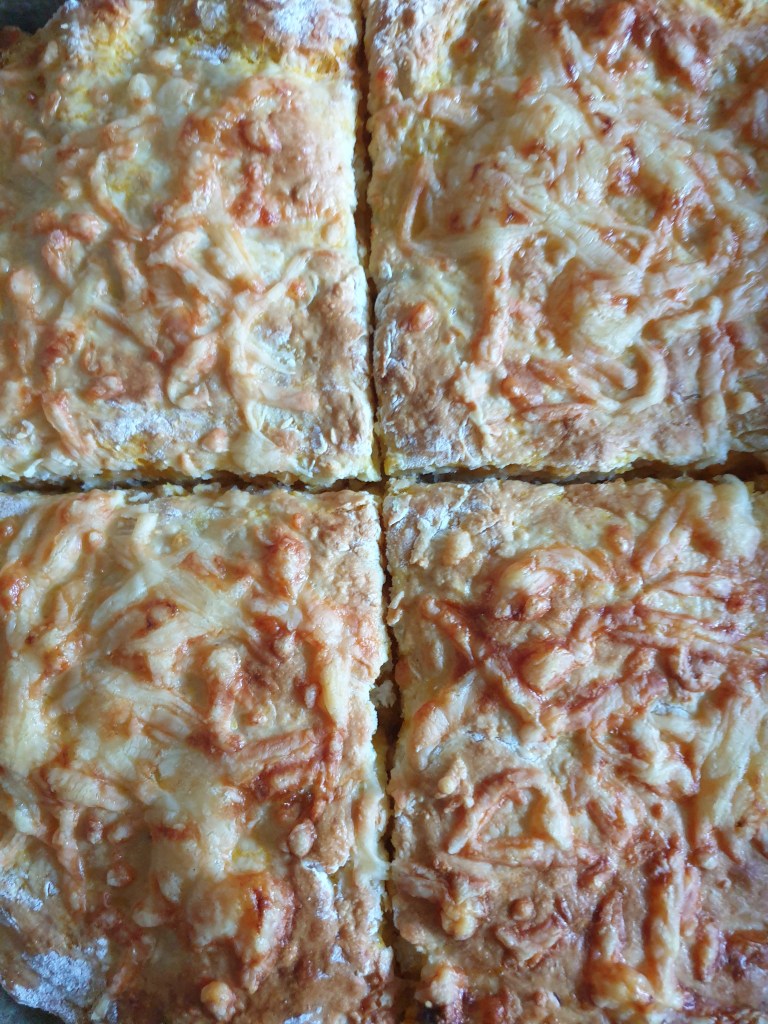
So having taken Monday off from work to catch up with domestic stuff, I needed to get breakfasts and lunches ready for the rest of the week ahead. I’d seen recipes for roasted parsnip, garlic & haricot bean soup, which I thought would go well with a pumpkin, cheese and rosemary scone.

For the love of man there was no pumpkin puree to be found in any of the major supermarkets. I went to all of them to check. So I substituted it with butternut squash that we had in the freezer instead.

C was making bread rolls so we had competing needs for the oven but roasting the butternut coincided with baking his rolls so all worked out OK.

Whilst the soup ingredients were in the soup maker, I made my biscoff pancakes for breakfasts. They turned out probably the best looking I’ve ever made them. Nice and golden colour. I guess I wasn’t rushing unlike usual.

Then all the ingredients for the scones got mixed and kneaded. I forgot to take my rings off so they all got a bit gunned up with mixture. They smelled lovely whilst they were baking so I’m looking forward to tasting them.

The soup looks a bit insipid (I suppose it would do really) but I’m sure it’ll taste fine.

After lunch I got on with one of my least favourite domestic chores, the ironing. Still, got it done and out of the way.

Ready for a three day working week.

Listen to you heart

Image by Free-Photos from Pixabay

How will you play big in the coming year?  Sometimes we have no idea, our head can be filled with so many should versus our desires.  What do you really want?  It can feel small in comparison to everyone else.  That doesn’t mean you’re afraid of putting big desires out there.

Podcast fave, Tonya Leigh, tells us that it needn’t be one big goal but a collection of smaller things you want to create and experience.  The biggest act of bravery is to love what you love and want what you want.

TL says that we spend a lot of our formative years listening to other people’s opinions of what we should do in life.  No one gets to decide your version of big, except you.

Of course, that won’t stop others having an opinion on that; some may think you’re thinking too big whilst others may think you’re thinking too small.  Don’t allow them to project their beliefs and limitations on to you.  Let them think what they want.  Decide what feels true for you.  It could be a solo round the world trip, or growing flowers in your garden. Your version of big will stretch, challenge and delight you.

TL implores not to chase big things but to follow your big soul.  No two souls are alike. What does your soul call you to think, create and fell?  It will guide you if you listen.

Want what you want unapologetically.  If you want to earn £1million or you want to sell everything and live in a tent, so long as you like your reason for doing it, that is your big.  You don’t have to justify it or explain it to anyone else, so long as it’s true for you.

Your definition of your big will evolve as you do.  Put the effort into learning and educating yourself for what your big is at this moment.

So, what’s your big?

What seasonal sustenance do you need?

Image by DanaTentis from Pixabay

The weather has taken a definite turn for the chillier this last week, with lots more rain too.  The winder coat has been washed and re-waterproofed.  The jumpers have been brought out.  The heater has even been on a couple of times in the office to take the chill off.

Some people can really struggle during winter.  Some suffer from Seasonal Adjustment Disorder (SAD), others worry about the increased isolation during cold, dark winter nights, less likely to go out in the evening and missing out of social interactions. 

A questionnaire in Psychologies Magazine looked into who we could create a winter of content and what we need to feel our best during this time.  My responses were resulted predominantly into a need for stimulation:

“It’s natural to shift your routine with the changing season, and that might mean feeling as if you want to hunker down indoors, snuggle up and do less.  But it’s one thing to response to a gut instinct and another to find yourself putting your life on hold until spring returns.

There is a lot of appeal in takin a break from challenge and uncertainty for a while, especially if you’re feeling somewhat vulnerable, or if dark days have had an impact on your mood and energy levels – but retreating to your comfort zone and drifting along in a ‘holding pattern’ can be particularly undermining for those how thrive on new experiences.

If you know that you get a mood and energy boost by feeling stretched in some way, don’t wait for the new year to set fresh goals for yourself, or to take some time to think about what projects or new direction would inspire your professional and personal life.  That means creating opportunities to expand your social life and tap into that vital energy that you experience from new ideas, people and places.  It may mean branching out on your own if others don’t get your need for ‘new’.

Take some time to visualise the first day of spring and think about how you want to feel when it arrives. Then consider: what can I put in place now to make that happen for myself?  Now take a step towards making it possible.”

I have some romantic notion of snuggling up on the sofa under a blanket with a hot chocolate, watching cute black and white seasonal films.  Reality is, I don’t have time for that and if I snuggled under a blanket, I’d probably fall asleep before the opening credits of the film had finished.

In #bellringing terms things actually pick up more during this time of year.  We have Remembrance ringing in November, then throughout December there are various carol services to ring for as well as Christmas Day ringing.

We usually get to visit members of the family who live farther away, and that usually involves an overnight stay, a trip to a park, house or event that provides the something new and exciting.  Although I don’t necessarily enjoy Christmas Day itself (over eating, pressure to be entertaining or entertained and so on) I do like the preparation for Christmas.  Every year I have a grand plan to decorate, to wrap gifts whilst listening to Christmas tunes or watching Christmas films.  I see all these delicious looking recipes that every year I promise I’ll get around to making, then not actually make any of them.  I have notion that Christmas will be exactly like that chocolate box cover, that screenplay of romance and family togetherness. It never quite works out like that does it?

I don’t believe in New Year resolutions. Why only have a goal or ambition at one time of the year?  I always try to make the best of opportunities that come my way, or work to create those opportunities.  Some of these have come to fruition recently, so getting through this winter time will be interesting and challenging (in a good way).

How would you create a winter of content for yourself and what do you need to feel your best during this time?

Are you an emotional eater?

Image by Steve Buissinne from Pixabay

Over the last few days I’ve really stuffed my face with junk.  I made breakfasts and lunches for the week but on top of that I’ve visiting the shops on site and loaded up with crisps, cake and chocolate.  Possibly as a result of being anxious about something.  Possibly because it’s now getting quite wintery and I just want to fill up on warm stodgy food, instead of being good and controlling my food intake.

Emotional eating is when we feel vulnerable and use food to support our feelings rather than because of hunger.  It happens when we experience emotional downturns, depression, anxiety, stress and even loneliness.  Obviously this can lead to weight increase and the health problems that are associated. An article in Health & Wellbeing magazine discussed how and why we comfort eat.

Finding comfort in food is fairly common with some people reaching for food to suppress and soothe negative feelings several times a week. Some of us then feel guilty for having stuffed our faces, leading to more depression or anxiety, fuelled by more food and the cycle continues.

There are lots of reasons why we eat emotionally eat.  For some if can be deep rooted, childhood trauma.  For others its stress related and food we tend to binge on is high in sugar and releases the feel good hormone, so temporarily we feel better. Taking time to understand when and why we emotionally eat can be beneficial.  Removing distractions and focussing on what the food tastes, looks and smells like. 

Comfort eating is perfectly normal.  We can associate specific foods with positive experiences and feelings of pleasure.  The problem comes when we use food as a sole coping mechanism.  Using food as one of a range of methods to self-soothe should not be demonised.

The article offers three ways to help feel more in control of emotional eating:

  1. Find another way – find a new way to deal with stress.  Anything from journaling, reading, going for a walk or some other way to decompress.
  2. Move – regular exercise can help a lot in terms of relieving stress.  Exercises that release endorphins like going for a walk, or job may help when you feel more emotional.
  3. Remove temptation – it’s easier to cave in when we know we can. If we have crisps, cake and chocolate in the cupboard, it’s all too easy to grab it in a moment of weakness. Make an effort not to buy it when you do the food shop.

I know that I’m only eating comfort food this week because I’ve been anxious about something.  I can tell, because I’ve also been chewing my finger nails and ripping the skin from the side of my thumb.  I also know that this time will pass and when it does, I’ll be back on it, nails and thumb intact.  So I’m not going to deny myself this temporary lapse, and enjoy the food that I know will be off limits again soon.

Do you use food as an emotional crutch?  If not, how to you cope?