Self-sabotaging sleep patterns

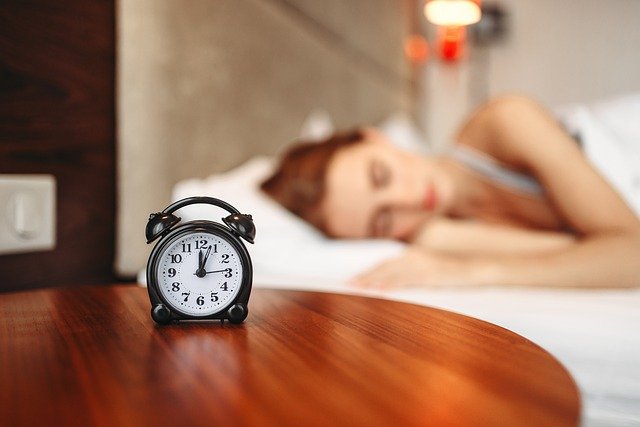
Image by Katniss12 from Pixabay

I’ve mentioned before that I could sleep for Britain.  Or at least I think I could.  Or maybe I just fantasise about trying.  My Fitbit tells me that I average 7.5 hours a night, which is the socially prescribed length of time.  However, it’s not all quality sleep.

Looking at the breakdown of my sleep patterns registered on my Fitbit I’m generally either awake or restless about 14 times per night. I spend around 1hr 59mins in REM, 4hrs 10mins in light and 58mins in deep, restorative sleep. My heartrate during my sleep time is roughly 25% above resting heartrate.

I generally go to bed properly around 11.30pm – midnight but have often already fallen asleep on the sofa prior to that.  I rarely have trouble getting off to sleep. On weekdays the alarm rips me awake at 6am and on a weekend at 7am.  Once the alarm has gone off, I’m awake.  I can’t lie there, or get back to sleep, unlike someone I could mention!

In order to upgrade my sleep for a more restorative slumber, the latest Psychologies Magazine quick test suggested that my problem is around self-care.  The area I scored most on suggested that:

Sometimes, there is no real explanation for a shift in sleeping patterns but, if you’ve previously enjoyed regenerative sleep and now find it more elusive, it’s worth taking some time to assess the balance of your life.  We all experience periods of sleep disruption and, for many people, sleep quality naturally fluctuates.  No one has perfect sleep all the time – but if your stress levels have crept up, or you’ve stopped making tome to eat well and exercise regularly, it’s time to ask why self-care has slipped down your list of priorities. Being well aware of what habits help or hinder sleep is one thing, but putting them into practice is another.  You many know from experience that what you do on a daily basis has a direct impact on the quality of sleep that you enjoy at night.  But, even with the best of intentions, it’s easy to lose focus and slip into old habits, especially if your inner critic convinces you that you’ll never keep it up and taking care of yourself is not worth the effort.

Try to remember that small acts of self-neglect can accumulate and evolve into self-sabotage.  How easy do you find it to be self-compassionate? Think about the advice you would give a friend who was finding it hard to get the sleep they need.  Then think about how you can start to walk your talk to improve your own unsatisfactory sleep situation.”

I think some of my pre-bedtime naps are a result of boredom, I’m not really bothered about watching tv that late at night.  Once I’ve sat down and finished all I need to do, I shut down.  Sometimes, sleep is my answer to stress, if I’m asleep it can’t bother me. Should I be more active in order to stay away later, tire myself out more and have a good nights sleep? Sometimes, I can stay awake until midnight.  If I’m working on something, or engrossed in a good book, or scrolling through social media (although that’s not advised just before bed). I usually find the next day, or a couple of days later, late nights catch up with me and I need a week of sleep to get over it. 

It may be conditioning though.  A bad habit that I’ve got into by letting myself fall asleep on the sofa has just become the norm. If I were to stay awake a while longer, would the sleep I do then get be more restorative?

How do you manage to stay awake until bedtime?
Only on the right side

I have noticed something happening in recent months which only happens when I lay back and turn my head to the right.

When I lay on my back and turn my head to the right after a little while, but whilst still awake, I make involuntary sounds like puffing air out, pffft, or slight snorting or sometimes a high pitched whistling sound. I don’t feel it coming on, it varies between noises, and I can’t stop it. I am fully aware of when it happens. It doesn’t happen when I turn my head to the left, or if I lay on my side or front.

Its only started happening recently and I have no idea what is causing it or how to stop it.

According to sleepfoundation.com sleeping on your back pulls the tissues around your airways downwards, making the airways narrower, resulting in snoring. Those with obstructive sleep apnea tend to have blocked airways that slow down or stop breathing altogether and snorting or choking is the body’s way of waking you up.

My issue is that I do it when I’m awake rather than asleep, and only on one side. I am not aware that I have a cold or sinus problems or any other contributing factor like a dodgy thyroid.

C does accuse me of snoring sometimes, usually when I’ve fallen asleep on the sofa. He’s one to talk. I’ve not been able to hear the TV over his snoring sometimes. It also doesn’t matter to him if he’s laying on his front, back or side. Nudging him to turn over has zero effect.

I might take a bit more notice of other symptoms next time it happens just to see if its when I have a cough or cold or sinus troubles, or generally more tired or anything else.

I have sometimes deliberately laid back and turned my head to the right in order to induce the involuntarily sounds, with some success.

What funny noises do you make?

The power of the power nap

Image by 영훈 박 from Pixabay

I love sleep.  I can sleep through thunderstorms.  I can sleep through pretty much anything.  If it were an Olympic sport, I’d be a gold medallist. I don’t lack sleep.

I can also nap to order.  If I’m relaxed at home, not really doing much (not very often), I can actually set myself a mental time limit on having a nap.  I curl up and look at the clock, then tell myself I have fifteen or twenty minutes for a quick nap. More often than not, I will actually wake up, without the need for an alarm, in that timeframe.

Research suggests that a twenty minute snooze in the afternoon provides more rest than if we were to extend our morning sleep by twenty minutes. Enjoying a nap in the afternoon has been shown to greatly improve cognitive function, recover any sleep deprivation, prepare us for upcoming sleep loss, relax our mood and increase energy levels. https://www.sleepfoundation.org/sleep-hygiene/napping

Some people say that they feel groggy after a nap and no better for it.  This is because of the stages our body cycles through during sleep. A five minute nap is too short to be beneficial at all.  Sleeping for longer than thirty minutes gives the body a chance to enter deep sleep which is when you may feel groggy afterwards.

Although there are benefits for having a short afternoon siesta, for some it can be counterproductive by interfering with the natural ability to fall asleep at bedtime.  Insomniacs should avoid napping.

The Sleep Foundation offer advice for taking the best nap:

Set an alarm – the best nap length is for about ten to twenty minutes, providing restorative sleep without the drowsiness. Of, if you’re like me, just tell yourself how long you can nap for.

Nap early – about halfway between the point when you wake up and the time you intend to go to bed.  Don’t leave it too late otherwise it would affect your chance to get to sleep when you do go to bed.

Create the right environment – make yourself comfortable, quiet, cool and dark.  I don’t have a problem falling asleep in the bright sunlight, curled up on the sofa.

Relax – put aside what’s worrying you, forget the to-do lists, or use a relaxing meditation.

Set your intentions – think about what you want to get from your nap whether restorative, or catching up on your Zzzzz’s.

There’s something to be said for some Mediterranean countries who officially recognise the benefits of a siesta. Can we petition the UK government to adopt this? I’m off for a nap now!

Getting up earlier vs getting more Zzzzz’s

I read many articles that advocate waking up early and starting your day earlier to make the most of it and get those things done that will set you up for a great day ahead, like doing your morning meditation or exercise session.  Some find it gives them some vital “alone” time for reflection or before the busyness of the day begins.

I do find that during the summer months I wake up earlier naturally, probably because it’s light outside, however, that doesn’t necessarily mean that I get out of bed and get on with the day.  Generally, I internally groan that its aaaaaaages before I need to be up and about and try to get in another few precious moments of sleep. 

However, once I am up, I’m up.  I don’t like sitting around.  I shower, dress, swig my coffee then go to work.  Even at the weekends, I get up, shower, dress and am wanted to get on with something or go somewhere.  I hate sitting around, wasting time. I can get up at any time of the morning.  If we’re catching a flight and I need to be up at 4am, I can get up and get on with the day.  I’m not loping about all groggy thinking that it is outrageous to be up at that time of day.

I do however like my sleep.  I think it’s because I have so much going on with a full day at the office, then come home to #bellringing meetings or activities most evenings.  I can keep going as late in to the night as you like if I’m on the go, but as soon as my butt hits the sofa, within half an hour I can fall asleep.  Once I’ve sat down, that’s it.  I’m not budging for anybody.

I have a tendency to fall asleep somewhere between 9 and 10pm.  Then I wake up at about Midnight, in time to go to bed.  I can remain conscious enough to get ready for bed and brush my teeth, but invariable, I can go straight to sleep again when my head hits the pillow.  According to my Fitbit I clock up an average of 7hrs 23mins of sleep a night, although that can range from 5½hrs to nearly 8½hrs at the weekend.  The app also gives you a sleep score where it works out the quality of the snoozing based on time spent awake, in REM, Light or Deep sleep cycles, and heart rate.  My average score over the last month as been 82, which puts me in the Good category.  Recommendations to improve sleep scores include exercises at least 3-4 hours before going to sleep, maintaining a regular sleep pattern and taking at least 150 minutes of active exercise per week.

I could get up earlier, but then I’d only be sitting around waiting for other people to get up, or go to work, by which time, I’d probably nod off again!

Done nothing all day, so why do I feel so tired?

I have literally done nothing today.  I feel so lazy.

Its Bank Holiday, so I’m not at work.  We had a bit of a lay in, I didn’t get up until 8am.  After showering and getting dressed, I plonked myself down on the sofa and played a game on my tablet.  C was helping on a Stedman #bellringing theory session, using my Zoom account I might add, but I wasn’t needed for that.  I took half an hour to make my breakfasts and lunches for the rest of the working week ahead. Then sat down again and played some more game.

After he’d finished his theory session, we decided to go into town to get some lunch. The sun was shining but it was very chilly.  We walked up to the High Street and back which took us about 20 minutes.  I ate my sandwich, then sat on the sofa playing more of my game again. He then went to do some work in the study, and I had a sneaky 10 minute nap, before C made our afternoon cup of tea.  He had his whilst working in the study, I had mine whilst playing games on my tablet.

C went down to make dinner.  I sat on the sofa watching TV now that its early evening, but essentially doing nothing.  And I feel exhausted.  I napped before bedtime, went straight to sleep until the alarm the next day.

According to https://www.healthline.com/nutrition/10-reasons-you-are-tired#10.-High-Stress-Levels  there are multiple reasons why that might be:

  1. Consuming too many refined carbs.  Whilst giving a quick boost of energy, these baddies tend to rise and fall quickly, quick energy boost, followed by another slump;
  2. Being sedentary.  Inactivity is as bad as too active.  Exercise can reduce fatigue so walking, gentle exercise is better than none;
  3. Not getting enough of the right sort of sleep.  I’m not sure this one is me.  I sleep for Britain.  After a good quality night’s sleep your supposed to wake up feeling energised and ready to go.  Can’t say that’s ever happened to me though;
  4. Food sensitivities.  If you have intolerances like rashes or digestive problems it might be a sign that something you’ve eaten doesn’t agree with you.
  5. Not eating enough calories.  I definitely don’t think this one applies to me.  They might not be the right sort of calories, but I definitely get my quota in;
  6. Sleeping at the wrong time.  Now, I can sleep whenever, wherever.  If I’m not doing anything I fall asleep, if I’m bored I fall asleep.  Maybe I sleep too much!
  7. Not enough protein. Protein boosts your metabolic rate and can aid weight loss and prevent tiredness;
  8. Not drinking enough water.  I drink about 1.5 litres per day easily.  That’s in addition to coffee or anything else.
  9. Relying on energy drinks.  This is not me.  Don’t like them, they taste too sweet.
  10. High stress levels.  I don’t think I’m particularly stressed.  Sometimes more than others, sure, but generally I’m quite good at dealing with it.  Mostly I sleep it off, if I’m asleep it can’t worry me!

I’m exhausted just thinkng about it!

Slave to the Rhythm

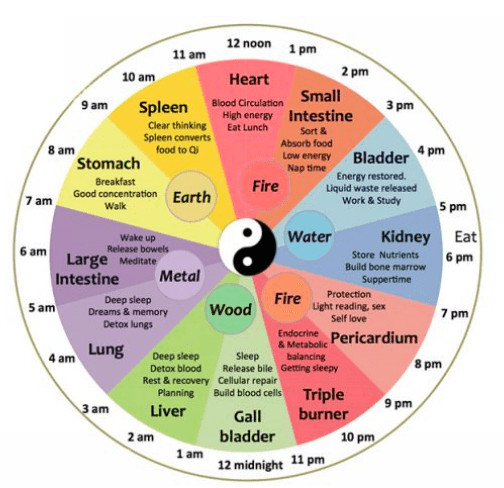
Having allowed myself the time to read some incredibly useful and illuminating books recently, I’m learning a lot about how the human body functions, it needs and ways in which to support it both physically and psychologically. The latest revelation was around the study of the traditional Chinese medicine understanding that you can make more out of your day by syncing your activities and energies with the times of the day that certain organs perform at their peak.

For example, the lungs peak performance time is between 3am and 5am, so this might be the best time for deep, restorative sleep, whereas the heart performs best between 11am and 1pm, so the ideal time for getting the blood circulating through exercise with high energy levels and eating a light lunch, so that come 1pm to 3pm your small intestine can sort and absorb food.

From about 7pm onwards the rhythm of the body clock is starting to wind down and the circulatory systems can focus on carrying nutrients around the body, a time to start to settle down for the evening. Sleeping between 9pm to 5am allows the gall bladder and liver to be most effective, cleansing the body of toxins, ready to start over when the lungs are preparing to restore oxygen to your muscles for the day ahead.

It was really interested to compare that clock to my daily routines. I get up around 6am, start work at 7.30am, have breakfast around 8.30-9am, just as my stomach is at peak efficiency and concentration levels should be highest. I go for a walk most lunch times, so that could be anywhere between 12noon and 2pm, at exactly the right time for my energy levels to be at their highest. I do suffer from the mid afternoon slumps, but being at work can’t partake of a short nap, but do feel that I need a sugar boost around 3pm, so cup of mint tea and a snack to keep me going. We do tend to eat our evening meal some time between 6pm and 7pm, so at the right time for my kidneys to be storing nutrients. Then, unless I have a meeting in the evening, or I’m at a virtual #bellringing session, I’m usually fairly zonked out on the sofa from then on in. I do have a bad habit of curling up with my sofa blanket, then falling asleep around 9.30pm, wake up again around midnight and head straight to bed where I can usually fall asleep fairly quickly and thoroughly until the alarm rips me awake again at 6am.

So, without realising it, I am actually quite in sync with my organ body clock. I am already a slave to the rhythm.

Sleep cures all

How much sleep is too much sleep? And is too much sleep bad for you?

I sleep a lot. I mean, like, A LOT. Sleep seems to be my answer to everything. I’m tired, I sleep. I’m bored, I sleep. I’m ill, I sleep. I’m stressed, I sleep. I’m sat still for more than half an hour, I sleep.

Last year some time, on an incredibly rare Saturday when we had nothing in the diary, we decided to have a lie in, so we didn’t set an alarm. We’d gone to bed about midnight the previous day, and presumably, I’d already had a nap on the sofa before bedtime. So, we woke up around 8am I guess. Really late for us, even on a weekend. I got up, had a shower and got dressed. I sat on the sofa waiting for C to get showered and dressed and had a nap. We wandered in to town a bit later in the morning and when we got back I had another nap. He woke me up for lunch after which I had another nap. He then woke me up for dinner, after which I settled for another nap, before being woken up in time to go to bed… and sleep through until the 7am Sunday alarm.

I’m generally ok of I keep going. If I have an evening meeting, or a #bellringing session, I’m ok and can stay awake, and then I’m usually still buzzing afterwards and that means I can stay awake until midnight or beyond. The moment I stop and sit down is when I could fall asleep fairly instantly.

I have also been known to fall asleep in the cinema. One time I was with a friend watching one of the Pirates of the Caribbean films and I’d said that there was this really clever bit where they walk on the sea bed in and out of the moonlight, and keep changing from humans to skeletons, but then managed to sleep through that very part of the film.

Apparently our metabolic system doesn’t like it if we sleep to much. Sleepfoundation.org suggests that between 7 and 9 hours sleep is ideal for most adults, with some needing around 10 hours kip. Their study suggested that sleeping more than the suggested amount could lead to increased risk of obesity, heart disease, back pain and headaches. An NHS review of this study did find that as a cross sectional study, it could not draw a direct cause and effect relationship between sleep and disease risk, as it could be that the symptoms of heart disease were causing people to sleep more rather than the other way around. They said that the study also didn’t take into account other factors that could have influenced the results such as chronic disease risk, lifestyle choices e.g. smoking and drinking habits. It summarised that having the occasional long snooze is not something to lose sleep over.

I wouldn’t say that I suffer from excessive sleepiness itself, but the act of sleeping seems to cure everything. I’m not necessarily tired but I can’t be hungry, anxious or bored if I’m asleep. 💤

Busy doing nothing

Apart from an interview to record in the evening we had nothing planned for Saturday. There was a time when we should have been helping at the District Training Day but with current restrictions, that got cancelled 😞

I demanded that the alarm clock be turned off. I have to get up at 6am for work, so I was going to take this rare opportunity for a lay in. Still wide awake at 6am though. Didn’t get out of bed until nearer 8am but couldn’t get back to sleep properly.

Once up and showered Mr presented me with coffee and a bacon sandwich for breakfast. Blessed. Then I just sat playing games on my tablet until he’d showered and dressed.

We wandered into town for nothing in particular but still managed to spend money on not a lot. I did buy a new pair of work shoes and Mr spotted a poster in the shoe shop of someone bearing the same surname as my family. Random.

Spent the afternoon back home reading and generally not doing much. Mr made dinner and we watched TV for a bit.

I recorded a #bellringing interview later on, then back to the sofa for more of doing nothing in particular.

Part of me thinks that I’ve wasted a day, but then there’s nothing wrong with having some solid “do nothong” time to recharge the old batteries.

Back on it tomorrow.

Ahhhhh, new pillows

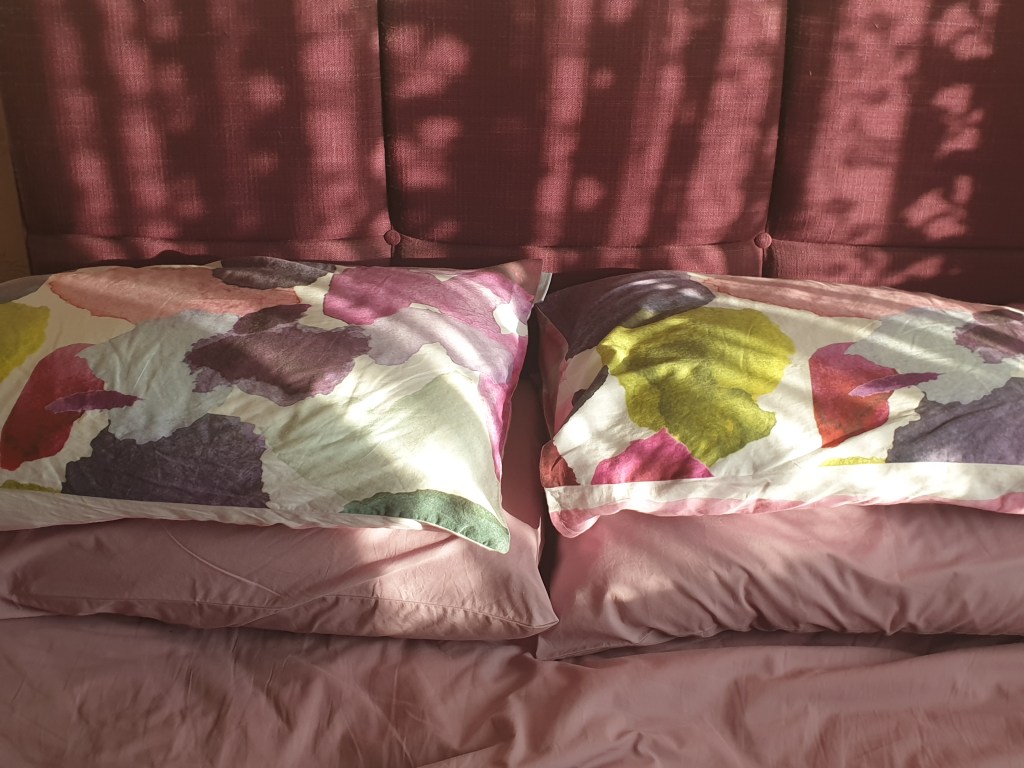
Mr came home from food shopping yesterday with the addition of 2 new sets of new pillows for our bed 😁 I can’t tell you how excited I am about that. I love soft, voluminous pillows.

Trouble is, they’re not really good for supporting your neck apparently and the way I sleep actually makes them fairly redundant. I tend to sleep 💤 on my front with my arms folded but above my head. That means that I tend to push the pillows up and most of my head is actually resting on the mattress.

Apparently that’s one of the worst positions to sleep in, according to onhealth.com who say that 7% of people sleep like this and although it may help ease snoring it may aggravate neck and back pain. I used to suffer quite chronic back pain but over the last year or so it seems to have improved.

All that aside though, being able to let your head flumph down into a soft pillow is such a good feeling, even if it is shortlived until I turn over.

Night, night 🥱😴

No need to alarm

Its a Bank Holiday today so for many it means a day off from work. A chance to spend time with family and do those DIY jobs you still haven’t completed, have a tidy up, go out for the day or simply chill out.

Fortunately I’m in a role that affords me the day off. We have no plans for the day as such, apart from a vurtual #bellringing tower tour this evening, so no need to rush about.

So why on earth was the alarm ⏰ set this morning?

Our alarm clock has two alarms set. One for 6am and one for 7am. You can have one or other or both set to go off. Admittedly it was the 7am that went off, so technically we had had a bit of a lie in. But there was no real need for it to go off at all. How nice would it have been to have woken up naturally, feeling more relaxed and refreshed.

Apparently you can train yourself to wake up naturally by using your body’s natural circadian rhythm by figuring out how much sleep 💤 you actually need and going to bed at the right time, following a relaxing bed time routine. https://www.sleep.org/how-to-wake-up-without-an-alarm-clock/

I usually don’t have a problem with going to sleep and probably have more sleep than I need. If I’m bored I’ll sleep, if I’m stressed or worried I’ll sleep and I’ll nod off if I’m sat still too long.

Fir those who get to take a Bank Holiday, I hope you find it relaxing and rejuvenating.