Finding Inner Me Strength in Others (and maybe yourself)

As a leader in several different aspects of life, at work and at leisure, I need to make sure that my various teams are motivated and enthused about what they do.  Sometimes that’s quite difficulty, everyone is getting Covid19 weary and there is nothing I can do to change the circumstances we are in. 

What I find really difficult is to engage the unengagable.  Some of them really don’t want to get involved, don’t care and are not interested on what goes on in the wider world, or sometimes even within their own team.  These people can sometimes bring others down with them making it much harder to get anyone motivated or thinking about innovative ways to solve problems.  It might be because of the type of role they have, perhaps they don’t see that they have much option but to just go along with whatever is happening.  Any spark that someone might show is very low level and can be missed if I’m not in the right place at the right time to spot it. 

I want people to feel valued in whatever role they play, whether a member of my team at work, one of our bell ringers or someone within any of the other groups I look after outside of work.  Identifying someone’s Me Strength, the thing that they are really good at, can be difficult. Merely saying well done, although nice to hear, doesn’t really help someone see their strengths and learn to cultivate them. 

Allowing someone to use their Me Strength every day is a good way to get someone to recognise it for themselves.  It means that I need to help them identify what their Me Strength is to start with.  Having a greater understanding of what someone is energised by is a start.  This can then allow you to co-create innovative solutions.  It might be that there is another person in the team who can bounce off of someone’s Me Strength and improve their own.  It needn’t be done in isolation. 

Therese Huston https://ideas.ted.com/2-kinds-of-praise-at-work-me-strength-we-strength/ offers some questions that can help identify someone’s Me Strength:

  1. What do you know you enjoy doing but haven’t done yet?
  2. What sorts of activities do you finish and thing you’re looking forward to doing again?
  3. What do you see on your calendar that you’re excited about?
  4. Was there a time when you were doing something and you were so absorbed by it you didn’t notice the time go by?
  5. What did you do on the day that you had your best day?  What made it the best day?

The questions Huston offers to help identify We Strengths are also useful to explore:

  1. What have other people told you that you do incredibly well?
  2. What’s got you noticed?
  3. Where do you feel most useful?
  4. What have you done before that you’re not doing now that had a lot of impact?
  5. What seems to come more easily to you than for others?

Trying to answer these questions for myself is hard. As a leader I do get to do more of what I enjoy and have the privilege of being autonomous in what I do in all areas of my life, therefore I can manifest more of the things I enjoy or am better at doing, to some extent. There are some things that come more easily to me than others and I am able to do them, or others have noticed and therefore played to that strength. 

I am not sure I can remember a “best day”, let alone what I was doing on that day, but there have certainly been days when the time has whizzed by and I’m not sure where it went.

How would you respond to those questions?

Can a change of outfit really change your outlook?

I suppose the lovely weather we’ve experienced over the last few days has had me sorting the short sleeves from the woolly jumpers. And having an extra day to chill out and do what you want to has been beneficial.

I’ve been girlying up by wearing some lighter, brighter clothing, cleaning some jewellery I haven’t worn in ages, spritzed on some perfume even though we’re not going anywhere, painted my nails, done some housework and cooked breakfasts for the week ahead. Quite the domestic goddess. I’ve actually felt really chilled and positive about some changes I’ve started to put in place and today it started to manifest.

But to make those feelings and attitudes to stick, I’m going to apply the 21 day rule of sticking with it for that long to see if I can change my habits.

The way you dress can affect the way you feel and therefore can be used to take advantage of and increase confidence. Wearing elegant clothes can even change your behaviour. Adding accessories ups the ante. 

I was told once that I should dress for the job I want not the one I have, but given that I’m sat in an office predominantly on my own, no one notices any way. I was also told that I should buy new underwear for an interview as it makes you feel more alert 😆

Apparently clothes have a cognitive affect with uncomfortable clothing associated with unease and distraction whilst comfortable clothing help us relax. Wearing the right clothes for the right occasion puts us in the right frame of mind.

Can all of this really make a difference or is it all superficial nonsense?

It will be time to be more sociable again soon as we meet more people face to face. Being a natural introvert that fills me with dread but can a change of outfits and mindset make a difference? Time will tell.

Will anyone notice and will they care?

A wonderful weekend

I don’t work Fridays so this gives us an extra day over the Bank Holiday which meant we were able to get to E&Ms without encountering too much traffic, spend a lovely couple of days with them before heading back on Sunday, beating the return traffic and still giving us Monday to do other stuff.

Helped by the fact that its been lovely, bright, sunny and warm, it has really started to feel like summer is coming.

We have now washed and put the winter dressing gowns and bed linen away in favour of the lighter ones, and I’ve even ventered so far as to check out the state of shorts in the cupboard.

Having spent the weekend in excellent company, being fed watered and walked and entertained, and knowing that there’s an extra day to relax before heading to work, I actually do feel quite rested.

I’ve researched a couple of things I want to do and taken some advice on how to achieve them, and have plans already being actioned.

I do need to check messages and other stuff as I’ve not responded to any emails over the weekend, but that shouldn’t take long. Then I intend to prepare breakfasts and lunches for work, then read and relax for the rest of the day.

Summer seems to be on its way with a good forecast for the rest of this week so time to shake off the drear of winter and a wet spring. Time to up my game and get on.

What no bells?

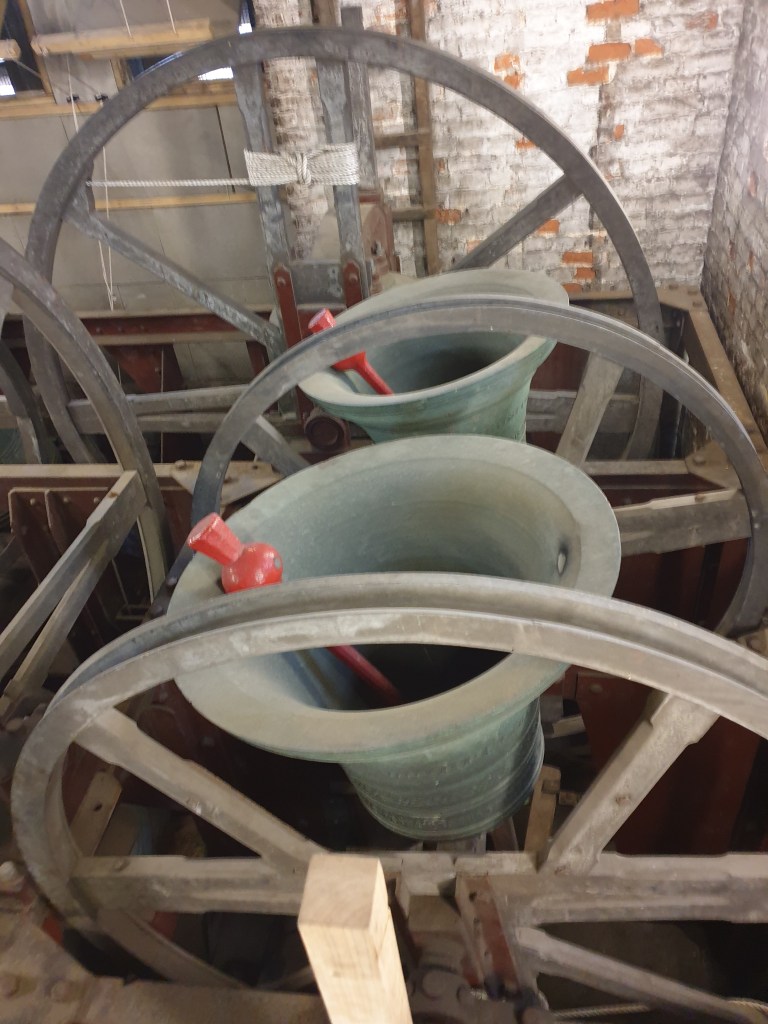
Although there has been no group #bellringing for such a long time now C and I have been going to the Cathedral and ringing two bells just to keep things going.

This week however we are away visiting E&M so not able to go to ring. In ordinary times we would go with E&M to their tower to ring on Sunday bit as they’re not back ringing yet either, we had the morning off.

An odd feeling to not go ringing but after yesterday’s marathon walk around Hardwick Hall we were all exhausted and enjoyed a couple of extra hours sleep.

I am looking forward to returning to the Cathedral next weekend when we will have a couple of extra of ringers for the first time in many, many months. The rules still only allow six people with social distancing, masks and good ventilation but it will be fantastic to hear more than ding and dong and try real ringing methods.

As we head into June and the possibility of no restrictions after the 21st (fingers tightly crossed) we may also be able to start practices again. I know many towers already have but because we are very reliant on people from other towers supporting our practice we’ve decided to hold off for a while.

It will be interesting to see and hear how we get on when trying to raise and ring the heavy bells for the first time in 16 months. Managing people’s expectations of what they could and should ring might be a challenge.

From what I’ve read on social media from other towers it seems that there has been a positive community reaction to bells being rung again but then I upoose no one is going to share any negative responses they’ve had.

I always share details of what ringing we are planning and what we’ve done on our Twitter account and tag local radio, the diocrsan office, the cathedral, local city sites as well. Some are really positive and like and share our posts which is lovely.

I want to build a closer relationship with the cathedral and diocesan offices and local community sites so that they start to fully consider the advantages that bellringers bring to church and community.

I’ve already had conversations with the cathedral office about a diocesan wide ring to mark the enthronement of our new Diocesan Bishop later on in the year and look forward to some closer links.

First proper road trip in a while

Its a bank holiday weekend in the UK and the start of half term school holidays. Its often the first real getaway opportunity but with some Covid restrictions in place, or at least limiting some activities, it was touch and go whether we’d be able to go anywhere.

We haven’t seen step daughter #1 since March 2020 for a fleeting meet up and the last time we came to stay with them would have been around Christmas 2019. Lots has happened since then.

It was lovely to be able to take a trip to see her and have a proper catch up. She had an exam on Friday afternoon so we we’re instructed not to arrive before 5pm. We got there about 5.30pm. The sun was shining and it was warm so it was great to be able to sit out in the back garden with a cuppa and have a good chat.

E is a great cook and baker too so no surprises that she’d made a lasagne and all she needed to do was shove it in the oven.

Before we knew it it was 11pm and she was clearly tired and getting uncomfortable so we all headed to bed.

It was lovely to be here and see her bump before due date in July. I’m glad she seems to be well throughout her pregnancy and everything is going as it should.

Looking forward to the rest of the weekend wandering around Hardwick Hall, curry night and good company for the rest of the weekend.

Whatever you’re doing I hope you have a great weekend.

Where do you get your baking inspiration from?

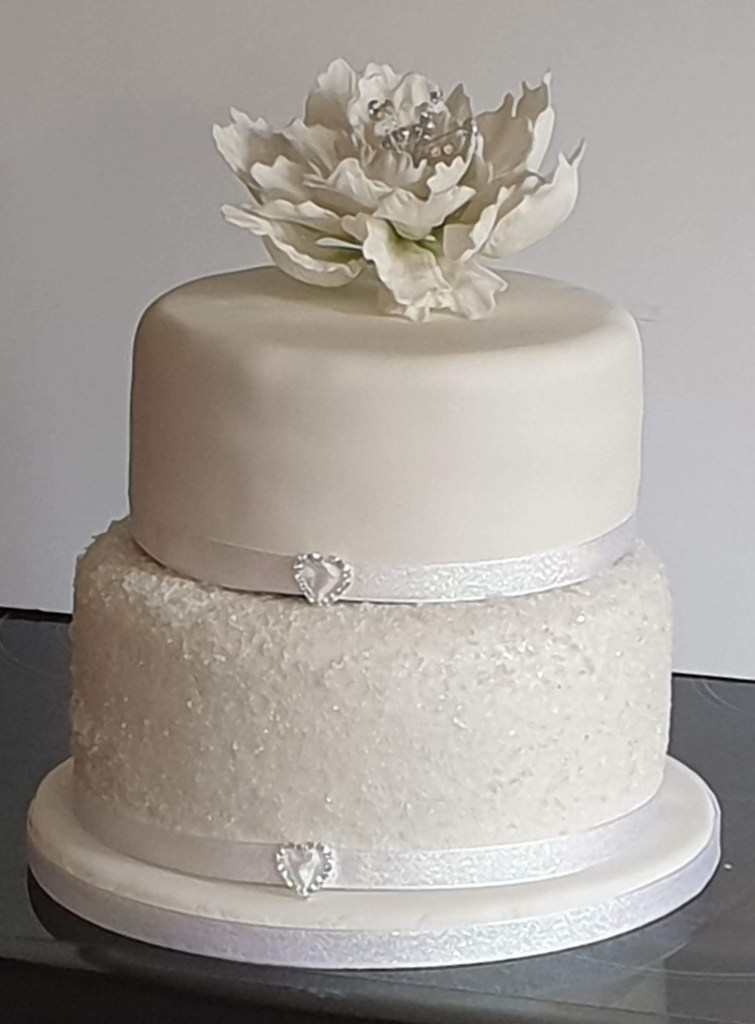
Here’s one I made earlier

I realise that this blog is called Bells, Bakes and Bettering Myself and that most of what I write about is predominantly #bellringing or something to do with learning a new technique, learning more about myself and the world I’m in, and there is very little to do with baking. Occasionally I’ll mention the latest BakedIn green box that has landed on the doormat.  I did say a while back that I was going to get in the habit of baking something from series of magazines that I’d invested in and I did make a start but didn’t get very far.  The trouble was some #bellringing activities took over which meant most of the time that I could put aside to bake was taken up with meetings. This is now starting to lessen so regular baking can resume.

I do have a few things in the cupboards that need using up such as flavours icing sugars that make great buttercream icing or you can use them in the cake batter to flavour it.  I have a cinnamon bun kit in the cupboard that needs using up, and quite possible a brownie kit too.  Then I need to get some inspiration and start getting creative again.  I have all these tools and things at my disposal but I just don’t get to use them often enough.  I need to get some practice in, and I do still have a voucher for a session with my friend Sarah, of The Cupcake Oven.  But I need some inspiration.

I follow several cake decorators on Instagram and Facebook.  Many of them are way too advanced for me, or I look at what they’ve created and think that I could actually do that if I had the time.  I’m not very imaginative so I need a plan to follow or use something someone else has done for inspiration.  I used to follow Paul Bradfield and I have used some of his tutorials in creating versions of Star Trek Enterprise, or standing up Santas.  They are really good step by step guides.

In fact it was through following Paul that I met Sarah.  I had been to a different cake making class and one of the other students in the class mentioned Paul.  I googled him and found that he was due to give a demonstration at my local Sugarcraft Guild (never knew they existed).  In order to get a place on the workshop, I joined the Guild for a while.  Sarah was a member, and may have been on the committee at the time too, before she moved further away.  I stopped going to the Guild as I found that a) I was by far the youngest in the room b) they all sat in cliques and c) when one of the committee members came up to me and said “Welcome, is this your first meeting”?  to which I replied “No, I’ve been coming here for over a year”, I realised that this wasn’t the group for me.  And to be honest, I wasn’t really learning much.  The people they had in to do demonstrations where far beyond what I could do, or indeed I had already mastered several techniques and didn’t learn anything new. 

It would be good to see Sarah again for another class, but I’ve done most of hers now and need to find other excuses for a visit.  I need some inspiration for your average hobby baker, who can make a reasonable tasting cake, and can make it look quite good with sugar flowers and bits. 

Any suggestions?

The Fishy Prospects of Cause and Effect

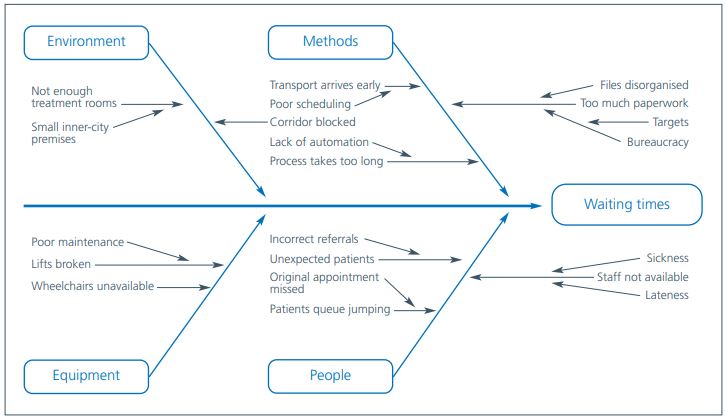
NHS QSIR Fishbone Diagram

I don’t like fish.  One of my siblings had goldfish when we were kids and my daughter had a couple of tropical type fish when she was little, but I don’t like having to clean them out, and I don’t like eating fish.

The only type of fish I do like is the Ishikawa diagram, more commonly known as the cause and effect diagram or the fishbone diagram.  You can see from the image above why it has that nickname.  N.B. that’s not my diagram either, just a copy of one from the NHS Quality, Service Improvement and Redesign book. This rather helpful analysis tool was invented by Professor Kaoru Ishikawa in 1968 and adopted by Dr Deming for improving quality.  This diagram is credited with being one of the first tools in the quality management process.

I have never really given it much air time in the past, preferring good old SWOT or PESTLE analysis tools, however a recent problem that requires a deep dive to determine the route cause has made me dust off this fish skeleton.  It is supposed to help identify why a particular problem is occurring and to identify a wider range of possible underlying factors.

To make good use of it, you need to identify the problem and consider and describe it in details, who is involved, when and where it occurs.  Then you identify the major factors and draw branches off it to represent the main categories of potential underlying factors.  You can then use the main categories to explore more specific factors, adding and labelling more lines off of the spine.  This in turn will help you to investigate the underlying factors through other data checking methods, carrying out assessments etc. then of course you can decide how to tackle those underlying factors that are causing problems. 

The particular issue I’ve started to investigate has thrown up some interesting possibilities as to what the underlying factors might be.  But it has also uncovered a fundamental issue in the way we collect the data which is probably giving us a skewed result in the first place.  It is plausible therefore that the issue we thought was a problem isn’t that much of a problem at all, it’s just the way we’ve been reporting it.  There is still some work to do in making sure we’ve covered all the possible reasons why the data is looks like there’s a problem, but I suspect in the next month’s report the figures will be markedly different.

I have mentioned before that I’m a bit of a data nerd and do like a spreadsheet but I also like a process flow.  The fishbone diagram is a nice little pictorial representation of reviewing problems and their route causes.  It then feeds into the process of eliminating bottlenecks, revising processes and improving quality, efficiency and effectiveness.

There are probably other applications for adopting the fishbone method in life too.

Which behaviours do I temporarily abandon when I’m under stress?

Mark Green posed this question as part of his article 5 Steps to Achieve Lasting Change More Quickly with Less Effort (https://www.linkedin.com/pulse/5-steps-achieve-lasting-change-more-quickly-less-effort-mark-green/) .  Green’s article discussed Gina Mollicone-Long’s five steps change process:

  1. Comfort zone
  2. Desire
  3. Breakthrough
  4. Dominant Habit
  5. ACME (Peak Performance)

This particular question was posed under Stage 4: Dominant Habit where we were invited to consider how we revert to old dominant habits and behaviour patterns when under stress.

Previously, I had undergone many types of personality tests from Belbin to Myers-Briggs, and the Westminster Course about understanding “my type”.  It was during a psychometric test at my former employer where we were asked to read a couple of pages of text, then undertake a scored assessment.  Or results were then plotted on various scales.  I came quite high up on the Perfectionist scale.  We then undertook a series of role plays (probably why I hate them so much now) designed to get us wound up and frustrated, before being repeating the questionnaire and plotting our new scores.  I was off the chart Perfectionist at this point.  I recall the leader remarking “I bet you’ve found all three spelling errors in that booklet haven’t you”?  He was rather taken aback when I said I’d actually found five and pointed out that we were in the UK and therefore the document should have been written in UK English not American.

When considering what behaviours I abandon when I’m stressed, it was also worth thinking about those that I positively adopt when I’m under stress.

I have noticed the most important thing I abandoned was probably politeness.  If I was under stress to get something done and someone else was holding that up, I could became quite short tempered with others and less tolerant of having to wait for things.  Then the Perfectionist kicked in and when I did get someone else’s input I found fault in it and wondered why I didn’t just do it myself in the first place.

I am fully aware that I’m not perfect and I don’t get things right every time and no doubt someone else is having those exact same thoughts about me and my work.  Being aware of what I can be like is part way to trying not to be like that. When I feel myself getting stressed out about things, I try to take myself away from it for a while and focus on something else.  I try to hold on to the question “what’s it like to be on the receiving end of me”, a reflective question learned throughout my Masters course on Senior Healthcare Leadership.

I consider this question on my journey home from work every day, and when I’m dealing with others outside of work.  What was it like to be on the receiving end of me today?  How did what I do impact or influence others?

Headlines Hitters

I am trying to improve my writing skills, in particular, for writing articles for publication.  I am following a number of leaders in the field of copywriting and journalism who are generous at giving away top tips every so often.

This week’s top tip from Carole Seawert (https://www.linkedin.com/pulse/secret-great-headline-b2b-copywriter-and-newsletter-writer-/?trackingId=Te9b20uY1%2FUJwSqiFWg2Sg%3D%3D) was about capturing the readers’ attention with a headline that will draw them in to read the rest of the story.  Apparently only 80% of people will read beyond the headline so you only have three seconds to get your reader interested.  The headline needs to be concise and pique interest enough to scroll down rather than swipe left. 

It is suggested by Neil Patel that a headline should be no more than 62 characters long otherwise search engines tend to ignore the rest (https://neilpatel.com/blog/the-step-by-step-guide-to-writing-powerful-headlines/).  Any longer than that and the reader is bored or confused already too. Seawert offered seven ways for beginners to tailor their headlines to create impact:

Numbered lists – 10 Ways to …, 3 Steps to…, 7 top tips…

How – to do…, I earned…, to make…

Why – doing x made y, some x is more successful, xyz is the best app ever…

Questions – Is this x causing y? Are you…? Do you need…?

The Secret – to living…, to writing…, of becoming…

The controversial – why xyz is a waste of time, the real answer to x is…, I’d rather be x than y

Unusual/Curious – What do x and y have in common? X accused of y, something doing something out of the ordinary

You get the picture, right? Seawert proposed that by following these formats a new writer could be well on the way to getting noticed.

Patel offered suggestions to include:

Numbers – the brain being more receptive, especially to odd numbers.

Rationales – tips, reasons, lessons, tricks, ideas, facts, secrets and so on.

Call to action – the purpose of the headline suing the four Us:

  • Uniqueness;
  • Ultra-specific;
  • Urgent;
  • Useful

Patel also recommended:

Stating the obvious – sounds obvious doesn’t it?

Use interesting adjectives – fun, painstaking, free, strange, absolute, essential etc

Addressing the reader – using “you” to connect the reader.

Use emotional words – amazing, fearless, sensational, grateful …

Then of course the headline needs to make sense so as not to confuse readers. With all of that in mind I must update my headline…

14 amazing ways new writers can create fantastic headlines now

What do you think?

Competition Time

I have just launched a #bellringing competition that doesn’t involve bell ringing. At least not physically. Usually competitions involve striking bells in the right place. This one is about striking pictures.

As Public Relations Officer I get asked from time to time for images of bells, churches or ringers for print or web articles. We don’t actually have a library of images so I thought it would be good to get other people to submit their photos under Creative Commons License which would allow sharing and reproduction.

It’s taken a few weeks to get the details and technicalities of how to administer the competition up and running but thanks to the magnificent work of the web assistant, the first category is now live.

The first category is Ringing Throughout the Seasons. We’re looking for images of churches and or ringing that obviously can determine the season, e.g. Church in the snow or surrounded by daffodils. Each submission is moderated to make sure that it fits the criteria and make sure that permissions have been given by anyone in the image etc.

People have six weeks to submit images then a winner and runner up will be determined and the next category opened.

Over time this will give us a great range if images that can be used for all sorts of purposes. It will be fantastic to see what gets submitted although moderating them all maybe time consuming. Then I’ll need to find judges to determine the winner and runners up in each category.

Let’s see how creative people are.