A desperate salesperson won’t land the sale

Over the last ten to twelve years I’ve been subject to salespeople, predominantly men, trying to convince me that their product is the best thing since sliced bread, sometimes to overbearing persistence.

In a previous role, one such man used to turn up outside my office first thing in the morning, sometimes he got there before I did and waited for me to arrive.  Then he would follow me, uninvited into my office, and start talking.  So many things wrong with that: 1) its first thing in the morning, I don’t talk to anyone until I’ve had my second coffee, 2) its first thing in the morning, I need to assess my service and anything that may have happened overnight that would affect us during the day, 3) he did not book an appointment, 4) I had told him multiple times to make an appointment, 5) he was a total jerk.  He really overstepped boundaries, telling me all about his home life and how his wife didn’t understand him, how he needed these sales to survive and so on.  Totally inappropriate conversations, unsolicited.  It got to the point where I would deliberately avoid him at conferences, and employ friends from other companies to help me escape him.  He may have had the best product under the sun but given his behaviour I would never have bought it in a million years. 

A different supplier turned up unannounced once, on his way to another customer and thought he’d pop in to say hello and asked whether I had time for him, I explained that I didn’t as I had to go to a meeting.  He wasn’t offended, he appreciated that I had other priorities at that time.  We arranged a better time for him to return so that we could have a conversation about his product which meant I could give him my full attention.  He understood it.  I bought his product.

I have some suppliers at the moment who phone, or email on a very regular basis, despite the fact that I’ve told them we are not currently in a position to engage with them.  They talk, and talk, and explain their service / product again, despite the fact that I am well aware of it and what they can offer.  I tried to tell them politely that I will get in touch with them when we are ready to engage but they end up saying that they’ll diarise another call in a few weeks’ time, even when I tell them that nothing it likely to change within that timescale, and repeating that I will contact them.

These all seem to be the actions of a desperate salesperson. They show classic signs of excessively cold calling, talking too much and not listening to the customer, making themselves too available to attend calls or meetings, and offering free trials like they were giving away candy.

In both personal and professional life, I will engage with salespeople as and when I need something.  The more a company badgers me, the less likely I am to want to listen, even if they do have the best offer, or product. 

For me, customer services after the sale is almost more important than the actual sale itself.  How you support me as a customer, help develop wider engagement and integrate the product or service, how they respond to requests for information or support.  These things will keep me coming back asking for news of what else they have to offer.

Dear salespeople, I recognise you have a job to do and sometimes your take home pay depends on landing a sale, but have some dignity, appreciate that I have other options, you are not the only supplier in the world … of anything.  If I say don’t call me back within the next two weeks, don’t call me. Oh, and don’t patronise me, I’ve done my homework on your, your company and your product.
Discovering my creativity

Image by Anthony Arnaud from Pixabay

I have never been what might be traditionally considered a creative person.  I cannot draw or paint, I cannot write poetry or prose, I cannot create beautiful crafts or a tranquil garden. I have tried different crafting activities before, things like making my own cards, cross-stitching.  I did them both for a while but soon lost interest.  I make cakes from time to time but generally only if there is a need and I’m ok at making sugarpaste flowers, but cannot really do character moulding.  I don’t think I do this often enough for it to be classed as my creativity outlet.

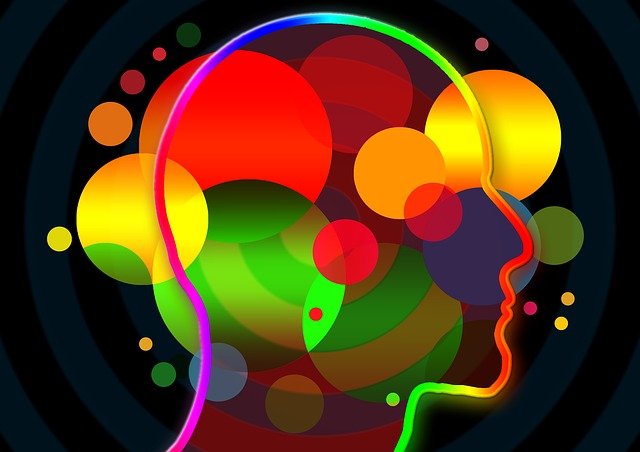
Having a creative hobby is supposed to help boost brain activity and help us cope with stress and promote positivity and wellbeing.  How we think about our creativity though expands into it being something that you discover over time, or that you excel at but take for granted and do it without thinking.

An article I was reading recently suggested that we could discover our own creative outlet by asking what gives us meaning and brings joy, what situations are we drawn to, what makes us unique, what do our friends love about us and what we daydream about.  This might be cooking, gardening, listening to others, making people smile or being really organised.

Once you have discovered what your outlet is think about how you excel at that and what it looks like to you, being proud of the attributes you have and how they set you apart from others.  When we think outside the box and explore ways to expressing your talent we can discover different ways to experience this more often.

I have spent some time reflecting on these questions and I still haven’t found what my creativity is.  If any of you feel moved to respond to the question of what my friends love about me, then feel free to drop a comment. 

I am still exploring who I am and came across a short quiz (https://ideas.ted.com/quiz-whats-your-creative-type/ )that proposed to help discover what my creative type was, here’s the results:

Result: You’re an Artisan.

You believe that being creative is its own reward. You’re driven to find the right rhyme, brush stroke, chord progression or tap technique. You truly love what you do, and you feel grateful that you get to do it. You can sometimes get so immersed in what you’re doing that you forget about your loved ones. Your dedication to your work and your willingness to share the credit also make you a great collaborator.

Just remember: You have a tendency to fall down a creative rabbit hole when you’re endlessly deliberating and fussing about your artistic choices. You are generally good with external deadlines, but when you’re not given a deadline by a producer, editor or client, sometimes you can get lost. In these instances, you need to establish your own self-imposed deadline and — this is important — mini-deadlines too. You’ll have to fool yourself into thinking your work must be completed by a particular date. Ironically, practicing this self-deception shows that you’re being real with yourself and your tendencies.

https://bottomlineinc.com/life/self-improvement/the-five-creativity-types described the Artisan creative as:

  • happy to follow your creative pursuit even if no one ever knew about it or paid you for it.
  • live for those moments of flow when you are so absorbed in creating that you lose all awareness of time and place.
  • love the creative process even more than the finished product.

To maximize creativity and stay motivated…

  • Indulge your desire to study, deepen and perfect your craft. Having a greater repertoire of tools will increase your natural enjoyment of your art.
  • Collaborate. Artists whose skills are complementary to yours can boost your confidence and take your art in satisfying new directions.
  • Ask for fair compensation for your work—don’t just give it away. Artisans find the work itself so rewarding that they can happily put countless unpaid hours into their art—potentially putting themselves at financial risk.

I love to study and learn in an effort to whatever I do better, although don’t actually know what my “art” is.  I like to find like-minded people to bounce ideas off and finding out other opinions and views.  I am not money motivated, although it does come in handy.  Fair assessment I’d say.

What’s in a name?

Image by Gerd Altmann from Pixabay

Most of us don’t have the opportunity to choose our names.  We are given them at birth and they may or may not come from family tradition, cultural recognition, or contemporary trend, or maybe even bucking the trend completely.

I do not use the long form of my name because I don’t think it suits me.  It doesn’t sound right.  That doesn’t mean that I hate my name, I just don’t feel the long form reflects who I am.  The long form of my name is far too elegant than the person I am.  I don’t think that I’ve ever been called by my long form name even when I was a child, apart from when I was being told off. Would I have become a different person if the long form name had been used all the time?  Who knows.  In fact, now most close family use the shortened short form.  My long form name can be shortened, then shortened again, and only those in the inner circle are allowed to use the shortened short form.

I know when we were thinking about names for our child we agreed that we didn’t want to use family names, we wanted names that sounded good when the child was a baby, growing up through school, and as an adult and older person.  Something that was not timeless.  We didn’t want our child to be made fun of at school because of a strange name.  We didn’t want their initials to spell a word or be synonymous with anything else.

Both my name and C’s actually mean the same thing.  C’s name from Hebrew means “victory of the people” and mine means “victory”, the goddess of victory from Latin origin. (Yet another accidental coincidence between us).  When we were looking for names for our child, we weren’t aware of the gender so needed to consider options either way.

We quickly settled on male gender names early on.  I had a couple of names in mind that I liked both the long and short form of.  Although having said that we didn’t want to use family names, one of those was actually C’s dad’s name.  We would probably have used that as a second name.

About a week before our baby was born, we still hadn’t really settled on female gendered names. This was the only time that we actually looked through a baby name book for some ideas.  We eventually settled on two names we liked that were good for a baby and for an older person.  Neither was a name used by family members, at least in the current alive generations.  We couldn’t decide which way round they should be though.

When our baby was born, she was a girl (the third one for C) so we had to decide which way round we would use the names we had chosen.  I recall the midwife asking what her name would be and I said that until we saw her properly we would decide which way around then.  When we saw her face we decided which way round to use the names.  And thus R was in the world.  I did insist that her second name be spelt a particular way in a nod to my preference for Tudor history.

As R grew up she evolved through a number of nicknames.  When she was a toddler we called her LB, short for Little Bum.  Probably not something she’d like to be called now.  Then we started to randomly call her Charley.  This doesn’t relate to either of her names, and is probably a derivation of our surname.  This is actually a nickname that she adopted for herself in later life.  I remember calling out for her as “Charley” in the town centre when I was looking at a spice stall and the lady behind the counter said “Oh Charlotte, that’s a lovely name”.  I replied with a smile saying “yes it is, but it isn’t hers”. 

Step daughter #1 and her husband are about to have their first child, which they already know is female.  We talked a while ago whether they had names chosen and I think they had a middle name sorted but still not settled on a first name.  We also discussed what C as a grandparent wanted to be called.  There are two sets of parents and step-parents so there’ll be an awful lot of grandparents.  C would definitely be Grandad. 

I was asked what I wanted to be called and I just said call me by my name.  I don’t particularly want to be called Nanna or Granny etc.  As one of the step-parents / step grandparent, I don’t feel it appropriate to be called such a familial name when there is already two Grandma’s / Nanna’s or whatever E and M’s mothers want to be called.  That’s doesn’t take anything away from my connection with the child, but it will just avoid so much confusion when it starts to talk about grandparents. 

It’s not a name that defines a person, but who they become.  I definitely do not feel particularly elegant or victorious about any aspect of my life and I’m certainly not a goddess of anything, so probably not fulfilling the meaning of my name. I am who I am and would rather people recognised me by my actions than my name. 

Whatever our name is, we can make it our own.

Do you schedule days off work to do other work?

Image by Sasin Tipchai from Pixabay

I am incredibly fortunate with the amount of annual leave I can take from my employer. Having been an employee for over 20 years I have racked up the maximum number of days off, plus as an office worker, I get Bank Holidays off too.  Sometimes this feels like too many days to try and fit in throughout the year.  This is particularly increased given that I do a four day condensed week.  I get the same level of annual leave and Bank Holiday leave, but I also don’t work on a Friday, so that’s like an extra day.  Worse problems to have, right?

I do find that I usually book days off when I have other things to do, like #bellringing meetings and events, baking for commissions, or as a way to catch up with other chores or must dos.  The majority of my 33 days leave is taken up for these reasons. 

Then there’s the guilty feeling of taking time off to do… nothing!  How is that even possible?  I look around the house thinking about all the things that I should do or could do now I have some time, but usually feel unmotivated to actually do any of it. 

Conversely it’s quite difficult to completely switch off  and disconnect from everything as emails and messages still ping though on the phone.  It’s a discipline that I’m not always successful at.

We have not had a holiday since summer 2019, like so many others, and my 50th birthday plans earlier this year were put on hold.  Again, we’re missing out on our usually summer holiday this year.  I have booked a week off in September though and we feel a bit more comfortable in booking something to go away for the week.

C has actually booked a hotel for the week and already I’m looking forward to getting away.  I don’t usually bother to look into the area we go to and leave it until we get there, but I’ve had a quick look at what there is in the area to visit and see, and thinking about what else we can do. 

We usually book a cottage and do self-catering, but C has booked a hotel for a change.  This means that we’ll have to eat out every evening. Oh dear, how sad!  It also means that we won’t be restricted so much by timescales and can stay out longer than we might have done if we had to get back to cook our own dinner. 

Of course there are many benefits to taking some time off including reducing stress levels, although sometimes the getting there and back can be stressful, improved mental health and motivations, greater wellbeing therefore decreased burnout, and happiness boosted by spending time with loved ones. 

I am ready for a holiday, to go somewhere else for a few days and explore, to turn the phones and emails off (except for emergencies).  We will probably still be taking precautions and using masks in public places etc, but look forward to a bit more freedom.

Bossing the meal prep

To save time, money, and temptation, I often spend Sunday afternoons prepping breakfasts and lunches for the week ahead. In order to achieve that I have to decide what I’m going to make by the Wednesday so C can buy any ingredients when he does the food shop on Thursday. The only things left to purchase from the farmers market on the Saturday is any fresh fruit that I’m trying to introduce to my diet.

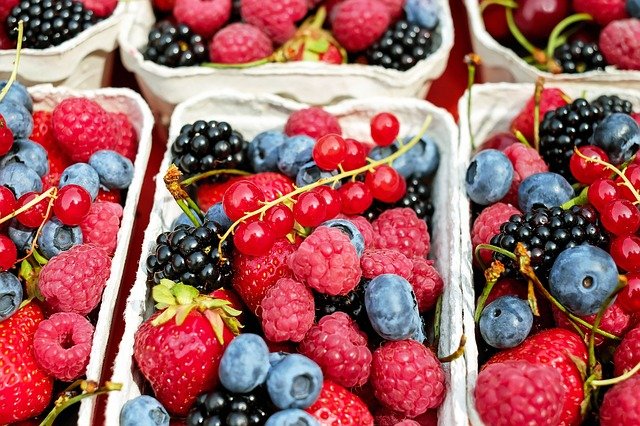
I’m still experimenting with fruit as to what I like, what I’ll eat if necessary and what is seasonal. I’ve eaten strawberries for the last several weeks and these were locally sourced and small, sweet and juicy. I seem to be liking red/black grapes but haven’t tried green ones yet.

One day last week I decided to augment my breakfast pancakes with some raspberries and blueberries. I’m glad I had the pancakes to wash them down with.

However, I’m going all out this week. I looked up what the best fruits were to help with weight loss and was told that grapefruit was top of the list, followed by berries of different kinds. C can’t have grapefruit anymore but I can. I decided to go all out and buy two, the idea being to have half a grapefruit each morning.

For snacking I’ve gone with a selection of raspberries, blueberries and black grapes. I still have a couple of nectarines from last week that were passable too. And there always an apple if necessary.

From being someone who categorically did not like fruit of any kind at all I’m now converted and choosing fruit over cakes and biscuits. I’m still getting used to some of them but persevering.

So, for the week ahead I’ve made the usual Biscoff pancakes which can be reheated at work. I’ll have half a grapefruit to go with it.

For lunch this week I’ve opted for a tuna and green bean nicoise salad. But that’s fish and I don’t do fish either. I’m really making myself do this so that I can have more healthier options and hopefully lose a bit if weight into the bargain. I’ll have the berries and grapes for snacking on later in the day to tide me over until dinner time when C would have made a lovely slimming world friendly dinner.

Of course there’s always a chance that we’ll ruin it in the evening with the addition of chocolate biscuits but you’ve got have a treat now and then, right?

Looking at and smelling all these lovely things is so much easier in the summer when you only want to eat light anyway. I wonder what it will be like come the winter when the fruit season changes and I want to fill up on comfort stodge.

Only mad dogs and English men…

Us Brits are never satisfied about the weather. Its either too wet, too cold or too hot. The trouble is with our weather is that it lurches from one to the other without much “reasonable” weather in between. I guess that’s global warming.

This week started off quite chilly and overcast. Its the middle of July and supposed to be summer. It even drizzled with rain early on.

The days that were forecast to be warm and sunny had an overture of chill and cloud, so not entirely as we had been lead to believe.

The forecast for the weekend was very hot and sunny with temperatures expected in the late 20’s. On Saturday morning it was clocking up 25 degrees in our back garden in the shade.

Only mad dogs and English men go out in the midday sun.

We had a virtual meeting from 11am to 1pm so that got us past midday. However we needed to pop into town briefly so went out about 1.30pm. Still at the peak of heat. We didn’t hang around long.

Later in the afternoon we headed back into town as we had booked tickets for the cinema. How lovely to be sitting in an air conditioned screen in the dark and cool. It hit us as we walked out.

In hot weather its really difficult to decide what to eat. Everything seems to be too hot to bother. I’m not a massive salad fan so that’s not really tempting. C had prepped dinner before we went to the cinema but by the time we got back home he was suggesting that we didn’t really want all the extras did we?

It didn’t take much to be persuaded to have a bottle of nicely chilled wine to go with our meal either.

The fan in the bedroom was fully employed overnight too.

National disaster averted

An email arrived a few days ago to advise that my green BakedIn box was on its way and what fresh ingredients would be required to supplement the contents of the box.  I was ever hopeful that the box would arrive on Friday and C even bought the fresh ingredients when he did the food shop the day before.

I saw a notification on their social media that people were reporting having issues with the seals on the boxes coming open in the post and some of the contents missing.  The postman knocked on the door and left the package by the front door.  The green box was wrapped in a Post Office bag apologising for the state in which the box had arrived.

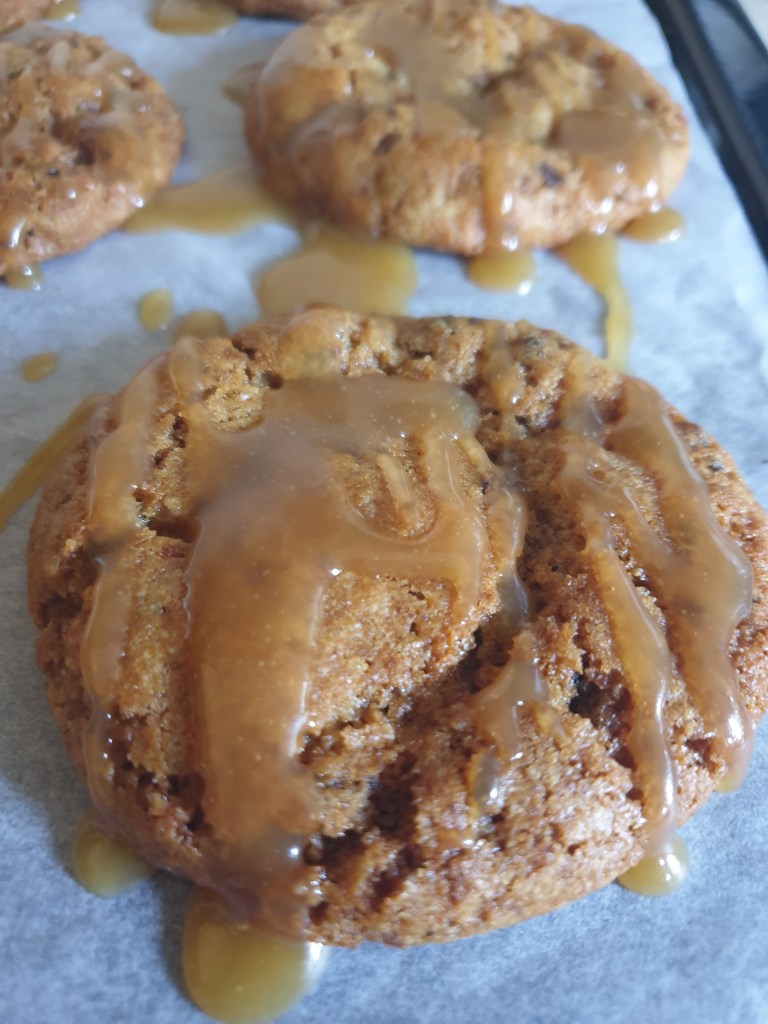
I opened the box and it seemed that all the bags of dry ingredients were accounted for, there are usually about five or six bags so I guessed that the six bags present were all present and correct. I messaged the lovely people at BakedIn and they emailed me the recipe card so I could at least do the bake.  Turns out it was Sticky Toffee Cookies.  I figured it was something to do with sticky toffee as the box contained chopped dates and fudge, and one of the fresh ingredients was cream.

The lovely people at BakedIn wanted the dispatch code so that they could check and make sure that it didn’t happen again.

So, disaster averted, and dough made, in the fridge to chill for half an hour, then weighed out into 18 evenly sized balls ready for baking.  The toffee sauce was rather yummy so I had to restrain myself from just spooning it straight into my mouth so it could be drizzled over the cookies.  They were supposed to have crushed walnuts sprinkled on top but as I don’t like them, I didn’t bother. 

Without waiting for the toffee sauce to set, C and I did a quality control test.  The cookies were lovely and soft, and the toffee sauce was still runny, but altogether very nice indeed. Later in the afternoon C wanted to start prepping our evening meal so decided to put the cookies in the fridge to help the sauce set.

We had a virtual #bellringing session in the evening, so it was nice to test another cookie after that when they had been in the fridge for a few hours.  Very nice indeed.  Not sure the rest will last very long.

Another great bake from BakedIn and can’t fault their customer service as they are very responsive to any issues.  They messaged me again to thank me for sending the dispatch code and said to let them know if there were any other issues.

The grass isn’t always greener

Image by jplenio from Pixabay

New things can bring us joy but it’s often short lived.  Something new is exciting at first but when we learn to adapt to it the shine wears off. 

Savouring the anticipation of the idea is often more rewarding and longer lasting that the actual outcome which can sometimes leave us feeling underwhelmed or disappointed, Benjamin P Hardy writes https://www.success.com/34-things-you-need-to-know-about-becoming-successful/ Conversely, things are often not as bad as we anticipate.  Our mind can work something up into a frenzy, but the actual discomfort may not be as bad as we thought it would have been.

When we consider whether to do something, every decision has a consequence so when you consciously choose one path, you unconsciously do not choose multiple others.  We have to make a decision on what matters most and will take whatever consequences that decision brings. Life is full of conflicting and competing priorities and decisions it can be hard to see the wood from the trees and having to make a decision can be stressful.  Many times we end up choosing the path of least resistance, or the one that requires less effort and even end up staying with the status quo because to do something else is just too difficult.

Entrepreneurs and big business tycoons are the risk takers who choose the difficult paths but they need to put the hard work in for it to pay off.  For every decision that succeeds, multiple others failed but they keep going.

How many times have you missed an opportunity because it wasn’t the right time, or you were too busy doing what you’ve always done?  Perhaps you felt too much would have to change in order for the opportunity to be worthwhile.  Perhaps you were just too insecure about your own abilities to make a leap of faith.

I was chatting with some former colleagues the other day and we discussed how long we had been employed at our organisation. I have been there twenty years now.  I recalled how I started out as a Band 2 administrator and now I’m a head of department on a very much higher salary.  I got there via a bit of a strange route but was fortunate to be in the right places at the right time and took some chances.  I was able to leverage my circumstances, skills and the people I knew in order to manoeuvre into increasingly better roles.  As I gained experience and more responsibility other people around the organisation got to know who I was and what I could do and when another chance came for me to change roles, I spoke to a few people I knew and a role that was becoming vacant, was open for consideration.  I did go through all the proper and formal selection processes but my last three roles have come about following conversations with colleagues and being in the right place at the right time.

As I consider my next steps, and what I want to be doing in the next five to ten years, I’m sure there will be many options available to me. I will need to make some brave decisions and see where it takes me, but nothing ventured, nothing gained.

If you had to give up one of your senses, which one and why?

Image by Gerd Altmann from Pixabay

I was listening to a podcast recently and one of the questions that briefly touched on was which of the senses you would give up if you had to.

According to https://www.scientificamerican.com/article/superpowers-for-the-blind-and-deaf/ if one of the senses is withdrawn e.g. someone who had sight goes blind, the brain doesn’t just learn to use the other senses better, but actually adapts and by rewiring and processes the other senses differently.  A study they cite showed people born deaf use areas of the brain typically used to process sound to process touch and vision instead.  This phenomenon is call cross-modal neuroplasticity. For those who lose their sight it seems the visual cortex is taken over by other senses such as sound and touch to help process language. About 285 million people are visually impaired by other senses usually compensate.

What if we woke up one day without a sense of taste?  Some people have experienced this as a symptom of Covid, and when we get colds or flu we often loose our sense of taste.  Our sense of taste is closely linked to smell with about 80% of our taste sensation provided by the sense of smell, so maybe that’s not such a bad sense to lose.

If we lost the sense of smell we wouldn’t be able to taste food, but would also not be able to smell things that are dangerous, like a gas leak or fire, or a food stuff gone off. 

Can we truly lose the sense of touch?  According to https://insh.world/science/what-if-we-lost-our-senses-one-after-the-other/ we start to lose touch sense as we get older but nerve damage or medical conditions can contribute.  If we lost this sense we wouldn’t be able to feel the touch of a loved one, or have any sense of harming our body, but it would also mean that we wouldn’t be able to walk properly without a sense of touching the ground.

What if you lost all senses?  Total sensory deprivation would cause hallucinations so it would be like forever being in a dream state and have a detrimental impact on psychological health. 

As a bell ringer, losing hearing would be difficult, but not impossible as we can use the visual clues of where to place the bell.  There are blind ringers who have a “sense” of where the rope falls and when to catch it.  If bell ringers lost touch it would make physically ringing a bell difficult as we all worry, particularly when we first learn to ring, about letting go of the tail end. Losing a sense of taste wouldn’t be an issue, and losing the sense of smell may be beneficial in some places where there is inadequate ventilation!

I think of all the sense to lose taste is probably the easiest one to live with if I had to, although I do like food.  What about you?

How reliable is our memory?

I have a rubbish memory at times.  I can recall things that happened months or even years ago, but often can’t remember what happened yesterday.  There are also incidences where someone recalled something that happened when we were all younger, but I remember it differently, or not at all.  According to Sheila Marie Orfano’s TED talk this is because as we form memories, we interpret visual information influenced by our own previous experiences and unconscious biases, and when we recall it we tend to reshape it in either a more positive light, or negative way, depending on our own feelings about the memory. Typically recalling with embellishment instead of the original experience.

The Rashomon effect argues there is no singular, objective truth to memories, offering different but equally conceivable versions of the same event. It is often recited in trials to discredit testimonies of eye witnesses. It can also explain the impact on public perception of national or global events.

In 20 years’ time will we remember this pandemic as a time when communities came together to support each other and clapping on our doorsteps for the NHS?  Or will we remember it as a time when we were restricted by movement, being kept away from our loved ones, or getting angry about those who seemed to have ignored the health guidance?

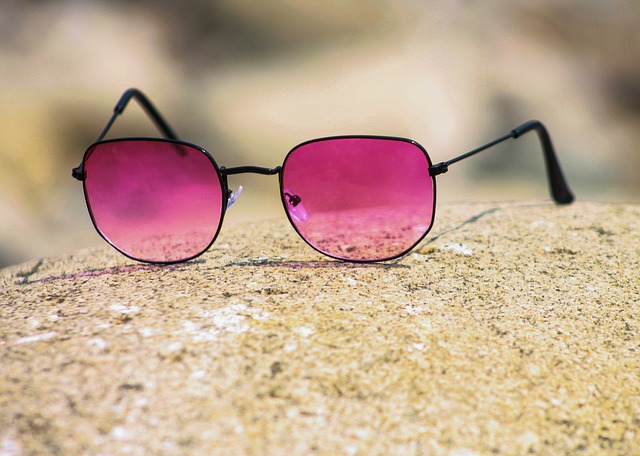
When we hear from certain generations they recall times in “the good old days” and how things were better than they are now. Is that actually true or do people recall memories through rose tinted glasses? Are there those who are predisposed to look at life in an overly optimistic view? Are there those who do the opposite?  Who is to say which is the real truth, or maybe they all are?

If someone tells you their version of the truth of an event, given their own biases and experiential influences, it may already be a version of the truth, and add the listeners experiences and biases, by the time the story has been retold a number of times, does it bare any resemblance the original?  It’s a bit like playing Chinese Whispers where a simple message is whispered from person to person along a line of people, then the person at the end of the line retells the message they heard to see if it was the same as the original message. Of course there are those in the line who might deliberately change the message in order to change the outcome.

In the same way there might be some people who change what they believe to be the truth either to show things in a better, or worse light, either for them or others.  Do people remember things in a deliberate way to block out having to remember the actual truth?

Sometimes people embellish the truth simply because the truth is boring and they want to bring some excitement to the story.  There’s a difference between an out and out lie verses making a story more attractive by adding fanciful detail.  Some embellishment can be harmless as its only intended to make the story more interesting rather than having an intent to deceive. 

The truth hurts when it makes us confront something we have denied, or leaves us feeling exposed to our own failings, but isn’t that how we learn, or is it better to hear a version of the truth?