When time is important

Time is money. Good time management is really important in this busy world of ours. But with the increase in reliance on technology is it really helping us be more efficient with our time management?

You could argue that with the advent of video conferencing, the hours spent travelling to and from meetings now become time we could spend being more productive. The trouble with video conference meetings though is they also block out much of the interaction.

Sometimes there’s a glitch and someone can’t get logged in. Or someone arrives late and interrupts the flow by announcing their late attival. Sometimes the details of the meeting are changed but not communicated to everyone. Sometimes the right people aren’t invited to the meeting.

One such occurrence that does wind me up is the system we use at work for meetings. In itself it works fine. But if you are attending the meeting because someone else has forward the invite to you, you don’t get any updates.

I planned most of my working day around a meeting that was due to take place at 2pm. The agenda had been emailed round earlier in the day so I’d read all of the attachments carefully to make sure I had some vague idea about what the meeting was for. I made sure that I went to lunch earlier so that I would be back in good time. I passed messages on to other people to action knowing that I would be in a meeting for a couple of hours so unable to action them myself. Got my whole day pretty much mapped out.

I logged into the call and it said I was the only participant. Fair enough I was prompt, so I’ll give everyone else a chance to log in. After about 3 minutes waiting I’m starting to think this is a bit ominous, so I email a colleague who is supposed to be on the same call. No response from her. Then I check her e-diary to see that she has had a cancellation for the meeting. I double checked my diary but no cancellation received. Then I noticed my invite to the meeting was forwarded. I wasn’t on the original list in invitees.

It seems that the video conferencing software can’t pick up forwardees, so they won’t get any updates. I guess there’s no reason why it should. And no one else thought to pass the message on. But again, why would they?

I have spent the next 10 minutes trying to either get logged into a meeting, thinking I was inept at the logging in process, then trying to determine what was going on. I suppose, given the fact that I’d passed a number of actions on to others, I do at least have the time to spend investigating the issue, but that’s beside the point. I later found out that another party who had also had the invite forwarded had recieved the cancellation. So how did that work? Further investigation required and/or a call logged with IT me thinks.

I watched a TEDxNHS talk back in January featuring Rachel Pilling and Dan Wadsworth that explained if you took 15 seconds to do something now that could save someone else 30 minutes later, then that person did the same, and so on, just imagine how much time would be released and how much less frustrating life would be. http://www.youtube.com/watch?v=wDqNHIKavVE&app

I guess I need someone to give me a 15 second masterclass on this video conferencing system as I clearly don’t have it set up properly.
There’s an app for that

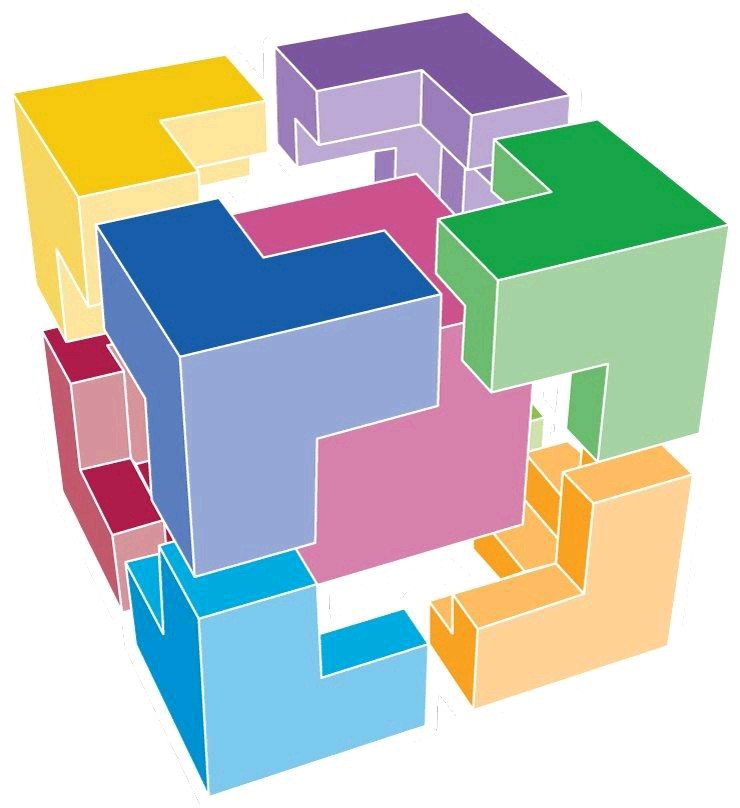
NHS Leadership Academy Healthcare Leadership Model

It seems that there’s an app for just about everything going. The latest one to land in my inbox is from the NHS Leadership Academy based on their Healthcare Leadership Model.

This model became very familiar to me as I was studying my MSc in Senior Heathcare Leadership via the Academy. It covers the 9 leadership dimensions of inspiring shared purpose, leading with care, evaluating information, connecting services, sharing the vision, engaging the team, holding to account, developing capability and influencing for results.

Throughout my course, which was a few years ago now, I referred to this model constantly. It has practical suggestions as to support you whether the behaviours are essential and you demonstrate proficiency, strength, or showing exemplary performance as a healthcare leader against each dimension.

To be honest, you could take away the “healthcare” part and it applies to any leadership role in any organisation, at any level.

Being an effective leader manifests itself from how we manage ourselves as leaders. How we recognise our self-awareness, self-confidence, self-control, self-knowledge, personal reflection, resilience and determination are the personal qualities and foundations of how we behave and how we interact with others, and they us.

All of this has a direct impact on our colleagues, our teams and our culture and climate within our teams and across our organisation.

Every now and then I revisit the model and on my latest look discovered that there is now an app that allows you to record observations of leadership behaviours and explore them using the dimensions. You can add your own reflections on yours or observed behaviours and look at summaries.

I shall download it and have a play.

An interesting & entertaining read

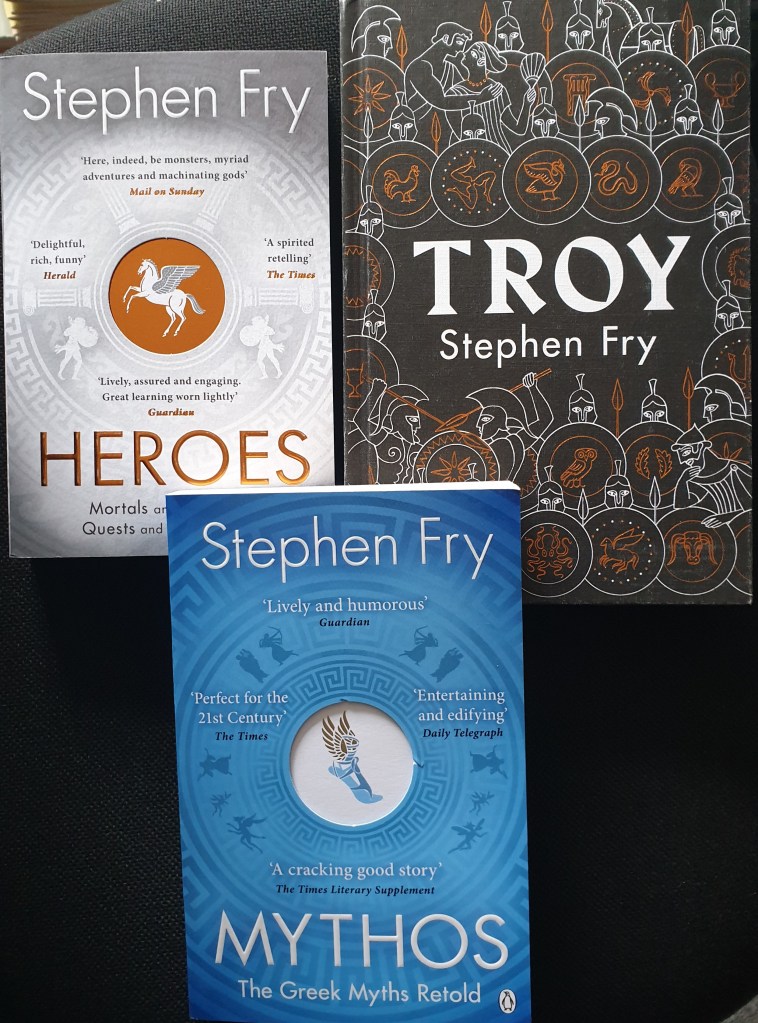
As I have a week off work and we’re now no longer able to do what we had originally planned I thought I’d get in some new reading materials. My timeline has been populated recently by the impending release of Stephen Fry’s latest offering Troy. Having read some of his books before, it was a no brainer to hit the Buy Now button.

Then of course, you get recommendations based on what you’ve just purchased, and up popped SF’s previous books on Greek mythology. Yep, I’ll take those too, thank you.

I sat down and opened the first book, Mythos, and was immediately transported to a world so very different from the traditional teachings, in this country at any rate, of the origins of the world and humankind.

Far from being a stuffy, non-fiction list of unpronounceable names and dates, the incestuous, violent beginnings of the world and humankind, had me laughing to myself, wishing that all historic text books were written this way.

Its not often I read a book from start to finish in one sitting (well 2 actually, apparently you supposed to go to bed at some point), but I really wanted to know what happened next, which God or Goddess killed which next, and which sibling/spousal coupling resulted in which infidelity and offspring.

SF’s writing style is so easy to read you lose track of the fact that there’s an awful lot of information being imparted. He also relates it to modern day events and people, so there’s no need to worry if you think you’re not going to understand.

I’m looking forward to reading the next installments.

Time to Ramp Things Up

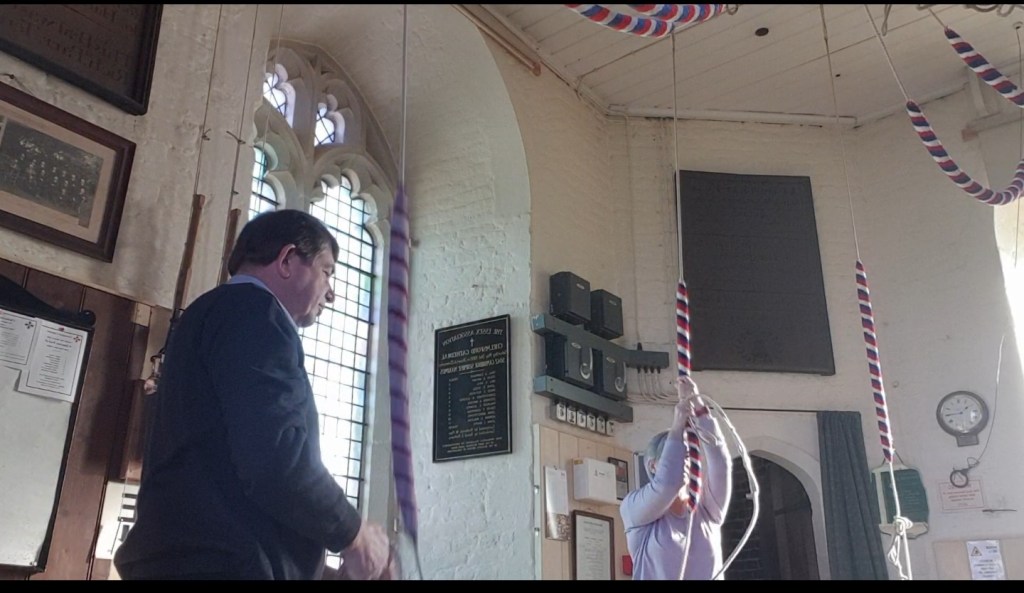
On Thursday evenings I run a RingingRoom virtual #bellringing session with a small group made up of family and friends. We’ve been doing this since about May, in leiu of actual bellringing in a tower on real bells.

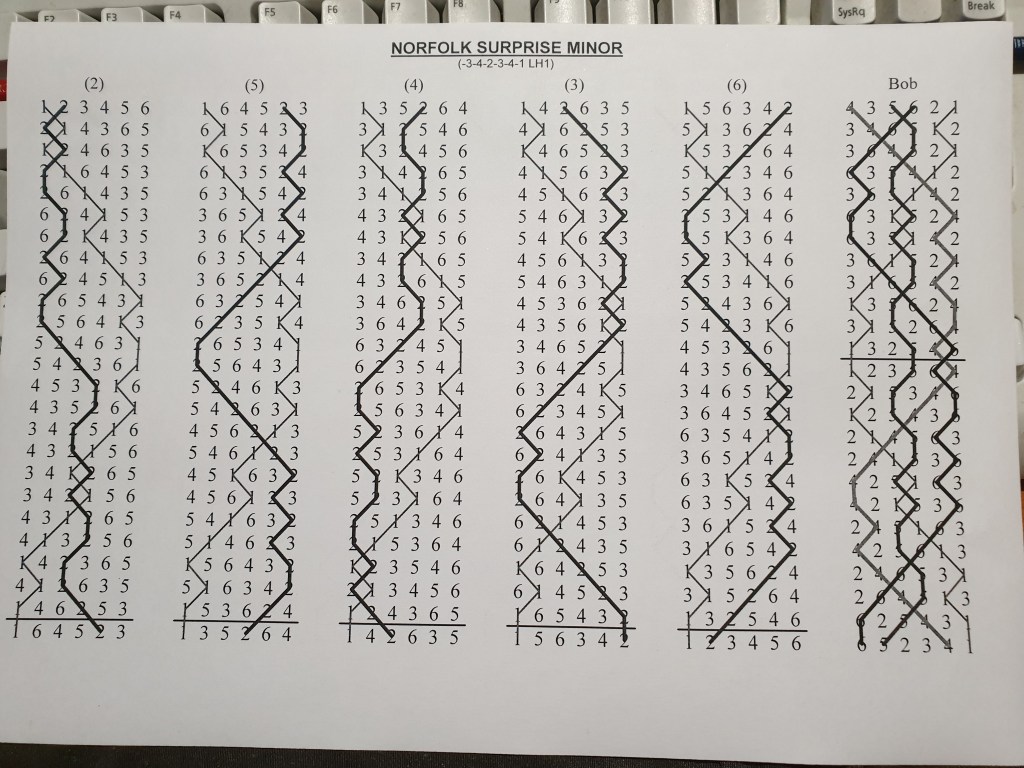
Over the months we’ve been building up our repertoire of methods having started off ringing various Minor methods like Double Oxford, Buxton and Pinehurst before moving on to Surprise Minor methods, Cambridge, Primrose, Ipswich and Bourne.

For some of the group, including myself, it’s the first time that we’ve rung some of these methods so it has been a massive achievement for the group.

Some weeks are better than others. Sometimes the technology is a bit flaky and let’s the rhythm down and sometimes one or more of us isn’t quite on top form. The point is that we stick with it. Each week we have a core 8 or 9 people, so each touch requires one or more person to sit out. But that’s just what it would be like in a real tower anyway. We spend about an hour or so ringing and I use a simple matrix (pictured) to try to make sure that everyone gets a fair go, and gets to try the method from every bell.

Now we’re more proficient at ringing some Surprise Minor methods, I asked everyone how they wanted to proceed. The options were to either a) stick with Surprise Minor and work our way through some of those methods, b) to move on to ringing Major methods, starting with something basic to help us get into an 8 bell rhythm, or c) to go for a combination of both, to add some variety, but that might mean sometimes learning 2 methods at the same time for some people. I want everyone to feel that they get something out of it, enjoy it, but not to feel pressured too much that they spend all week stressing over it.

The resounding result was to try a combination of both. We then agreed that the 2 methods should be “methods of the month” so we spend every week in the month consolidating those 2 methods before moving on. So for November our methods of the month will be Norwich Surprise Minor and Little Bob Major. Hopefully we’ll be able to give everyone good go at both of those throughout the evenings.

And after an intensive ringing session, we all head down the virtual pub for a good natter to catch up with what everyone’s been up to. Just like a real ringing session but without leaving the comfort of home.

Thank goodness for the advent of RingingRoom and Zoom.

Focus, focus

Wednesday evening’s #bellringing meeting agenda had 15 items on it and the meeting was scheduled for 2 hours with 9 attendees. Focus and a good Chairperson was going to be required in order to get through that lot in the time allowed. The meeting platform of choice was Zoom.

Usually this particular meeting is well managed and several email and offline discussions would have already taken place, so a lot of it is for informational purposes, but sometimes assigning actions to move things forward, and the odd formal bit of business that requires sign off.

There are some quite major projects on the go as well as needing to ensure the core business activities are kept on track. Fortunately this group are all well versed and good humoured, so the meetings don’t tend to feel like they drag or are unnecessary.

The meeting rattled through, including some sticky subjects, business duly conducted and only 10 minutes over published time. I think I only got one action out of it, so all good. 🤣

One of the things I can’t help but notice during these types of meetings is people’s refreshment choice. There were several glasses of wine in evidence, a couple of reds, 1 white I think and possibly 1 rose. There were a couple of mugs, presumably with tea or coffee in, unless they were cunningly disguising their beer or wine. My own beverage of choice was red wine, but it was wine Wednesday in our house after all 😀

What is the defining moment that shaped your identity?

An interesting question popped up in one of my social media time lines. It possetted that the best way to get to know people was instead of asking where someone is from or what they do, ask what was the defining moment that shaped their identity.

We are often defined by our job title, our social status, our religion, relationship status and so on.

I like questions like this but I’m not very good at answering them myself. I’m not sure I could pinpoint a defining moment, more a steady build up of experiences.

Getting to know yourself is important in defining who you are. Finding out what makes you tick. Observing how you think and feel, reflecting on thought process and recognising and catching some of these thoughts before they cause any anxiety.

I read an article in Psychologies Magazine offering a series of questions to ask friends or colleagues to get to know each other better. The idea is each person completes the following sentences then shares them with each other (I’ve added my own answers in italics):

To get the best out of megive me all the data and the time to analyse it and formulate questions and an action plan. Give me some encouragement that I’m on the right track. Treat me how you want to be treated.

In social situationsI’m generally uncomfortable, give me an “in” to a conversation so I’m not stood on the sidelines like Billy-no-mates, but give me and “out” opportunity to leave when I’ve had enough without it being awkward.

If I am stressed or worried ... I will shut my office door ear a lot of rubbish food, or sleep. It can’t bother me if I’m asleep.

When you ask me to do somethinggive me all the information then let me get on with it. Don’t micro manage me. I will shout if I have any problems or questions. You will be kept up to date.

If you are upset or angry with me tell me straight away. I can’t put it right and learn from it otherwise. And the sooner its dealt with, the better for everyone.

If you have feedback for me ... let’s go grab a coffee and go through it together so I fully understand and we can formulate a plan.

If you want to praise me or reward me please do, be genuine about it but don’t make a big deal about it.

If I say no to something be assured there’s a damn good reason. I won’t say it unless I have to and I will tell you why.

When I want time to myselfI’ll take myself somewhere else, and probably bake something or read, or sleep.

I am trying to get to know myself better and be more curious about others, to know them better too. That’s all still work in progress.

The Week Ahead

I turned the page in my diary to look at the week ahead. Its going to be a busy one.

I have the day job of course, 9.5 hour days Monday to Thursday. Then when I get home, apart from Monday evening, I have Zoom meetings or Ringing Room sessions every evening.

Tuesday a workgroup meeting, Wednesday an executive meeting, Thursday a RingingRoom #bellringing session, Friday a RingingRoom session, a joint workgroup discussion and a different workgroup meeting. Then Saturday a day off.

Its just one of those weeks when everything happens all at once. Thankfully not every week is like this.

Keeping busy is a great way to keep hopeful and motivated. Having something to occupy our time gives us something to talk about, something to learn from, something to share with others.

I know myself when I keep busy, I’m more motivated, have increased energy, more productive, more creative, more alert and more positive. When I have less to do, I get easily distracted by nothingness and lose focus, then just sit on the sofa playing games on my tablet.

Having said all that, of course it is good to have some down time, to relax and recharge. I have a week off work the following week which I’m looking forward to.

Brain drain

The brain apparently has the capacity for storage similar to that of an ipod or USB drive, but the way neurons connect many memories at a time, this capacity is exponentially increased. Why is it then, my ability to learn and retain a new #bellringing method is nanoseconds?

Learning new things is good for the brain. The younger the brain, the more space it has for new memory storage. As we get older it takes a bit longer and things become easier to forget quicker.

One way to learn is repetitive practice. It is suggested by some that spacing repetition over several weeks or months will have better longer term retention. There are tips and tricks on how to remember things more easily, if you can remember what they are in the first place. Exercice to clear your head. I don’t need exercise to clear my head, its pretty clear most of the time 🤣 Write down what needs to be remembered over and over again, just remember where you’d written it. Relate new things to what you already know, use some brain training app or game to sharpen your focus.

Lots of uber clever ringers remember methods as what the work is above and below where the treble is, or by thinking of it as a different method with bits added or chopped out.

Every time I need to learn a new method, I spend a while staring at the blue line, the pattern of the work. I sometimes even write it out a few times. Then I’ll have a go of ringing it on the simulator and do that over and over again.

Mt trouble is that I’m not very good at retaining it, so if I don’t then ring it for real very soon after learning it, I’ll forget it. I can also instantly forget it after I’ve rung it once and then have to learn it all over again for next time. And, when I learn it again, I have very little recollection of having rung it before, its like its completely new all over again.

I’m glad I get the opportunity to learn new methods and extend my repertoire, even if only temporarily. Apparently learning new things improves brain chemistry, increases learning speed, helps make connections between skill areas, makes you more interesting (😉) fights boredom and may help stave off dementia.

Intra, inter and Extra

Day 1 of our leadership course is asking us to reflect on our intra, inter and extra awareness. The awareness of ourselves, others and the wider world.

In a task in the afternoon we were given 4 instructions, the second of which was to select a leader for the task through a formal process. There were 4 of us in the team and after a very brief discussion about process I was nominated by all of the other 3, so I didn’t really get the opportunity to challenge.

The task was to prepare a 3 minute presentation to the Executive about building and maintaining morale, highlighting the challenges and changes required of leaders. We then had discussion and decided a way forward, then we had to pretend to present it.

After the task everyone is then invited to provide feedback on the content and dynamics of the leadership of the task. Basically invite character assassination but in a constructive way.

I was invited to give feedback first on how I thought it had gone and how people had behaved and contributed before they gave feedback on my leadership of the task.

Given that we’d only met each other that morning and had done a couple of small tasks together, there seemed to be already some understanding of people’s skills and attributes. Apparently, I was nominated to lead this task as I had already demonstrated earlier my ability to understand the rules of a task, to methodically approach the task and keep people on track.

Whilst it was really hard to listen whilst others talked about you, it was a very supportive environment, and I didn’t feel in any way threatened or demoralised by what people said. I actually found it uncomfortable because people were saying very complimentary things about my style. In fact there was nothing negative at all.

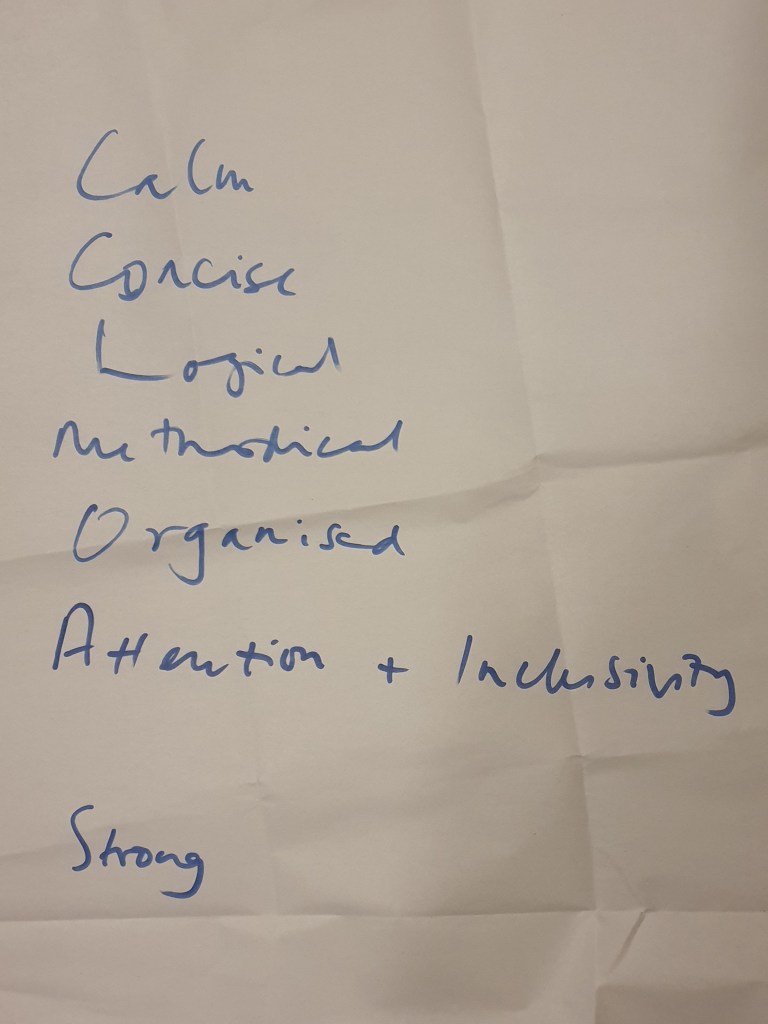
I was described as calm, considered, logical, methodical, organised, inclusive and paid attention to everyone, and strong when I needed to pull people back on topic and keep them to time. One person even said that they aspired to be like me.

The trouble is that I have no belief in that myself. I’m not saying they were lying about what they said, it would be difficult to accuse the whole group of conspiring, but I just don’t see it in myself.

The group facilitator wrote it all down (pictured) and told me to take it home and keep it to remind me of my leadership attributes, and believe it when other people see it in me, even if I don’t see it myself.

What did you want to be when you grew up?

I was having a conversation with someone earlier about how they felt about their current job and they replied that it was nothing like what they’d wanted to be growing up. In formative years they wanted to be a fire fighter but didn’t have the physique to go with it, then in teenage years wanted to do something in mechanics/engineering but was told by their school career adviser that that would be a waste of their academic talent. Then they thought they might go into law but only lasted a term in A levels before deciding it wasn’t for them. Now they find themselves in a low paid 9-5 office admin role which isn’t terribly fulfilling.

We talked around opportunities for retraining and doing something more in line with their creative side but it seemed all the enthusiasm had been sapped out of them.

When I was little, and during teenage years I had no idea what I wanted to do when I grew up. I still don’t. I have developed into the roles that I’ve had, adapted to the surroundings and been responsible for my own re-education. I wasn’t terribly academic at school and didn’t, and still don’t have, a real vocation in life. I work in areas that I seem to be pretty good at and had opportunities based on past performance and being in the right place at the right time. I would never had said as a younger me, “oh I want to do that job when I’m older“. I doubt whether I would even have known the job I currently do was even a thing.

Our daughter at one point wanted to be a forensic scientist and took all the necessary subjects at GCSE to enable her to take that further. Then an opportunity arrived which put her behind a camera lens. And she found her thing. She was and is effortlessly good at it and pursued it as a career option taking the subject at A level, then going on to study it at university. Sadly, making a career out of photography is exceptionally hard so she’s opted for a more conventional job and keeps her photography skills honed as her hobby. She seems to be doing pretty well in her chosen career at the moment which shows that if you are determined enough, you can progress.

I do wonder whether careers advice sessions are actually useful if they dissuade you from following your dreams and don’t actually have the full gambit of jobs in their basket. No career advisor would have told me I’d be better suited to the job I’m in, for sure.

My advice, for what its worth and what I told our daughter, is to do something you enjoy doing and the rest will come.

I’m still waiting to find out what it is I want to be when I grow up.