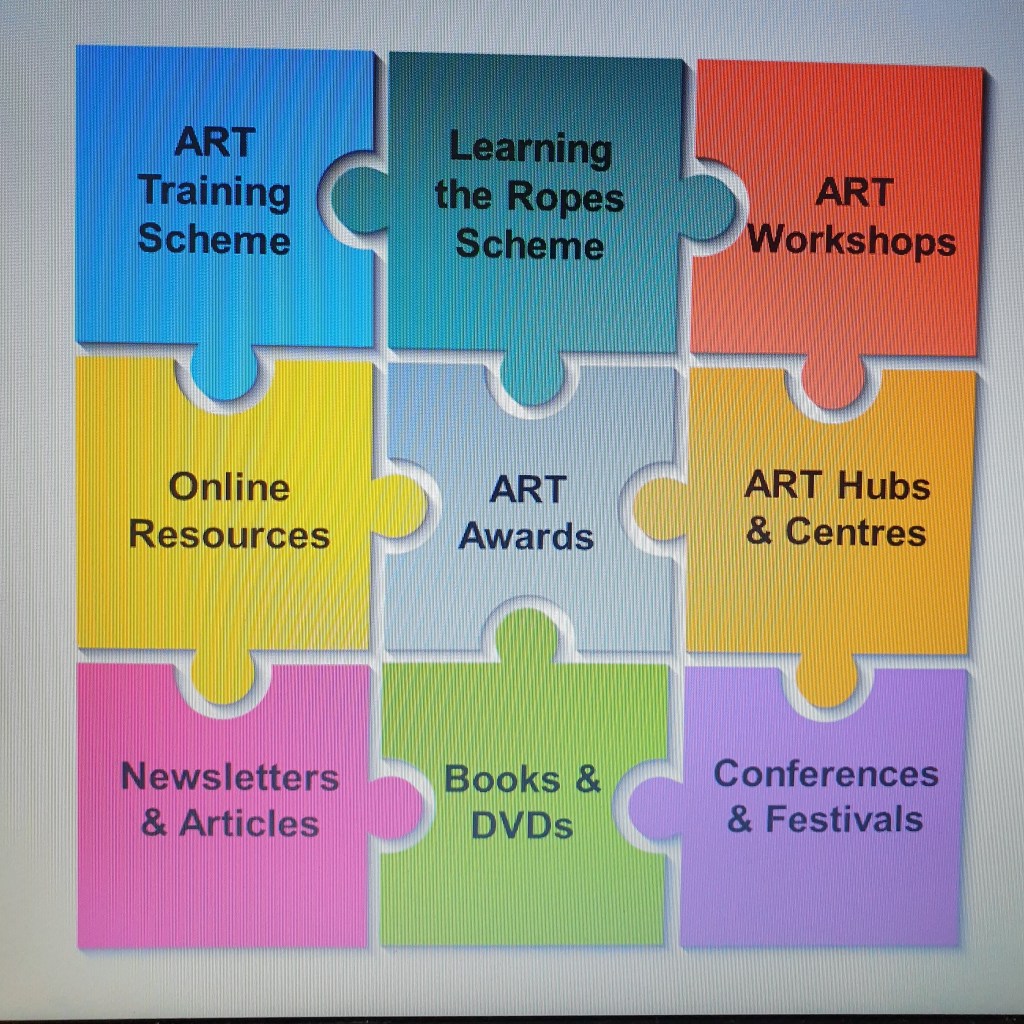
When 2 worlds colide

The trouble with starting a new job is finding your feet and who to talk to. In areas where you are less familiar you are more reliant on the information you can glean from others, and to which you must have faith that they’re telling you everything.

The trouble is you don’t know what you don’t know, and therefore don’t know what questions to ask of whom.

The first functioning day in the new job was to start a list of people to talk to over the coming weeks, then try to persuade them that its worth their while talking to me. I’ve started to set up the beginnings of a project plan, listed all the people that I’ve so far been advised to talk to, then attempt to book time in their diaries over the next 2 weeks. Its important to get in early to determine who I’m going to need to interact with regularly, and who I only need to check in with from time to time.

I’ve got a call booked with our Exec to make sure that we’re all expecting the same things and to put some solid definition around the project. I’ve got my Prince2 manual at the ready and have already set up a high level project plan.

I apply a project planning style to most things in my life, particularly around #bellringing as there’s so much going on sometimes its difficult to keep track of it.

Also interrelated are some guidance in PR writing around knowing the audience, hooking interest of those you want to engage with by writing an attractive headline, using words that are relatable, using action words that motivate them to want to talk to you, spell out the benefits of getting them to talk to you, telling the story of what the objective is then ending with a call to action, in this case persuading investment in service development.

Who knew the two worlds were so similar?

Which way to the office?

Today I started my new role. This has meant a change of office. I went to my, now old, office to box up some stuff to take across and locked up behind me. I will be back in that office from time to time so have only brought across what I feel are the essentials for now.

I’m going to be sharing an office again, something I’ve not done for several years. Having said that, both my fellow officee and I will be working from home at various points, so in reality will probably see very little of each other.

The weird thing is that the desk I’m now occupying was clearly someone else’s and they vacated it in a hurry. I suspect as a result of the first lockdown when those who could work from home, were encouraged to do so.

It feels a bit odd though to be moving someone else’s coffee cup and pen pot etc out of the way, so I can clean it down, and make space for my stuff. Somehow it feels invasive.

I’m now in an inner office situated at the back of a larger open plan office. The open plan office used to be occupied by IT staff, most of whom now work from home. Its a bit like the Marie Celeste.

I’ve booted up the PC and its taking an age to load my desktop view. Then of course it wants to do a gazillion updates because it hasn’t been used in 6 months. There’s one of those ergonomic mouse gizmos which feels very odd. That’s going to have to go. The screens (yes, there are two) are too close, the desk is smaller, there’s a headset plugged into the phone. The phone doesn’t ring out loud even though I’ve tested the ring tone. I’ve had to rethink my lunchtime walk start and stop.

One of the good things about it is that I’m much farther away from the shops and canteen and would have to go outside and into a building about 3 minutes walk away, so that should stop me from snacking.

It’s going to take a bit of getting used to.

Social Presence

I invested in a marketing booklet the other day that is supposed to help you increase your social media reach with the clever use of hashtags.

As Public Relations Officer for both my #bellringing Association and the Central Council of Church Bellringers, this is something that I’m keen to make use of.

The booklet came with an accompanying instructional video with examples being worked through to follow along with. I started to watch it yesterday. Its over an hour long and I was unable to invest that amount of time on it, at that time.

However, there were some great tips for updating your profile bio, so I actually did that on my own accounts and on the Association ones. When I get a chance I’ll go through the rest of the video and the booklet and see what gems of wisdom would be helpful, and put them into practice to see if it works.

I’m still very much a novice in the world of social media and I’m conscious on a personal level, not to let it take over my life. I would like to get better reach but its important to balance social presence with real life presence.

Baking tutorials, are they good for business?

Watching videos and IGLive tutorials from my favourite bakers really inspires me to want to bake more. The trouble is threefold. I tend to miss a lot of the tutorials as they tend to either be during the day or early evening when I haven’t quite got home from work. Secondly, I don’t have time to do so much baking. Thirdly, if I did all that baking I’d either be the size of a house or diabetic, or both 😅

Those who do free tutorials and IGLives are so generous with their time and expertise. Surely by telling everyone else how to do it runs the risk of putting themselves out of work because we’d all be able to do it for ourselves.

Does it make good business sense? Actually, it probably does. By making themselves more accessible, it means that more people would follow them, be interested in their other products and offers, and be willing to paid for membership and exclusive access to more tutorials.

The company my daughter works for seem to have quite a cult following, with people willing to travel miles to get their hands on their goods. So far, I’ve only managed to sample a sourdough loaf, but I hear their doughnuts are to die for. I’ve watched bits of a few IGLives, when I’ve managed to get to it in time. There’s nothing pretencious about any of the recipes, its all good, honest baking. I’m kinda hoping that R will get me a copy of their book for Christmas 😁

I do need to put a bit more effort into some home baking puddings and cake. C is in charge of bread baking as he’s the one that eats most of it, so I’d best not interfere there.

Shout out to my favourites: Bread Ahead, Cakeflix and The Cupcake Oven.

Training, learning, sharing

The Association training day was held on Saturday. In a parallel universe we would have been meeting together and physically ringing, with pub lunches and some great camaraderie.

With lockdown we’ve moved it to a digital format instead. Whilst we’re not all meeting together, or physically #bellringing, or having a lovely pub lunch, we have been able to meet in small virtual groups using Zoom, we were able to ring using RingingRoom and were able to offer both a lunchtime talk and an evening talk. We may not have been able to do that in the real world.

Considering that only a few months back we were feeling bereft about not being able to ring, the organisers were able to put a great programme together thanks to a few people’s efforts. Yes we’re not meeting face to face but there doesn’t seem to be anything that we can’t do online.

When we are able to get back to the tower together, our learning, experience sharing and skills will have helped us and will put us on a great place to move forward.

When we look at the survival and recovery of #bellringing there are some fantastic resources to support a safe return to the tower and much more to come.

There were 2 fabulous talks during the day, the first on the Association of Ringing Teachers and Central Council of Church Bellringers collaboration on survival and recovery. The second was about the Birmingham School of Bellringing and how it teaches from bell handling up to method ringing. I recorded and uploaded both to our Youtube channel.

An excellent way to spend the day training, learning and sharing.

What you permit you promote

What you allow, you encourage. What you condone, you own.

This phrase was mentioned recently with regard to leadership. I don’t think that this should be solely levelled at leaders. I think this is something that anyone at any level should look to.

If you see a damaged piece of equipment is it solely the responsibility of the leader to fix it? They may well have the responsibility to get it fixed, or purchase a new one, but if staff on the shop floor keep walking past it “oh yeah, that’s been broken for ages” without either reporting it or removing it, then surely they are complicit in any accident that may occur later on if someone tries to use it. The same if something is untidy or a behaviour is unacceptable. If anyone allows it to continue without addressing it, at a commensurate level of responsibility, then they are promoting, allowing or condoning.

As a leader though, you can be quite constrained about how to deal with an issue. Policies and procedures may require certain levels of challenge. Start with an informal conversation to address a behavioural problem, set some improvement objectives, revise them. If after a period of time there is no improvement, escalate to a more formal stage, then repeat the objectives and review. Then, if there’s still no improvement, escalate again and so on. Sometimes there may be 4 stages before anything final is resolved. All of that takes time and of course may have to be kept confidential. That means the rest of the team may think that nothing is being done about it.

For replacing equipment it might be an easier process, but again it has to go through several layers of authorisation before an actual order is placed. That takes time and it looks like nothing is being resolved.

Bring that back to something like parenting. I remember saying to my daughter, when she had books, toys and other stuff strewn across the floor “move it or lose it”. If she hadn’t tidied up within an agreed time frame, I would scoop it all up and put it in the bin. And I mean the outside bin, not a waste paper basket or the kitchen bin.

Mostly with my daughter you only had to tell her once, or on the rare occasion of following through, I did actually put her school work in the outside bin. She threw a wobbly and had to fish it out. But next time I asked her to tidy up “move it or lose it”, she did as asked.

I think as parents, or leaders, shop floor folk, or even family members or friends, it is something that we should all adhere to this mantra, in any situation, walk of life, relationship. If you permit the bad things to happen, you are promoting them as acceptable and the norm.

Reflexivity

A group of us picked up where we’d left off in the next session of a leadership course being run by the Trust, and spent a while discussing reflexivity: the examination of your own beliefs, judgement and practices, with the purpose to have a better understanding of what we do with that knowledge.

We were asked to consider what attributes of teams get the best out of us as leaders, and what attributes of ourselves bring out the worst in our team.

For me, the former requires focus, direction, lateral thinking, autonomy and timeliness.  For me to function at a higher cognitive level my team needs to be focused on the task at hand, to all be pulling in the same direction for the same purpose, to find solutions to problems using their own skills, experiences and initiative, and to keep to agreed timescales.  Then, I can fully support their needs, priorities and strategic direction.

I probably set some high expectations and then expect my team to deliver to the same level and quality of output, at the same pace, as me. Of course I’m heading for trouble there. I am a world away from their reality and have a very different skill set. I need to remember that and make concessions. Of course this is going to irritate them because if they are unable to deliver to my expectations,   they may feel under pressure, unsupported, or even like they had failed. And if I don’t get what I expected then I might feel let down and frustrated.

Having recognised this over the years I have tried hard to acknowledge different skill sets and work with people’s skills rather than against them. I try to ensure that people are comfortable with what is being asked of them but at the same time stretch them a bit and help them develop new skills.

Being able to do this will lead to my team being more autonomous,  focused and problem solving. Thus enabling me to be more strategically supportive.

Understanding Emotional Intelligence

Emotional intelligence (EI), sometimes referred to as Emotional Quotient (EQ), is the ability to understand, manage and use your emotions in a positive way to help relieve stress, effectively communicate, empathise, overcome and difuse difficult situations.

This week’s #MSEBuddyNetwork focused on understanding our EI. We were asked to complete a questionnaire to determine our current state of EI in the 4 areas of self awareness, managing emotions, motivating oneself, empathy and social skill. At the end of the questionnaire you tot up the scores and there’s a brief descriptor of how to interpret the scores. If you score 10-17 this indicates a development priority, 18-34 suggests giving attention to the weaker areas and 35-50 indicates this area of strength.

Having an understanding of you EI affects your performance at work, your physical health and mental wellbeing, your relationships with others and social intelligence.

I scored 40, 37, 36, 37 and 29 in each area respectively. No surprises that the area I need to work on most is in social skills. I’m not a great mixer. I like my own space and am close to a very small group of people. I’m not an outgoing sort of person and not brilliant at networking. But this area is key to my every day work and some of the roles I occupy in a voluntary capacity. Its about persuasion, building rapport, collaboration. I’m OK at the reflection, change management and leadership side of social skills.

The Skillsyouneed.com website has some useful resources and suggestions on how to develop in these areas as well as suggestions on further reading.

The other thing I thought would be useful to do would be to get someone who knows you reasonably well to do the questionnaire but about you. That way it could validate your own perception of your strengths and weaknesses, or shed some light on your blind spots (Johari window).

Transferable Skills

When I talk to members of my team, particularly when they are considering alternative roles, they often tell me that “I can’t do that”. I then take them, line by line, through the job description and ask them why they think they can’t do it.

One person told me once that they weren’t very organised. She was a mother of 3 school age children, a wife, had a full time job and all the family pursuits that go with kids. I asked her to think about how she cooked dinner in the evening. She said that she’d think about what to cook before leaving for work in the morning, when she got home, she’d get everything out of the fridge, put it in the pot/pan, then check in with the kids and their homework, then finish tickling the pot/pan and dish up. I asked how she managed all that to which she replied that it had to be planned and organised. Lightbulb 💡 moment. That means she could organise. Its a transferable skill.

The Psychologies Magazine suggests when you’re thinking about a new career, that by doing a skills audit you can determine if there are any core competencies that need working on. Things to think about are communications, research planning interpersonal and HR, positive attributes, management, leadership and decision making, financial management and critical thinking.

The article also noted that you only need 70% of the skills listed on a job spec to apply for it. Then, once you’ve thought about what skills you have, and worked out what you need and why, the next step is to marry up your skills with your values.

I’m going to conduct the skills audit just to find out where my shortcomings are, and focus on “pivoting a new future“.

Leading to a new path

Its funny how things turn out sometimes.

After feeling stuck in a rut for a while, I’ve been making some noises and needing to do something different and I’ve been investing some energy in to making that happen. I still have a long way until retirement so I need to be enthusiastic about the work I undertake to make it valuable and fulfilling.

As I’ve mentioned before, I don’t have a calling or a vocation. I’ve moved from job to job in line with my strengths or desire to do something different.

As I head into the final months of my 40’s, the thought of changing career, or doing something else is quite daunting. I’ve been fortunate over the years to have been in the right place at the right time, with the right people behind me. This has enabled me to move roles, increase my responsibilities and wage packet to go with it. Those people are no longer at hand and I am becoming that person for others. But I do still need a job that I’m engaged with.

A while back I made some noises about wanting to move away from service management and go back to project management, where my skills are more commensurate. I also want to spend more time doing things that I enjoy (e.g. #bellringing) and to do better at that too.

Deciding that I want to invest more in my own final years of employment and thinking about the “what if…” scenarios has helped me formulate what I want to do.

Its not about the pay packet, I’m not motivated by money, although I do enjoy having some. I need to have purpose, value and satisfaction. I need to feel that I can use my experience, knowledge and skills to contribute to a larger society.

Change is never without its worry. Am I too old to do this? Will I regret it? What if it doesn’t work out? Should I just bite the bullet and hang the consequences?

Two opportunities are currently about to present themselves and I’m going to reach out for both of them. Now is the time to do what I want rather than what I must.