Getting spliced

Our Monday night #bellringing practices have been a little short of bodies recently, so we’ve been concentrating on ringing eight bell methods, with some triples for those in that learning zone. 

This last Monday we had enough to ring some Surprise Major methods.  We started with some Yorkshire to warm up with.  Then rang some Bristol which proved a little too much for some, so it crashed out.  C asked me what I’d like to ring so I suggested some simple spliced: Cambridge, Yorkshire, and Superlative. I did also want to throw in some Lincolnshire but others in the band were less confident, so we stuck to the three methods.

I’ve always been told that because I don’t learn methods by learning the place bells, I’ll never be any good at ringing spliced.  That may be true to some extent.  But if that was the case, how come I was one of the stronger ringers in that touch?  I may not consciously know what place bell I am, or be able to quote lead end orders, but I can figure out what piece of work to do next. 

My minor (forgive the pun) #bellringing ambition is to ring the standard eight to Eight Spliced.  I’m not going to get into a debate here about Standard Eight versus Core Seven. They both have their place. 

Of the Standard Eight methods I semi-regularly ring seven of them: Cambridge, Yorkshire, Superlative, Rutland, Lincolnshire, Bristol, and Pudsey.  I think I’ve only ever rung London a couple of times.  The most I have ever rung spliced together is probably four of them and probably not very well.  We just don’t do it regularly enough, partly because the ability of the band.

The Education Column Series 2, Sheet 7 introduces the theme of splicing, describing it as a touch where you change methods at any lead end. The method changes could be accompanied by a Bob or Single too. As the treble leads, we finish the work of the old method, noting where we are at the backstroke, then start ringing that place bell’s work in the new method as the treble moves away from the lead. In the same Series, Sheet 10 it suggests deciding in advance what methods you’re going to splice and stick to the ones you are most familiar with to start. 

My inability to learn methods by being able to quote place bells and being consciously aware of them has improved over lockdown where we’ve been practicing different methods on Ringing Room and as I’ve been coaching others through new methods, I’ve looked at them differently myself.  Perhaps I have an unconscious ability to know what place bell I am.  I can sometime see where the treble is and know what place I am at the backstroke; its just a case of know what work that place bell does!

I think through using Ringing Room I have become more aware of what other bells around me are doing and more aware of where the treble is and what piece of work I do next.  So, without being able to say out loud what place bell I am, perhaps I do know after all.  Maybe there’s hope that I’ll crack eight spliced soon.
A plea for Pudsey

No, I don’t mean that loveable, cute, one-eyed bear synonymous with raising millions for childrens’ charities.  I mean the Surprise Major version.

For some reason this method of the Surprise Major Standard Eight gets a bad wrap.  It’s probably the least popular of the standard eight methods.  Possibly because its less musical than most of the others.  However, I quite like it.  It’s easy enough to learn.

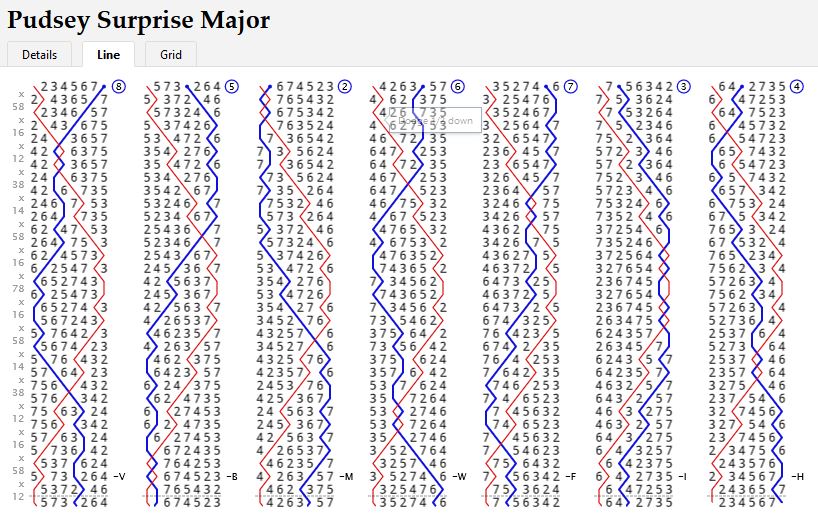
All the places are Yorkshire places.  2nds and 5ths place bells are the same as Cambridge except the double and single/single and double dodges at the back are the other way around.  3rds place bell is similar to Cambridge but starts and ends with a dodge in 3/4 and only has one dodge at the back either side of working with the Treble.  All the work at the back otherwise is double and single or single and double with the double always coming nearest the 5/6 places.

I have rung two quarters of Pudsey Surprise Major inside and one of Pudsey Surprise Royal on the Treble, and one peal of Major inside. I’m hoping that come Sunday, it’ll be two peals.

The idea that the Standard Eight gets usurped by the Core Seven leaves Pudsey out in the cold, along with Rutland and Lincolnshire.  A bit like Pluto being demoted from a planet to a dwarf planet, not being able to exert its own orbit dominance, Pudsey may become consigned to the list of long forgotten methods that only get rung when someone is collecting the alphabet and wants an easy win.

For me, learning Pudsey was a whole lot easier than learning Superlative, which has survived the move to the Core Seven, and Cornwall and Lessness have found their way in. There are staunch supporters of the Core Seven just as there are stoic evangelists of the Standard Eight. Can’t we combine them into the Terrific Ten?

I guess it depends on where you start from.  If you came from the school of learning Kent before Cambridge or Oxford before Norwich, then Cornwall.  Unless you were like me and went straight from Plain Bob to Cambridge so didn’t have all those steppingstones along the way.

There doesn’t seem to be a linear learning route once you start into the world of Surprise methods. Cambridge is an obvious starting point as so many other methods seem to use elements of it, but then it seems to be potluck based on your local circumstances.  The Ringing World started developing various pathways and introduced the Little Purple Ringing Book that attempts to progress you through ringing simple surprise minor methods.  It made me chuckle when I read “First and foremost, don’t try to jump straight from Plain Bob and Grandsire to Cambridge”. That’s exactly what I did. 

So, I’d put a plea out for Pudsey.  Don’t give it such a hard time just because it’s been relegated to a dwarf method!

Contagious Places

Image by Prawny from Pixabay

#bellringing is riddled with jargon. From what we call the bells, its fixtures and fittings, to method types, to what we call pieces of work within a method and much more.  As we start to learn more complex methods, we use some of this jargon to abbreviate parts of methods.  This means that we learn the work within that jargon and can add it to other methods to create different ones. 

I am familiar with things like cats ears (A portion of work with two points upward separated by a whole pull, giving a portion of blue line that looks like cat’s ears, eg making a single in Stedman Doubles) and coat hangers (the opposite piece of work).  Cambridge places (Work consisting of three dodges with intervening pairs of places separating them, all in the same pair of positions), Kent places (Hunting interrupted by two contiguous places (in lieu of a dodge), as in Kent). Long work (An extended portion of work, often on the front or back, often characteristic of a particular method), and various others.

In a recent virtual #bellringing session we were ringing London Scholars’ Pleasure Treble Bob Minor which has bedsprings in the middle (a place, dodge and place) and Kingston Treble Bob Minor which introduced me to the phrase Contiguous places (Successive places made by the same bell (in adjacent places) eg (3rds and 4ths in Kent). At one point in the method someone went a bit awry, and C told them they should be doing “contagious places”, much to everyone’s mirth.

Small wonder it’s difficult to get to grips with the language of bells and bellringing. I’ve been doing it for forty years and yet I still find out new phrases.  They are all meant to help you navigate a method.

If ever your stuck for understanding #bellringing jargon, John Harrison has a great resource at https://jaharrison.me.uk/Ringing/Glossary/L.html#top which has an extensive alphabetical list of words and phrases. His website is a fascinating resource not only for #bellringing jargon, but articles he’s written, talks he’s presented, all mixed with some personal information about his #bellringing career and his other interests in fell walking, metal sculpture and brickwork. It’s not the prettiest of websites but the content is extensive, varied and very well researched.

I urge you to take a look.  You might learn a thing or two. I did!

I can ring a rainbow

In recent years #bellringing repertoire has begun to be referred to in different coloured zones. The green zone for those starting in rounds, call changes and plain hunting. The blue zone for those who have mastered plain bob, Grandsire and similar. The red zone for those progressing from Cambridge Surprise Minor, with the infamous black zone for the high fliers ringing beyond Bristol Surprise Maximus.

I won’t ever reach the dizzying heights of the black zone, partly because I don’t have the brain capacity, but also lack of opportunity, and if I’m honest, I probably just don’t want to.

I am comfortably in the maroon zone as I can ring some Surprise Minor and Major methods. On the way through I’ve rung in the green, cyan, blue and purple zones.

Last week a few of us were discussing methods we used to ring on a practice night when all the right people turned up. I’ve rung quarters of Superlative Surprise Maximus, Swindon Surprise Royal, Anglia Surprise Royal and London Surprise Royal. At the moment we can just about get through half a course of Cambridge or Yorkshire Surprise Royal.

I would like to get back to ringing other Surprise Royal and Maximus but need the right calibre of ringers to be able to do that. In the meantime I’m quite enjoying a spread of methods well in the maroon zone. A bit beyond Cambridge Surprise Minor and a few different eight bell methods.

Perhaps the definitions between the red and black zones need to be established. I think there’s too much of a gap between them.

The Ringing World produced The Little Purple Ringing Book for those transitioning from the blue to red zone. The ‘purple book’ has been fun to work through with my virtual #bellringing practice on a Thursday evening resulting in some quarter peals with firsts in methods for all.

It would be great if there was a follow up called The Little Maroon Book of Ringing. There’s often an assumption by the time you’ve mastered the red zone you should be competent to move onwards under your own steam. Personally, I’ll take all the help I could get thank you.

Whether Simon Linford’s new book The Core Seven and Beyond is an attempt to fill that gap I’m not sure, I’ve not seen its content. If you’ve seen it, let me know whats in it.

Is #bellringing the pursuit of aimless joy?

Image by Pexels from Pixabay

I was reading an article about how a woman and her child walked round and round in circles in the deep snow like Winnie the Pooh and Piglet.  It had no purpose, barely counted as exercise and once more snow fell they’d do it all again.  Sometimes for over an hour.  #bellringing can be a bit like that.  We can go ringing, be it practice night, a quarter peal or peal attempt, a training day or service ringing.  Sometimes #bellringing can have no real purpose but we do it anyway.  When the child was asked why she was trudging in circles in the snow for ages, seemingly pointlessly, her simple answer was because it’s fun. #bellringing can be like that too!

Ask people who make sand sculptures, or balance stones, why they do that when they know their efforts will be lost to the elements, and they’ll tell you that it helps them shed stress, entertain others and in some cases “mess with people’s heads”.  #bellringing can be like that too! Once we’ve rung our bells, the sound is lost for ever (unless you’ve recorded it and uploaded it to YouTube). It was transitory; there and now gone.  But we do it for the fleeting joy of the activity itself.

We can spend a lot of time obsessing over personal goals and problems, feeling the weight of expectation and the fears that go with them.  #bellringing can trick us into take a break from all of that.  I often consider it therapy after a bad day at the office.  To be able to do something physical, that requires my full attention, and stretches my brain.  It can become a meditation, a moment to be in the present.  When we ring with others we can feel that we are part of something bigger but it’s equally as transient as our few moments or hours of #bellringing itself.

When we think of #bellringing vanishing into the larger scheme of space and time, along with any method mistakes we may make, we needn’t be afraid to try a new bell, a new method, have a go at conducting something for the first time.  In the few moments that follow, it becomes ephemeral and consigned to history.

A busy day not at the office

Well, not that one anyway.  I obviously seemed in a productive mood on Friday, even from the moment I woke up.

We had a virtual #bellringing session at 10.30am but even before that I’d made a start on drafting a report that I wanted to get written.  I had the results of a competition I’m running to share and that involved writing articles, emails and purchasing online prizes.  I’d done most of that before #bellringing.

Ringing finished at 12 noon and after a brief chit chat, I went to the kitchen and cracked open the latest green box from BakedIn which had arrived that morning.  C had already bought the fresh ingredients needed, so I had everything ready to start baking.  I peeled and chopped a large cooking apple, made the cake batter, combined them.  The cake was baking whilst I made the toffee sauce and the buttercream.  For some reason I really can’t make toffee sauce.  My sugar water never goes a lovely amber colour before the sugar starts to crystalise, so I end up catching it early, adding the butter and cream and the darkest I get is a pale beige.  Tasted ok though.  Cake made and, in the fridge, ready for the weekend.

Back to the in box.  I have several.  Three different #bellrigning accounts plus my personal account.  I blitzed through a pile of emails that were either for information or needed a quick response from me.  Then set about dealing with the more complicated ones.  Some required further enquiry.  Some required me to write another article and send that off.  I currently have two articles awaiting publication in the Ringing World from different roles. 

Speaking of being published, I was quoted in last week’s Sunday Express.  The article was about getting more young ringers. I spoke with the interviewer at some length about the Ringing World National Youth Contest and the Young Change Ringers Association, neither of which were mentioned.  I also pointed her to our website where she could download decent photos of bells and ringing but instead, they chose a photo of a European style bell.  Well, at least we were in the national press again.

I needed to arrange several meetings, so Doodlepolls duly issued. Action Logs updated and circulated. I even remembered to ask for some details to be updated on a website and was given access to be able to do it myself.  Oh, the power!  It made much more sense to be able to update minor things like that myself than have to keep asking the webmasters to do it for me.

I managed to cross so many things off my To Do List I need to start another page and write out what’s left.  Several of the things I’d accomplished will result in further work but for now they are with someone else to deal with and I’ll pick it back up later.  I even dared to chase the Church of England about something too!

I really had no concept of time.  The day flew by.  So much achieved.  A good day at the office I feel. At least I can now relax for the evening not worrying about the long list of things I still need to do.  I only have a short list now!

It’s only taken 40 years

Image by Tumisu from Pixabay

I learned to ring when I was eleven years old.  Taught by my father at towers that jogged along quite nicely but weren’t particularly high fliers when it came to method ringing and conducting teaching.  By the time I was eighteen and left home I could ring Plain Bob Double, Minor, Triples and Major, and Grandsire Doubles and Triples, and the occasional other Doubles/Minor method that we might have learned for a specific occasions such as All Saints Place Doubles for All Saints Day, at All Saints Church.  It wasn’t until I left home that I started to venture into other methods like St Clements College Bob Minor, and after a couple of years away started to learn Cambridge Surprise Minor. I may have gone via Kent and Oxford Treble Bob, I can’t remember.

There was never any encouragement to learn how to conduct things.  That’s not a gripe, that’s just the way it was at the towers I rang at.  I did call Call Changes, but it was never discussed, supported or even suggested that I learn to call or conduct methods.

When I returned back to my home county, I took up ringing at some different towers and my Minor repertoire extended a little bit with St Simon’s, St Martin’s and others.  Again, I was never invited to conduct, and it didn’t occur to me to pursue it as there were already those in the tower more experienced who just did it.

Then I met C and my method ringing sky rocketed.  I recall one #bellringing holiday where he wrote the line for Stedman Doubles and Triples out on a napkin over lunch during the first day, then for the rest of the tour I rang Stedman at every tower, every day and by the end of the week was ringing touches of it as if I had known it for years.  My methods started expanding into Surprise Minor, Major and now Royal and Maximus. 

At some point I did learn how to call touches of Plain Bob Doubles.  As most people probably do, I started with myself unaffected regardless of what bell I was ringing, then figured out the Make In Out method.  I think this was around the time I was ringing St Simon’s et al.  I did get as far as calling a few quarter peals of Plain Bob Doubles.  I may have even called Go and That’s All for some other methods, but very rarely.

I’ve not really been too worried about conducting as there has always been more experience people around to do that for me. I also feel that I could Call but not Conduct.  Me calling a quarter peal of Plain Bob Double relies on everyone doing as instructed and staying in the right place.  I wouldn’t be able to sort them out if it went wrong.

I guess with the passage of time, I have more awareness of some methods and although I still don’t ring or learn by place bells, I can see where some of the other bells are and can put people right based on seeing where the treble is or knowing what piece of work I’m doing and whether they should be with me or somewhere else in the change. 

In recent years it has become much more noticeable about the lack of female conductors.  A piece of research undertaken shared stories on women’s experiences of being encouraged, and learning to conduct.  The Women in Ringing research (www.womeninringing.info) explored the gender balance within #bellringing and the barriers to progression and untapped potential which may impact the longer-term sustainability of #bellringing.

Anyway, we had a district meeting earlier this week so I went along to support it.  It was a great evening with lots of laughter and learners trying new things.  One lady had only practiced Plain Bob Doubles on the simulator, so had her first goes at ringing it with “real people” and did really well.  Others were stretched and moved away for their usual bell, and everyone got a go with a strong band around them and someone standing with them if needed.  It was a fun practice and the locals really appreciated the support and enjoyed themselves, throwing themselves into whatever they were ringing.

I was asked to call Go and That’s All a couple of times either to Plain Bob Doubles or Minor, and a to a touch of Plain Bob Doubles.  When it came to trying a touch of Plain Bob Minor a band caught hold and the ringing master asked several others if they would like to call the touch.  Everyone declined citing inexperience.  C was sitting this one out and was on the bench behind me.  So I volunteered to have a go and he could poke me in the leg when a call was due just to make sure I got it in the right place.  I called the very simple touch where a Bob was called every time the bell I was ringing was doing its 5/6 up or 5/6 down dodges.  Four calls in total.  C did poke me in the leg at the appropriate times, but I was already there, called the Bob and even managed some semblance of being able to see where the Treble was at the time. 

That is the first time I have EVER called a touch of Plain Bob Minor.  EVER. And I have to say I was rather chuffed. 

I would like to call more, and I need to do more homework around that I understand, but there are opportunities on a Sunday morning or a practice night where I could at least say Go and That’s All to plain courses of things. 

From the success of last week’s virtual #bellringing session where we all got to have a go at saying Go and That’s All to plain courses of the new method we were learning, and the invigoration from calling my first touch of Plain Bob Minor this week, I might well push to call more, even if I can’t fully conduct things yet.  I’ll need to read some more chapters of Calling It Round (https://callingitround.cccbr.org.uk) then just put myself out there.

Baking and bellringing successes

Family and friends gather online on a Thursday evening for a virtual #bellringing session. We’ve been doing this all through lockdowm and even though real life practices are up and running again, this group still meets virtually, every week to practice things we wouldn’t ordinarily get to ring in our towers.

New methods are proposed every month with the objective of attempting a quarter peal on the last week of the month. September’s method was Sandal Treble Bob Minor. None of us had rung this before.

So, we attempted a quarter peal on the last Thursday of the month and it was going along nicely, good striking and very few trips. Unfortunately the attempt was stood up because two bells had swapped over. That was a real shame.

Friday mornings bring a second opportunity for practicing these methods with a slightly different group, but the core few are the same.

Having got plenty of time before ringing was due to start I decided to make a start on this week’s bake; a chocolate orange loaf cake. I managed to get the cake batter in the oven and cooked, the crystallised peel and the orange drizzle done before ringing started.

We decided to attempt the quarter peal again as there were only six of us again. There were a few more mistakes than previously, and the treble had lag issues which almost caused problems. However this time around we successfully scored the quarter. A first in method for everyone.

Hot on the heels of that success, I finished the cake off by making the chocolate frosting and assembled it all. I must admit to being slightly chuffed with how it turned out.

Later in the evening I gave a PR presentation to the Recovery Champions, a group of ringers who are helping their local areas get back to ringing after the pandemic. Nearly 50 people joined the session which included some lively debate on how to kick start recruitment again.

In between all this, as its now autumn and the weather has definitely taken a turn for the cooler and wetter, I did the great wardrobe swap over. Summer clothes now bagged up and vacuum sealed and autumn and winter jumpers getting an airing and iron.

I feel that I’ve had a super productive day with some great wins. Yay for Friday.

Should’ve, could’ve would’ve, did

Saturday I should have been in Staplehurst competing in the Essex Trophy 10 bell striking competition. Sadly our team had to withdraw so I had one of those days that was all wrong because the plans had changed.

It did mean I could have a bit more of a lay in and leisurely bacon buttie for breakfast. No complaints there.

I had decided to make a Biscoff cheesecake for Sunday lunch so while C was getting ready, started to prepare. I hadn’t realised that the recipe was actually for a baked cheesecake. Not that that’s an issue, cheesecake is cheesecake and acceptable in any form, but I’d never made a baked one before.

I’ve seen so many times on GBBO how baked cheesecakes split because they’re cooled down too quickly so decided to leave it in the oven, but turn the heat off, whilst we popped into town.

I bought myself some flowers (no one gonna buy them for me) and would’ve purchased a load of fruit from the High Street Market stall. Only it wasn’t there. We ended going back up to the old market and got some from there but it didn’t look as nice.

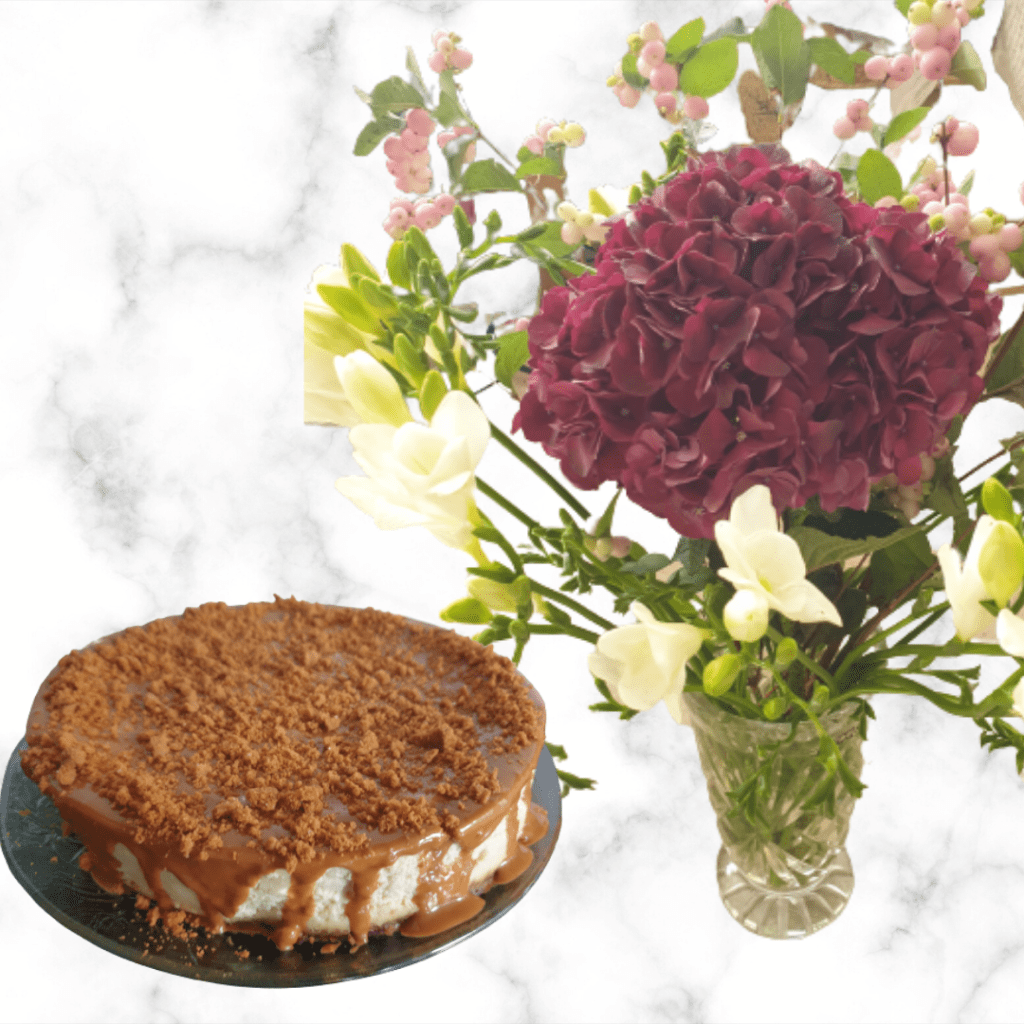
Once home, I removed the cheesecake from the oven and was rather impressed it hadn’t sunk or cracked. Yay, me!! It needed covering in melted Biscoff spread and sprinkled with more Biscoff biscuits. Did look rather delish even if I do say so myself.

I could and probably should have then spent the rest of the day dealing with reports, emails and actions but I was far from in the right mood, feeling rather annoyed by something and nothing. So I sat reading a book, drinking peppermint tea instead. That did of course mean cramming more things into Sunday but nothing like a bit of pressure to get motivated.

I needed to be nice to myself on Saturday so revelled in self indulgence.

“There is lots of work going on and it’s an exciting time that will bring great benefit to ringing”

This was a fabulous quote from Linda Garton during the CCCBR AGM, following the presentations given by the Workgroup Leads.  So much is done by so few for the benefit of so many. 

The CCCBR has eight Workgroups covering everything from Public Relations, Senior Stakeholder Liaison, Historical and Archive, Stewardship and Management, Technical and Taxonomy, Volunteer and Leadership, Youth and Schools and Universities.  Each Workgroup has a leader and a small team of people assisting with the work of the Council on behalf of #bellringers everywhere.  And they (we, me included) are all volunteers.  The Council does not employ anyone.

With around 35-40 thousand bell ringers across the world, the Council has about 200 representatives.  Of that 35-40 thousand, only about 87 people are listed as Workgroup members. Some people are on more than one Workgroup.

What is clear is that the #bellringing community want support, want progress and want information.  There are also a group of people who don’t want the Council to stick their noses into local #bellringing affairs.  You can’t please everyone all the time.

What the Council does though is issue guidance on the major issues that affect everyone.  Over the last year a small group have been looking closely at Covid guidance and showed strong leadership in dealing with fall out of that.  Other groups have been beavering away in the background making sure things continue to run smoothly, to ensure the assets of the Council are kept in good order, and to keep #bellringing active and moving forward. 

The Forward Plan includes initiatives like the Mobile Belfry that could be used in schools and events, launching a Call Change Competition to rival the prestigious national change ringing striking competitions, having a centre to host ringing events and training in collaboration with the Churches Conservation Trust. 

Plans are already underway for organising next year’s AGM which will be held face-to-face for the first time after two years of virtual meetings, and will include seminars, events, ringing and much more.

There is so much going on, and it is an exciting time that will benefit ringing.  It would be good to have a few more people involved to help out though.