How full is your energy reservoir?

Energy is your fuel.  You need energy to function.  We can do everything we want to do all the time, and do them well over a sustained period of time without sufficient emotional, mental and physical energy. As you navigate your day, your energies start to deplete.  Sometimes from external sources like work or home responsibilities, and sometimes through your own thoughts and self-talk.

Nataly Kogan wrote about the energy reservoir and how having too many leaky parts will drain your energy to the point you end up doing less and less. She suggested a number of areas which you could contribute to draining your energy reservoir:

  • Multitasking
  • Mindlessly scroll through social media
  • Overconsuming news
  • Talking negatively to and about yourself
  • Trying to do everything perfectly
  • Making lots of decisions (and trying to make each one perfect)

Learning to manage your energy reservoir, becoming more aware of your emotional, mental and physical energies, requires self-care.  Self-care should not be regarded as a luxury, or only for those who have worked hard and deserve it, or only available to you after you’ve crashed and burned.

Kogan uses the analogy of a car and how it can’t run on empty or fumes.  If the car runs out of fuel it stops.  When you run out of energy you stop.  But running on fumes, or almost empty isn’t good either. It stops you being good at all the things you care about. You can’t be good at your job if you’re exhausted, you can’t be a good friend if you have no energy to spend time in their company. Its harder to focus, takes more time, you can’t think clearly when your emotions, mental wellbeing and physical needs aren’t being met.

When you practice self-care regularly, you are keeping your energy levels topped up.  Again, a bit like the car, if you fill up with petrol when the tank is half full already, it takes less time than it does to fill up an empty tank. When your energy reservoir is fully empty, it’ll take longer to recharge it, but if you top it up daily it takes less time and effort.

Kogan suggested three questions to ask yourself:

  1. How is my emotional, mental and physical energy reservoir right now? – be specific.  You might feel alright in one area and not in another. Don’t judge your response, whatever comes up is the right answer.
  2. What has been unnecessarily draining my energy today, and can I do it less? – again be specific.  Is there something specific about work, or a relationship that is draining you? Take time to accept the struggle and shift your thoughts so they drain you less.
  3. What can I do to fill my energy reservoir today? – a short walk might do the trick.  Sitting down to read with a cuppa is just as good.

Start doing this practice once a day, put a reminder in your calendar if you need to. As you get the hang of it start practicing it throughout your day.


Living the life of luxury… for less

Image by Gioele Fazzeri from Pixabay

Last week I took some annual leave.  I didn’t have anything in particular planned but needed to use up some leave.  I visited a couple of former work colleagues, one had retired a couple of years ago but we’re still in touch, and the other had recently suffered an accident so was home convalescing. Towards the latter part of the week, I thought about how nice it might have been to have had a spa day.  I’ve never been to a spa, and would probably feel uncomfortable at one, but I like to idea of being pampered a bit.

At the very end of the week C and I went into London to do a chocolate experience and theatre trip from vouchers I’d received for my birthday last year. I must admit to walking around Covent Garden and the high-end shopping areas with a twinge of envy, why can’t I shop in those types of shop? 

In April’s Platinum Magazine, Jasmine Birtles offers a number of ideas on how to add a bit of luxury to your lifestyle without breaking the bank:

Dining out:

  • Sign up as a mystery shopper so you get to review bars and restaurants in return for writing a report on the food, service, cleanliness etc
  • Get a Taste Card – offers 50% off or 2 for 1 deals in over 6,000 restaurants in the UK.  60 day free membership, then £39.99 per year
  • Restaurant offer sites like TheFork and OpenTable often have good deals
  • Use discount sites like Groupon and LatestDeals

Luxury items but cheaper:

  • Buy secondhand if you’re ok with that.  Check out eBay, Vinted, DePop, Gumtree, Preloved etc for designer clothes and homeware
  • Discount sites like FeelUnique.com offer deals on luxury cosmetics, perfumes, make up and skin and hair products. Secret Sales offers big discounts on fashion, beauty, home and lifestyle brands.

Luxury travel:

  • Ever wanted to fly in a private jet?  Victor offers “empty leg” flights at serious discounts.  This is where a plane has flown somewhere but needs to get back anyway so better to have someone on board than fly empty
  • Voyage Prive and TravelZoo offer 70% off luxury holidays and last minute travel deals

If you’re like me and want to try the spa experience without the embarrassment of not knowing what to do, or you want to experience the luxury life without footing the bill, here are some other ideas to try:

  • By a home manicure set
  • Go to charity shops in posh areas, where all the designer clothes are
  • Volunteer in National Trust or Historic Houses to spend time in beautiful surroundings
  • Sign up to newsletters from local galleries for invites to openings where there’s often free drink and nibbles
  • Use a cloth napkin with a ring holder at home.  Add a bit of luxury to eating in
  • Reuse posh tins, those nice biscuit tins or the Fortnum and Masons tea caddy, and refill them with cheaper versions
  • Have dinner at your dining table with your best china, some candles and flowers

I cannot endorse any of these sites as I’ve never used them but I am seriously considering looking into some of these sites to see what they have to offer. I do like eating out, and a good deal, and I’d like to experience a bit more luxury, but I don’t have the bank balance to go with it.  Provided that I don’t need to sign my life away and get bombarded with spam, it might be worth a looksee.

What sites can you think of that provide the luxury lifestyle at a fraction of the price?

5 steps to confidence

Image by Alexas_Fotos from Pixabay

Every now and then I have a bit of a crisis of confidence.  It could be anything from being able to ring a particular method in #bellringing, or something to do with work, or within a relationship with someone.  This morning, I was slightly shaken by the fact that I went into the office for only the second time since the middle of January.  I have become comfortable with working from home, the thirty second commute is a dream, I get so much more done during the day.  As an introvert, interacting with people face to face is often an issue, particularly when you work in the health sector during a pandemic.

The whole process of getting ready for work, finding an office appropriate outfit, remembering to pack a lunch bag, allowing enough time to travel, finding a parking space, walking through an open plan office to my office at the back, the thought that I’d have to go over to the main building later to look at something with a group of people, the thought of the commute home, particularly on a day that I want to get home promptly as we were going out for dinner for C’s birthday.

Although most of this could be put down to anxiety about needing to do all those things, my confidence was a little shaken because I haven’t seen the people who have moved into the open plan office whilst I’ve been away, so don’t know who they are.  Despite my own desire to move on from managing my team, I need to go back there today to do some activities with them. Do I still hold the same place with them now that I no longer manage them, how will they take to me being back amongst them?

I haven’t listened to Tonya Leigh for a while, but the latest podcast I heard was about situations that rocked her confidence.  She shared that it’s easy to feel confident when everything is going your way, when you’re hitting your goals and creating the results you want. But when those times don’t happen we can resort to things like over eating, she says these are the times when you need the most confidence, when you are at your least confident.

Part of being successful is being rejected and failing over and over again, as I mentioned the other day in the blog with the Richard Branson book. Obstacles are there to grow you, to guide you and part of the process of learning. Often we give up on ourselves and feel something has gone wrong, tell ourselves we don’t have what it takes, and everything is against us.

TL says that what separates those who create the results and those that don’t is stubbornness.  Self confidence is the feeling of trust in one’s own abilities, qualities and judgement. When we lose confidence we start to feel self-doubt, insecure, self-pity, this is when we need to practice confidence the most. To be willing to believe in yourself even when its hard, even when you’re not getting the result you want yet, to overcome the obstacles rather than avoid them.

We need to change the narrative for the future we want, and to embody and practice what self-confidence truly is. Its not about being perfect or what happens when things don’t go well, its about who you are when things don’t go well, when things get tough.

TL offered five things she uses to help when her self-confidence falters:

  1. Understand why you are not feeling confident – avoid looking at the external things that you feel aren’t making you feel confident and look at your thinking about your abilities, do you trust yourself and your own judgement?
  2. Practice little wins – we often look to the past to affirm our self-doubt, but you can begin to practice little wins to refer to, to show yourself you can trust yourself, you have good abilities, you have good judgement.
  3. Do the opposite of what insecurity tells you to do – when you feel insecure it breeds an action or inaction that proves yourself true.  Doing the opposite, take action, stay committed, you create something incredible that doesn’t exist in this moment.  You don’t need to know exactly how its going to pan out before you take action.
  4. Look for evidence it can be done – we look for all the reasons why we can’t do it.  As long as you think you can’t do it, you won’t even try. Or when you try and it fails you allow your brain to spiral.  Look for people who were rejected but still made it, for those who created the result you want and let them inspire you.
  5. Envision the confident version of you – ask yourself what your confident version of yourself is thinking, how does your confident self feel about this situation? What would your confident self do?

We have a choice to be the insecure version of ourselves, or to step into the confident version or ourselves.  Whatever you practice the most is what you’re getting the best at. If you practice confidence over time this will become your default. We can still suffer from self-doubt but if we recognise its just our brains creating that feeling, we can show up and take action, believe in our dreams to drive and inspire you to keep practicing confidence.

The power dynamic

Where does your power come from?  There’s a certain individual in the political sphere trying to make his power felt across the globe at the moment, but what gives him that power?  Is it the power of experience, knowledge, being trusted and respected?  Is it legitimate based on his position and right to issue demands?  Is it through punishment for non-compliance and making people scared?

I’m not one for dabbling in politics really, but at a recent work-related training session we discussed Power Bases.  Where we, as management and leaders within our organisation, get our power from. This resonated in today’s current situation in Ukraine.

There are six power bases that leaders and managers fall into, they may even overlap:

  • Reward – the ability to reward, give bonuses, supporting someone in career development
  • Coercive – punishment through non-compliance, scaring people into submission
  • Legitimate – job title or position and right to issue commands
  • Referent – trusted and respected.  Seen to treat everyone fairly
  • Expert – experience or knowledge.  Qualification or experience
  • Informational – controlling the information others need, withholding or oversharing

I image we’d all think that this individual (and I’m not going to give the dignity of using his name) is probably using a mixture of legitimate power, because he’s the leader of his country and can issue commands, coercive power by either scaring his own military, or certainly those people whose country he has invaded into submission through punishment.  He may even be using informational power by controlling what he says to anyone group of people to try to keep the upper hand. He may well be using reward power to certain members of his government, promising promotion etc if they do as he commands.  I certainly don’t see him as having referent power, especially outside of his own country.

When we go on leadership training, we are often asked to name great leaders.  People think of Lincoln, Mandela, Ghandi, Churchill, very few women ever named.  Occasionally someone would thrown in a name like Hitler and receive much derision.  You could argue Hitler was a great leader.  A definition being “a person influences and motivates others to get involved in accomplishment of a particular task… All great leaders had something unique about them and yet they were bound by greatness that helped them to lead masses to innovation and new ideologies.” Leadership and 10 Great Leaders from History – Industry Leaders Magazine

Hitler could be a described as a great leader given how successful he was at getting the masses to follow his ideologies.  So is the current tyrant, imposing his power over others, also a great leader?  He obviously thinks so and seems to have convinced his government and military that its perfectly ok to invade another country whilst bare-faced lying to the rest of the world. I’m sure the rest of the world probably thinks he’s a crazed, despotic dictator. He’s using whatever power he has to control events.

When we think about the power we have over others, particularly when we are in a leadership position how much do we take for granted, or even consider the effects on others, based on our power base?

Making assumptions

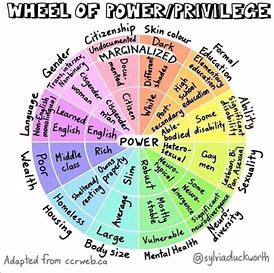
How do you describe yourself to others?  We are often asked to introduce ourselves at events and we define ourselves in quite narrow ways, depending on our environment.  I was at a work training session on working with diverse teams.  The first thing we were asked to do was to introduce ourselves.  Everyone said their name, their job role and their place within the organisational structure.

I had also spent some time that day shortlisting people for a job role where I was using the information on their application form to make assumptions on whether I would consider them a suitable candidate or not.  Although personal information is no longer available to see at this stage of the process, we can make a multitude of assumptions about a person based on the information they have put about their educational background, their employment history, and even within their personal statement.  I could tell roughly how old they were, whether they were male or female (for some), and approximate their ethnicity based on their responses.  Without thinking I could attach unconscious bias to those applications.  I do try my hardest not to, but things do run through your mind like, how many jobs someone has had over the last 5 years could indicate they are not reliable and could be a waste of time investing effort into training them.  It could of course mean they just haven’t found the right job for them yet, or there may have been other circumstances out of their control, like redundancy or relocation.

A lot of what we think about in diverse teams is about the needs of others, be it cultural, physical or other.  We were asked to consider what we get from our current team, what we needed from our current team and what needs were not being met by our current team.

When we look at meeting the general and specific needs of our teams, the Adair Model shows the close relationship between leadership and management.  Looking after people, understanding and responding to individual needs of team members is more of a leadership role and the process, task oriented aspect is more of a managerial role. Trying to meet all of these needs can be quite hard at times. 

What tasks does your team need to deliver? What are the individual needs of your team members in order to be effective? What are the behaviours required from the team? What should the team culture be? How can you get the balance right across all these areas?  Do we spend more time thinking about the task, how much time to we spend on specific individuals, and how much time do we put into creating and effective team?

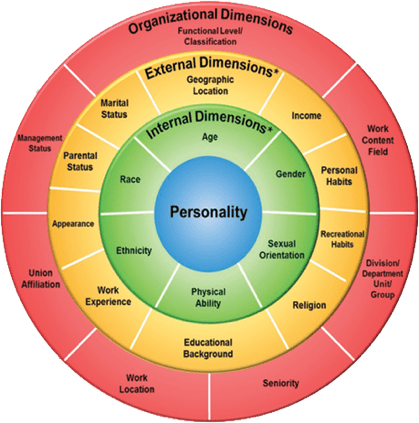
When we consider a diverse team we need to think about other aspects of people’s lives.  Understanding cultural background, heritage, talents, and skills can help people understand one another better, building a foundation for stronger developmental relationships. Using a tool such as the Gardenswartz & Rowe Identity Wheel, we can start to consider what other adjectives to use to describe ourselves, skills we have, our favourite books, hobbies, etc.  We can use this type of information to have a better understanding of other people’s skills and interests, and what else they can bring to the mix. If we can make people feel they belong, but appreciating their uniqueness and what they can bring, people will have a much higher sense of belonging, and likely to be more successful in the role and stay longer.

We can generalise about people based on observation, cultural characteristics etc and use this information to inform, but we need to make sure we still recongise the individual differences that will avoid our generalisations becoming stereotyping.

An excellent image was shared showing Erin Meyer’s The Culture Map, taking eight key attributes and plotting them against different cultures.  It’s easy to see from this how things can get lost in translation. So when you work for a large, multi-cultural organisation, it helps to understand other people’s backgrounds in order to help them, and you, reach a better understanding.

Given what’s going on in the world at the moment it is highly likely that the volume of people seeking refugee support will increase.  We need to make sure we accept and understand people’s differences, celebrate their uniqueness and work collectively to get the best out of everybody.

Giving as good as I got

I have benefitted over the years from having people at work, more senior to me, notice what I am capable of and look out for opportunities for me to progress and get promotions.  They have been my cheerleader, mentioning me to others as someone who might be able to help solve their problems.  My last three positions were brought about through conversations with someone, who then prompted someone else, and an opportunity door opened for me.

Until yesterday, I didn’t really twig, that I am now that person for others.  I am the one cheerleading others into opportunities and finding ways for progression and promotion for others.  I am now that person who I had the benefit from.  It’s now my turn to support others.

In my previous two roles I managed large teams of people.  There were a few who showed a spark, who had something worth cultivating. I spent time with them helping them to consider whether a change in career would be good for them, whether they had the right skills and attributes for a different role. 

It seems a bit counter intuitive to be helping your staff to move to a different job, after all, it’s going to leave you short of experienced staff in your own area.  But I feel we shouldn’t be selfish in that regard.  Where people show an interest, a spark of enthusiasm, and indeed some level of competence, I feel its my job to nurture that.  To provide opportunities for them to experience other things, to have a go at something they may not otherwise get the chance to try.

I have sat with staff looking at job descriptions going through each one, line by line to explain where they have transferrable skills, or where they need to get some more exposure or experience.  Often, these people have the skills but lack the confidence to try.  Once you start to point out to them that it’s not all about knowing everything there is to know about a job before you get there. There will be things they can do that are similar, systems they’ve used that demonstrate they can learn a new system.  Even considering household chores as project planning.  How do you get the kids out to school every morning and then get to work on time?  Its all about planning and having things in place.  These are all skills that people don’t necessarily think about when they look at a job description.

Just lately I have given support to someone looking to get out of the role they are unhappy in.  One has come up that I think they could be capable of doing, but they lack the confidence because they’ve not done that sort of thing before.  Well, me neither.  My last two big teams I managed I knew nothing about their service, but I knew how to process map, I knew how to plan and how to deal with people.  The rest I learned along the way.

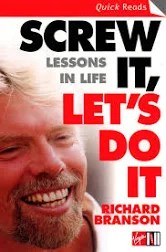
One of the most fun books I’ve read was Richard Branson’s ‘Screw It, Let’s Do It!’  The premise simply being do it anyway.  You don’t know if you can do it unless you try.  You might fail, many, many times, but you learn from those failures and build on them.  If you never try, you never learn.  There’ll be people there to help you along the way.

If you’re thinking of a new career move, or a change in direction in any part of your life, I say “screw it, just do it”. 

You should be so lucky, lucky, lucky, lucky

Image by Katharina N. from Pixabay

To paraphrase pop princess Kylie!

Does everything you do have to be meticulously planned out or do you leave something to chance or luck? We are encouraged from an early age to make grand plans “what do you want to be when you grow up?”, develop strategies and check in to make sure we’re still on track and everything is under control. But how much do we put down to sheer luck?  Can luck be harnessed or manifested?  Surely we’d all have won the lottery by now if we were that lucky.

When you consider events that have truly shaped your life, random encounters that introduce you to the love of your life, coming up with a new business venture whilst stirring your latte in the coffee shop, or bumping into an old acquaintance who ends up offering you the job of your dreams, sometimes these aren’t just passively passing luck stopping by for a visit.  According to Dr Christian Busch in Psychologies Magazine, there is an active element that prompted you to seize an opportunity that presented itself, and you did something with it.

It’s a different kind of luck at play here. Not the blind luck such as you happened to have been born into a wealthy family, but the smart luck we create for ourselves when we turn random and unexpected into something positive by our own actions.  Its about joining the dots and making the most of what you are presented with.

According to some research the greatest opportunities and improvements, good and bad, are often down to serendipity.  Good luck resulting from unplanned moments in which a proactive decision leads to a positive outcome. Suddenly the most mundane of encounters can have the potential to change your life for ever.

There are some who seem to be luckier than others, and they may have somehow developed an intuitive muscle for the unexpected.  We can underestimate how predictable the unexpected really is.  True learning and success isn’t about having a linear process and controlling the exact outcome.  Instead of having an exact plan, we need to learn to join the dots.

Successful people tend to have a combination of planned direction but with some freedom to accept the unknown. Its not about letting go of control but gaining influence over uncertainty to be able to use it to your advantage.

Accepting unexpected changes, limitations and imperfections allows you to reframe situations to see an opportunity where others may just see a problem. Busch offers five ways to cultivate serendipity into your everyday life:

  1. Set hooks – whenever you communicate with someone, case a few hooks: concrete examples of your current interests, hobbies and vocation.  This maximised the change you and the other person coincidentally latching onto common grounds and shared passions.
  2. Change the way you ask questions – imagine meeting someone new at a dinner party.  You might go into autopilot and ask what they do.  This limits the other persons response but positioning yourself for smart luck means asking more open-ended questions that open up conversations that might lead to something more intriguing.
  3. Nurture and expand your network – technology fosters serendipitous networking from home but setting “serendipity bombs”.  Write honest, speculate message to people you admire to share you they have already shaped your trajectory, and open up a dialogue about how they can be part of your future journey.  Follow people your respect and make a point of providing thoughtful, relevant commentary on what they have posted.
  4. Reflect on incidences when serendipity could have happened but didn’t – perhaps you bumped into someone but didn’t start a conversation with them.  Perhaps you had an idea in a meeting but didn’t share it.  Identify what held you back and tackle it.
  5. Write down three thing you would do if you had no constraints and you couldn’t fail – write down the reasons why you think you cannot reframe the situation.  Then the reasons why or how you can. Then act on them and make it happen.

Serendipity can be a profound source of moments that make life meaningful and turn unexpected potential threats into a source of opportunity.  Every chance encounter is an opportunity to find love, make new friends, forge a new interest, get that career started.

Go out and grab it by the horns.

Are you a socialised introvert?

Image by mohamed Hassan from Pixabay

I was listening to a IG live chat the other day, by two women predominantly discussing the menopause, but a phrase that was used was “socialised introvert”.  As a naturally introverted person, I was intrigued.

A socialised introvert if basically someone who is naturally introverted, and doesn’t have a problem with their own company, choosing to stay in rather than party.  They aren’t shy necessarily but enjoy smaller, intimate gatherings rather than raucous parties; one to one coffee catch ups rather than noisy nights out with a large group. These sorts can be a real strength, as the well-grounded introvert can be a quiet “rock” at gatherings, and a comfort to others who are anxious or prefer to stay in the background.

When researching the phrase I came across Mary Grace Garis’ definitions of the four types of introverts.  The first, the socialised, is as described above.

Then there’s the Thinking Introvert. The type that hypothesises, creates, identifies, and storytells to the point of domination of their mental capacity. This means they de-prioritise other people as an unintended consequence. However, when they do have something to say, it’s worth listening to.

Third is the Anxious Introvert, the one that is genuinely uncomfortable at social gatherings, and sometimes even when they’re alone.  They really suffer with social anxiety or a related anxiety disorder, but even so possess a quiet strength. Their sensitivity can create subgroups in social gatherings that even things out, maybe by forming a quieter group outside, creating balance against the busy noise inside.

Then there’s the Restrained Introvert.  The one that holds their cards close to their chest.  The one that will open up once they are comfortable in your presence. These are often the comment sense sorts who balance out the impetuousness of extroverts.

Regardless of your architype, being an introvert wields subdued powers and strengths in genuinely connecting with people.  It doesn’t mean you’re being rude, rather you are honing your contribution until it can be truly appreciated.

If you do feel that you want to, or ought to, be more sociable and social, here are some ways that might help:

  1. Find a reason to go out that excites you
  2. Prepare small talk questions in advance
  3. Let people get to know you, talk about something you’re interested in
  4. Go out, even when you don’t feel like it
  5. Remind yourself of your good qualities
  6. Take small steps
  7. Recharge before you socialise
  8. Set realistic and specific socialising goals
  9. Look for places you can take a break
  10. Express your personality
  11. Comment on something someone else is wearing
  12. Try making conversation even if you feel shy
  13. Say something rather than nothing
  14. Give yourself a job at a party
  15. Get a job that increases your social skills
  16. Keep up your existing friendships
  17. Fill your emotional bucket with deep and meaningful conversations
  18. Allow yourself to leave after 20 minutes
  19. Step back and be boring
  20. Know that being introverted, shy or having social anxiety is common

Getting spliced

Our Monday night #bellringing practices have been a little short of bodies recently, so we’ve been concentrating on ringing eight bell methods, with some triples for those in that learning zone. 

This last Monday we had enough to ring some Surprise Major methods.  We started with some Yorkshire to warm up with.  Then rang some Bristol which proved a little too much for some, so it crashed out.  C asked me what I’d like to ring so I suggested some simple spliced: Cambridge, Yorkshire, and Superlative. I did also want to throw in some Lincolnshire but others in the band were less confident, so we stuck to the three methods.

I’ve always been told that because I don’t learn methods by learning the place bells, I’ll never be any good at ringing spliced.  That may be true to some extent.  But if that was the case, how come I was one of the stronger ringers in that touch?  I may not consciously know what place bell I am, or be able to quote lead end orders, but I can figure out what piece of work to do next. 

My minor (forgive the pun) #bellringing ambition is to ring the standard eight to Eight Spliced.  I’m not going to get into a debate here about Standard Eight versus Core Seven. They both have their place. 

Of the Standard Eight methods I semi-regularly ring seven of them: Cambridge, Yorkshire, Superlative, Rutland, Lincolnshire, Bristol, and Pudsey.  I think I’ve only ever rung London a couple of times.  The most I have ever rung spliced together is probably four of them and probably not very well.  We just don’t do it regularly enough, partly because the ability of the band.

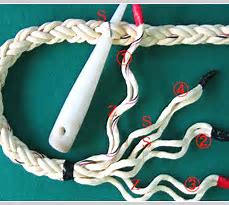
The Education Column Series 2, Sheet 7 introduces the theme of splicing, describing it as a touch where you change methods at any lead end. The method changes could be accompanied by a Bob or Single too. As the treble leads, we finish the work of the old method, noting where we are at the backstroke, then start ringing that place bell’s work in the new method as the treble moves away from the lead. In the same Series, Sheet 10 it suggests deciding in advance what methods you’re going to splice and stick to the ones you are most familiar with to start. 

My inability to learn methods by being able to quote place bells and being consciously aware of them has improved over lockdown where we’ve been practicing different methods on Ringing Room and as I’ve been coaching others through new methods, I’ve looked at them differently myself.  Perhaps I have an unconscious ability to know what place bell I am.  I can sometime see where the treble is and know what place I am at the backstroke; its just a case of know what work that place bell does!

I think through using Ringing Room I have become more aware of what other bells around me are doing and more aware of where the treble is and what piece of work I do next.  So, without being able to say out loud what place bell I am, perhaps I do know after all.  Maybe there’s hope that I’ll crack eight spliced soon.

What are you tired of tolerating?

Image by Gerd Altmann from Pixabay

You don’t get what you want, you get what you tolerate”, says podcast fave Tonya Leigh.

When we feel anger, frustration and resentment its often because we have been tolerating something that is not a fit with our soul, our vision for ourselves and our dreams.  It just does not feel good. When the resentment, frustration and anger grows, instead of no longer being available to whatever is triggering that feeling, we often engage in self-destructive habits. Food, alcohol, poor relationships.  Things that make us feel worse.

When you are feeling anger, frustration and resentment, ask yourself what are you tolerating? Think about what it is you want for your life, your dreams and desires, your goals.  What do you need to make yourself unavailable for in order to reach them?

TL suggests that all those things you need to stop being available for are self inflicted. If you overeat, or revert to alcohol, or put up with toxic relationships, its because you don’t want to feel the emotions, and then you end up beating yourself up over your self-destructive habit, and make yourself feel even worse. It ends up becoming a vicious circle.

When we wake up to no longer tolerating the things we feel, do and create, we can be done with it.  The thoughts don’t just go away, but we no longer need to entertain them and look for something that looks and feels better.   It can be effective really quickly.  When we stop tolerating people pleasing, or our own negative talk, or being confused and indecisive, we can be loving, honest and kind to others because we start being those things to ourselves. If you’re tired of tolerating scarcity look for abundance.

Be your own personal assistant and look at whether things support your vision, desires and goals, and if they don’t, then don’t take that call, make yourself unavailable for it. As long as you’re available for these feelings, they’ll keep showing up.

By making yourself unavailable to those feelings, you start making yourself available for so much more that matches your values.  It can be uncomfortable.  You have to say no, you will feel discomfort, you have to show up even when its hard, you have to stop tolerating your own excuses, you have to do things that are unfamiliar. The pay off is you get to shape your life with the things that align with what you want to create, your vision and how you want to become. 

Image what your life could be like if you only make yourself available to the possibilities that you have.  What do you want to make yourself available for?

We need to stop tolerating our own limiting beliefs, our own negativity and our own habitual states of being that don’t align with what it is we want.

What are you done tolerating?