8 Ways to adopt a happier lifestyle from other countries

Image by Pexels from Pixabay

Allie Finn recently wrote about how countries like Norway, Finland, Denmark, Switzerland, Netherlands and Sweden continually top the list of happiest countries.  Probably no coincidence they are all near neighbours. But how easy is it change a long engrained cultural lifestyle in order to be happier.  Finn listed eight traits from these countries that we could adopt to live a happier lifestyle:

  1. Hygge – the art of being cozy.  Taking pleasure in soothing things like wrapping yourself up in a blanket with a cup of tea and a good book.  It could even look like cancelling plans and just being cozied up at home.
  2. Niksen – the art of doing nothing. The idea is to literally turn off your brain and let your mind wander through idle consciousness. This allows you to be more creative and better at problem solving and helps with reducing stress.
  3. Kosalig – Almost the opposite of Hygge in as much as its about social interaction.  Getting into finding positive ways to enjoy the harsher times (winter in particular), so you feel more positive, less alone and closer to the people you care about.
  4. Friluftsliv – again involved embracing the outdoors, particularly in wintertime.  Lean into exploring the outdoors in the winter and challenging yourself to explore.  This helps with positive mental health.
  5. Fika – taking breaks during your working day to be mindful.  Step away from the desk and the phone and actually take time to unplug from work for a short while.  Taking dedicated breaks during the day has actually been seen to improve productivity and improve focus.
  6. Lagom – not too little, not too much.  Finding balance and not living in extremes. 
  7. Sisu – perseverance, resilience.  Finishing what you started even when you feel like giving up.
  8. Coorie – actually a Scottish concept about spending time outdoors, hiking, stargazing and simply unplugging. Small, quiet and slow activities that engage us with our surroundings.

Is it that people from these countries are genuinely happier, or is it that there are just more of them that respond to happiness questionnaires?  Surely, here in the UK we have things to be happy about, even in the current situation. 

We can, if we want to, find happiness wherever we are doing whatever we’re doing.  We often see images of people in deprived areas, but they have the biggest smiles.  They make the most of what they have.  Maybe its just as we become more affluent that happiness starts to fade a bit.  We can have all the fancy houses, cars and holidays but does that make us truly happy. 

We can look for happiness in the simplest of things.  As I’m writing this a butterfly has just flittered passed the window.  That’s the first one I’ve seen so far this year and a sure sign spring is on the way.  For that fleeting moment, that butterfly gave me a sense of happiness as I thought about it dancing in the sunlight, and the sense of warmer days ahead. 

We don’t need things to be happy, we need a sense of happiness within us.  One that can sustain us and spread to others.  We can be happy if we choose too. 

What would we export as the UK’s model of happy?

How full is your energy reservoir?

Energy is your fuel.  You need energy to function.  We can do everything we want to do all the time, and do them well over a sustained period of time without sufficient emotional, mental and physical energy. As you navigate your day, your energies start to deplete.  Sometimes from external sources like work or home responsibilities, and sometimes through your own thoughts and self-talk.

Nataly Kogan wrote about the energy reservoir and how having too many leaky parts will drain your energy to the point you end up doing less and less. She suggested a number of areas which you could contribute to draining your energy reservoir:

  • Multitasking
  • Mindlessly scroll through social media
  • Overconsuming news
  • Talking negatively to and about yourself
  • Trying to do everything perfectly
  • Making lots of decisions (and trying to make each one perfect)

Learning to manage your energy reservoir, becoming more aware of your emotional, mental and physical energies, requires self-care.  Self-care should not be regarded as a luxury, or only for those who have worked hard and deserve it, or only available to you after you’ve crashed and burned.

Kogan uses the analogy of a car and how it can’t run on empty or fumes.  If the car runs out of fuel it stops.  When you run out of energy you stop.  But running on fumes, or almost empty isn’t good either. It stops you being good at all the things you care about. You can’t be good at your job if you’re exhausted, you can’t be a good friend if you have no energy to spend time in their company. Its harder to focus, takes more time, you can’t think clearly when your emotions, mental wellbeing and physical needs aren’t being met.

When you practice self-care regularly, you are keeping your energy levels topped up.  Again, a bit like the car, if you fill up with petrol when the tank is half full already, it takes less time than it does to fill up an empty tank. When your energy reservoir is fully empty, it’ll take longer to recharge it, but if you top it up daily it takes less time and effort.

Kogan suggested three questions to ask yourself:

  1. How is my emotional, mental and physical energy reservoir right now? – be specific.  You might feel alright in one area and not in another. Don’t judge your response, whatever comes up is the right answer.
  2. What has been unnecessarily draining my energy today, and can I do it less? – again be specific.  Is there something specific about work, or a relationship that is draining you? Take time to accept the struggle and shift your thoughts so they drain you less.
  3. What can I do to fill my energy reservoir today? – a short walk might do the trick.  Sitting down to read with a cuppa is just as good.

Start doing this practice once a day, put a reminder in your calendar if you need to. As you get the hang of it start practicing it throughout your day.

Why are you so hard on yourself?

Image by Gerd Altmann from Pixabay

Are you one of those people who are kind to everyone else but rarely to yourself?  Apparently, most of us are like this.  I know I am.  I will sit with others whilst they go through drama and trauma, but when I have my own to deal with, I tend to brush it under the carpet.

In a recent Psychologies Magazine ten question quiz, I wanted to find out what was standing in the way of my self-compassion. Turns out, and not really surprisingly, what is draining my self-compassion is self-doubt.

The questions asked what we do when things go wrong, what we feel are the benefits of self-compassion, what our most common cause of stress is, what we wished for more of, how we allowed self-compassion to show itself, when we needed support from a friend, what we think of self-compassion, when we feel happiest what how life would be easier if we were better at something.

For once, my results came out almost exclusively as one of the four possible responses, although there were a couple of questions where none of the answer options really fitted for me. The other reasons were self-pity, self-sabotage and self-neglect.  Reading through their descriptions, I found some elements that I also resonated with. The self-doubt summary was:

“You have an ambivalent view of self-kindness.  You know it’s a good thing and may encourage loved ones to be kinder to themselves, but you apply different rules to yourself.  At the heart of your resistance is a fear that being kind means accepting yourself as you are now. That self-acceptance is the foundation of self-compassion is a tricky concept for those who see themselves as a work in progress, but research shows that people who score highly in self-compassion have the greatest motivation for self-improvement.  It is a myth that being hard on yourself fosters drive.

When you hold back from loving and accepting yourself until you’re a ‘better’ person, you give yourself the message that you’re not enough. That undermining self-belief acts as a brake for even the most focused attempts to achieve.  If this is an old story don’t you owe it to yourself to try something new?  Talk to yourself as compassionately as you would a friend and shift your mental focus to spotlight the best in yourself and what is going well, then watch yourself flourish”.

I know that I have embarked on a bit of a mission of self-improvement but it doesn’t make me feel that I am not enough.  I am merely trying to recognise where I have room for development of self-awareness which actually includes learning more about my self-worth.  I don’t think it’s the same as thinking I’m not good enough. I am good enough and I am worthy, I just need to figure out how to show that.

I certainly don’t sit around feeling sorry for myself or play the victim, and I try not to get too close to those who wallow in their own pity party. 

I can self-sabotage at times.  I am aware of what I need to be doing to stay fit and healthy, to take on less and create space to breathe, but I do find myself saying yes to things even when they fill me with dread. 

I did resonate with the self-neglect description of assuming I’m ok when I’m not and having a default setting of self-reliance and self-sufficiency out of feeling there is no one to rely on. If I don’t let anyone get to close, I won’t get let down or hurt, therefore I won’t ask for help with perhaps I should.

Are you a pitier, doubter, sabotager or neglecter?

Things that are just not worth your time

Image by Gerd Altmann from Pixabay

We waste so much time on things that don’t bring joy and value to our lives.  That don’t align with who we want to be and what we want to create.  Have you ever conducted a time inventory and really analysed how you spend your time?  How we spend our time is a reflection on the quality of our life.

Using time wisely is one of the best acts of self-love we can give ourselves.  Having strict rules around where and when and on what we spend our time can give us the space to create our lives.  Looking at the discrepancies between the reality and the desire of our lives side by side can be enlightening.  The key is to choose how we use the hours we have by avoiding things that waste our time we regain more time to create, love, enjoy and live.

My mate Tonya Leigh suggested we should list the things we should stop doing that are wasting our time, here are some of hers, and mine suggestions:

  1. Using our best persuasion tactics in an attempt to change our mind or talk ourselves out of, or in to something;
  2. Explaining to others the details of why.  We shouldn’t need to explain why we don’t want to do something or need to change or cancel plans.  We don’t need to explain our lives away.
  3. Obsessing with perfectionism.  Done is better than perfect.  Do your best then move on.
  4. Questioning our own ability to do, say or be something.  Acknowledge our inner critic, but don’t indulge it.
  5. Waiting in long queues to buy the latest thing, or tickets for an event or be the first to have something.  So what if you’re not the first to have it?  It’ll nearly always still be there once the queue has died down.
  6. Spending hours and hours on social media so that we don’t miss out on anything.  Dip in and out and use the rest of the time to do something of value.  If it’s important we know something, someone will tell us.
  7. Following through on the obligatory “yes, let’s get together”, when you can’t fit it in or simply don’t want to.
  8. Keeping up with the latest trend, beauty, fashion, gadget etc.  Do you, not everyone else.
  9. Fuelling committing to the impossible job of making sure others like us.  It’s our job to like ourselves and accept others either like us or they don’t. What others think of us is none of our business.  What we think of ourselves is most definitely our business. Personally, I’d rather spend time with people I don’t need to try to convince.
  10. Fanning, caressing and swaddling our stories from the past.  Let it go, it’s done.  Enjoy today and look to a bright future.
  11. Making lists of all the things we don’t have.  Wake up to all the things we do have and appreciate them.
  12. Poking our noses into other people’s drama, even when we’re trying to be helpful.  I personally don’t have time for other people’s crazy.
  13. Spending hours in the gym. We shouldn’t waste time obsessing over the perfect body, but love the one we have.  Going for a walk or doing anything that moves our bodies is good enough.
  14. Insisting on cleaning before getting on with what we should be doing.  I have no interest in being a cleaner and we have too much stuff in our house to bother too much about it.  Cleaning before getting on with things is just a distraction task and often not really productive.
  15. Committing to get better at things we should and could be better at but don’t really want to. We don’t need to be the best at everything and I would personally rather spend the time doing things that I’m naturally good at (if only I knew what that was).  Accept our own strengths then use other people’s strengths to fill in the gaps.
  16. Preparing gourmet dinners that should be on the front of Good Food magazine.  Don’t make it complicated.  Eat well and simply.
  17. Placating the negative nay-sayers.  If they cannot believe and support our personal dreams, they don’t deserve to be around us when those dreams come true.  This doesn’t include those who hold a different opinion as discussion and challenge are always beneficial.  Just those who tell us it’s not possible, or it’ll never work.
  18. Holding pity parties for one with a dose of self-loathing. Nothing good comes from hating ourselves.  We have the choice whether to hate or love ourselves.
  19. Refreshing the email inbox again, and again, and again.  Checking emails hundreds of times a day is not productive; it’s a distraction from focussing on what’s truly important.
  20. Indulging in trash.  Whether its trashy tv or social media, we know what’s trash by the way it makes us feel. 
  21. Beating ourselves up over wasting time.  Sometimes it’s inevitable.  How we chose to spend our time is such an individual thing.  We should make a commitment not to waste time but not beat ourselves up when it does happen. We can’t be perfect all the time, remember?

The idea is to master the art of how we spend our time and energy, to tweak it to align with our desires.

What would be on your list of things to stop wasting time doing?

And now to stop chasing happiness

Image by mohamed Hassan from Pixabay

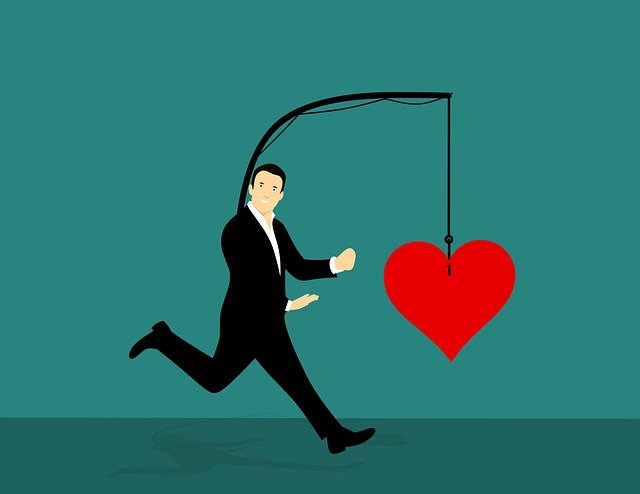
Recently I have been posting about how we are encouraged to try to find our happiness by defining what we desire and taking action to achieve it.  Today, I’m going to suggest that we stop trying to chase happiness.  We spend so much time, energy and money in trying to achieve a state of happiness but are we truly any happier?

Some nuggets of wisdom from my podcast fave (sorry if you’re getting sick of her but I find her interesting and challenging)  Tonya Leigh who suggested that we should stop chasing happiness and accept that we have different moods, sometimes things are a bit doom and gloom, and we’re not always on our A game.  These emotions should not be avoided or resisted but acknowledged and allowed.  She questioned what if we used our emotions to discover the wisdom those days hold, what if we didn’t make a negative emotion mean something has gone terribly wrong in our lives?

The chances are when we delve deeper into our emotions they can be the key to unlocking a successful life, feeling and understanding our emotions can be fundamental to our creativity and desires.

Continually trying to chase happiness can be exhausting and whilst we are intent on that, we can be abandoning taking care of ourselves.  Consider whether we are running towards something or away from something when we chase happiness.  Sitting with our emotions can be a journey of discovery of beliefs that have been holding us back, patterns that keep showing up and how we can feel an emotion without having to react to it.

TL suggested that there  will always be occasions when we are not on top of the world but that’s ok, its normal and part of everyday emotion.  However, we still get up and get on with our day.   She suggested that it was important to show up and be who you are in the moment.  Trying to be happy all the time can actually make us more miserable as we’re always striving for something slightly out of reach.  Turn the focus off of you and onto all that is around you, even when you are feeling less than 100%.

She suggested that is was normal to have negative emotions.  It’s only the meaning we chose to attach to it and that when you stop resisting or reacting to an emotion it simply becomes a feeling in your body.  She concluded that moods come and go, so navigate according to your desire, not your mood.

You could be happier if you stopped chasing happiness.

What do you need to take control of your future?

Image by Gino Crescoli from Pixabay

This was the latest question posed in Psychologies Magazine with the usual ten questions to choose responses from.  One question put was “When you have to make a big decision, you tend to…”  the answer options were:

  • Ask other people’s advice
  • Put it off if you can
  • Worry about it
  • Do what’s expected of you

I chose “Do what’s expected of you” as the response that most resonated with me.  I often don’t necessarily do or respond the way I’d like to but go with what I think others want, or expect of me.  I go along with what everyone else wants, even if it really isn’t what I want to do, out of a sense of duty, out of a sense of not wanting to rock the boat, or it’s just less drama to do what the other person wants rather than what I want.  There is plenty, in all walks of life, that I would have rather done or not done, or said, that I’ve just kept quiet about.  Sometimes to the point where it has emotionally hurt me to go against what I would rather do.

The results from my answers to the ten questions suggested:

Try to think about how you feel.

There’s no doubt a stoic approach to life – ‘putting up and shutting up’ – can help you stick at things.  There are lots of upsides to having a high tolerance for discomfort, boredom or feeling ‘not quite right’, but the pay-off is often weeks and months spent ‘just getting on with it’, which can drift into years.  When your feelings come way down your list of priorities, it’s hard to justify making changes that might impact on others.  And, in a busy life, it’s easy to operate in ‘doing mode’, getting on with everyday commitments whilst switching off from how you feel.

Journaling may help you pin down your emotions and gain insight into your feelings.  At the end of each day, rate a list of categories of your choice out of 10 (achievement; happiness; peace of mind’ wellbeing’ purpose; sense of connection..) If your scores are consistently lower than five, you have proof that the way you are living is not working for you. There is much to be learned from being curious about your feelings, instated of burying anything that is difficult.

Through the work I’m doing to get to know myself better, I am starting to find that I have a wider range of emotional responses.  In the past, I would just shrug something off and try to ignore it.  I had been accused of being uncaring in the past, when actually I did care, I just didn’t dramatise it.

What I have found so far is that I am responding more openly about things that upset me, usually by crying (often shut away somewhere or in the dark).  I am becoming more decisive about things I don’t want to do, and vocalising it.  Sometimes I still have to do it but at least I can now say that I’m doing it under duress.  What I still haven’t really got to grips with is vocalising my emotions and feeling confident enough to tell other people exactly how I feel, or how they have made me feel. 

I think some of that comes from the fear of being ridiculed about feeling that way.  Some it from not wanting to come across as needy, pathetic, “over emotional” or even as hormonal being a woman of a certain age. 

Some of those around me are not great at sharing emotions either, so most of the time these things go unsaid.  I don’t think they necessarily go unnoticed, they are just not commented on or discussed, in the hope that it’ll blow over in a day or so. If I get grumpy about something someone has or hasn’t done, I usually just go into quiet mode, don’t say much.  Nothing is said back and it’s a case of leaving be until I get over it.  But that doesn’t resolve the issue.  It’s still sitting there in the dark waiting to surface again another time.

I know what I’m feeling, so I don’t think I need to keep a journal about it and score it. For me it’s about being able to communicate that with someone in a confident and supportive way. I am definitely in the ‘putting up and shutting up’ role, getting on with ‘doing mode’ rather than acknowledging how I feel, verbalising it and acting on it.

Something to work on.

When your jeans don’t fit

Image by Couleur from Pixabay

Having just got back from a week’s holiday where we ate and drank very well, I was mildly anxious about trying to get back into my work clothes on Monday morning. I wasn’t going to deny myself the pleasures of eating out and enjoying different foods and wines.  We had everything from English, French, Greek, Mexican, Italian and Indian cuisines.  More often than not three courses too.  I also enjoyed cocktails before dinner and wine with dinner. I was on holiday.  I wasn’t going to spend it calorie counting. I’d put on about 6lb, which was about what I’d expected, knowing full well that when we got back home, I’d be back to calorie counting and being more careful what I eat.

I must admit, I was rather glad when the trousers I’d picked out to wear to work didn’t cut off the circulation. A little snugger than usual, but I could breathe.

I know that on my return to routine, I’ll get back to that sweet spot when I experience the flow of life, where I’m eating the right things in the right amounts. There was no need to spiral into doom, gloom and despair.  It’s about learning to be comfortable in your own skin, even when there’s a little bit extra around the middle.  If the trousers didn’t fit, I’d simply change the outfit.

In order to find that sweet spot, podcast favourite Tonya Leigh suggested that we need to be honest and respectful of ourselves.  What happens in our own mind is the worst thing that can happen if we let it.  It would be impossible to get back to that sweet spot if we thing of not getting into our jeans as a failure. We need to recognise that our bodies fluctuate and see it as a sign that we need to get back in touch with our body and tweak one thing at a time, rather than try to tackle it full on.

Getting to the sweet spot requires self-awareness and curiosity.  If we’ve fallen off the wagon, TL suggested asking yourself the following questions:

  1. What’s been going on?
  2. What have you neglected?
  3. What do you need to let go of?
  4. What do you need to add?
  5. What are you going to do next?

Often its about more than just food but with a new awareness and a few simple tweaks we can get back on it quickly. TL suggested that everything you desire lives within your sweet spot.  It doesn’t have to be a struggle to find it.  You can’t live in it 100% of the time; life has its ups and downs.  It can be fun to explore and be curious about yourself.  It can take a lifetime of practice to get there.  Everyone’s sweet spot is different but when you get there you can be energised full of passion and excitement and can be unstoppable (if you want to).

TL concluded that living in the sweet spot required elegance, an internal sophistication of confidence and mindset.

I am confident that by the end of the week, I’ll have lost most, if not all of that holiday gain as I’ll be back in the zone of opting for healthier foods, I’ll certainly be drinking less and not having three course meals every evening. I’ll be back in my sweet spot by the weekend.

What does your sweet spot look like?

The Nordic way to happiness

Image by Patrik Linden from Pixabay

According to Women & Home magazine Scandinavian women are amongst the healthiest and happiest in the world due to their outdoor lifestyle, diet and PMA (positive mental attitude).

These super women seem to be better at having a positive winter mindset by enjoying cold weather activities and celebrating koselig (a sense of cosiness). Their mantra being “there is no such thing as bad weather only bad clothes”.

The Swedish ladies apply life with fika, taking time out to prioritise over relaxing coffee and cake with others.

It seems that hot and spicy boudoir activity keeps stress levels low and boosts immunity and the Nordic key to this is to keep honest and open communication with your partner about your needs in a supportive and affectionate way, and often. 

Detoxifying saunas keep the Finish ladies de stressed and bonded. They tend to go starkers into a temperature of 80 degrees followed by a cold water cool off.  They also opt for whipping themselves with birch leaves in a ritual called vihta, supposedly cleaning the skin and improving circulation. 

They have a strong tradition of sports and active hobbies just for fun so they don’t see going to the gym as a chore.  Their go to activities include cycling, Nordic walking and wild swimming.

It seems the Scandinavians have figured out the art of a good night’s sleep by using separate duvets.  This puts an end to the cover stealing or different temperature controls needed.  Apparently us Brits would rather sleep in separate beds.

The Swedes love an ice dip, kallbad, or ice-bathing enjoyed during autumn and winter. It decreases tension, boosts energy and improves memory.

They eat healthily, lagom “in balance and moderation”, fresh seafood, lean wild meat, grains, seasonal vegetables, berries and superfoods.

Whilst I would be happy to embrace some of the Scandinavian way of life – I’d be happy with koselig and could combine that with some fika.  I’d be happy to boost my immunity and reduce stress levels with boudoir activity (oo er), I’d love to take a sauna, but you can keep the cold dip afterwards, and the vihta.  I think the idea of separate duvet covers is genius. As a women “of a certain age” I’m sure my overall temperature is on the rise and we often battle over whether the duvet should be on or off or somewhere in between.  I’d much prefer that to separate beds for sure.  I certainly won’t be trying out kallbad, a water phobia puts pay to that. And with some moderation I would happily indulge in logom

How will you embrace a Nordic lifestyle?

Why self love matters

Image by Gerd Altmann from Pixabay

My next foray in to the School of Self Image with Tonya Leigh looks at why self love matters. Have you missed her guidance over the last few days?

TL noted that if you’ve ever been in love with someone the first few months are full of passion, romance, attentiveness, excitement and desire.  The world suddenly feels warm and light instead of dull and gloomy.  When you are in love chemicals in your brain create a sense of euphoria and pleasure.  It has you doing those silly, giddy things like waking up early, dancing around to music, taking time getting ready. Resentment, doom and gloom and judgement melt away.

In the early stages of a new relationship you treat it with care, attentively.  You are present and discovering more about the other person.  You keep your promises. You don’t see the flaws in the other person.  You give the relationship your full attention.

Do you treat yourself in the same way?

TL suggested that we tend to criticise ourselves, beat ourselves up over our mistakes, and then beat ourselves up over beating ourselves up.  We resent the past and dread the future.  We mistreat our bodies and retreat to avoid feelings.  We end up finding distractions to avoid being with ourselves.

She proffers that if you want to attract love into your life, want to be happy and healthy, want to have a fulfilling career, wake up with a passion for life and exude confidence by treating yourself as you would treat a new lover.  Treat yourself with compassion. Forgive yourself.  Commit to becoming your own lover. Lovers rarely criticise, make nasty judgements or crude comments about each other.  They respect, love and connect to each other.

Nothing you desire for yourself comes from self-hatred.  Once you deeply love yourself you can no longer abandon yourself by self-destruction.  You no longer treat yourself as worthless, or have to prove that you are deserving.  You no longer let yourself down by not showing up for yourself, nor allow others to trample all over you. Instead you are connected to your body, needs and life.  You respect your body as it is.  You take control of your own time.  You show up for what you decide is important.  You love deeply and have fierce boundaries.

The only person who can change it is you.  Starting with a fierce commitment to loving yourself.  Its not easy.  It begins with a decision, followed by constant awareness and courage.

TL suggested looking for something to love every day. It could be the sunset, music, your coffee.  Show yourself some love by buying yourself some flowers, pay attention to your feelings and say no without explanation.

When you deeply love yourself there is nothing you cannot do, overcome or create.  You’ll never feel alone or bored, or abandoned.  You’ll be glowing like a person in love.

I may regret asking this but how do you plan to be your own lover this week?

To love oneself is the beginning of a lifelong romance

Oscar Wilde

6 Ways to use the Power of Procrastination

Image by S K from Pixabay

In October’s Woman & Home magazine there’s an article about how we should use the art of procrastination to allow time to reflect rather than react.  We clearly can’t procrastinate about everything all the time otherwise nothing would ever get done, but there is a time for procrastinating to find the value of not rushing into things in order to complete them.

The article shares five tops tips from three experts in business, coaching and self-care:

  1. Lean in gradually – don’t be afraid to let your mind wander and take its time before reaching a decision or taking action.  Make sure you have all the information and let it sit for a while before moving forward. Create space away from the problem, do something else that helps soothe your mind before allowing the solution to come to you.
  2. You time – don’t let yourself be pressured by others. Whether it’s committing to a night out with friends, a workplace problem or any difficult situation.  Take a step back to assess the situation.  Taking time out to think will help reduce stress and avoid rushing in to things you’re not comfortable with.
  3. Headspace haven – day to day business can be hectic and a challenge.  Making a specific to do list allows you to free up mind space.  Break the tasks down into smaller more achievable tasks and be clear what the action is.
  4. Be imperfect – You have limits, flaws and needs.  When you feel under pressure ask yourself “Is this realistic?”, “How stressed am I right now?” “How can I break this down to be more manageable?”, “What’s the impact of reaching good enough but no perfect here?”.  Reframe your goals and rather than aim to produce something perfect, make your new goal to take the first step or learn something new.
  5. Overload overthrow – we can all usually cope with a few things happening at the same time but when they are all needing our full attention it can become overwhelming.  One suggestion was to ”batch tasks for efficiency”.  Decide on the order in which to tackle each task and how much time you are willing to spend on it, and then prioritise what’s important and urgent, rather than being distracted by what’s just arrived in your in box.
  6. Small and slow – sometimes it’s hard to get started on a new task but that’s because we might still be mulling over how the tackle it and still planning it in our heads.  The advice is to start slowing by scheduling bite sized time set aside to do things.  Committing to a smaller task is much easier in terms of achievability and time constraints, but also provides a boost once it’s been completed and could spur you on to complete the full task.  One suggestion was to break the task down into 90 days.  Divide the year into 4 quarters and commit to focussing on a certain number of goals and tasks within that 90 days.  Anything that doesn’t need to be done right now can shift to a latter quarter.

I can definitely be a procrastinator if there’s a task that I don’t really want to do, or I’m not sure how to start it, or it’s such a big task that I can’t see the wood for the trees on where or how to tackle it, or if it’s such a big task it seems like it’ll never end.

I have talked before about the need to declutter at home and it always seems such an overwhelming task to even start.  I never know where to even begin with it.  I’ve watched Marie Kondo and her idea on how to declutter and organise the home category by category rather than room by room and I did start to do that with my own papers and space.  But for now, that’s still a massive procrastination brick wall for me.

How will you use the power of procrastination to tackle a problem?