Reflexivity

A group of us picked up where we’d left off in the next session of a leadership course being run by the Trust, and spent a while discussing reflexivity: the examination of your own beliefs, judgement and practices, with the purpose to have a better understanding of what we do with that knowledge.

We were asked to consider what attributes of teams get the best out of us as leaders, and what attributes of ourselves bring out the worst in our team.

For me, the former requires focus, direction, lateral thinking, autonomy and timeliness.  For me to function at a higher cognitive level my team needs to be focused on the task at hand, to all be pulling in the same direction for the same purpose, to find solutions to problems using their own skills, experiences and initiative, and to keep to agreed timescales.  Then, I can fully support their needs, priorities and strategic direction.

I probably set some high expectations and then expect my team to deliver to the same level and quality of output, at the same pace, as me. Of course I’m heading for trouble there. I am a world away from their reality and have a very different skill set. I need to remember that and make concessions. Of course this is going to irritate them because if they are unable to deliver to my expectations,   they may feel under pressure, unsupported, or even like they had failed. And if I don’t get what I expected then I might feel let down and frustrated.

Having recognised this over the years I have tried hard to acknowledge different skill sets and work with people’s skills rather than against them. I try to ensure that people are comfortable with what is being asked of them but at the same time stretch them a bit and help them develop new skills.

Being able to do this will lead to my team being more autonomous,  focused and problem solving. Thus enabling me to be more strategically supportive.
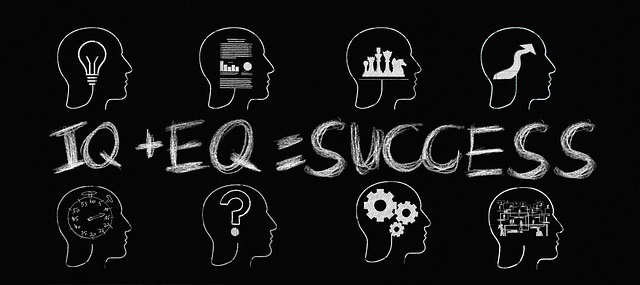
Understanding Emotional Intelligence

Emotional intelligence (EI), sometimes referred to as Emotional Quotient (EQ), is the ability to understand, manage and use your emotions in a positive way to help relieve stress, effectively communicate, empathise, overcome and difuse difficult situations.

This week’s #MSEBuddyNetwork focused on understanding our EI. We were asked to complete a questionnaire to determine our current state of EI in the 4 areas of self awareness, managing emotions, motivating oneself, empathy and social skill. At the end of the questionnaire you tot up the scores and there’s a brief descriptor of how to interpret the scores. If you score 10-17 this indicates a development priority, 18-34 suggests giving attention to the weaker areas and 35-50 indicates this area of strength.

Having an understanding of you EI affects your performance at work, your physical health and mental wellbeing, your relationships with others and social intelligence.

I scored 40, 37, 36, 37 and 29 in each area respectively. No surprises that the area I need to work on most is in social skills. I’m not a great mixer. I like my own space and am close to a very small group of people. I’m not an outgoing sort of person and not brilliant at networking. But this area is key to my every day work and some of the roles I occupy in a voluntary capacity. Its about persuasion, building rapport, collaboration. I’m OK at the reflection, change management and leadership side of social skills.

The Skillsyouneed.com website has some useful resources and suggestions on how to develop in these areas as well as suggestions on further reading.

The other thing I thought would be useful to do would be to get someone who knows you reasonably well to do the questionnaire but about you. That way it could validate your own perception of your strengths and weaknesses, or shed some light on your blind spots (Johari window).

Transferable Skills

When I talk to members of my team, particularly when they are considering alternative roles, they often tell me that “I can’t do that”. I then take them, line by line, through the job description and ask them why they think they can’t do it.

One person told me once that they weren’t very organised. She was a mother of 3 school age children, a wife, had a full time job and all the family pursuits that go with kids. I asked her to think about how she cooked dinner in the evening. She said that she’d think about what to cook before leaving for work in the morning, when she got home, she’d get everything out of the fridge, put it in the pot/pan, then check in with the kids and their homework, then finish tickling the pot/pan and dish up. I asked how she managed all that to which she replied that it had to be planned and organised. Lightbulb 💡 moment. That means she could organise. Its a transferable skill.

The Psychologies Magazine suggests when you’re thinking about a new career, that by doing a skills audit you can determine if there are any core competencies that need working on. Things to think about are communications, research planning interpersonal and HR, positive attributes, management, leadership and decision making, financial management and critical thinking.

The article also noted that you only need 70% of the skills listed on a job spec to apply for it. Then, once you’ve thought about what skills you have, and worked out what you need and why, the next step is to marry up your skills with your values.

I’m going to conduct the skills audit just to find out where my shortcomings are, and focus on “pivoting a new future“.

Leading to a new path

Its funny how things turn out sometimes.

After feeling stuck in a rut for a while, I’ve been making some noises and needing to do something different and I’ve been investing some energy in to making that happen. I still have a long way until retirement so I need to be enthusiastic about the work I undertake to make it valuable and fulfilling.

As I’ve mentioned before, I don’t have a calling or a vocation. I’ve moved from job to job in line with my strengths or desire to do something different.

As I head into the final months of my 40’s, the thought of changing career, or doing something else is quite daunting. I’ve been fortunate over the years to have been in the right place at the right time, with the right people behind me. This has enabled me to move roles, increase my responsibilities and wage packet to go with it. Those people are no longer at hand and I am becoming that person for others. But I do still need a job that I’m engaged with.

A while back I made some noises about wanting to move away from service management and go back to project management, where my skills are more commensurate. I also want to spend more time doing things that I enjoy (e.g. #bellringing) and to do better at that too.

Deciding that I want to invest more in my own final years of employment and thinking about the “what if…” scenarios has helped me formulate what I want to do.

Its not about the pay packet, I’m not motivated by money, although I do enjoy having some. I need to have purpose, value and satisfaction. I need to feel that I can use my experience, knowledge and skills to contribute to a larger society.

Change is never without its worry. Am I too old to do this? Will I regret it? What if it doesn’t work out? Should I just bite the bullet and hang the consequences?

Two opportunities are currently about to present themselves and I’m going to reach out for both of them. Now is the time to do what I want rather than what I must.

There’s an app for that

NHS Leadership Academy Healthcare Leadership Model

It seems that there’s an app for just about everything going. The latest one to land in my inbox is from the NHS Leadership Academy based on their Healthcare Leadership Model.

This model became very familiar to me as I was studying my MSc in Senior Heathcare Leadership via the Academy. It covers the 9 leadership dimensions of inspiring shared purpose, leading with care, evaluating information, connecting services, sharing the vision, engaging the team, holding to account, developing capability and influencing for results.

Throughout my course, which was a few years ago now, I referred to this model constantly. It has practical suggestions as to support you whether the behaviours are essential and you demonstrate proficiency, strength, or showing exemplary performance as a healthcare leader against each dimension.

To be honest, you could take away the “healthcare” part and it applies to any leadership role in any organisation, at any level.

Being an effective leader manifests itself from how we manage ourselves as leaders. How we recognise our self-awareness, self-confidence, self-control, self-knowledge, personal reflection, resilience and determination are the personal qualities and foundations of how we behave and how we interact with others, and they us.

All of this has a direct impact on our colleagues, our teams and our culture and climate within our teams and across our organisation.

Every now and then I revisit the model and on my latest look discovered that there is now an app that allows you to record observations of leadership behaviours and explore them using the dimensions. You can add your own reflections on yours or observed behaviours and look at summaries.

I shall download it and have a play.

7 years thrown away

As the epic clearance of the study continues multiple boxes of our daughters secondary school exercise books have just been deposited at the recycling centre ♻️.

Every book she had written in during her 7 years at high school was kept, for who knows what reason. How long should these thing be kept? She certainly doesn’t want them and they are of no value to anyone, so why do we, as parents, feel the need to keep such stuff?

I did have a flick through some of them and it was pleasing to see some of the teachers’ comments on work that she’d done well, and interesting to see some of the comments on things she hadn’t.

There were also some art and DT things she’d made that are no use to man nor beast. I did seek permission before we embarked on this process and her response was “just get rid“. Clearly she feels no attachment.

Of course we’ve kept school reports, certificates and achievements, but keeping all of this extra stuff seems futile, so why did we do it in the first place?

Everything a child does or produces is precious and important. It was their hard work, so who am I to decide what might be important to her in the future.

I didn’t have this much trouble throwing out my own degree papers. Once it was done, it was finished with. But that was my choice. Throwing out something which technically belongs to someone else is harder.

I suppose its another acknowledgement of the fact that she doesn’t live her anymore. Not permanently any way. Her room will always be her room and she will always have that space to visit or return to if she needs it. She needed it during lockdown #1 but so far lockdown #2 looks more stable from her work perspective, and she has a good flat mate to stay with, who is unlikely to be able to return to his family home.

Just the next phase in parenting. Letting go of those innocent (🤣) years.

Strolling, strolling, strolling

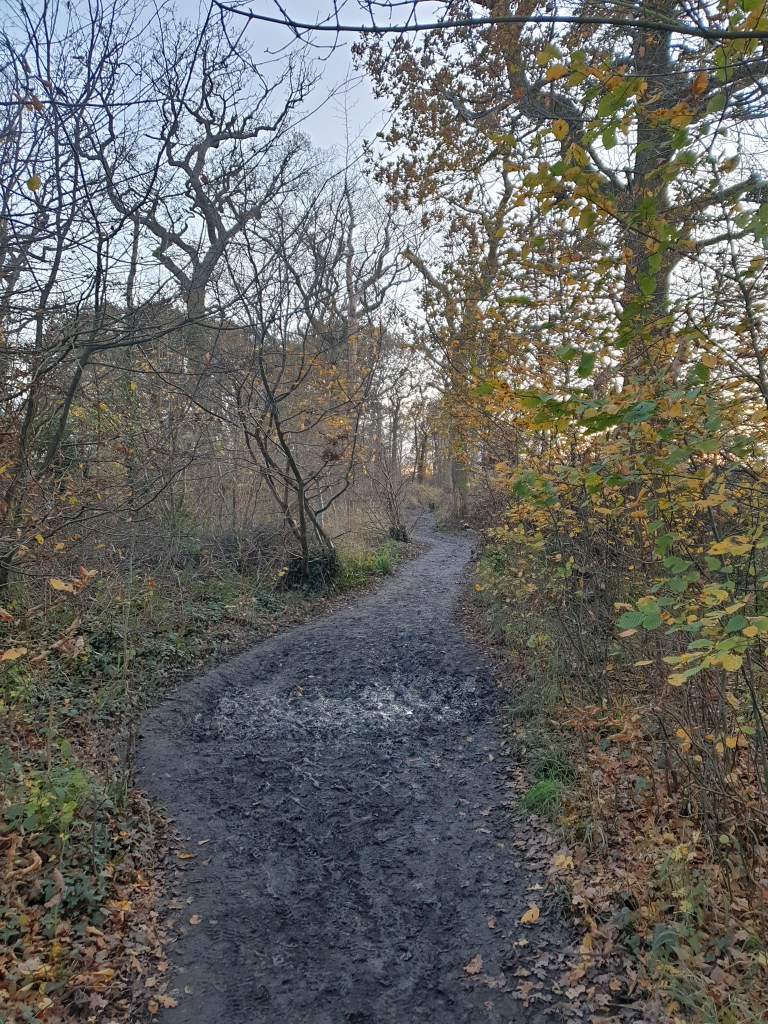
Something I try to do every day is go out for a walk. Sometimes it might just be walking into town, during a working week its around the hospital grounds at lunchtime, and sometimes its a bit more of a planned event, like Tuesday’s epic Thames Path.

On Monday afternoon I took myself for a walk around the block whilst C was waiting for a parcel to be collected. I simply wandered up the main road to the local park, around the edge of the park and back down the back streets. Not very far, but enough.

Wednesday C needed to pick up a prescription so we walked to the GP surgery, about a mile, then can back via the old Cinder Track, a footpath that links the estate where my parents live to the city centre. This path I have trod many times in my childhood.

It seems that a lot has changed along that path since I last went that way. The actual path is the same 2 lane affair. Pedestrians to the left, cyclist’s the right, as you head into the city. But what was once just old scrubland has been turned into a pleasant little tree covered pathway, with children’s play things and benches, and notices telling you about the wildlife that frequents the area.

For all that new scenery there was a sense of the familiar. I’ve walked, run and cycled along that path and back so many times. Its nice to see the scrubland repurchased, but its nice to have the familiar crunch of the path underfoot.

Things change and they can change rapidly and sometimes unexpectedly. Its inevitable that things will progress and move on. Things will never stay the same forever.

As human beings we need to be adaptable and resilient in the face of change. Sometimes that’s easier said than done. I try my best to adapt to new things, like virtual #bellringing rather than the real thing and I try even harder to be resilient. Sometimes going for a walk to clear my thoughts helps with that.

What is the defining moment that shaped your identity?

An interesting question popped up in one of my social media time lines. It possetted that the best way to get to know people was instead of asking where someone is from or what they do, ask what was the defining moment that shaped their identity.

We are often defined by our job title, our social status, our religion, relationship status and so on.

I like questions like this but I’m not very good at answering them myself. I’m not sure I could pinpoint a defining moment, more a steady build up of experiences.

Getting to know yourself is important in defining who you are. Finding out what makes you tick. Observing how you think and feel, reflecting on thought process and recognising and catching some of these thoughts before they cause any anxiety.

I read an article in Psychologies Magazine offering a series of questions to ask friends or colleagues to get to know each other better. The idea is each person completes the following sentences then shares them with each other (I’ve added my own answers in italics):

To get the best out of megive me all the data and the time to analyse it and formulate questions and an action plan. Give me some encouragement that I’m on the right track. Treat me how you want to be treated.

In social situationsI’m generally uncomfortable, give me an “in” to a conversation so I’m not stood on the sidelines like Billy-no-mates, but give me and “out” opportunity to leave when I’ve had enough without it being awkward.

If I am stressed or worried ... I will shut my office door ear a lot of rubbish food, or sleep. It can’t bother me if I’m asleep.

When you ask me to do somethinggive me all the information then let me get on with it. Don’t micro manage me. I will shout if I have any problems or questions. You will be kept up to date.

If you are upset or angry with me tell me straight away. I can’t put it right and learn from it otherwise. And the sooner its dealt with, the better for everyone.

If you have feedback for me ... let’s go grab a coffee and go through it together so I fully understand and we can formulate a plan.

If you want to praise me or reward me please do, be genuine about it but don’t make a big deal about it.

If I say no to something be assured there’s a damn good reason. I won’t say it unless I have to and I will tell you why.

When I want time to myselfI’ll take myself somewhere else, and probably bake something or read, or sleep.

I am trying to get to know myself better and be more curious about others, to know them better too. That’s all still work in progress.

Intra, inter and Extra

Day 1 of our leadership course is asking us to reflect on our intra, inter and extra awareness. The awareness of ourselves, others and the wider world.

In a task in the afternoon we were given 4 instructions, the second of which was to select a leader for the task through a formal process. There were 4 of us in the team and after a very brief discussion about process I was nominated by all of the other 3, so I didn’t really get the opportunity to challenge.

The task was to prepare a 3 minute presentation to the Executive about building and maintaining morale, highlighting the challenges and changes required of leaders. We then had discussion and decided a way forward, then we had to pretend to present it.

After the task everyone is then invited to provide feedback on the content and dynamics of the leadership of the task. Basically invite character assassination but in a constructive way.

I was invited to give feedback first on how I thought it had gone and how people had behaved and contributed before they gave feedback on my leadership of the task.

Given that we’d only met each other that morning and had done a couple of small tasks together, there seemed to be already some understanding of people’s skills and attributes. Apparently, I was nominated to lead this task as I had already demonstrated earlier my ability to understand the rules of a task, to methodically approach the task and keep people on track.

Whilst it was really hard to listen whilst others talked about you, it was a very supportive environment, and I didn’t feel in any way threatened or demoralised by what people said. I actually found it uncomfortable because people were saying very complimentary things about my style. In fact there was nothing negative at all.

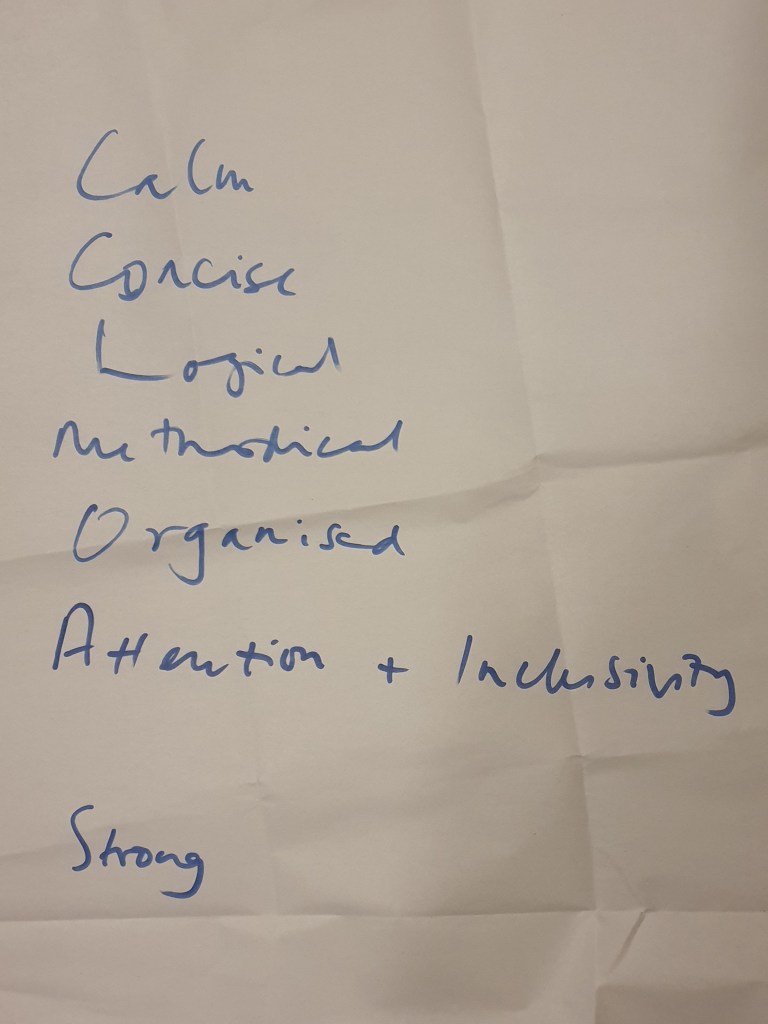
I was described as calm, considered, logical, methodical, organised, inclusive and paid attention to everyone, and strong when I needed to pull people back on topic and keep them to time. One person even said that they aspired to be like me.

The trouble is that I have no belief in that myself. I’m not saying they were lying about what they said, it would be difficult to accuse the whole group of conspiring, but I just don’t see it in myself.

The group facilitator wrote it all down (pictured) and told me to take it home and keep it to remind me of my leadership attributes, and believe it when other people see it in me, even if I don’t see it myself.

Busy week ahead

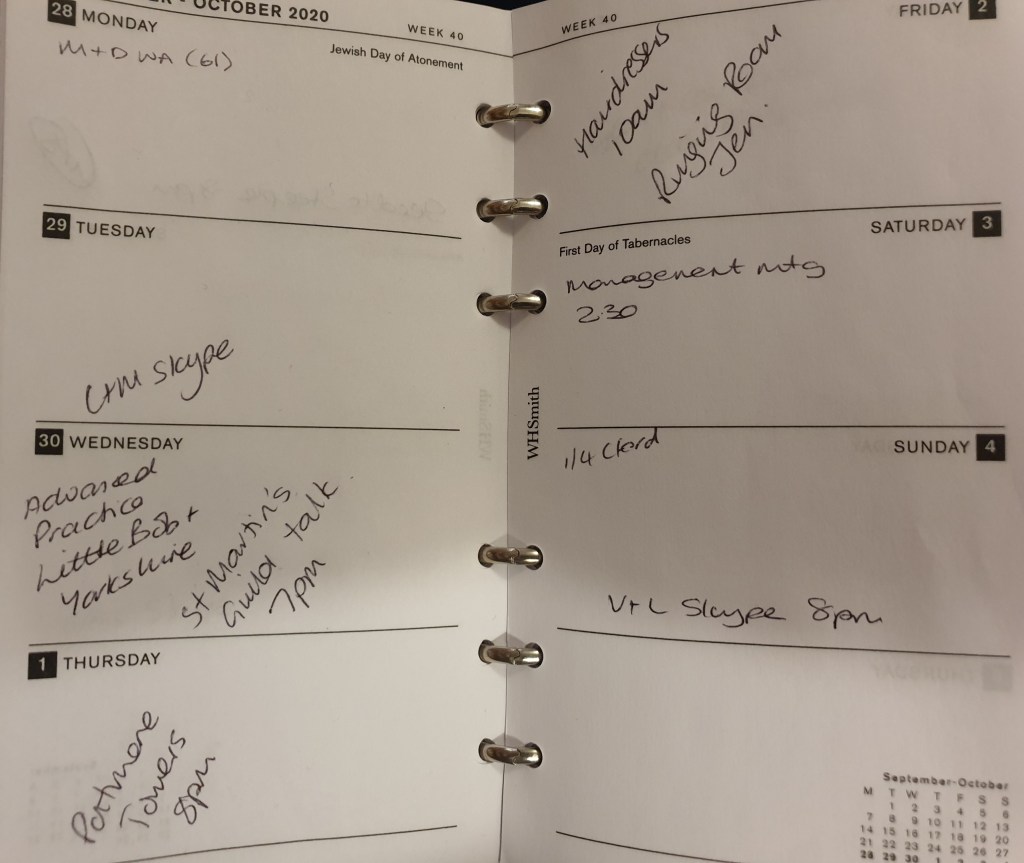
Monday night is the only evening this week when I haven’t got something in the diary. As well as a full time day job, I have 3 #bellringing meetings on Tuesday, Saturday and Sunday, one presentation to deliver on Wednesday and 2 RingingRoom sessions on Thursday and Friday. Everything has come at once. Thankfully its not like that every week otherwise my head would explode.

Considering that there’s very little actual ringing being done, there’s still a lot of work to do.

In order to be able to get to a point when ringing can return to anything like it was previously an awful lot of things are bring planned and delivered behind the scenes. Some people are saying “what’s the point if we can’t actually ring?” To me, the point is that if we don’t do all of these things now, there may not be ringing to go back to.

I fear that we will have lost an awful lot of ringers during this hiatus. Some due to age or infirmity but others who were only just setting out on their learning may find other things have tempted them away.

Within our own Association I see that some districts have been really good at getting people together virtually having district quiz nights, even having their scheduled meeting by video conference. Some have even managed to meet up where social distancing can be maintained and before the Rule of Six came in. Others have barely tried. It demonstrates the variety of leadership styles and levels of expectation rather starkly. I’ve done my bit in our district by holding a virtual district practice on the evenings when we would have been holding a proper district practice but attendance hasn’t been overwhelming, but then it never was at the real thing anyway. The district meeting and training day that we should have had didn’t place. There has been no discussion about plans for next year yet.

One of the meetings, on Saturday, is the Association management committee meeting. All districts are required to report on activities since the last meeting and I am looking forward to hearing about what’s been going on in other districts. I’m hoping that there will be some direction on how we should approach next year, particularly with the Annual District Meetings that take place in January and how they can successfully be conducted.

I will keep doing my little bit to keep things going as long as I am able.