Actions speak louder than words

Apparently this term was first coined in its current form by US President Abraham Lincoln during his Cooper Union Address in February 1860, but it may have been first voiced in the English Civil War by John Pym and recorded in Hansard in 1628 as “A word spoken in season is like an Apple of Gold set in Picture of Silver”, meaning that actions are more precious than words.

Today marked the first anniversary of the first UK lockdown of the Covid pandemic and organisations and people came together at 12noon to remember all of those who have died as a result of the virus, and to reflect on the tremendous work that the NHS and other front line services have done. 

The Church of England partnered with Marie Curie to mark the first anniversary of the first lockdown in the UK with a national day of reflection to reflect on our collective loss due to Covid-19, support those who have been bereaved, and hope for a brighter future. Bellringers were invited by the Church to participate in this day by marking the end of the one minute silent reflection at 12 noon by tolling a bell.

At work, for the NHS, we had a virtual gathering that embraced the moment of silent reflection, and then words from our CEO and Chair.  Later in the afternoon, I happened to be in the queue for a coffee and the CEO was in front of me.  We exchanged smiles, and I said that I’d logged on and listened to the “broadcast”.  She immediately described how they’d tried something new with the technology and that it hadn’t really worked how they’d wanted it to, so it wasn’t as slick as usual.  I told her that that didn’t matter.  What mattered is that we took a moment, and in a large acute NHS Trust, believe me that’s not easy, to stop, remember not just those patients we’ve lost, but also a number of colleagues and friends, to give thanks for the effort that the whole organisation has put in to help fight this virus.  We were able to take a moment to think about others, and the impact that has had on ourselves, our friends and families, and our colleagues.

The action spoke louder than the words.

The Instant Gratification Monkey

I was reading an online article from Tim Urban, who studied why procrastinators procrastinate.  He possets that they can’t help it.  In their brain the procrastinator has the Rational Decision Maker who steadily guides the mind in to doing what needs to be done, and then there’s the Instant Gratification Monkey who sideswipes things and sends the mind off wandering for some instant satisfaction for information or other, that takes us away from our steady path.

The Instant Gratification Monkey takes us off to play in what Urban calls the Dark Playground, that space where all the fun, new, shiny things hang out that distract us from what we should be doing. In the back of our minds though is this constant feeling of anxiety or regret for that looming deadline or that thing that we’ve been working towards for ages.  When that deadline approaches though, it’s time for a visit from the Panic Monster who scares us away from the Dark Playground back in to a sense of productivity to get things done.

Urban offers three steps to turn procrastination into motivation:

  1. recognise that you are procrastinating.  Being aware of something is usually the first step in resolving it. 
  2. Understand the reason for the procrastination.  Is it the task itself, or is it you? Is it that you aren’t enjoying it, not qualified for it, or feeling overwhelmed by it?
  3. Set objectives, tactics and rewards.  Depending on the reason for the procrastination in the first place it might be as simple as having a to do list if you’re feeling overwhelmed, or someone that holds you to account, or if you promise yourself a treat if you get that thing done.

There are times that I procrastinate.  It’s not usually because I don’t want to do something, more that I don’t want to do that particular thing right now.  I will send that email out but after I’ve watched this episode of that tv programme I like.  I will write that report just as soon as I’ve finished making lunch.  I will learn how to ring handbells properly, just as soon as I’ve written that report and sent that email.  Sometimes it can become a vicious cycle.

Other days, I can blast through even the most boring, or painful task without so much as a second thought.  It’s about the frame of mind that I’m in.  Sometimes, I find being in a particular place, or with particular people helps galvanise me into action.  Sometimes I just wake up and tell myself that today I’m going to power on through all that stuff and clear my to do list.

Today has definitely been one of the latter type of days.  I’ve finished the first draft of a strategy document.  I’ve documented a framework that I invented that supports that strategy.  I’ve been for a power walk.  I’ve read the next section on learning to ring handbells and had a few goes at it.  My Rational Decision Maker was in charge today.

I wonder if that means tomorrow I’ll be all out of juice and my Instant Gratification Monkey will be running the show.

Making the most of time

No surprises but there are 24 hours in a day. How we spend them is our choice. Whether we spend them wisely is debatable. Some people profess to be really good at time management whilst others feel that there isn’t enough time to get everything done. Is time slipping away from us or are we wasting it?

The latest dossier in Psychologies Magazine goes into some detail about where commitment lies, understanding procrastination, understanding how we currently spend our time and prioritising what’s important. It offers some advice on timekeeping tips for the proverbial laters. Then comes the inevitable 10 question test to determine what stops you making the most of your time.

My results indicated the dominant trait of overthinking, putting hours into mulling over events, conversations, decisions and tasks. This leads to being overwhelmed and worry that others seem to be more productive. Others may be unaware the extent of the overthinking because the outward impression is one of calm. It suggests that I should schedule worry time and limit it to 15 minutes.

A close second was overcommitment, a difficulty in saying no to opportunity and helping others. But if that time does not align with core values it will undermine wellbeing. The challenge here is to find space in my life to connect with the people I love and nurture new connections. Resist the urge to fill all the time up.

Both easier said than done. Today for example. First day back at work after 2 weeks off. By midday I was already feeling that I’d had enough. I didn’t want to be there. By the end if the day I was starting to seriously consider my get out strategy. I had a meeting in the evening I had a zoom call which was fine, not anything stressful, just a bit of preplanned for something which may, or may not, be happening next week.

I’ll try and give tomorrow a fresh start and not worry about the things that I can’t do anything about. And it’ll be C’s birthday so I intend to spend the evening with him and not worrying about what else still needs to be done.

That was the week (or 2) that was

The end of my 2 weeks annual leave has arrived.  Monday morning sees the return to the office.  Have I had a good holiday?  Do I feel relaxed and rejuvenated?

Yes, I’ve had a good couple of weeks off, considering.  I don’t particularly feel relaxed or rejuvenated thought.  But I suspect that’s to do with the fact that we’re in lockdown and we can’t go anywhere or do anything or see anyone.

If we have been able to do things, I might have felt more energised.  As it was, I spent most of the week not venturing far from home.

The first week I took the opportunity to undertake an online Mindfulness course.  This was quite interesting and useful, but not something that I’ve suddenly found enlightenment from.  It did give me some focus for a few days.

I had 7 virtual #bellringing sessions during the fortnight, some which I ran. I watched a funeral online. I attended 4 meetings and 1 virtual dinner.  In between, I did some reading, played some games on my tablet and celebrated my 50th birthday, lockdown stylee.

I did spend some time, quite purposefully, doing not a lot.  C still did all the housework and cooking. 

This sort of gave me an insight to what life might be like at a time when I could give up paid work completely.  However, if that was the case, things would happen very differently.  I would see a fair distribution of household labour.  I would also probably do some form of exercise, whether down the gym or online stuff at home, or more walking at least.  I would definitely do more baking and cooking.  I do miss that a little bit.

I’ve had a good couple of weeks off and enjoyed not having to get up early and go to an office and get grief all day. I’m sure that feeling will be short lived when I open the office door.

50 Ways to Enjoy Turning Fifty

My sister bought me this book for my birthday last week.  I thought I’d better take more than a cursory look at it.  It claims to have 50 ways to make this the best year EVER.  The book is set out in chapters based on making the most of turning 50, planning the best year EVER, implementing the plan, treating yourself well, having fun, looking back, looking within, expressing gratitude, putting things in order, eliminating what you don’t need, giving and looking forward. 

Each chapter has key questions to help you analyse yourself and figure how to make the most of turning 50, thought experiences to delve a little deeper and activities to do. It does say that you can dip in and out of the book, fast forward to the bits that most interest you and so on but being a pedant, I started at the beginning.  

Way #1 Accept your age. 

Thought experiment 1 asks you to make a list of people you admire who are over fifty and who are living terrific lives and make a note of what you admire about how this person is living their life.  OK, so first thing is to think of people over 50 who I admire.

I’m not going to list them all here because some of them might read this and either be embarrassed or disagree.  I’ve written each of them in the book.  Suffice to say that it includes C, my parents and siblings, a few former work colleagues, and some ringers I know. In some cases, I admire what they have achieved over adversity.  In others I admire what they’re currently doing with their lives, and if I’m honest, I’m probably a bit jealous of.  Some I admire because I wish I were more like them.

The key questions were what are some benefits of turning 50? and What are you looking forward to this year?

I guess benefits might include being that little bit wiser sometimes.  Having more opportunities to reflect on what I want out of life and trying to achieve a better work/life balance. Nearer to retirement age (although still some considerable way to go).  Looking forward to getting to see R again.  This year has been an exception and we haven’t been able to spend time together, so as soon as we can we’ll do that.  Can plan for the trip that we should have had for my 50th birthday.

Thought experiment 2: what concerns do you have about turning fifty?  What challenges are you experiencing or expecting? Which of those can’t you change? What constructive actions can you take regarding that item?

I’m not really bothered about turning 50.  It’s just a number.  I guess ill health, or my level of unfitness is probably going to be an issue at some point.  I’m feeling less tolerant of other people, which I need to reign in a bit sometimes and there are other things that I’d rather be doing with my time but have to work instead. I can’t change that for a few more years yet unless something amazing comes up, like winning the lottery.

Every day’s a school day

It seems like it at the moment anyway.  Between doing my online mindfulness course, which has really challenged some thoughts and feelings, and learning methods for virtual #bellringing in Ringing Room sessions, of which I had 4 this week.

The first #bellringing session was a district practice which I didn’t need to learn anything new for but the session that I run on Thursdays we’re consolidating methods that we’ve been learning for February.  Some of those methods are repeated at a Friday morning session but sometimes something different.  Then every other Friday there’s another session that changes methods every time.  This week I needed to learn Newcastle and Alnwick Surprise Minor.  And in 2 weeks’ time, we’re aiming for London and Wells Surprise Minor, and I set new methods for our Thursday session at the beginning of the month.

Some of these methods I’ve never even looked at, always thinking they are beyond my capability but with the advent of Ringing Room, have been able to ring things that I wouldn’t normally get to ring in any of the towers that I would normally frequent.

Learning to ring takes time, even just the basics of handling a bell on your own, then you need to join in with others and make a meaningful sound.  Then you can move on to the more complicated stuff, but that tends to depend on others a bit more, as you can only ring to the standard of the most novice ringer in the band.  However, learning skills that require longer term commitment can be rewarding and stimulating for the brain.

A quick internet search shows that there are a multitude of sites that promote learning something new, from new skills, to new languages, to cooking and baking, knitting and creating videos.  I’ve always found learning something new to be rewarding.  It doesn’t necessarily make me an expert in it but it gives me better understanding, better skills, better adjustment and a wider range of things to do.

Having just completed the 6 week mindfulness course, I’m now looking around the site to find the next thing to dive into. 

Sitting with adversity

I’ve just completed a free, online 6 week course in Demystifying Mindfulness course via Future Learn (www.furturelearn.com).  The course covered the “science of mindfulness, how it works and why from a political, psychological and philosophical perspective”.  Throughout the course were a series of Mindfulness Labs, opportunities to practice a meditation technique. Something not so long ago I would have said was nonsense. One of the ones that resonated with me most was the one on Sitting with Adversity.

Usually throughout a meditation the participant is encouraged to let go of thoughts and feelings and concentrate on breath or sounds.  In this particular one though we were actively encouraged to invite a difficult situation, thought or feeling and to acknowledge its existence, to sit alongside it, before considering “each in breath a new beginning and each out breath a letting go”.

So many situations to choose from. I may well have to come back to this meditation several times to get through them all.  However, at the end of the 15 minutes or so, I felt much calmer about the situation I had been thinking about.  I chose to lessen its hold over me and consider what was within my personal means of being able to do about it.  In the end, I chose to let it be what it will be.

Even coming to terms with that simple statement of letting something be what it will be and making a conscious decision to not let it affect me in the way it had been, was enough to lighten to load.

I have done several short courses via Future Learn and would thoroughly recommend it as a way of broadening horizons and dipping into something before deciding whether or not its something you want to pursue further.

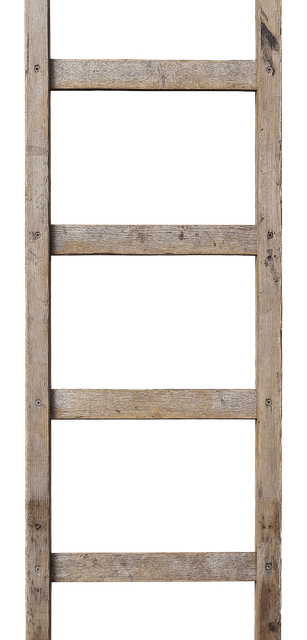
The Ladder of Participation

Someone at work mentioned that they were reading an article about the Ladder of Participation.  This got me thinking about my own participation in activities both at work and home, predominantly about the roles I have within the #bellringing community.

The Ladder, devised in the late 1960’s, has three categories: Non-participation, Tokenism and Citizen Power.  Each category has a number of rungs within it that describes how citizens, the general public, can through participation, have more influence in society. https://nhspublicvoice.wordpress.com/2016/10/27/ladder-of-participation-shows-how-involved-you-are/

Starting at the bottom rungs of the ladder in the non-participative categories are Manipulation and Therapy.  These two are there to educate and cure the participant and to achieve public support through PR activities.

The next three rungs are in the Tokenism category and cover Informing, the one way flow of information, Consultation, the use of attitudinal surveys, meetings, public enquiries, but can be seen as a window dressing, before escalating to Placation, allowing citizens to give opinion or advise but holding on to the right to judge the legitimacy of that advice.

The real Citizen Power comes with the top three rungs of the ladder.  Partnership, the redistribution of power between citizens and the power holders with shared decision making.  Delegated Power, where the citizens now have the power to make decisions and assure accountability.  Citizen Control, where the participants hold the power for entire job planning, policy making and managing activities.

In the #bellringing context I can see definite elements of manipulation and therapy and informing, where we are providing information, guidance and exercises to educate and support.  We are currently undertaking various consultations to find out what people want from their #bellringing organisations.  I hope that we do not then use that to placate, but inform decision and policy making.  We have seen some great examples, particularly over the last 12 months or so or partnership, Association of Ringing Teachers, Central Council of Church Bell Ringers and The Ringing World working together.  We are certainly offering opportunities for Delegated Power in the workgroup structure, which allows anyone, even if they are not a Council member to participate and influence the direction we are taking, and providing expertise.  The Citizen Control might be a bit more tricky to manage wholescale, but there are pockets of activities that are directed by the ringers at a local level and we would want to support them with that.

No doubt there is room for improvement at every rung of the ladder, but it was interesting to note that we are on every rung. Where are you on the ladder?

What’s stopping you from letting go?

Another one of those self-awareness quizzes (I’m getting quite in to them now) was all about what’s stopping you from letting things go and moving forward. This could be an incident that keeps holding you back, lack of self-confidence, lack of imagination, capability or opportunity.

So having answered the obligatory 10 questions – why do they feel the need after question 4 and question 8 to let you know that you are now 40% and 80% complete? – it spewed out my results:

Self-Awareness

Ruminating can become habitual, the go-to place for your mind to wander. But constantly rehashing old arguments, decisions or events keeps them live and fresh. Next time you find yourself sucked into an overthinking spiral, check in with how you feel. If your mood has taken a downturn or you’re feeling anxious, your thinking is not helping you resolve anything. Increasing self-awareness by making time every day to do a mindfulness exercise can help you get into the habit of observing the stories your mind is telling you without getting sucked into them. Try starting your day with a mindful shower – focus on feeling all the sensations and smells. When your mind wanders, observe where it has gone without comment or analysis, then bring yourself back to the present. It may also help to schedule daily ‘worry time’ and park your overthinking until a specific time of day, preferably when you’re relaxed and in a good frame of mind. If, when worry time comes around, you don’t want to go over old stuff, that’s a bonus.

I do actually go over things, again and again, and try to understand the different nuances of what has happened, why it happened, what could have been done differently, how I could have reacted differently.  I also spend a lot of time thinking about why am I spending so much time thinking about it.  I often tell myself to move on. 

I guess that I’m one of those who constantly beats myself up about things.  There’s always something I could have done better, or should have done that I didn’t, or did that I shouldn’t have, or that I really ought to give more time to. I replay conversations over in my mind multiple times.  “What if I’d have said this”? or “if they’d have said that I could have…” and so on.

I’m not sure that I want to schedule a daily worry time, as there are some days when I don’t overly worry about anything in particular, and I’m not sure that you can necessarily schedule it.  Things that will cause worry that are triggered by other things and can happen at any time.  I might be in the middle of one thing and something on the radio or that I’ve read will trigger my brain to relive a previous worry.

I try to learn from previous errors and hope not to repeat them (not always necessarily successfully) however, I do find it really hard to forget about them and move on, even when a solution has been found, agreed and implemented.  I will stew over it, even after some considerable time. 

I guess I need to learn how to deal with it in the moment, resolve whatever it is, and then move on.  Step away.  Park it.  Easier said than done.

How adventurous are you?

I do not think I’m the adventurous type at all.  I like home comforts. I like routine.  I like to know what I’m doing and when so that I can plan around it.  I’m not particularly great at trying new experiences.  Although I did do an abseil once.  I did go skiing when I was at school.  I do like to travel and see different places. And I did make my husband do husky sledging a few years back. But I’m not spontaneous, or good at thinking of what others might see as exciting things to do.

So, I thought I’d try and find out what the experts say about whether I’m an adventurous sort or not and turned to one of those on line quizzes that thinks its gets to know all about you and your preferences by asking you a mere 10 multiple choice questions.  According to the results:

You are excited by new experiences

Cosmopolitan, smart and savvy, above all, you get your kicks from interesting experiences. You flourish when your mind and senses are nourished and flounder in a cultural vacuum. The buzz of a new exhibit, the hush as the theatre curtain parts, or the flavours of a new cuisine all excite your palate and thrill your thoughts. For you, the conventional is dreary. Because you open yourself up to a wide array of artistic and intellectual interests, your world is ever expanding.

Well, as it happens, yes I do like the theatre.  We do try to at least make an annual trip to see a West End show each Christmas time (2020 being the exception) and if anything else takes our fancy in the mean time we’d go along.  I do like to learn new things and educate myself.  I enjoy certain types of museums and exhibits and enjoy a good National Trust property or English Heritage site.  I do like eating, so trying new things from time to time is good, and when we are on holiday abroad I do like to try something that might be considered local cuisine (so long as its not fish!).

So I might not be adventurous in the sense that I like to do extreme things like water sports (I have a phobia of water so that’s not going to work), or bungee jumping, or fast paced stuff, I’m more of a slow, steady adventurer. I’m less keen on the “let’s do something crazy” and go for more of the “let’s plan a nice trip out”. 

A while back I did do a year (and am probably still doing it) of saying “yes” to everything that came my way.  This was both exciting to take on new challenges but worrying as some of the things I was asked to do put me in the spotlight, somewhere I’m not comfortable with.  However, it did give me a chance to connect with new people, and has stretched my own learning and capacity. The downside is that I now get involved in lots of things that I can’t always give sufficient time to. So there’s a fine balance needed.

So, maybe I am unconventionally adventurous and my world is ever expanding, just slowly.