A strange day

With the excitement of starting a new role next week, and a long weekend away in between, today was a very strange day indeed.

Because the move to the new role has been swift, the opportunity to hand over things, finish things off and so on has been very short. Not least having the chance to tell my team about it.

The day has been spent trying to wrap up loose ends and get things to a sensible state for someone else to pick up and finish. The other things I need to sort out is moving desks. There are some things I can take home that I won’t be able to utilise in my new office space, but there are other things that I will need to take across, and some that I don’t need to take with me.

The plan is to come back to this office on Tuesday, after my weekend off, to pick the bits that I will need, then walk them over the other side of the site to where I will base myself. I also have the option to be able to work from home, so I may start doing that a couple of days a week too.

I suppose I’m not technically leaving the team as its only a secondment, so there’s been no “leaving do”. I’ve spoken to my team leaders and sent a message round to the team as I didn’t get to see and speak to everyone. I will get to see them from time to time so I guess its not a case of walking away.

At least I have a nice long weekend, Thursday to Monday inclusive, to be able to switch brain ready to hit my new role next week.

Reasons to celebrate

The 1st of December. The start of the build up to Christmas. The first day you can legitimately have chocolate for breakfast from your advent calendar.

For the last few years I’ve bought C a beer advent calendar from Adnams, our favourite purveyors of beer. However, this year they weren’t offering one, presumably as a bi product of covid shutdowns they’ve not been able to brew the volumes of beer as they had done.

Not to be out manoeuvred though I found an alternative supplier offering an advent calendar of craft beers from different establishments. Order duly placed.

On the route out of the checking out procedure I was directed to the “customers who bought this product also bought …” section. Apparently someone had bought a prosecco advent calendar. I never knew there was such a thing. Click, I’ll have one of those too.

For some reason or another an advent calendar is the one thing that C has never bought for me. We’ve bought them for R and her various flatmates over the years, and I’ve always bought him one, either chocolate or more recently beer. But for some unknown reason I’ve never been given an advent calendar.

This year he even bought himself a tea advent calendar. I don’t drink the stuff, so it was definitely a self purchase.

Well, I’ve treated myself this year seen as though no-one is going to do it for me. I know, sob story isn’t it? First world problems.

It seems fortuitous therefore that on the first day of opening my prosecco calendar, that I actually have something to celebrate. I was interviewed for a project manager 6 month secondment role, at a higher banding, and was successfully appointed, and asked to start next week.

I shall crack open that first bottle tonight and toast a new future.

Training, learning, sharing

The Association training day was held on Saturday. In a parallel universe we would have been meeting together and physically ringing, with pub lunches and some great camaraderie.

With lockdown we’ve moved it to a digital format instead. Whilst we’re not all meeting together, or physically #bellringing, or having a lovely pub lunch, we have been able to meet in small virtual groups using Zoom, we were able to ring using RingingRoom and were able to offer both a lunchtime talk and an evening talk. We may not have been able to do that in the real world.

Considering that only a few months back we were feeling bereft about not being able to ring, the organisers were able to put a great programme together thanks to a few people’s efforts. Yes we’re not meeting face to face but there doesn’t seem to be anything that we can’t do online.

When we are able to get back to the tower together, our learning, experience sharing and skills will have helped us and will put us on a great place to move forward.

When we look at the survival and recovery of #bellringing there are some fantastic resources to support a safe return to the tower and much more to come.

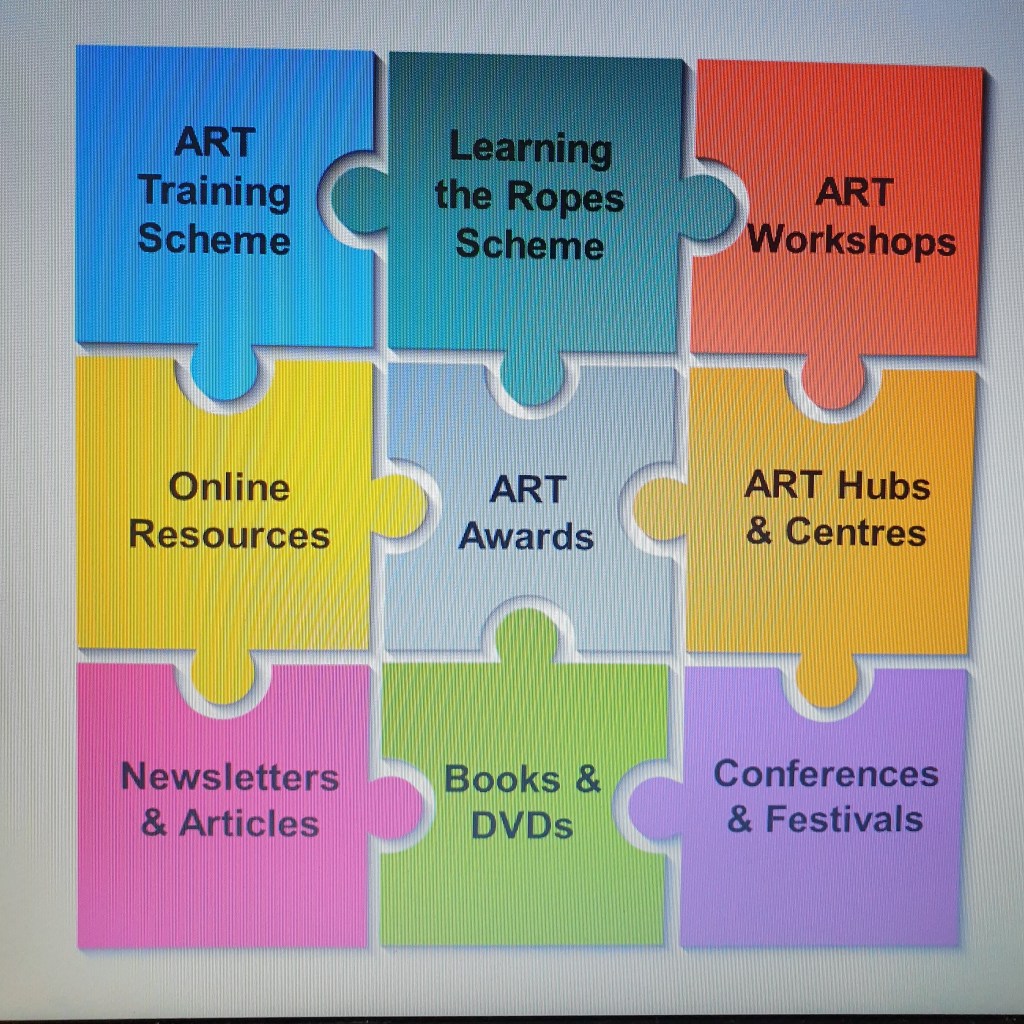
There were 2 fabulous talks during the day, the first on the Association of Ringing Teachers and Central Council of Church Bellringers collaboration on survival and recovery. The second was about the Birmingham School of Bellringing and how it teaches from bell handling up to method ringing. I recorded and uploaded both to our Youtube channel.

An excellent way to spend the day training, learning and sharing.

What you permit you promote

What you allow, you encourage. What you condone, you own.

This phrase was mentioned recently with regard to leadership. I don’t think that this should be solely levelled at leaders. I think this is something that anyone at any level should look to.

If you see a damaged piece of equipment is it solely the responsibility of the leader to fix it? They may well have the responsibility to get it fixed, or purchase a new one, but if staff on the shop floor keep walking past it “oh yeah, that’s been broken for ages” without either reporting it or removing it, then surely they are complicit in any accident that may occur later on if someone tries to use it. The same if something is untidy or a behaviour is unacceptable. If anyone allows it to continue without addressing it, at a commensurate level of responsibility, then they are promoting, allowing or condoning.

As a leader though, you can be quite constrained about how to deal with an issue. Policies and procedures may require certain levels of challenge. Start with an informal conversation to address a behavioural problem, set some improvement objectives, revise them. If after a period of time there is no improvement, escalate to a more formal stage, then repeat the objectives and review. Then, if there’s still no improvement, escalate again and so on. Sometimes there may be 4 stages before anything final is resolved. All of that takes time and of course may have to be kept confidential. That means the rest of the team may think that nothing is being done about it.

For replacing equipment it might be an easier process, but again it has to go through several layers of authorisation before an actual order is placed. That takes time and it looks like nothing is being resolved.

Bring that back to something like parenting. I remember saying to my daughter, when she had books, toys and other stuff strewn across the floor “move it or lose it”. If she hadn’t tidied up within an agreed time frame, I would scoop it all up and put it in the bin. And I mean the outside bin, not a waste paper basket or the kitchen bin.

Mostly with my daughter you only had to tell her once, or on the rare occasion of following through, I did actually put her school work in the outside bin. She threw a wobbly and had to fish it out. But next time I asked her to tidy up “move it or lose it”, she did as asked.

I think as parents, or leaders, shop floor folk, or even family members or friends, it is something that we should all adhere to this mantra, in any situation, walk of life, relationship. If you permit the bad things to happen, you are promoting them as acceptable and the norm.

Reflexivity

A group of us picked up where we’d left off in the next session of a leadership course being run by the Trust, and spent a while discussing reflexivity: the examination of your own beliefs, judgement and practices, with the purpose to have a better understanding of what we do with that knowledge.

We were asked to consider what attributes of teams get the best out of us as leaders, and what attributes of ourselves bring out the worst in our team.

For me, the former requires focus, direction, lateral thinking, autonomy and timeliness.  For me to function at a higher cognitive level my team needs to be focused on the task at hand, to all be pulling in the same direction for the same purpose, to find solutions to problems using their own skills, experiences and initiative, and to keep to agreed timescales.  Then, I can fully support their needs, priorities and strategic direction.

I probably set some high expectations and then expect my team to deliver to the same level and quality of output, at the same pace, as me. Of course I’m heading for trouble there. I am a world away from their reality and have a very different skill set. I need to remember that and make concessions. Of course this is going to irritate them because if they are unable to deliver to my expectations,   they may feel under pressure, unsupported, or even like they had failed. And if I don’t get what I expected then I might feel let down and frustrated.

Having recognised this over the years I have tried hard to acknowledge different skill sets and work with people’s skills rather than against them. I try to ensure that people are comfortable with what is being asked of them but at the same time stretch them a bit and help them develop new skills.

Being able to do this will lead to my team being more autonomous,  focused and problem solving. Thus enabling me to be more strategically supportive.

Understanding Emotional Intelligence

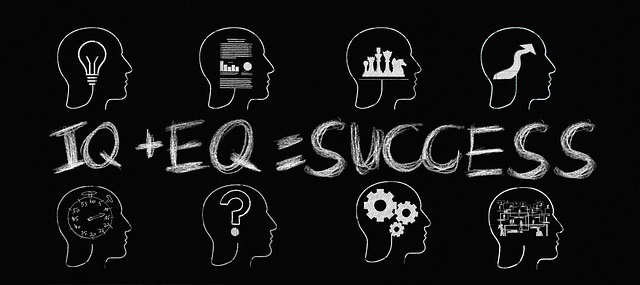
Emotional intelligence (EI), sometimes referred to as Emotional Quotient (EQ), is the ability to understand, manage and use your emotions in a positive way to help relieve stress, effectively communicate, empathise, overcome and difuse difficult situations.

This week’s #MSEBuddyNetwork focused on understanding our EI. We were asked to complete a questionnaire to determine our current state of EI in the 4 areas of self awareness, managing emotions, motivating oneself, empathy and social skill. At the end of the questionnaire you tot up the scores and there’s a brief descriptor of how to interpret the scores. If you score 10-17 this indicates a development priority, 18-34 suggests giving attention to the weaker areas and 35-50 indicates this area of strength.

Having an understanding of you EI affects your performance at work, your physical health and mental wellbeing, your relationships with others and social intelligence.

I scored 40, 37, 36, 37 and 29 in each area respectively. No surprises that the area I need to work on most is in social skills. I’m not a great mixer. I like my own space and am close to a very small group of people. I’m not an outgoing sort of person and not brilliant at networking. But this area is key to my every day work and some of the roles I occupy in a voluntary capacity. Its about persuasion, building rapport, collaboration. I’m OK at the reflection, change management and leadership side of social skills.

The Skillsyouneed.com website has some useful resources and suggestions on how to develop in these areas as well as suggestions on further reading.

The other thing I thought would be useful to do would be to get someone who knows you reasonably well to do the questionnaire but about you. That way it could validate your own perception of your strengths and weaknesses, or shed some light on your blind spots (Johari window).

Transferable Skills

When I talk to members of my team, particularly when they are considering alternative roles, they often tell me that “I can’t do that”. I then take them, line by line, through the job description and ask them why they think they can’t do it.

One person told me once that they weren’t very organised. She was a mother of 3 school age children, a wife, had a full time job and all the family pursuits that go with kids. I asked her to think about how she cooked dinner in the evening. She said that she’d think about what to cook before leaving for work in the morning, when she got home, she’d get everything out of the fridge, put it in the pot/pan, then check in with the kids and their homework, then finish tickling the pot/pan and dish up. I asked how she managed all that to which she replied that it had to be planned and organised. Lightbulb 💡 moment. That means she could organise. Its a transferable skill.

The Psychologies Magazine suggests when you’re thinking about a new career, that by doing a skills audit you can determine if there are any core competencies that need working on. Things to think about are communications, research planning interpersonal and HR, positive attributes, management, leadership and decision making, financial management and critical thinking.

The article also noted that you only need 70% of the skills listed on a job spec to apply for it. Then, once you’ve thought about what skills you have, and worked out what you need and why, the next step is to marry up your skills with your values.

I’m going to conduct the skills audit just to find out where my shortcomings are, and focus on “pivoting a new future“.

Leading to a new path

Its funny how things turn out sometimes.

After feeling stuck in a rut for a while, I’ve been making some noises and needing to do something different and I’ve been investing some energy in to making that happen. I still have a long way until retirement so I need to be enthusiastic about the work I undertake to make it valuable and fulfilling.

As I’ve mentioned before, I don’t have a calling or a vocation. I’ve moved from job to job in line with my strengths or desire to do something different.

As I head into the final months of my 40’s, the thought of changing career, or doing something else is quite daunting. I’ve been fortunate over the years to have been in the right place at the right time, with the right people behind me. This has enabled me to move roles, increase my responsibilities and wage packet to go with it. Those people are no longer at hand and I am becoming that person for others. But I do still need a job that I’m engaged with.

A while back I made some noises about wanting to move away from service management and go back to project management, where my skills are more commensurate. I also want to spend more time doing things that I enjoy (e.g. #bellringing) and to do better at that too.

Deciding that I want to invest more in my own final years of employment and thinking about the “what if…” scenarios has helped me formulate what I want to do.

Its not about the pay packet, I’m not motivated by money, although I do enjoy having some. I need to have purpose, value and satisfaction. I need to feel that I can use my experience, knowledge and skills to contribute to a larger society.

Change is never without its worry. Am I too old to do this? Will I regret it? What if it doesn’t work out? Should I just bite the bullet and hang the consequences?

Two opportunities are currently about to present themselves and I’m going to reach out for both of them. Now is the time to do what I want rather than what I must.

When time is important

Time is money. Good time management is really important in this busy world of ours. But with the increase in reliance on technology is it really helping us be more efficient with our time management?

You could argue that with the advent of video conferencing, the hours spent travelling to and from meetings now become time we could spend being more productive. The trouble with video conference meetings though is they also block out much of the interaction.

Sometimes there’s a glitch and someone can’t get logged in. Or someone arrives late and interrupts the flow by announcing their late attival. Sometimes the details of the meeting are changed but not communicated to everyone. Sometimes the right people aren’t invited to the meeting.

One such occurrence that does wind me up is the system we use at work for meetings. In itself it works fine. But if you are attending the meeting because someone else has forward the invite to you, you don’t get any updates.

I planned most of my working day around a meeting that was due to take place at 2pm. The agenda had been emailed round earlier in the day so I’d read all of the attachments carefully to make sure I had some vague idea about what the meeting was for. I made sure that I went to lunch earlier so that I would be back in good time. I passed messages on to other people to action knowing that I would be in a meeting for a couple of hours so unable to action them myself. Got my whole day pretty much mapped out.

I logged into the call and it said I was the only participant. Fair enough I was prompt, so I’ll give everyone else a chance to log in. After about 3 minutes waiting I’m starting to think this is a bit ominous, so I email a colleague who is supposed to be on the same call. No response from her. Then I check her e-diary to see that she has had a cancellation for the meeting. I double checked my diary but no cancellation received. Then I noticed my invite to the meeting was forwarded. I wasn’t on the original list in invitees.

It seems that the video conferencing software can’t pick up forwardees, so they won’t get any updates. I guess there’s no reason why it should. And no one else thought to pass the message on. But again, why would they?

I have spent the next 10 minutes trying to either get logged into a meeting, thinking I was inept at the logging in process, then trying to determine what was going on. I suppose, given the fact that I’d passed a number of actions on to others, I do at least have the time to spend investigating the issue, but that’s beside the point. I later found out that another party who had also had the invite forwarded had recieved the cancellation. So how did that work? Further investigation required and/or a call logged with IT me thinks.

I watched a TEDxNHS talk back in January featuring Rachel Pilling and Dan Wadsworth that explained if you took 15 seconds to do something now that could save someone else 30 minutes later, then that person did the same, and so on, just imagine how much time would be released and how much less frustrating life would be. http://www.youtube.com/watch?v=wDqNHIKavVE&app

I guess I need someone to give me a 15 second masterclass on this video conferencing system as I clearly don’t have it set up properly.

There’s an app for that

NHS Leadership Academy Healthcare Leadership Model

It seems that there’s an app for just about everything going. The latest one to land in my inbox is from the NHS Leadership Academy based on their Healthcare Leadership Model.

This model became very familiar to me as I was studying my MSc in Senior Heathcare Leadership via the Academy. It covers the 9 leadership dimensions of inspiring shared purpose, leading with care, evaluating information, connecting services, sharing the vision, engaging the team, holding to account, developing capability and influencing for results.

Throughout my course, which was a few years ago now, I referred to this model constantly. It has practical suggestions as to support you whether the behaviours are essential and you demonstrate proficiency, strength, or showing exemplary performance as a healthcare leader against each dimension.

To be honest, you could take away the “healthcare” part and it applies to any leadership role in any organisation, at any level.

Being an effective leader manifests itself from how we manage ourselves as leaders. How we recognise our self-awareness, self-confidence, self-control, self-knowledge, personal reflection, resilience and determination are the personal qualities and foundations of how we behave and how we interact with others, and they us.

All of this has a direct impact on our colleagues, our teams and our culture and climate within our teams and across our organisation.

Every now and then I revisit the model and on my latest look discovered that there is now an app that allows you to record observations of leadership behaviours and explore them using the dimensions. You can add your own reflections on yours or observed behaviours and look at summaries.

I shall download it and have a play.