Love language and laptops

At work I have two monitors, which until I had them, I didn’t realise I needed.  With multiple windows opened, it’s remarkable the difference it makes to be able to have two things on view at the same time.  At home, C has two monitors on our main PC, but I just have my laptop that sits on my desk, not really at the right height either. 

This past week, thanks to the latest Covid instructions, I’ve been working from home again.  I have been using my work laptop, and back to only having one screen.  It’s not the end of the world, there are far greater things to be concerned with, but suddenly it did make a difference. 

I happened to mention this to C the other day, and how useful it had been on a Zoom call recently to be able to have everyone on one screen whilst the document I was sharing with them was on the other.  I suggested that it might be an idea to check the post-Christmas sales to see what bargains were to be had.

Next thing I know…

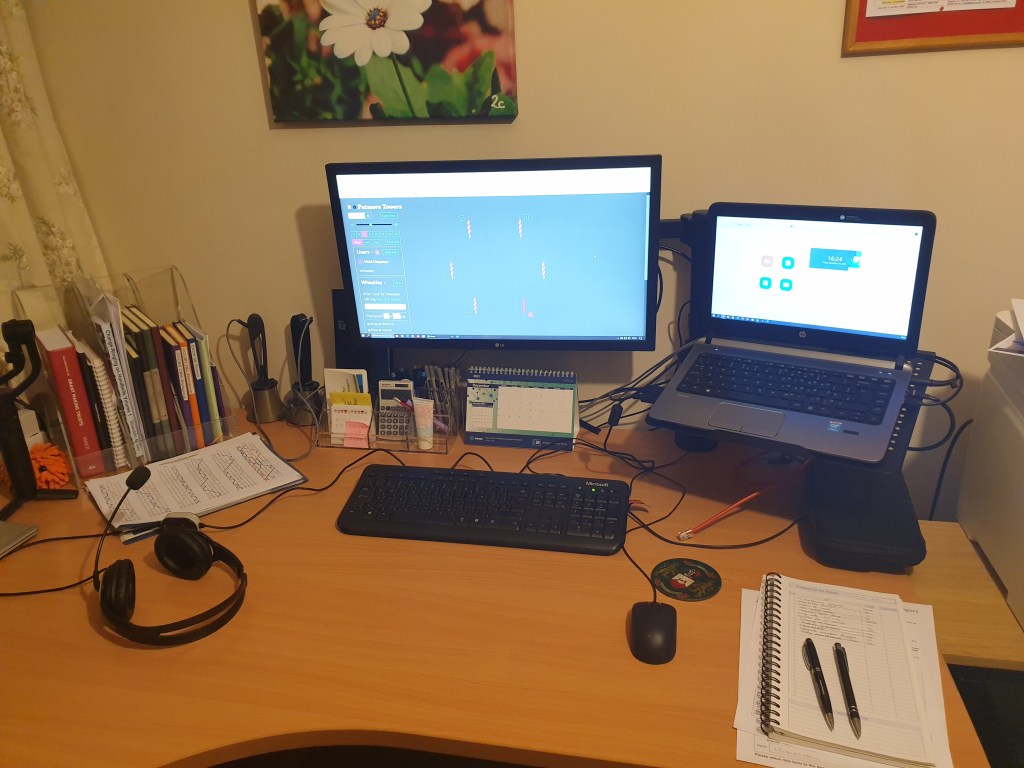
A pole that can have a monitor attached one side and a laptop resting on a metal tray on the other arrived one day.  A mahoosive 24” monitor arrived the next.  An hour or so later, I have a new home office set up with a massive screen directly in front and my laptop slightly off to the right.  He said that when he checked the website there was little in way of stock and what was there was already discounted so he thought he’d get it now.

Now, I am extremely grateful of course, but it got me wondering about a podcast I’d listened to about 18 months or so ago all about Love Languages. The concept of love languages was developed by Gary Chapman which he distilled from his experience in marriage counselling. The five love languages are five different ways of expressing and receiving love: words of affirmation, quality time, receiving gifts, acts of service, and physical touch. Not everyone communicates love in the same way, and likewise, people have different ways they prefer to receive love.

Its clear that C likes to express his love language as acts of service.  He does so much for so many in many different ways.  It can be from making my coffee in the morning, to all the work he does for the #bellringing community locally, to fixing things, booking things, arranging things and generally providing. Don’t get me wrong, I love having things sorted out for me, my coffee made, my dinner cooked (to be fair he is retired and I’m still at full time work), and things around the house done for me, but I do miss cooking sometimes.  And sometimes he’ll take over doing things, even when I don’t really want or need him to. 

I like receiving gifts, and I don’t know many people who don’t, but I think my love language would actually be a combination of quality time and physical touch.  I’d rather spend time with him, and those closest to me, and to feel physical connection, even though I’m not really a touchy, feely sort. We do often hold hands when we’re sitting on the sofa watching tv, and our feet usually interlace when we’re asleep in bed. I do like to hug our daughter.  We don’t get to see her very often so its nice when we do, and she leans in for a hug or presents the top of her head for a kiss.  Even now she’s 24, it feels lovely when we’re sitting on the sofa and she leans in and puts her head on my shoulder, even if it’s only for a few seconds. 

I am extremely grateful for my new home office set up and look forward to getting used to what pops up on each screen.  It’ll be fun rearranging the desk items multiple times until I’m happy with them.

Thank you Mr C.

50 Ways to Enjoy Turning Fifty

My sister bought me this book for my birthday last week.  I thought I’d better take more than a cursory look at it.  It claims to have 50 ways to make this the best year EVER.  The book is set out in chapters based on making the most of turning 50, planning the best year EVER, implementing the plan, treating yourself well, having fun, looking back, looking within, expressing gratitude, putting things in order, eliminating what you don’t need, giving and looking forward. 

Each chapter has key questions to help you analyse yourself and figure how to make the most of turning 50, thought experiences to delve a little deeper and activities to do. It does say that you can dip in and out of the book, fast forward to the bits that most interest you and so on but being a pedant, I started at the beginning.  

Way #1 Accept your age. 

Thought experiment 1 asks you to make a list of people you admire who are over fifty and who are living terrific lives and make a note of what you admire about how this person is living their life.  OK, so first thing is to think of people over 50 who I admire.

I’m not going to list them all here because some of them might read this and either be embarrassed or disagree.  I’ve written each of them in the book.  Suffice to say that it includes C, my parents and siblings, a few former work colleagues, and some ringers I know. In some cases, I admire what they have achieved over adversity.  In others I admire what they’re currently doing with their lives, and if I’m honest, I’m probably a bit jealous of.  Some I admire because I wish I were more like them.

The key questions were what are some benefits of turning 50? and What are you looking forward to this year?

I guess benefits might include being that little bit wiser sometimes.  Having more opportunities to reflect on what I want out of life and trying to achieve a better work/life balance. Nearer to retirement age (although still some considerable way to go).  Looking forward to getting to see R again.  This year has been an exception and we haven’t been able to spend time together, so as soon as we can we’ll do that.  Can plan for the trip that we should have had for my 50th birthday.

Thought experiment 2: what concerns do you have about turning fifty?  What challenges are you experiencing or expecting? Which of those can’t you change? What constructive actions can you take regarding that item?

I’m not really bothered about turning 50.  It’s just a number.  I guess ill health, or my level of unfitness is probably going to be an issue at some point.  I’m feeling less tolerant of other people, which I need to reign in a bit sometimes and there are other things that I’d rather be doing with my time but have to work instead. I can’t change that for a few more years yet unless something amazing comes up, like winning the lottery.

Why we do what we do

I have the next week off work as annual leave. I have no plans, and no real thoughts about what to do with my time. I have a couple of reports to write and could bake something but other than that, because we can’t go very far due to lockdown, no other real thoughts about what to do. That got me thinking about why we do what we do (or not).

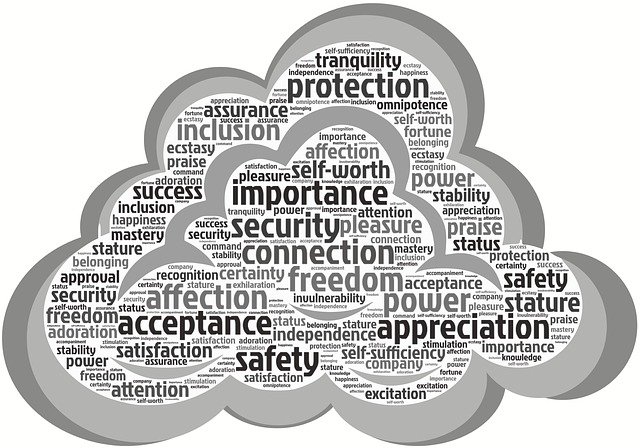
You could take Maslow’s hierarchy of needs and work through that systematically, but does that cover it? Yes, there are some basic needs that ought to be addressed: the need for food, shelter, sleep, company etc. We need our elements of security around employment, health and some material belongings. There is certainly a need for friendship, family, love and a sense of connection. But then we get on to the things that you could argue we don’t NEED, we just WANT. Respect, recognition, strength, and then self-actualisation – to be the best we can be.

There’s another school of thought that suggests a different solution to why we do what we do.

A sense of obligation – to share experience and knowledge, the obligation to serve others. A sense of duty, and pride – perhaps via volunteerism, a call to action, pride in a job well done and our want to succeed. We should be wary of the vice like self intention, cunningly disguised as “being in our best interests”, which only really offer temporary pleasure. Acts of kindness and our altruistic love for the benefit of others. Passion for our favourite activity or cause, our desire to do something. The desire to “tick the box”, perhaps something off our bucket list, but could lead on to somewhere else. Our destiny may be coloured by family tradition, a hobby or particular calling that other family members before us have excelled in. Yes, there’s a need to have a sense of fulfilment to keep us energised and empowered through our self-actualisation. But maybe we do it for others, to have something to share or for the “greater good”.

Tony Robbins, an author and podcaster, as well as being a mutli-billion dollar entrepreneur, in his TED Talk and book, describes 6 human needs – certainty, significance, variety, love/connection, growth and contribution – and how each influences our thoughts, feelings, behaviours and actions. By understanding what drives us, we can understand how to meet those needs. The same for people around us, once we know what drives them, we can help them meet their needs too.

At a very fundamental level, I know I need to be safe, secure, independent and have a sense of purpose. The narcissist in me does need some form of appreciation every now and then, but I certainly need feedback to make sure that I’m at least heading in the right direction and to help me achieve some personal growth. I need to be educated. I need to understand things and learn from them. I try to encompass all of that in my working, social and family life and am conscious that I don’t always get it right.

Christmas parties are a no go

Every Christmas we put on a Christmas lunch with quizzes, food, raffles and Secret Santa’s gift swaps. Last year I remember driving to the wholesalers in the morning to collect all the pre ordered party food and stressing over being able to get parked back at the office. For a team of c.70 people, thats a lot of food etc to unload.

Almost immediately after the previous years party I had already written the quizzes for last year, had already planned the food shopping and started getting bits together for the raffle.

This year, of course, that wasn’t going to happen. With my team split across two shifts now, and the need to keep sharing things to a minimum, it would have been difficult to have put on the lunch. We looked at possibilities of getting food delivered, or ordering prepacked sandwich bags. Quizzes would have been difficult too as they tend to do it as teams so sitting near each other wasn’t an option, and I’d have to do it twice which wouldn’t be practical. It seemed there was no appetite for people wanting to do Secret Santa’s either this year.

But we did decide to do a raffle. Over the year I’ve been collecting bits and pieces, buying stuff and shopping for all the things we know they’d be interested in, mainly alcohol. We managed to cover the costs and be able to put £50 in an envelope as a prize and still have some left over to give to Charity.

This year we will be sending a donation to Crisis for those who struggle expecially at Christmas time. As much as it has been nice to receive prizes and gifts, it has more meaning to give to others.

One of my team encapsulated that perfectly. He (we’ll call him S) had been talking with one of his colleagues (we’ll call him R) and they had decided which prize they would most like if their raffle ticket was drawn. S’s ticket was drawn. He picked the prize that he knew R wanted and gave it to him “in case your ticket doesn’t get picked”. R’s ticket was then picked and instead of taking something else that he wanted, he picked the prize that S had wanted and gave it to him. They were both very pleased.

There is much to be said for the giving rather than receiving. It doesn’t have to be big, bold and expensive. Giving your time, or something simple like a coffee or a chat, might just be what someone needs right now.