Why are we so poor at dealing with our emotions?

Maybe you’re not, maybe its just me.  Is it because evolutionarily we worry about showing emotion as a sign of weakness that gives some imaginary power to others to hold over us? Or is it that we’re simply just not good at it?

When we are able to understand and name our emotions we are in a better position to tame them.  A study led by Matthew Lieberman looked at how people responded to looking at pictures of faces with different emotional expressions.  The act of naming the emotion reduced its impact on the participants.  It turned out that when naming the emotion the activity in part of the brain’s prefrontal cortex increased significantly (Bill Lucas, rEvolution, how to Thrive in Crazy Times).

People who routinely notice their emotions get better at picking up their early warning signals such as clenched fists or the pit in the stomach, or tight shoulders, or raising the voice, cutting across others when they speak, and so on. They are also better at recognising their negative inner voices and finding ways to banish them. 

By their very nature emotions consume energy.  Its all too easy not to recognise an emotion is emerging when we are in the moment.  It’s only as our self-awareness grows we become able to notice emotions as they occur.  From then we can take a step back and look at it from a different perspective as if it were happening to someone else.  The very act of noticing the emotion can help us separate us from it and create space for us to evaluate what’s going on.

When we are dealing with the inevitable transition through life, if we can notice our emotions and name them, we are better placed to be able to see them as part of a larger pattern and are more likely to be able to modify our behaviours in light of previous experiences.

I grew up in the era of suck-it-up.  If I fell over and hurt myself and cried, I’d be asked if I was dead yet, if not, stop grizzling.  It instilled a sense of no point talking about it, you’ll not get much sympathy.  I’m not berating my childhood experiences here, but those early lessons are the ones that shape who we become. 

Over the years and various life experiences, I have learned not to bother saying what I actually feel.  Either no one is going to listen, nobody cares, I’ll not get any sympathy and therefore nothing will change, so there’s no point saying anything.  What I’m finding now in later life, and it may be “woman of a certain age” related, is I get more emotional about things more easily. I cry more at sad movies.  I feel more desolate when I don’t get a hug from C when I need one (not because he refuses, but probably doesn’t even notice).  When I feel I want to talk about emotional stuff, I can’t find the words to use. I feel people will think I’ve lost the plot. I don’t know who to talk to about emotional stuff; its not necessarily appropriate to discuss with C and he doesn’t talk about his emotions either, so we’re as bad as each other. 

All this can lead to bottling up emotions over time, then when they explode, someone asks why you didn’t say anything or where did that come from.  Some may even think you’re having a midlife crisis because its out of character.  Sometimes, its just not that easy to say things, find the words, speak to the people you really need to speak to about what you’re feeling. Sometimes you still have to just suck it up.

What will make you happier in 2022?

Happiness is a state of mind, not a trait, and therefore not a permanent feature.  According to some experts 10-50% of our happiness comes down to genetics, the rest is up to us.  But just like learning an instrument, or learning to ring bells, we can learn to be happier.

If you’re a regular to my blog you’ll know I occasionally get sucked in by those ten question quizzes that are supposed to be able to define you and then offer you a way of self-development.  Sometimes they are fairly accurate, others way off, and sometimes I find it hard to accurately respond to the multiple choice answers as none of them really fit, so end up picking the best of the bunch, even though it may not reflect my feelings at all.

In such a quiz in February’s Woman & Home magazine, the questions are reduced to just seven in their quiz to determine how to make 2022 the best year yet.  Out of those seven questions four of them didn’t really have answers that were accurate for me, and even the second best option wasn’t that close.  However, the results were still fairly accurate:

Work on – being more confident.  You’re kind and generous, but be careful not to give all your energy to other people.  Your fear of making mistakes may be holding you back.

Try the “one for me” rule – when you give someone a compliment, mentally give one to yourself.

Remember to practice failure – the only way you’ll learn is to try, fail and try again. Practise failing in situations where it doesn’t really matter. You’ll normalise failure as a part of life”.

To some point I agree. I don’t think it’s my fear of making mistakes that holds me back.  Everyone makes mistakes and that’s now we learn.  For me its more a fear of being discovered as an imposter, not knowing what I’m talking about, being somewhere I shouldn’t. 

I have noticed more recently, where I’ve held back from saying what I really want to say because it won’t make matters any easier, or not wanting to add fuel to the fire, I have noticed where not to say something doesn’t add any value, I have acknowledged that to myself.  A sort of compliment for not making things worse.

As I said, failing at something is how we learn.  We won’t get everything right every time, we’re only human.  There will be times where I say something I shouldn’t, or do or not to something, whether it’s at work, #bellringing or in my home and social life.  The important part is that I learn from that mistake and try not to do it again, and where necessary make an appropriate apology if it caused distress or problems for others.

I’m not entirely sure how I am supposed to translate this result into actions that will make me any happier.

Get back out there and have some fun

Its probably been a while since we all had some really good fun, and with the current situation some might feel fun is still a long way away.  At some point we have to learn to live with this virus and get on with our lives whilst taking appropriate precautions, but that shouldn’t mean we can start to get back out there and enjoy ourselves.

Science journalist Catherine Price did some research with a focus group of 1,500 participants worldwide to explore their definitions of fun.  She found that defining “true fun” as any time, however short, when three elements combine: playfulness, connection with other people and flow, a state of being so actively engaged in the present experience that you lose track of time.

Having fun has both mental and physical benefits. When we’re stressed we produce more cortisol which makes our heart beat faster and blood pressure and blood sugar levels increase.  Fun is the antidote as it can energise and relax, you don’t feel anxious when you have fun. Price offered five ways to enjoy more fun:

  1. Lose yourself in the moment – being fully engaged and present, free from self-criticism and judgement.  It’s the thrill of losing ourselves in whatever we’re doing and not caring about the outcome.  It’s laughing, playing, euphoric connection, rebellion and the bliss that comes from letting go.  Price suggested starting a fun time journal to acknowledge the fun that already exists in our lives, not only focussing on the major moments but appreciating the smaller moment of fun that pop up unexpectedly every day.  It could be as simple as a smile or a compliment. We need to notice and value those moments too.
  2. Find your fun magnets – Price suggested reflecting on three experiences that you could describe as having true fun when you felt completely present, engages and alive, where time stood still but flew by and when you were so energised.  Focus on where fun was the dominant descriptor then try to put yourself back there, in the moment, and fully immerse yourself in reimagining the sights and sounds, the smells and the feelings you felt in your mind and body.  What was it in particular that made it feel fun? Then, look forward and describe something that you’d love to do in the future, what is it you’d enjoy most about it? Look at the fun themes, the activities and people that most often generate fun for you.
  3. Edit your free time – We can all claim to be very busy and not have time for fun, but having fun doesn’t mean adding more things to your already packed diary.  It requires us to create space by doing fewer things, so that we can spend time in a more targeted way.  You may already do an activity that once upon a time felt like fun, but no longer holds that feeling for you.  Notice this and choose to spend your time differently, on an activity that does bring you joy, don’t waste your time on activities that don’t excite you.  Watch out for “fake fun”, activities that are marketed to us as fun but are a meaningless waste of time, like binge-watching tv, buying things we don’t need, or scrolling for hours on end through social media. 
  4. Pursue your passions – when we’re obsessed with productivity we can end up with no hobbies, anxiety and depression can leave us drained and tired, with little energy for anything else.  Price suggested setting yourself fifteen minutes to answer the following questions, noting everything that comes to mind:
    1. When I was a child, I enjoyed…
    1. I’m curious about …
    1. Things I used to do with my free time but don’t any more…
    1. Things I always say I want to do or learn but supposedly, don’t have time for …
    1. I feel alive when I…

Keep going until the timer runs out.  Once you have your initial list, try one and ask yourself whether you enjoyed it, was your curiosity piqued, would you do it again.  If you didn’t enjoy it give yourself permission to stop.

5. Plan ahead – this might seem a bit counterintuitive, you can’t say “I’m going to have fun on Friday between 7-9pm”, it just doesn’t work like that.  However, now you have identified your fun magnets you can use these to help generate fun and factor it in accordingly.  Once you’ve set aside time for fun, you’ll remember how good it feels.

I’ve said before that I don’t really know what fun is anymore, but I might just use the questions above to try to rediscover some of it.

How about you?

How one sentence can change your life

Image by 165106 from Pixabay

Whether we recognise it or not, we all need and use mentors and coaches that we can look up to who have travelled that path we are on now.  We might not recognise someone in that role “officially” but every time we have a conversation with someone, and we ask questions, or for advice, the other person is mentoring or coaching. You probably have many people who have inspired you, or you’ve learned from, or someone who has had an impact on you.

For anyone who has delved into the world of personal development, you can often look for more “official” role models.  It could be a colleague or work based mentoring scheme, or through the world of personal development and life coaching.  There are hundreds of them out there ready to help.  But how do you know which one to approach?  It’s going to cost you money and you want to make sure you get value for that.  You need to feel comfortable with them as going through the process can leave you feeling quite vulnerable.

I spent time with one person and all she said every time I asked a question or for advice was, “what would you tell someone else if they asked that question?”  That’s not helpful if you’re searching for those answers yourself.  Someone else’s story is different to your so it doesn’t necessarily translate.  If I knew what to tell someone else, I wouldn’t be asking the question myself, would I?  Thankfully, I wasn’t paying for this particular pearl of wisdom, and I’ve not been back since to that particular person.

We can often feel guilty for investing in our own growth and so far, I’ve not spent real money on it, but I am curious about it.  I saw something recently on LinkedIn which sounded really fun.  It was a group for women for fun and fascinating conversations in and around London, with events hosted at some truly stunning locations.  I was really tempted, it sounded like fun and a good opportunity for networking and to experience different things.  But something held me back.  The cost actually wasn’t that extravagant: £20 per month or £220 for the year for which you get exclusive access to the podcast, the online community and networking and so on.  Obviously there was a cost of attending an event on top of that, but factor in the glitz and glamour of attending an intimate supper in one of London’s most gorgeous venues, drinks nights, or bespoke evenings like wine tastings, book clubs, walks and talks.  It all sounded like a fun thing to do, to experience.  What was really holding me back was two things:

  1. Would I fit in with this group of people?  My lifestyle is so very different at the moment.  Would I look and sound like an idiot around these, presumably very cultured and clever people?
  2. Could I justify the expense?  It’s not much, but without being able to see exactly what I’d be getting for my money, I don’t know whether it would be worth the investment, and what I’d truly get out of it.

But surely if I don’t try, how will I ever know?  It’s a bit like mentoring and coaching, until you try with someone, you’ll never know if it’ll work for you or not.

Now, I’ve also had some great work based coaches.  Two stand out.  One I’d never met before and knew nothing about, who was very much senior to me, who was willing to meet with me over a coffee and chat about my future.  She carefully explored how I thought my career was going, and I do remember one particular piece of advice she gave me “when you go for an interview, wear some sexy undies, it’ll make you feel really special, and you’ll hold yourself completely differently”.  I’ve never actually put that to the test, but I can see her point.  The second coach I’ve had experience with was someone I know of, not necessarily very well, but we have mixed in work circles before.  She knew more about my situation and pushed a bit harder at the “what do you really want?” thoughts. This really helped me galvanise my own plans. She never told me what I should do, she asked how various things made me feel, and asked me to explore my feelings around the various options that were open to me.  It was a very soft and gentle approach but had some hard hitting lessons behind it.

So, I’m currently flitting between what should be my next self-development step with coaching or mentoring. Again, I need to look at where I want to be in life and what things do I want to experience.  Should I invest at least one £20 monthly fee in this London club and dip my toe in the water to see if it’s the right fit?  I know only I can answer that question. 

When you start to investigate life coaches, you’ll see they charge £thousand’s for their efforts.  I recognise that’s due to their expertise and knowledge in this area, but can it really be value for money?  Obviously, they would claim it is and all the intangible results you’ll benefit from along the way.

But they might just have that one sentence that could make a world of difference.

Above, Below and Beyond

It’s only taken 40 years, but I’ve had a #bellringing epiphany.  I am well acquainted with the theory that more complex methods are often made up of parts of the work from two other methods.  C and other people I ring with are expertly able to ring a method just by being told that it’s This above That. What that means is when you are in the change beneath the Treble you do the work of one method, then after you’ve passed the Treble on your way to the back, you do the work of a different method. 

For Christmas, at my request, C bought me the complete set of The Education Column series of articles.  I’ve read the first set and am making my way through Series 2 on Introducing Surprise. Some of it is stuff I already know, and some is proving to be interesting developments.

I was one of those ringers who skipped from Plain Bob straight to Cambridge Surprise without going via all of those lovely methods that help build pieces of work together.  My #bellringing experiences have also meant that the towers I rang at didn’t ring those methods either, so I never needed to learn them.

With the development of Ringing Room, the virtual #bellringing platform created at the very start of the pandemic lockdowns, I’ve been running a practice that has gone back to some of the basics.  We’ve travelled through Kent and Oxford, St Clements, Woodbine, Pinehurst, Buxton, then through to Cambridge, Ipswich, Norwich, Borne, Beverley, Surfleet and others.  Each building on the framework of the last.  More recently we’ve been ringing Sandal, Duke of Norfolk and College Exercise courtesy of the Little Purple Book. 

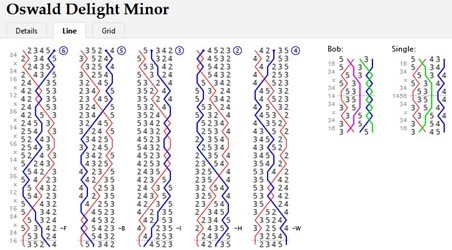
I was reading through Sheet 10 of Series 2 of the Introducing Surprise article, and it introduced Oswald Delight Minor. It was introducing us to the theory of Above and Below.  Oswald combines two methods that we’ve learned on our journey, Cambridge and Kent. 

I know both of these methods well, so decided to try a new way to learn this new method. I decided not to look at a blue line.  I didn’t even read the rest of the article once it had said Cambridge below and Kent above.  I opened up Abel on my PC and went headlong into having a go at a plain course of it, just reiterating to myself the whole way through “Cambridge below, Kent above”.  It wasn’t absolutely perfect first time, but I actually got through it without any major mistakes, without referring to a blue line. I can see where I’m passing the Treble and switch between the two methods. 

This is the first time in 40 years of #bellringing that I have actually seen Above and Below and rung a method using just that information.

I promised myself at the beginning of the year that I’d take #bellrinigng theory more seriously, but I also think having gone back over those methods I missed out on using Ringing Room has helped me see the bells better, particularly where I’m passing the Treble. 

Thank you to the developers of Ringing Room for creating something that has given so much joy, comfort and learning to so many of us, and to David Smith, extraordinarily nice bloke from Oz, for writing the Education Column, which until now, I’ve pretty much glossed over most of the time. I promise to read them properly from now.

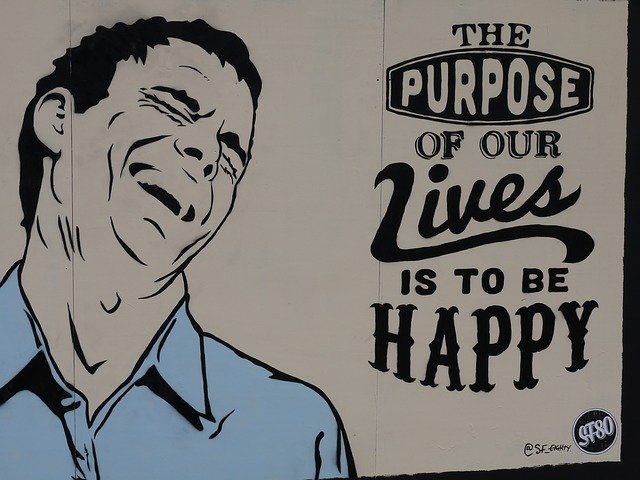
How to find and live out your purpose

Image by burrough from Pixabay

Do you sometimes think if you could just figure out what your life’s purpose is, your life would be complete?  I have done occasionally.  I wonder what the point of me is, why am I here? What am I meant to be contributing to the world?

Purpose is the reason for which something is done or created, or for which something exists.  In figuring out what your purpose is, you get to decide why you exist, why you’re doing something.  Your purpose can be being intentional and deciding how you want to show up, who you want to be. 

There are those who in their early years have a clear view of who they want to be when they grow up, a doctor, a lawyer, a writer.  Most of us though probably don’t have a strong sense of who we want to be.  I’d never have thought I’d be doing what I am now.  I never really thought about what I wanted to be or do.  R had very clear views.  At first she wanted to be a forensic scientist and we helped her towards that route.  We looked at what she needed to do at University and worked it backwards through A levels and GCSEs.  When it became apparent that she probably wasn’t cut out for that, an opportunity arose for her to play with photography, and that’s where she excelled.  She was a natural at it. She did photography at A level and even her teacher said there was nothing more she could teach her, she needed to go to Uni to do it, and that’s what she did.  Unfortunately the world of photography is a difficult one to get into, particularly if you lack self-confidence, but she has eventually found a job that revolves around camera equipment and is happy taking photos for fun.  She’s even had a couple of commissions over the last few years.  She found her thing.

If you think about what has led you to this moment, you stop trying to find your purpose and focus on deliberately showing up as the person you want to be. It takes practice, but things will begin to change.  When you refocus energy from resisting your job or what you do now into creative energy you can think about other things you want to experience.  When we are curious about other opportunities and projects they lead to the next step, and the next, without necessarily knowing what the outcome will be. 

You may still not know what the ultimate outcome will be but your purpose will be whatever you want it to be and whoever you decide to be.  Beyond that you get to choose to involve yourself in things you’re curious about and that may take you down another route.  Take the pressure off yourself and decide who you want to be as a human being then live that out no matter where you are or what you’re doing. 

For me, I think I’ve taken choices, particularly at work, that have served my needs at the time.  I reduced my hours when R was at school and I took a job that was much lower banding than I was used to.  Not long into it, I started to see opportunities to make efficiencies, to make the process better and get more information out of it as a result.  That lead to promotion.  Eventually I went back to full time, and in a role that gave me opportunity to process and plan, and organise.  Over the course of the next six years, I got promoted three times based on my emerging capabilities.  As a result of that I was then head hunted for a job with a major increase in responsibilities.  From there I’ve used my abilities to plan, process map and monitor.  This has put me back into the project management world, which makes good use of those skills. 

I feel that my purpose is to organise things and people, and look at processes to try to improve them.  I also have a number of curiosities outside of work that I dabble in but so far have not taken the braver step into investing fully into them.  I am keen to learn and explore areas of unfamiliarity. 

I think I will always return to organising.  It’s what I do.  I must be my purpose.

What’s yours?

6 Ways to be more self-possessed

There are certain people who can walk down the street or into a room and command admiration and respect.  I’m not one of them.  It’s not down to the way someone looks or dresses, although that can help in getting attention, but something deeper in the energy that person brings into the room.

According to podcast fave Tonya Leigh, being self-possessed means having or showing self-possession, composed in mind or manner, calm, collected, composed, cool-headed, peaceful, serene, undisturbed, unperturbed, untroubled, unshaken, poised. When you possess something you own it, so being self-possessed means to own yourself.

TL talked about several areas of ownership:

  1. Owing your past – owning your story of your past.  We may have certain feelings about how we grew up, or who we were when we were younger, and hide parts of ourselves from others.  You can’t change your past but you have control over the story about your past.  All of those challenges and feelings of negativity or shame, or dislike for our past actually shape the person we become.  When we start to own the story of our past, we start to become more self-possessed. Tell your story in a way that empowers you and sets you up for an incredible future. You then start to appreciate the lessons from your past and how it has shaped you. 
  2. Owning your emotional life – taking responsibility for how you feel all of the time, without blaming anyone else for how you feel.  This can be uncomfortable as we want to say that someone else made us feel angry or upset but you give your power away.  When you take responsibility for how you feel you get to decide how to respond to it. When you look into why you feel anger, sadness or hurt or worry, you realise that you are the creator of your emotions all of the time, so when you decide you’re tired of feeling that way and you want to feel different; you can because you own it.
  3. Owning your self-opinion – you get to create your self-opinion and how you want to think about yourself.  Your self-opinion creates everything in your life.  If you think you are lazy, you will create laziness in your life.  If you think you are shy, you create evidence for that.  If you think you are not good enough, you will create evidence for that.  Equally, when you own your self-opinion, you can create self-opinions to drive new actions and new behaviours.  We base our self-opinion on what we think others think of us or on evidence of the past. You need to create new evidence to support the new self-opinion of you.
  4. Ownership of your desires – own them unapologetically.  Secretly we might want something but are afraid to admit it.  Maybe you’re worried about what others might think, or whether you deserve it.  When you own your desires you start to line up your thoughts, feelings and actions with what it is you want to create.  The first step is admitting it to yourself, being 100% honest with yourself.  The only thing that matters is liking your reasons for wanting whatever it is you want.
  5. Ownership of your decisions – sometimes we doubt our decisions, or blame others for them, or not making decisions.  The most important decision you make is not the first decision but the decision after the decision, which is owning it, and how you’re going to feel about it.  Blaming others for our decisions is playing the victim of circumstance. Choose your decision, then own it.  You have a choice.  You can sacrifice something and take another route, but so long as you feel good about your choice either way.  Stop feeling regret for decisions, they were your choice. Own it and move on. Take full responsibility and start to make very clear decisions.
  6. Ownership of your presence – it’s a combination of many things: how you dress, how you walk into a room, how you treat other people.  We often walk into a room and match the energy there.  You get to be deliberate about the energy you bring into a space. How do you want others to be in the space?  Be intentional about how you speak, how you bring your presence. 

When you are self-possessed you own the way you are and feel the way you feel.  You make decisions and choose how to show up in the world. 

I still have a lot of work to do in most of these areas.  I’m ok with my past, it is what it is, I can’t change it.  I still get taken over by emotions sometimes, but seem to be getting better and lot letting things get to me or if they do, not holding on to them for too long.  I am self-deprecating, full of imposter syndrome and have a low opinion of myself most of the time.  Occasionally, when something goes well I might feel good about myself for a while.  I don’t fully own all of my desires. I don’t worry too much about what others might think, that’s their issue to deal with, but actually admitting some of my desires, and what I really want, I’ll often go along with what someone else wants to do when that’s not really what I want to do at all. I’m not yet the person I want to be fully, unapologetically.  I do own my decisions though.  No one else makes decisions for me.  I may have to sacrifice something occasionally, but I’m getting better at saying no to things I don’t want to do.  I am terrible at presence.  Being introverted and with imposter syndrome, I walk in to most rooms and want to shrink into the corner so no one can see me.  There are certain areas in life when I’m the complete opposite.  There are times when I feel I want to hide in a corner, but I have to take a deep breath and pretend to be someone else for a while.

Where do you need to work on self-possession?

Check your connectedness

Image by Tú Anh from Pixabay

A new year offers an opportunity to reflect and take stock of life.  Cultivating an attitude of learning from experience makes that reflection an opportunity for growth and transformation.  Its not so much what you did but what you understand and work with, how you give it meaning and how you integrate it into you life.  In practical terms the aim is to open yourself to connections to your body and the energy that flows from it, to your gut and heart, your feelings and emotions, your mind ideas, beliefs and narratives, and your soul, your connection beyond your physical self.

In this article by Jan Day, she explored one of the most important ways people connect with each other is through touch.  It’s crucial to our sense of wellbeing, and many have experienced that loss during the pandemic.  Even a small touch can affect the way we feel and act positively. 

Physical touch also impacts our care and compassion for others.  Many people reported during the pandemic that they felt much less connected when they were kept away from others.  Getting back in touch, literally, is worth spending some time on now.  Whether we’re selecting fruit from the market, stroking a pet, walking in the woods or being intimate with a partner, it can provide a balance of energies of the body, heart and mind and you can feel the sense of being alive. 

Before we can fully reconnect with others, we need to reconnect with ourselves.  Day offered an exercise to focus on your relationship with your own body by breathing slowing as you use your hands to soothe and stroke yourself as you are cradling your arms around yourself.  Sounds a bit weird but Day said as you notice what you are feeling, opening and closing your eyes, notice any thoughts that arise and how you felt afterwards.

Once you’re ready to reconnect with others its worth thinking about how touch plays a part in relationships.  Giving and receiving touch in turns with others (probably safest to try this with your partner first) may be easier.  You can voice whether or not you want to be touched or not, but that doesn’t mean you’re bad, untrustworthy or unlikable, just that you don’t have to endure touch you don’t enjoy.

When you’re ready to move on to reconnecting with the power of your mind, Day suggested choosing a situation where you are not getting the outcome you want.  Run through it in your mind or write it down in the present tense and relive what actually happened in your perception.  Don’t worry about whether it was true or not, if you think it happened, it will be affecting you whether it happened that way or not.  Then imagine you can change it so that it happened just the way you wanted it to.  It can be helpful to image and give yourself permission to allow yourself a different experience in your mind.  Make sure you stay connected with your body and your feelings.  Notice what resources you got from reliving it differently.

In connecting with your body, feelings in your gut and heart and the stories you create in your mind, you create capacity for joy, pleasure that will expand and happiness will arise naturally, rather than simply being a goal.

I’m not a particularly touchy, feely sort but I do appreciate a sense of connectedness to those around me. C and I often hold hands on the sofa, link feet in bed, and rub each others’ shoulders as we walk past. I like to hold R tight when I do get the chance to hug her, which isn’t very often. I need to make that feeling last until the next time I get the chance.

I don’t suppose I’ll ever feel comfortable with the whole huggy, kissy thing that some families do but I can appreciate a sense of connection by being in proximity.

Playing judge and jury

For the last couple of mornings and evenings I’ve either woken up or gone to bed feeling angry. Feeling angry about something that hasn’t even happened. And may not happen. Yet I’ve allowed thoughts to intrude and impact my first and last feelings of, what have otherwise been, thoroughly lovely days. Nothing has even happened to trigger those particular thoughts. They just popped into my head uninvited, and once there, spent a few hours getting comfortable.

I’m second guessing things that may happen. I’m reading too much in to something. Maybe I’m feeling slightly threatened by it. I have no real proof these things will pan out the way my brain is seeing them. These things are not fact. Yet I’m struggling to shift the vibe.

In Psychologies Magazine, experts Sophie Mort and Ivan Franekova offered six ways to soothe anxiety. One of which was to act as judge and jury. The idea being that when you get a feeling something is a bit off and you can’t shake that vibe, you start to second guess, mind read and catastrophise without any real proof.

Mort and Franekova suggested taking your thoughts to court to help realise they are not fact. It encourages you to look at the concrete proof of your intrusive thought rather than going with assumptions.

First you identify your “hot thought” that is causing you distress. Then either in your head, or on paper if its easier, look for factual evidence to support your hot thought. Next look for the evidence against it. Finally, consider alternative thoughts, perhaps imagining what a friend would say about it. This reasoning can help pause and challenge your anxiety.

So applying those to my hot thought: Evidence for is previous experience, it has happened before and could easily happen again. Evidence against is that it hasn’t happened yet, and might not. That friend might say “so what if it does, what real harm is it going to do you?”

In reality its such a trivial thing but something that seems to be bothering me for some reason, and I know it really shouldn’t. It may not happen. It might, but so what if it does? Who will it hurt? No one. It will mildly inconvenience me for a few minutes. I may have no choice in the matter “for the greater good” and I’ll be doing someone else a favour if I do it.

I can feel myself getting riled up even as I write this. By the time you’ve read this it will be over one way or another and I’ll be asking myself what the big deal was all about.

And we will all have moved on.

Are you disciplined?

According to Jim Rohn for every disciplined effort there are multiple rewards. You reap what you sow and all that. His concept is if you’re fair and honest and patient with others your reward will be multiplied. If you give more than you recieve your reward will be more than you expect.

Rohn said everything what we value requires care, attention and discipline. Our thoughts require discipline. We must be constant with our inner boundaries and codes of conduct to avoid confusion. If we have confused thoughts the results will be confusing.

Rohn urges us to learn the disciplines of writing a card, or a letter to a friend, paying bills on time, showing up on time, paying attention, having regular meetings with colleagues, partners, children, parents, learn to learn, teach all you can teach and read all you can read.

With each discipline comes reward. With each new book comes new knowledge, each success new ambition, each challenge new understanding. Even bad experiences can provide a unique contribution. If we neflect the care and attention of discipline the things we value can be taken for granted.

I have stated to map out plans for something in my life I know needs more care and attention but I need to follow through with the discipline of making things happen. So far few opportunities have arisen to make any definitive in roads but I’m going to let things settle back to some sense of normality after the Christmas period then start to plan events and actions. I have promised myself to make at least one outwardly visible action oer month. I just need to be disciplined with it.

What areas in your life need discipline right now?