A woman of a certain age

I’m not great at being ill.  I haven’t got the time or patience. I certainly am not one for taking tablets if I can avoid it.  If I have a cold, I don’t bother to take remedies (unless its really bad), preferring the symptoms to ride out their nature course; for me it seems to get it over with quicker.  It’s like I can almost tell myself not to be ill.  When I feel symptoms of something coming on, I mentally tell myself I haven’t got the time to be ill right now so go away, it is kinda works to some degree.

Now that I’m a woman of a certain age, I’m conscious things might have a propensity to start getting worn out.  Whether its my joints or skin, or hair, or nails, or immune systems, whatever.  I have always been a bit cautious around the taking vitamin supplements.  I’m not convinced they really work, and they could possibly contraindicate other medication you might be on, and we shouldn’t be self-subscribing chemicals.  However, I am aware that taking additional supplements can have beneficial effects for some. 

For example, C takes a daily dose of cod liver and glucosamine.  Now, I don’t really know if they work, but he seems to think they do. I call it into question when he more regularly wears wrist supports for #bellringing nowadays though. 

I’m reading more and more articles in health and wellbeing magazines about the benefits of taking supplements in older age to help with muscle, joint and other ailments.  At the moment I don’t appear to have any.  So, should I consider starting to take them now, before I get symptoms?  Are they as effective after the damage has already been done, so to speak?

So, I’m going to try an experiment.  I have bought a bottle of multi vitamins intended for women of a certain age.  There are 30 tablets in the bottle and the recommended dose is one per day.  I realise that it can take some time for these things to have an effect, but by the time I’ve finished the bottle I ought to be able to tell if there’s been any change in my overall health, vitality, mood etc. 

Netdoctor suggests that “When it comes to feeling the benefits, there’s no single answer, thanks to a variety of factors that impact vitamin absorption – from the type of supplement you’re taking to the ways certain nutrients interact with each other in the body.” Biologically vitamins are absorbed in a matter of hours and are supposed to have immediate metabolic effects, but there are a number of reasons why their efficacy may prevent you getting the full benefit:

  • Deficiency levels – if you are already deficient it may take longer, or you may need a higher dose of that particular vitamin or mineral;
  • Type of supplement – those taken in liquid form are known to work quicker than those in tablet or capsule form as your body doesn’t have to breakdown the casing first;
  • Water vs fat-soluble – vitamins A, D, E and K are fat-soluble meaning they need fat to be absorbed and should be taken with food.  Water solubles dissolve in water and can have a faster effect;
  • Nutrient pairing – many vitamins and minerals are interrelated in how they work, for example vitamin D helps your body absorb calcium so if you have low levels of vitamin D, you’ll likely have low levels of calcium too.  But there are those that compete against each other too, like zinc and copper so if taken together you might have a higher intake of zinc because the recommended dose is higher than that of copper;
  • Lifestyle and habits – drinking alcohol and smoking can interrupt absorption levels.  Caffeine can block vitamin B6, calcium, iron, and magnesium so it is advised not to have caffeine for 45 minutes before or after taking any supplements;
  • Health issues – underlying health issues may prevent you being able to absorb properly, such as coeliac, or because you lack the right hormones that are intrinsic to B12 absorption.

Having read that, I need to adjust the time of day I take my supplement as I started taking it in the morning with my coffee.  I best hold off for a while!

So how will I be able to tell if any of this is working? Of course, there’s no straight answer. Its dependent on each and every person and which vitamin combination they are taking. It is also dependent on age, gender, digestive health, pre-existing levels, diet, pre-existing medical conditions and more.

It’s more helpful to look for signs of deficiencies, which vary depending on which supplement you’re deficient in. It is unlikely that you will feel or see anything if you’re nutritionally replete – however, you will notice signs of fatigue, poor skin, or nails if chronically lacking nutrients and these are all signs to look out for.

The only symptom I have on a regular basis is tiredness.  I can sleep for Britain.  I fall asleep very soon after our evening meal, wake up in time to go to bed, then more often than not sleep through until the alarm.  I can fall asleep pretty easily at any time of the day, even when I haven’t been up long.  I don’t know if I have any other deficiencies.  I can’t think of any outward signs. 

In 30 days’ time, I’ll see if taking a multi-vitamin for a woman of a certain age has made any difference whatsoever. I’ll try to keep open-minded about it.
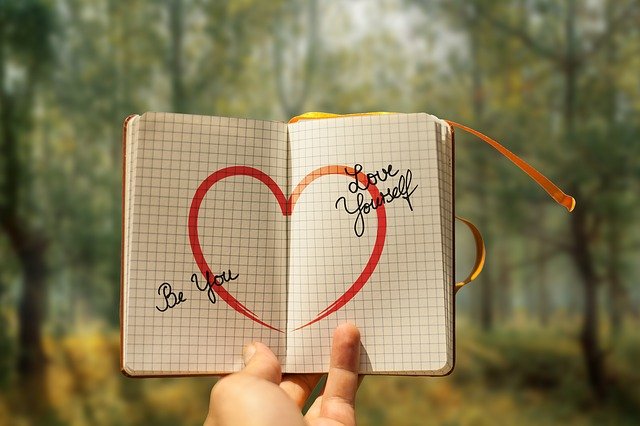

Why self love matters

Image by Gerd Altmann from Pixabay

My next foray in to the School of Self Image with Tonya Leigh looks at why self love matters. Have you missed her guidance over the last few days?

TL noted that if you’ve ever been in love with someone the first few months are full of passion, romance, attentiveness, excitement and desire.  The world suddenly feels warm and light instead of dull and gloomy.  When you are in love chemicals in your brain create a sense of euphoria and pleasure.  It has you doing those silly, giddy things like waking up early, dancing around to music, taking time getting ready. Resentment, doom and gloom and judgement melt away.

In the early stages of a new relationship you treat it with care, attentively.  You are present and discovering more about the other person.  You keep your promises. You don’t see the flaws in the other person.  You give the relationship your full attention.

Do you treat yourself in the same way?

TL suggested that we tend to criticise ourselves, beat ourselves up over our mistakes, and then beat ourselves up over beating ourselves up.  We resent the past and dread the future.  We mistreat our bodies and retreat to avoid feelings.  We end up finding distractions to avoid being with ourselves.

She proffers that if you want to attract love into your life, want to be happy and healthy, want to have a fulfilling career, wake up with a passion for life and exude confidence by treating yourself as you would treat a new lover.  Treat yourself with compassion. Forgive yourself.  Commit to becoming your own lover. Lovers rarely criticise, make nasty judgements or crude comments about each other.  They respect, love and connect to each other.

Nothing you desire for yourself comes from self-hatred.  Once you deeply love yourself you can no longer abandon yourself by self-destruction.  You no longer treat yourself as worthless, or have to prove that you are deserving.  You no longer let yourself down by not showing up for yourself, nor allow others to trample all over you. Instead you are connected to your body, needs and life.  You respect your body as it is.  You take control of your own time.  You show up for what you decide is important.  You love deeply and have fierce boundaries.

The only person who can change it is you.  Starting with a fierce commitment to loving yourself.  Its not easy.  It begins with a decision, followed by constant awareness and courage.

TL suggested looking for something to love every day. It could be the sunset, music, your coffee.  Show yourself some love by buying yourself some flowers, pay attention to your feelings and say no without explanation.

When you deeply love yourself there is nothing you cannot do, overcome or create.  You’ll never feel alone or bored, or abandoned.  You’ll be glowing like a person in love.

I may regret asking this but how do you plan to be your own lover this week?

To love oneself is the beginning of a lifelong romance

Oscar Wilde

Is there an art to journaling?

We read in wellbeing magazines and across social media that keeping a daily journal is something that helps us keep grounded, show gratitude and generally support our mental health, helping with prioritising fears, problems and concerns, tracking symptoms day-to-day to help you recognise triggers and learn ways to control them, and provide an opportunity to speak positively and kindly to yourself.  It helps us craft a sense of self and reflection on experiences and self-discovery.  Often the instructions are to write three things that you are grateful for.  Simple.

Only its not. 

Once you’ve written that you’re grateful for having a nice home, or a loving family, or a good job you enjoy, or the smell of coffee first thing in the morning, how soon does it become difficult to find different things to be grateful for?  Its not that we’re any less grateful for those things, but a journal would get pretty dull if the same three things kept cropping up.

Also, persistent journaling could have negative effects as it makes you spend too much time over thinking things, making you a passive observer of your life rather than active participant.  You can become a bit self-obsessed and it could be a place of blame rather than finding solutions, and you could wallow in self-pity.

I have recently started listening to a different podcast about elegance, grace and femininity.  About the second episode in, the narrator actually described, in some detail, how she didn’t really get the point of journaling but started anyway to see what the fuss was all about.  After a while she got the hang of it and via her podcast offered some actual practical guidance how to journal, in a way that works for her at least.  She acknowledges that her style might not suit everyone, but this was the first real example that I’d seen that was actually any use.

She suggests that you write:

  • A love note – what you want to give gratitude for
  • Secret garden – those things that only you know about/think/feel
  • Idea garden – describe dreams, goals, things to strive for
  • “I am…” statement – I am strong / beautiful / bountiful etc
  • Top three things that you want to put your energy into that day
  • 9-1-1 – if you still feel uninspired, identify what’s blocking your thoughts and feelings and speak kindly toward it

She expanded a little bit on the “I am” statements:

  • I am deeply grateful for – list three qualities you possess
  • I am proud of myself for – biggest accomplishment this year
  • I forgive myself for – a regret
  • I appreciate my ability to – insert superpower
  • I love my – best physical attribute
  • I am high fiving myself for making it through – insert biggest challenge
  • This time next year I will be thanking myself for – deep desire

This is the first time that I had actually seen an example of journaling, and it made much more sense then.

I have never kept a diary, except for the year that I turned 40.  I wrote in a book everyday anything from the mundane what I had for dinner and the tedium of work to the excitement of fun events and different situations etc.  But I also wrote some heartfelt stuff that I felt I couldn’t say out loud during a year where quite a lot off odd things happened.  I did wonder whether to do it again as I was turning 50 but never got round to it. I started a blog instead, so I guess that counts, although I can’t write everything I think or feel.

I am not sure this is something I intend to do on a regular basis, but it would be interesting to try it using the structure set up above might be interesting.