Finding your signature scent

When I was younger I had a real problem with perfumed things. Sprays, some deodorants, bubblebath, shower gel, definitely perfumes and even just strong smelling things like oranges, freshly cut grass would set my nose off and if I came into skin contact, would more often than not bring me out in a horrendous rash.

As I’ve grown older I’ve been able to manage deodorants well enough and can now pretty much take my pick. I still tend to use the same shower gel for the last 30 odd years. I dont use anything in the bath on the extremely rare opportunities for a soak in the tub.

I have tried a few perfumes over the years. Its been hard to find something that I like the smell of but that’s not going to irritate.

I tend to stick with what I would describe as “clean” fragrances, rather than the heavy musk or floral scents.

I have only recently got back into spritzing on a bit of perfume. C had bought me some in the past and its sat on the dressing table gathering dust. I have three sorts, all variations from the same brand. Some are still in their cellophane wrapping.

According to perfume designer Narciso Rodriguez, musk is supposed to have a depth that is very personal and intimate. “It becomes at one with the woman who wears it“. I remember trying Obsession by Calvin Klein back in the day but didn’t really rate it.

I think perfume is a very personal thing and would never buy anyone perfume unless they had specifically requested it. Every Christmas we buy R a bottle of her favourite Black Opium by Yves Saint Lauren. The one year we didn’t we were truly chastised.

I think how you wear perfume is important too. I just give a little spritz around my decolletage. I don’t bother with all the pulse points. But there is a right and a wrong way according to https://www.byrdie.com/how-to-apply-perfume

  1. Do apply directly to the skin. The oil loving properties of the skin provide an excellent canvas and the warmth of the skin can enhance the scent.
  2. Don’t apply it to hair. The alcohol based formula can damage hair.
  3. Do apply to pulse points; insides of the elbows, back of the knees, chest, and the sides of the neck as these areas allow the perfume to “be enjoyed”.
  4. Don’t rub into the skin. Rubbing it in will make the top notes fade and evaporate.
  5. Do walk through a scent cloud if you want to fully immerse yourself but make sure its a non toxic perfume. And try not to inhale it, its toxic after all.
  6. Do layer complimentary scents. But avoid the big heavy scents that will overload and become unpleasant.
  7. Do apply to clothes. This can help revitalise musty smelling coats in the winter. If you can wash it, you can spritz it.

Perfume can be very expensive but an easy way and cheaper is to use a simple spritz spray like the Body Shop’s vanilla body mist. Same net effect but for ten quid a bottle rather than over a hundred quid a bottle.

What’s your signature scent?

If you had to give up one of your senses, which one and why?

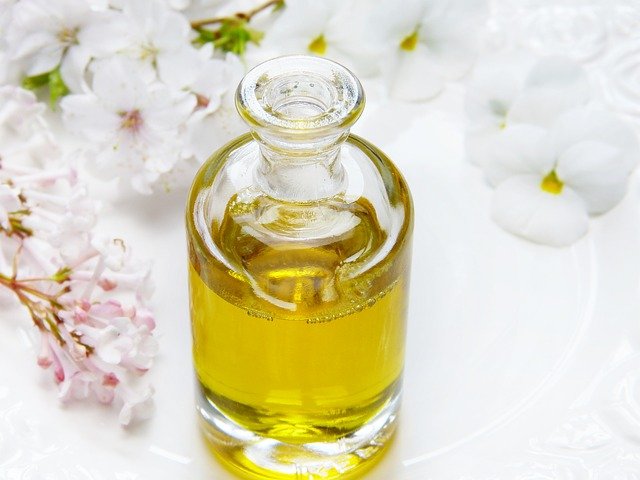
Image by Gerd Altmann from Pixabay

I was listening to a podcast recently and one of the questions that briefly touched on was which of the senses you would give up if you had to.

According to https://www.scientificamerican.com/article/superpowers-for-the-blind-and-deaf/ if one of the senses is withdrawn e.g. someone who had sight goes blind, the brain doesn’t just learn to use the other senses better, but actually adapts and by rewiring and processes the other senses differently.  A study they cite showed people born deaf use areas of the brain typically used to process sound to process touch and vision instead.  This phenomenon is call cross-modal neuroplasticity. For those who lose their sight it seems the visual cortex is taken over by other senses such as sound and touch to help process language. About 285 million people are visually impaired by other senses usually compensate.

What if we woke up one day without a sense of taste?  Some people have experienced this as a symptom of Covid, and when we get colds or flu we often loose our sense of taste.  Our sense of taste is closely linked to smell with about 80% of our taste sensation provided by the sense of smell, so maybe that’s not such a bad sense to lose.

If we lost the sense of smell we wouldn’t be able to taste food, but would also not be able to smell things that are dangerous, like a gas leak or fire, or a food stuff gone off. 

Can we truly lose the sense of touch?  According to https://insh.world/science/what-if-we-lost-our-senses-one-after-the-other/ we start to lose touch sense as we get older but nerve damage or medical conditions can contribute.  If we lost this sense we wouldn’t be able to feel the touch of a loved one, or have any sense of harming our body, but it would also mean that we wouldn’t be able to walk properly without a sense of touching the ground.

What if you lost all senses?  Total sensory deprivation would cause hallucinations so it would be like forever being in a dream state and have a detrimental impact on psychological health. 

As a bell ringer, losing hearing would be difficult, but not impossible as we can use the visual clues of where to place the bell.  There are blind ringers who have a “sense” of where the rope falls and when to catch it.  If bell ringers lost touch it would make physically ringing a bell difficult as we all worry, particularly when we first learn to ring, about letting go of the tail end. Losing a sense of taste wouldn’t be an issue, and losing the sense of smell may be beneficial in some places where there is inadequate ventilation!

I think of all the sense to lose taste is probably the easiest one to live with if I had to, although I do like food.  What about you?

And then there was chocolate cake

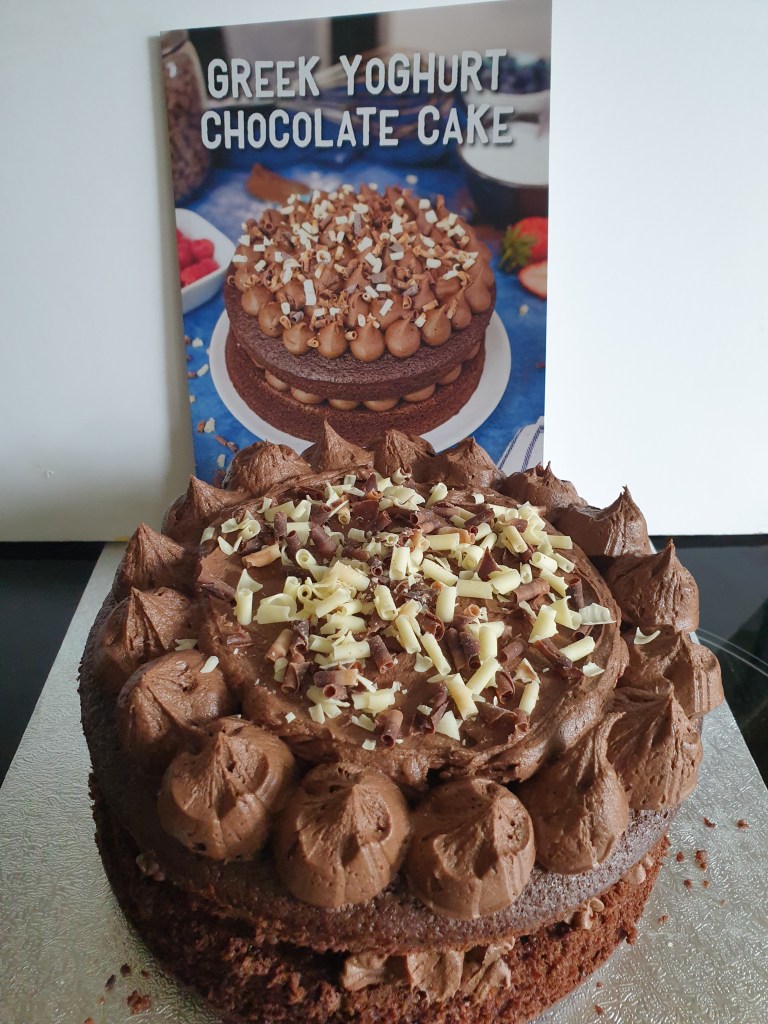
As well as everything that has been going on since Friday, I did manage to bake a chocolate cake as well.  The smell of the cake batter baking was incredible.  There’s something about it that seems magical.  The recipe I used produced a soft, light sponge, deep chocolate colour and flavour.  Its been said that we eat with our eyes and that food should be aesthetically pleasing to look at to entice out appetite, but I figure smell plays just as important a role.

Our sense of smell comes from the stimulation of special cells in our nasal cavities which transmit a multitude of senses to our olfactory bulb in the brain which identifies a smell https://io9.gizmodo.com/the-human-nose-can-sense-10-basic-smells-1355489504 Apparently there are 10 dimensions to what humans can smell:

  1. Fragrant – florals and perfumes;
  2. Fruity – all non citrus fruits;
  3. Citrus – lemon, lime, orange etc
  4. Woody and resinous – pine or freshly cut grass;
  5. Chemical – bleach or ammonia;
  6. Sweet – chocolate, vanilla, caramel
  7. Minty and peppermint – eucalyptus and camphor;
  8. Toasted and nutty – popcorn, almonds, peanut butter;
  9. Pungent – blue cheese, cigar smoke
  10. Decayed – rotting meat, sour milk

Smells like baked bread and brewing coffee are an amalgamation of dimensions.

Dark chocolate has a particularly strong smell and German scientists claim to have found the fragrance that we love so much by testing 2 different sorts of distinctive whiffing dark chocolate and analysed the chemical compounds.  These chemicals are released when the chocolate is at room temperature. In a previous study, it claims that the aroma of cocoa beans, the main ingredient in chocolate, individually smell similar to crisps, human sweat, earth, cooked meat, peaches, raw beef fat, cooked cabbage, cucumber and honey.

Those aromas on their own are enough to put you right off, but apparently, when some alchemy is done, the smell of chocolate is irresistible to many.

Thankfully, my cake did not smell of any of those pungent pongs, but of chocolate cake, with chocolate ganache frosting, with chocolate curls on top.  And tasted bloody lovely!