What’s stopping you from letting go?

Another one of those self-awareness quizzes (I’m getting quite in to them now) was all about what’s stopping you from letting things go and moving forward. This could be an incident that keeps holding you back, lack of self-confidence, lack of imagination, capability or opportunity.

So having answered the obligatory 10 questions – why do they feel the need after question 4 and question 8 to let you know that you are now 40% and 80% complete? – it spewed out my results:

Self-Awareness

Ruminating can become habitual, the go-to place for your mind to wander. But constantly rehashing old arguments, decisions or events keeps them live and fresh. Next time you find yourself sucked into an overthinking spiral, check in with how you feel. If your mood has taken a downturn or you’re feeling anxious, your thinking is not helping you resolve anything. Increasing self-awareness by making time every day to do a mindfulness exercise can help you get into the habit of observing the stories your mind is telling you without getting sucked into them. Try starting your day with a mindful shower – focus on feeling all the sensations and smells. When your mind wanders, observe where it has gone without comment or analysis, then bring yourself back to the present. It may also help to schedule daily ‘worry time’ and park your overthinking until a specific time of day, preferably when you’re relaxed and in a good frame of mind. If, when worry time comes around, you don’t want to go over old stuff, that’s a bonus.

I do actually go over things, again and again, and try to understand the different nuances of what has happened, why it happened, what could have been done differently, how I could have reacted differently.  I also spend a lot of time thinking about why am I spending so much time thinking about it.  I often tell myself to move on. 

I guess that I’m one of those who constantly beats myself up about things.  There’s always something I could have done better, or should have done that I didn’t, or did that I shouldn’t have, or that I really ought to give more time to. I replay conversations over in my mind multiple times.  “What if I’d have said this”? or “if they’d have said that I could have…” and so on.

I’m not sure that I want to schedule a daily worry time, as there are some days when I don’t overly worry about anything in particular, and I’m not sure that you can necessarily schedule it.  Things that will cause worry that are triggered by other things and can happen at any time.  I might be in the middle of one thing and something on the radio or that I’ve read will trigger my brain to relive a previous worry.

I try to learn from previous errors and hope not to repeat them (not always necessarily successfully) however, I do find it really hard to forget about them and move on, even when a solution has been found, agreed and implemented.  I will stew over it, even after some considerable time. 

I guess I need to learn how to deal with it in the moment, resolve whatever it is, and then move on.  Step away.  Park it.  Easier said than done.
How adventurous are you?

I do not think I’m the adventurous type at all.  I like home comforts. I like routine.  I like to know what I’m doing and when so that I can plan around it.  I’m not particularly great at trying new experiences.  Although I did do an abseil once.  I did go skiing when I was at school.  I do like to travel and see different places. And I did make my husband do husky sledging a few years back. But I’m not spontaneous, or good at thinking of what others might see as exciting things to do.

So, I thought I’d try and find out what the experts say about whether I’m an adventurous sort or not and turned to one of those on line quizzes that thinks its gets to know all about you and your preferences by asking you a mere 10 multiple choice questions.  According to the results:

You are excited by new experiences

Cosmopolitan, smart and savvy, above all, you get your kicks from interesting experiences. You flourish when your mind and senses are nourished and flounder in a cultural vacuum. The buzz of a new exhibit, the hush as the theatre curtain parts, or the flavours of a new cuisine all excite your palate and thrill your thoughts. For you, the conventional is dreary. Because you open yourself up to a wide array of artistic and intellectual interests, your world is ever expanding.

Well, as it happens, yes I do like the theatre.  We do try to at least make an annual trip to see a West End show each Christmas time (2020 being the exception) and if anything else takes our fancy in the mean time we’d go along.  I do like to learn new things and educate myself.  I enjoy certain types of museums and exhibits and enjoy a good National Trust property or English Heritage site.  I do like eating, so trying new things from time to time is good, and when we are on holiday abroad I do like to try something that might be considered local cuisine (so long as its not fish!).

So I might not be adventurous in the sense that I like to do extreme things like water sports (I have a phobia of water so that’s not going to work), or bungee jumping, or fast paced stuff, I’m more of a slow, steady adventurer. I’m less keen on the “let’s do something crazy” and go for more of the “let’s plan a nice trip out”. 

A while back I did do a year (and am probably still doing it) of saying “yes” to everything that came my way.  This was both exciting to take on new challenges but worrying as some of the things I was asked to do put me in the spotlight, somewhere I’m not comfortable with.  However, it did give me a chance to connect with new people, and has stretched my own learning and capacity. The downside is that I now get involved in lots of things that I can’t always give sufficient time to. So there’s a fine balance needed.

So, maybe I am unconventionally adventurous and my world is ever expanding, just slowly.

‘S not funny

Sure sign I’m coming down with a cold. The last couple of days I’ve had a headache, then yesterday woke up with a raging sore throat. For me, these are the early warning signs of a cold brewing. Then by early evening I’d developed sneezing and a snotty nose. Lovely.

Sneezing is really annoying. I had a fit of several sneezes on the trot and could barely draw breath between them. Apparently the force of a sneeze can reach 40mph. You can’t control a sneeze, it’ll happen without mercy. The signals to the brain causes a reflex in the face, nose and chest, which is what causes you to inhale. Then there’s the explosive expellation.

Clearly, I’m currently sneezing as I’m coming down with a cold, but there are other reasons that cause people to sneeze. My daughter sneezes every time she goes out in the sunshine.

There are many suggested remedies for colds and sneezing such as drinking hot teas, eating spicy food, using a facial steam bath. Then there’s the medication that contains paracetamol and other active ingredients.

I’m generally a “let it flow” kind of person. My observational experience has shown that those who try to stave off the symptoms by taking medicines tend to have their colds hanging around a lot longer. By not taking anything my cold is generally over and done with in a couple of days. C tends to take medication and his colds can go on for over a week, sometimes two.

As annoying as it was to have an uncontrollable sneezing fit during a zoom meeting, I know it’ll be over with in a day or so. Just hope I can get through the next full day of virtual #bellringing without too much bother.🤧

Slave to the Rhythm

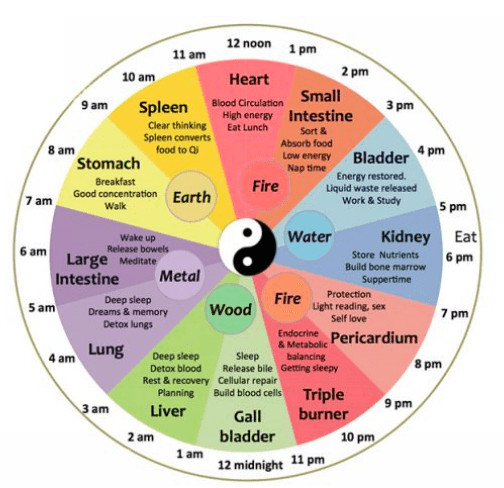
Having allowed myself the time to read some incredibly useful and illuminating books recently, I’m learning a lot about how the human body functions, it needs and ways in which to support it both physically and psychologically. The latest revelation was around the study of the traditional Chinese medicine understanding that you can make more out of your day by syncing your activities and energies with the times of the day that certain organs perform at their peak.

For example, the lungs peak performance time is between 3am and 5am, so this might be the best time for deep, restorative sleep, whereas the heart performs best between 11am and 1pm, so the ideal time for getting the blood circulating through exercise with high energy levels and eating a light lunch, so that come 1pm to 3pm your small intestine can sort and absorb food.

From about 7pm onwards the rhythm of the body clock is starting to wind down and the circulatory systems can focus on carrying nutrients around the body, a time to start to settle down for the evening. Sleeping between 9pm to 5am allows the gall bladder and liver to be most effective, cleansing the body of toxins, ready to start over when the lungs are preparing to restore oxygen to your muscles for the day ahead.

It was really interested to compare that clock to my daily routines. I get up around 6am, start work at 7.30am, have breakfast around 8.30-9am, just as my stomach is at peak efficiency and concentration levels should be highest. I go for a walk most lunch times, so that could be anywhere between 12noon and 2pm, at exactly the right time for my energy levels to be at their highest. I do suffer from the mid afternoon slumps, but being at work can’t partake of a short nap, but do feel that I need a sugar boost around 3pm, so cup of mint tea and a snack to keep me going. We do tend to eat our evening meal some time between 6pm and 7pm, so at the right time for my kidneys to be storing nutrients. Then, unless I have a meeting in the evening, or I’m at a virtual #bellringing session, I’m usually fairly zonked out on the sofa from then on in. I do have a bad habit of curling up with my sofa blanket, then falling asleep around 9.30pm, wake up again around midnight and head straight to bed where I can usually fall asleep fairly quickly and thoroughly until the alarm rips me awake again at 6am.

So, without realising it, I am actually quite in sync with my organ body clock. I am already a slave to the rhythm.

The importance of nothing

Life can be so full on sometimes. Even having a week off work doesn’t really give you the rest you sometimes need. I’ve written loads, researched loads, rung loads and had several meetings during my week off so I really haven’t felt any restorative benefit.

Today though, we had nowhere to be and nothing to do. C turned the alarm clock off so we woke up naturally and didn’t actually get out of bed until nearly 10am, which is unheard of. Some might say that that’s wasting so much of the day, but waking up naturally actually made me feel more awake and alert than being ripped from slumber by a screeching radio alarm.

Saturdays have seem to have got a new ritual of bacon butties for breakfast. C cooks them whilst I’m in the shower so its ready, with my coffee, when I’m dressed and ready to face the world. So grateful for that.

Both of us then just sat for a while, reading or catching up with social media. No need to rush.

We had no reason to go into town for anything and as we’d had a late breakfast didn’t feel the need for lunch.

I did do some food prep for breakfasts and lunches for the working week ahead as Sunday is full of ringing, family Skype and virtual meetings as well as the weekly ironing fun. But once that was all finished, I could get comfy on the sofa and read.

Haven’t spent so much time dedicated to just reading for ages. A cup of mint tea with the last slice of winter spice cake made it all a bit hygge. Both of us just sat on the sofa reading. For hours. No other distractions of TV or radio. Blissful.

Some might suggest that a day was wasted and we should have done some exercise or something more constructive with our day, but I actually feel more awake and positive having taken some time to just be.

It probably helped that the book I was reading, not one of the e-shorts I had intended to, was talking about quietening inner critics and self sabotage. It was helping me understand the ways to silence the inner brain chatter and believe that I’m good enough, when so much that has been going on lately has left me feeling totally inadequate.

Benefits of doing nothing include being mentally stronger and more compassionate by having opportunities to delve deeper into innermost feelings and convictions. It helps relieve stress and help you become more rested, happier, productive, creative and allows your brain to reboot by letting thoughts settle.

My step count for the day is hardly going to break the 1000 mark but it doesn’t matter for one day. Self healing and restoration was what was needed today and I’m glad to have given it space in my life.

Kindling some e-shorts

As I’ve been on annual leave this week, one of the things that I wanted to do was some reading.  Trouble is, I’ve read all the fiction books that I’ve invested in and although I have some non-fiction to wade through, felt that being on “holiday” wasn’t the best time to read those.

I haven’t downloaded a Kindle edition of a book in ages.  I much prefer the physical thing to hold, turn pages and even the smell.  I am also a bit OCD when it comes to collections. If there are a number of books by an author I enjoy, or a series that run together, then I have to buy all of them, and read them in order.

My favourite genre is historical fiction, most specifically Tudor period. I’ve read all the Jean Plaidy, Phillipa Gregory et al.  Having most recently thoroughly enjoyed Alison Weir’s series on the Six Tudor Queens.  I have the final instalment already on pre-order.  I happened to be rummaging around that well known online purchasing site and came across a series of Alison Weir e-shorts.  These seem to be companion stories to the Six Tudor Queens series.  There are 7 e-shorts so far that relate to the first 4 books of the Tudor Queens, so one can assume that there are more to come. For £0.99 each, it was a no brainer to download the lot.

I’ve gone through the precis for each e-short and listed them in order of which main Six Tudor Queens books they sit along side so that I can, as with full series, read them in order.  There appears to be 1 that sits with Katherine of Aragon, 1 that bridges that with Anne Boleyn, 1 that accompanies Anne Boleyn, 1 for Jane Seymour and 2 for Anna of Kleves. 

I have a whole day with no meetings or need to be anywhere else or do anything in particular, that I can give wholeheartedly over to reading these e-shorts.  Give me a nudge when dinner’s ready!

Magazine Questionnaires

Do you ever do those questionnaires in magazines? You know, the ones that tell you, depending on your score, what is in store for you in the coming year, what your personality traits are, or what your love life will have in store?

I remember as a kid the only magazine I bought with any regularity was Smash Hits. The only questionnaires they did worked out which pop star you were likely to marry. Of course you had to do the quiz over and over again until you got the answer you wanted. BTW, the only legitimate answer was Simon le Bon 😍

As I progressed (?) on to mags like Cosmopolitan the questionnaires were more along the lines of “how to make him fancy you” and “why your friends don’t like you much”. I guess they thought they were some sort of attempt at self help.

In the workplace over the years I’ve done many, many psychometric tests like Belbin, designed to find out your fundamental personality traits, then try to convince you how you and your colleagues could all work together in perfect harmony despite your differences. I’ve done Belbin so many times for different reasons. I still come out as ISTJ, the logistician. Introverted, observant, thinking and judging. I like facts and data. I like methodology and practicality. It means I’m honest and direct, strong willed, dutiful, responsible, practical. But on the flip side I can be stubborn, insensitive, always by the book, judgy, and self blaming when things fail.

Because I’m not spontaneous or outgoing I find it hard to make friends or trust people’s motives, or express emotions freely (until really pushed). This is the area I’m working on hardest and the moment and I don’t mind telling you, its bloody hard.

I did a magazine questionnaire this week in Psychologies Magazine about what kind of comfort do you need. Each question has 4 options to choose from then you count the times you’ve selected a particular response and it tries to explain what area you need to search in order to find solace.

Have you ever noticed there’s always at least one question where none of the answers is applicable?

Apparently, according to the number of hearts, diamonds, circles and squares I ticked, I have equal measure of hearts and squares. That means that I need to be looking for something spiritual and relational.

By spiritual it doesn’t mean finding God or some mystical thing, but could be in the form of rituals that allow time for reflection, and to connect with others. It suggests that I should focus on treating everyone with kindness, respect and lack of judgement and increase deep listening, filter out the gossip.

Relational suggests investing in meaningful connections with people and changing the relationship I have with myself. Being more compassionate with myself will, apparently, help me find comfort from others.

So, take my intovertedness and difficulty in making friends, insensitivity, stubbornness and self deprecation and just go out there and make meaningful connections. Just like that. Easy. Not.

Suggestions welcome.

Worth the wait?

Yesterday I ordered some books from Amazon which I hope arrive during the coming week, as I have some annual leave and therefore time to read them. Amazon told me that they should all arrive the following day.

Today Amazon tells me that my parcel should arrive today any time before 10pm. Thats going to be scary if the doorbell rings that late at night!

I have high hopes for these books. They will help me to understand and do better in the social media world. At least that’s what I’m hoping. I hope they are worth the wait.

According to logisticsmgepsupv.wordpress.com we spend around 6 months of our lives waiting in line for things, 43 days on hold with automated customer services, and 27 days waiting for a bus, 32 minutes per day waiting for a doctor, 28 minutes in a security line at the airport, 21 minutes for our significant other to get ready to go out, and 38 hours a year sitting in traffic. A Daily Mail survey suggested that we wait around 4 months of our lives waiting for the kettle to boil.

Sometimes the planning and experience associated with the waiting process can be extremely pleasurable. Like the smell around the house when you’re baking chocolate brownies. The creative processes of art, cooking, crafting, travel, and a myriad of other things can give as much pleasure during the creating or planning process as the final product does. And when you have that final product, it will be all the more sweet knowing the effort it took to create it.

As I’ve said before, I am an ongoing development as a human being and am trying to get as much pleasure out of the creation of the person I want to be, as much as what the end result might be.

Good things come to those who wait, apparently.

Why we do what we do

I have the next week off work as annual leave. I have no plans, and no real thoughts about what to do with my time. I have a couple of reports to write and could bake something but other than that, because we can’t go very far due to lockdown, no other real thoughts about what to do. That got me thinking about why we do what we do (or not).

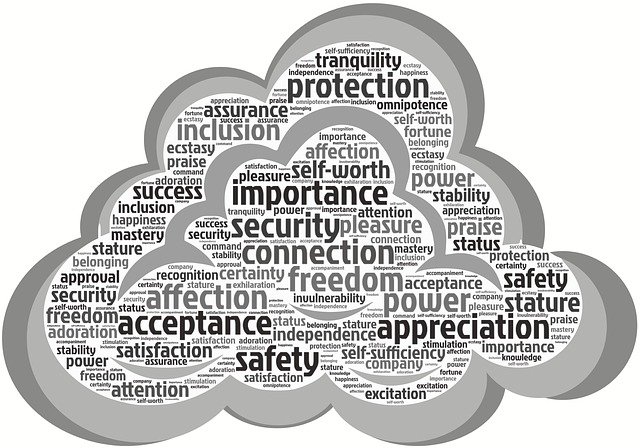
You could take Maslow’s hierarchy of needs and work through that systematically, but does that cover it? Yes, there are some basic needs that ought to be addressed: the need for food, shelter, sleep, company etc. We need our elements of security around employment, health and some material belongings. There is certainly a need for friendship, family, love and a sense of connection. But then we get on to the things that you could argue we don’t NEED, we just WANT. Respect, recognition, strength, and then self-actualisation – to be the best we can be.

There’s another school of thought that suggests a different solution to why we do what we do.

A sense of obligation – to share experience and knowledge, the obligation to serve others. A sense of duty, and pride – perhaps via volunteerism, a call to action, pride in a job well done and our want to succeed. We should be wary of the vice like self intention, cunningly disguised as “being in our best interests”, which only really offer temporary pleasure. Acts of kindness and our altruistic love for the benefit of others. Passion for our favourite activity or cause, our desire to do something. The desire to “tick the box”, perhaps something off our bucket list, but could lead on to somewhere else. Our destiny may be coloured by family tradition, a hobby or particular calling that other family members before us have excelled in. Yes, there’s a need to have a sense of fulfilment to keep us energised and empowered through our self-actualisation. But maybe we do it for others, to have something to share or for the “greater good”.

Tony Robbins, an author and podcaster, as well as being a mutli-billion dollar entrepreneur, in his TED Talk and book, describes 6 human needs – certainty, significance, variety, love/connection, growth and contribution – and how each influences our thoughts, feelings, behaviours and actions. By understanding what drives us, we can understand how to meet those needs. The same for people around us, once we know what drives them, we can help them meet their needs too.

At a very fundamental level, I know I need to be safe, secure, independent and have a sense of purpose. The narcissist in me does need some form of appreciation every now and then, but I certainly need feedback to make sure that I’m at least heading in the right direction and to help me achieve some personal growth. I need to be educated. I need to understand things and learn from them. I try to encompass all of that in my working, social and family life and am conscious that I don’t always get it right.

Surround sound

How often do we get an opportunity to just sit and listen, I mean REALLY listen to the sounds around us?

Both C and I were sat out our respective desks in the study, going about our business when it suddenly hit my ears there there was silence. Neither of us were speaking. At the time neither of us was hammering our keyboards or frantically clicking a mouse. But then I noticed the non-silence which actually became quite loud.

I could hear the birds twittering in the back garden, as clear as a bell. The hum from the fan on C’s PC, continual hum. The wall clock ticking, so loudly too that it beggers belief that sometimes you barely notice it at all. There was an occasional mouse click as one or other of us scrolled up whatever it was we were reading on the screen. There was a throat clearing after a glug of water. There was a chair squeaking under the pressure of shifting weight. There was an airplane outside on its way to, or from, who knows where. There was pen scratching on paper as I was making notes. There was a belly rumble and an over emphasised exhalation.

Within the space of somewhere between 5 to 10 minutes there were all these sounds surrounding me, but there was silence. Peaceful, gratifying, restorative. All of these amazing sounds that I might have missed had the radio in the kitchen been on, or had I been hammering away at documents or emails, or people talking.

Silence can provide us with so many benefits if we choose to allow them into our lives.

It can allow us to concentrate and focus, which apparently can be lost if the sound is over 80 decibels. Obviously the writer of that point has never been to a #bellringing practice where concentration is required despite the noise of the bells.

It can allow our minds to be more creative. Some eminent scientists did their best creative work after a period of solitude and quietness.

It can allow us to discover how we may improve our lives when attention is given to self awareness practices. Taking time to self reflect can help figure out what and where we want to be.

It can help relax us and reduce stress levels if we allow a period of silence.

It can affect our ability to learn. The more noise we are exposed to the worse we perform and find it harder to concentrate.

Doing nothing and remaining silent can increase productivity of new brain cells, which in turn supports greater productivity as much as tenfold.

Silence can help cultivate calmness and peacefulness when you regularly practice silence and patience.

If you are able to, I invite you to sit somewhere comfortable and just be silent for even just a few moments. Make a note of all the things that you can hear in the silence. You’ll be surprised how much surround sound there is.