Can’t believe I nearly missed this. I was prompted by yesterday’s blog about Spoonerisms Day and wondered what was so special about this day/week.
I came across a website that lists awareness events by day/week/month. I usually only get to hear about theses things after the event.
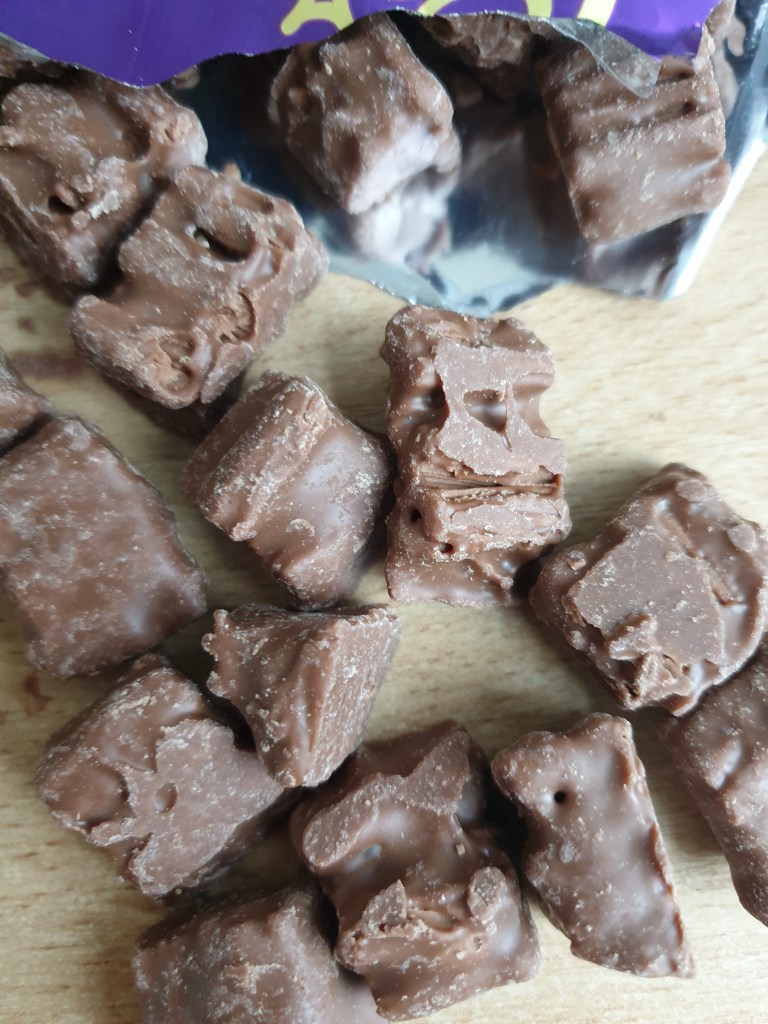
There are some massive awareness events this month like Black History Month, National Cholesterol Month, Lupus Awareness Month, ADHD Awareness Month, Breast Cancer Awareness Month, Go Sober for October, Baby Loss Awareness week, Arthritis week, Adoption week, and Work/Life week. But randomly thrown in is Chocolate week. I’m not sure that Chocolate Week has quite the same message as the others, in fact, does it actually contradict Cholesterol Month?
In all seriousness, there are some things that we need to elevate and become more aware of and actually do something about, whether its stamping out racism or looking after ourselves and others by being better informed.
Now that I’ve found this website http://www.awarenessdays.com I shall celebrate Chocolate Week whilst I read up and educate myself about the more serious issues that deserve our attention and action this month.
Our #MSEBuddyNetwork session yesterday was led by Chris Sheepshanks, a developer of organisational coaching programmes. He was very engaging and a real find.
He talked about coaching as being a tool to help others draw things out, rather than for you to push your ideas on to others. He said that a good coachong session should help the individual have a greater awareness of what they are doing in order to take responsibility for their actions leading to understanding what choices can be made to move forward.
Chris mentioned 5 principles:
1 -Slow down to speed up. We usually spend more time deciding what needs to be done and doing it that we don’t give enough time to reflecting and connecting in order to find our own purpose. Coaching should help people have a better conversation with themselves by facilitating pause and reflect.
2- Sustained high performance. We spend so much time on trying to achieve what it is we want to achieve without giving thought to learning, growing, stretching and developing ourselves. We need to find enjoyment in what we do and find a sense of purpose.
3 – Get comfortable being uncomfortable. Its easy to do what you’ve always done and natural to stay there but we won’t learn anything if that’s where we stop. Learning gives us a slight touch of discomfort and vulnerability but a good coach should be careful not to push too hard and risk over exposing or withdrawal.
4 – Trust & Rapport. To truly have a transformative conversation there needs to be a strong sense of trust between coach and coachee that supports an honest and openness with others.
5 – Enable Others to Play a Better Inner Game. Tim Galway says that everyone has the potential to perform but that not everyone performs to their potential. The interference that stops that by way of fear and self-doubt it what stops us.
I think that last point is significant for me. I’ve spoken before about my imposter syndrome holding me back and sometimes I do go for the easy option of familiarity and being comfortable, or even putting things in the “too difficult ” box and put off having to deal with it.
Having thought about this a bit, I am currently in the process of taking stock, to increase my awareness of what I’m doing and why, and take responsibility for learning, growing and developing in to what I want to manifest. Then I’ll make a decision on what direction to go in based on informed choices. For now, that might be taking some time to slow down to reflect and connect, in order to speed up.
We are often told not to sweat the small stuff. Don’t get worked up over trivial things. And mostly that’s how I roll. I don’t very often get worked up over incidentals. People have written books on the subject to help us have a more stress free life. However, sometimes the small stuff is worth sweating over to make a difference to someone else.
I used to manage a team of over 250 staff who worked around the clock. They were the lowest paid staff in the organisation. I used to think that they couldn’t possibly have anything to worry about, they’d turn up to work, do their job then go home again. They didn’t have to worry about budgets and rosters and equipment and processes and management performance audits. That was until one of them came into my office one time and broke down in a hysterical fit of sobbing. Dear God, now what do I do?
I shut the door behind her, handed over the box of tissues I always kept on my desk then waited without saying anything. Once she’d gathered her composure she went on to tell me a whole raft of problems at home that had been building up over a period of months that had now all come to a head. Her father had been taken ill suddenly and passed away, her child was being expelled from school for antisocial behaviour, she’d found out that her partner had been having an affair and had just emptied their bank account and run off with the other person and because she was so low paid she would not be able to afford the rent and bills on her own. Quite understandably her world was collapsing around her and the only constant was coming to work. Jeez, and there’s me stressing over a bloody management report in my nice single person office, with a window a nice secure home and social life.
It hit me then that everyone has something going on in their life that maybe they don’t want the outside world to know about, or they try to keep private.
This particular person downloaded all her troubles. I didn’t necessarily have the answers, although made a couple of suggestions to deal with the immediate issues. At the end of a long talk she looked at me thanked me for listening and not judging her.
Sweating the small stuff could mean something simple like being kind and courteous to each other. Sweating those kinds of small things could make a real difference for someone.
I am a member of the #MSEBuddyNetwork at work, a group of staff who are here to listen and support colleagues. Whilst I was on leave last week I missed out on the session about Respect. Thankfully the slides and supporting documents are circulated afterwards so I was able to catch up on the conversation.
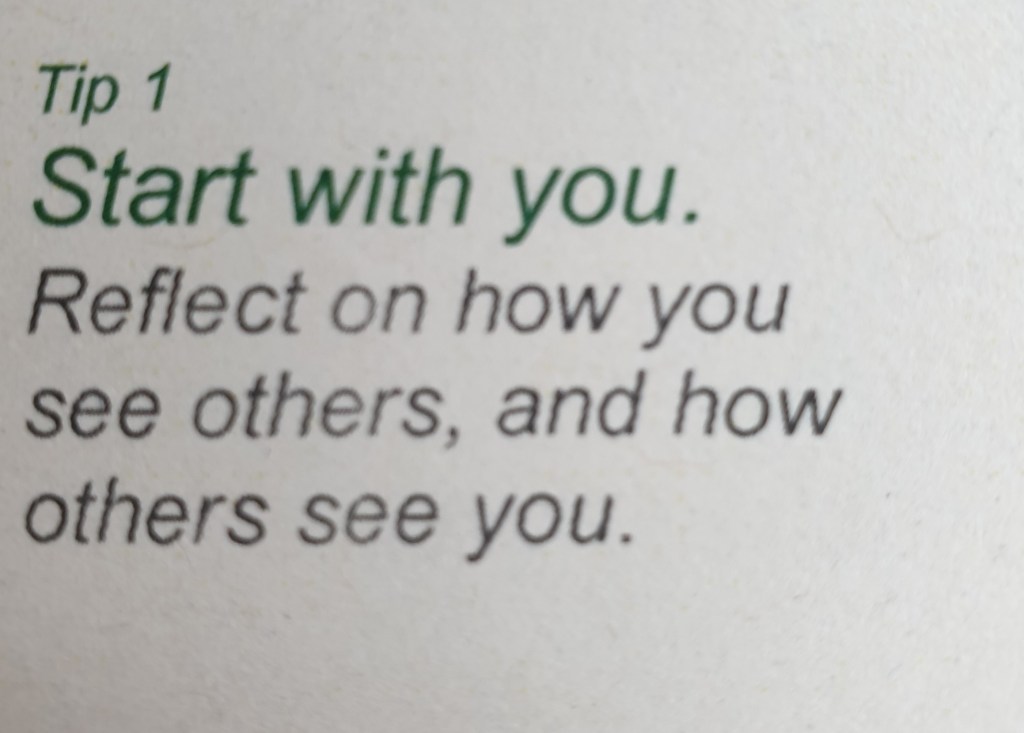
One of the supporting documents circulated was 30 Tips For Respect. A matrix of ideas to help put into focus what we should be thinking about with regards to respecting others. Tip 1 was entitled Start with You and went on to describe that you should reflect on how you see others and how others see you. This got me thinking about a piece of work I’d done during my Masters on What is it Like to be on the Receiving End of Me?
I tried to find the relevant documents that I’d collected and written at the time but I must have put them somewhere very safe and forgotten where.
Anyway, this was pulled in to very sharp focus during a conversation I had with a member of my staff. We have had to instigate shift patterns since the start of distancing restrictions as I have 66 staff crammed into a small space. In order to keep them socially distanced I can only have half of them in at any one time. Over time this has started to cause problems with people’s mental and physical health and some have been referred for support. The advice that they had been given contradicts the regulations of social distancing and therefore it has not been possible to act on some of that advice. The person I was speaking to was having a hard time understanding why she couldn’t revert to her previous hours and that it seemed that I, as the manager, didn’t seem to understand what people were thinking. We had a really good honest and frank chat about what I have been doing to try to get their issues and working arrangements sorted and she acknowledged that she felt better for having had the conversation with me. She then said “you need to tell everyone what you’ve just told me, it doesn’t matter that it’s still not resolved and you haven’t got all the answers, but people would feel better knowing that something was actually being escalated”.
I thanked her for her honesty and said that I would reflect on what she’d said but that I wasn’t going to rush straight in now. I would give the matter further thought but have said that if she feels others would feel better for knowing more about what I’ve been doing and escalating with senior managers and directors then I will do that.
It was a great example of listening to and respecting others’ needs and reflecting on my own behaviours and what its like to be on the receiving end of me.

 Bells, Bakes & Bettering Myself