Learning the art of the Hashtaggery

Its simple, right? You just stick a # in front of a word, job done. But what’s the point of the #?

The # is there for you to link your post, in whatever medium that might be, to a word that may connect you with others who might be interested in the same topic. It can help your post reach a myriad of different audiences. The hashtag became popular with Twitter, but you can use it on just about any social media platform. It means that anyone looking for a particular topic can search using the hashtag and find other sites and content of interest. Very useful if you are wanting to get a message out or share information with the masses. According to some sources you can get 45% more likes and 67% more comments on your content by using the right hashtag strategy.

I use a very small number of hashtags on my posts about bellringing, mainly because some social media platforms have a limit on the number of characters you can use, but mainly because I’m rubbish at thinking on synonyms, you know, those other words that are related to the one you’re using. For example, I use #bellringing a lot when I post about any bellringing activity, or sharing information. For some reason it took me ages to connect #bells, #bellringers, #ringing, #campanology. Search these hashtags and it opens up another world of bell related sites, some not so relevant to the type of bellringing I do, but means the posts has the potential to reach a whole new audience.

Up until recently, I’ve never really used a hashtag as a search function to find other like minded topics, but as I’ve got more into using social media, I’m finding out all sorts of useful tips. There’s a whole business made out of teaching people how to hashtag properly. I took the plunge a while back and purchased an e-book on how to make the most of hashtags, but only because it was going super cheap. And, I have to say, I’ve learned quite a bit from it.

The particular e-book I purchased was more specifically focussed on Instagram, the least of the main social media platforms that I’m familiar with but the ideas can be used across the other platforms too. I look after 3 different Instagram accounts, including my personal one. I had them open as I was going through the e-book and putting the suggestions into play immediately as I was reading through it.

I edited the profiles for each account to make them more appealing and relevant so that it instantly gives a viewer the information they need about the account. I looked at the hashtags that were suitable for the size of each account based on the number of followers each account already had. Using hashtags relating to topics where there are too many followers already means that our messages could get lost in amongst all the noise. I thought about the keywords that users might be searching for when they’re trying to find our information. I then used those words to search sites where the ideal audiences would also be looking at. I followed a number of those, then looked at the kind of hashtags they were using and jotted down any that I thought might be useful.

Then its about the engagement. Once you’ve found the top accounts in your topic of interest, by liking and commenting on their accounts regularly, this will help your visability too, amongst their followers.

I’ve made a list of all the hashtags that I think would be useful for each of the accounts I look after and now that I’m starting to use them, I’ll be able to look at the analytics to see how they are helping reach wider engagement.

I shall become a master of hashtaggery!

Worth the wait?

Yesterday I ordered some books from Amazon which I hope arrive during the coming week, as I have some annual leave and therefore time to read them. Amazon told me that they should all arrive the following day.

Today Amazon tells me that my parcel should arrive today any time before 10pm. Thats going to be scary if the doorbell rings that late at night!

I have high hopes for these books. They will help me to understand and do better in the social media world. At least that’s what I’m hoping. I hope they are worth the wait.

According to logisticsmgepsupv.wordpress.com we spend around 6 months of our lives waiting in line for things, 43 days on hold with automated customer services, and 27 days waiting for a bus, 32 minutes per day waiting for a doctor, 28 minutes in a security line at the airport, 21 minutes for our significant other to get ready to go out, and 38 hours a year sitting in traffic. A Daily Mail survey suggested that we wait around 4 months of our lives waiting for the kettle to boil.

Sometimes the planning and experience associated with the waiting process can be extremely pleasurable. Like the smell around the house when you’re baking chocolate brownies. The creative processes of art, cooking, crafting, travel, and a myriad of other things can give as much pleasure during the creating or planning process as the final product does. And when you have that final product, it will be all the more sweet knowing the effort it took to create it.

As I’ve said before, I am an ongoing development as a human being and am trying to get as much pleasure out of the creation of the person I want to be, as much as what the end result might be.

Good things come to those who wait, apparently.

Why we do what we do

I have the next week off work as annual leave. I have no plans, and no real thoughts about what to do with my time. I have a couple of reports to write and could bake something but other than that, because we can’t go very far due to lockdown, no other real thoughts about what to do. That got me thinking about why we do what we do (or not).

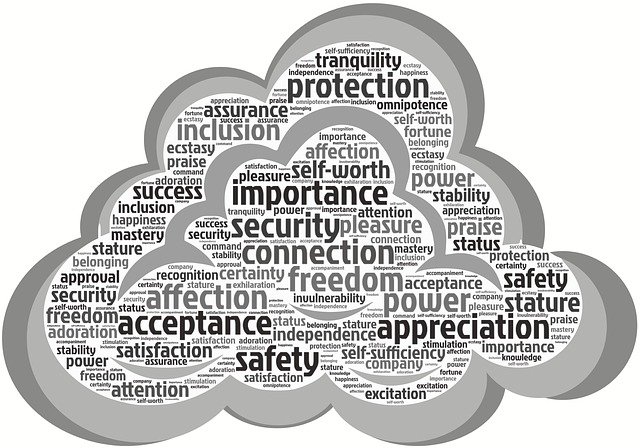
You could take Maslow’s hierarchy of needs and work through that systematically, but does that cover it? Yes, there are some basic needs that ought to be addressed: the need for food, shelter, sleep, company etc. We need our elements of security around employment, health and some material belongings. There is certainly a need for friendship, family, love and a sense of connection. But then we get on to the things that you could argue we don’t NEED, we just WANT. Respect, recognition, strength, and then self-actualisation – to be the best we can be.

There’s another school of thought that suggests a different solution to why we do what we do.

A sense of obligation – to share experience and knowledge, the obligation to serve others. A sense of duty, and pride – perhaps via volunteerism, a call to action, pride in a job well done and our want to succeed. We should be wary of the vice like self intention, cunningly disguised as “being in our best interests”, which only really offer temporary pleasure. Acts of kindness and our altruistic love for the benefit of others. Passion for our favourite activity or cause, our desire to do something. The desire to “tick the box”, perhaps something off our bucket list, but could lead on to somewhere else. Our destiny may be coloured by family tradition, a hobby or particular calling that other family members before us have excelled in. Yes, there’s a need to have a sense of fulfilment to keep us energised and empowered through our self-actualisation. But maybe we do it for others, to have something to share or for the “greater good”.

Tony Robbins, an author and podcaster, as well as being a mutli-billion dollar entrepreneur, in his TED Talk and book, describes 6 human needs – certainty, significance, variety, love/connection, growth and contribution – and how each influences our thoughts, feelings, behaviours and actions. By understanding what drives us, we can understand how to meet those needs. The same for people around us, once we know what drives them, we can help them meet their needs too.

At a very fundamental level, I know I need to be safe, secure, independent and have a sense of purpose. The narcissist in me does need some form of appreciation every now and then, but I certainly need feedback to make sure that I’m at least heading in the right direction and to help me achieve some personal growth. I need to be educated. I need to understand things and learn from them. I try to encompass all of that in my working, social and family life and am conscious that I don’t always get it right.

Brain Overload

I’ve been given the opportunity to participate in a #bellringing pilot program where exceptionally expert ringers give their time to help those like myself who are trying to master Surprise Major methods.

I’ve been on 2 sessions now mostly with different helpers, but a couple of familiar faces, and the same person has lead both sessions I’ve been on, which is helpful as they get to know your capabilities.

Its been a while since #bellringing has given me so much stress.

On both occasions I’ve spent all day stressing over it, then an hour or so practicing on Abel beforehand. Then trying hard not to use a crib sheet. It’s scary whilst it’s happening because you don’t want to come across as the village idiot. There were a couple of things said this week that I didn’t understand. I had to ask C about one before the session started, and then just laughed the other one off on the call. That’s the one thing I would say does need to be considered by these experts, not everybody will understand some of the terminology, or what difference it makes to the ringing.

Then, because of all the use of brain power, I started to get a headache and get very warm towards the end. Probably the warmest I’d been all day as its about 0 degrees at the moment.

Then there’s a sense of relief when it’s all over. Glad that RingingRoom exists. Glad not to have made a complete fool of myself. Glad to have the opportunity. Glad to have met and rung with ringers from all over, including one from New Zealand. Glad that C had cooked dinner whilst I was ringing and bought me up one of my bottles of prosecco left from my advent calendar. Glad its over … until next time 🤣

Start as you mean to go on

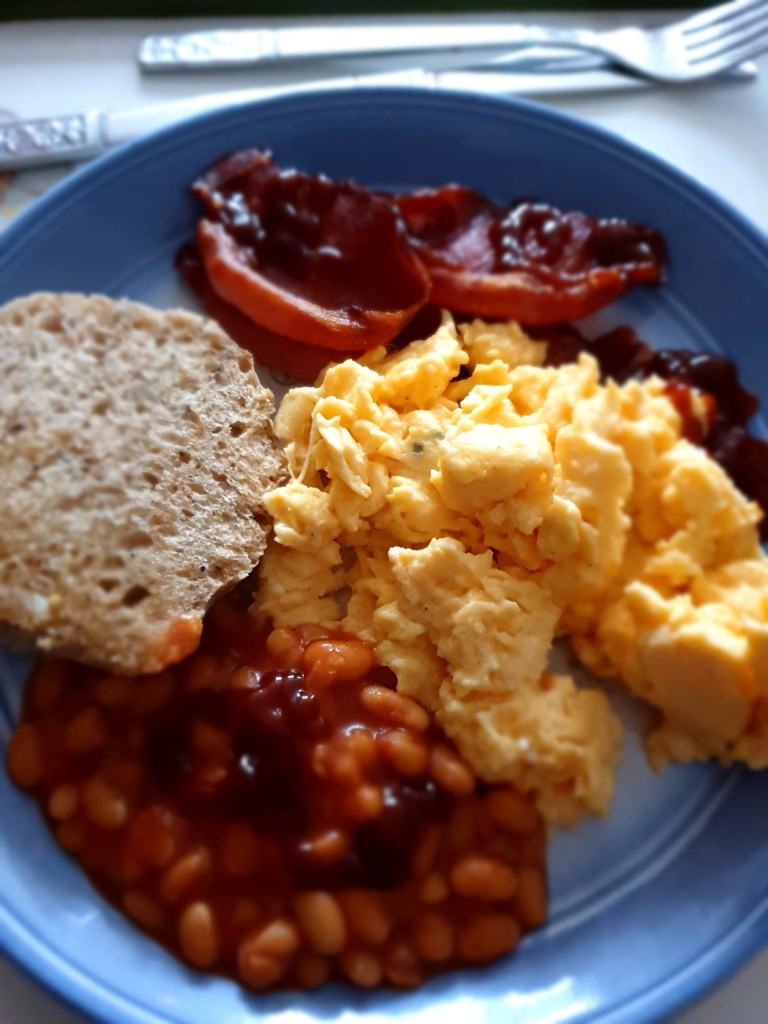
New Years Day morning. A new year ahead that hasn’t been written yet. C made a cooked brunch. I could get used to that 😋.

This year will mark a significant birthday for me. The day this blog is uploaded will mark 50 days until I turn 50. I don’t have any issues with turning 50, it is but a number after all.

The 12 months before I turned 40 I kept a daily diary. I did think of doing something similar for the year that I turned 50 but somehow never got round to it. I guess you could say that I’ve used this blog as a sort of diary, although there’s lots that I haven’t written in a blog that I would have written in a diary.

Starting a new year and a new decade of life gives me the opportunity to start afresh and start as I mean to go on. I could get used to C cooking me breakfast every day but thats not practical or too good for my health. I could take this opportunity to establish some new habits. Start or do more of the things that I ought to do better and drop things that I should not, do less of or that self sabotage.

I read somewhere on line recently that it can take from 18 to 254 days to form a new habit and an average of 66 days for a new behavior to become automatic. Now, I’m not one for New Years resolutions, but I have 50 days to do 50 things that will have a positive habit forming effect on my life to take me into my 50s.

Where to start? Drop me some suggestions 👇

New Year, new you

My various social media feeds are already abuzz with suggestions about how to start the new year with a new outlook, or a new plan or a new … (insert anything of newness here). Magazines are already cramming the newsagent shelves with top tips on making 2021 the “best year yet“.

An article I’m currently reading offers 4 such tips.

1. Have a vision of where you want to be. Dream big and realign your mindset to think bigger and be more ambitious.

2. Learn something new. Overcome the fear of new knowledge by reading or watching YouTube videos, or do an online course.

3. Prioritise wellbeing to help focus on success. Stress associated with moving forward should be met with taking time to step back and relax.

4. Strengthen your resolve. Put in the time and effort to gain success. Keep going when things get tough. Implement good habits that support your goals.

Well, that’s all fine and dandy but I find it mildly contradictive. You’ve got to steam ahead with goals and learn new stuff and keep going when things get tough, but chill out and relax. If I’m chilling out and relaxing, how exactly am I embracing my ambition, expanding my knowledge and being more resilient? Unless my goal is to chill out, learn how to chill out properly and I resolve to chill out better. Maybe that’s the answer.

Whatever your vision is, whether you want to learn something new, however strong your resolve is and however good you are with your personal wellbeing, I wish you a happy, healthy and safe New Year.

Christmas gadgets

I had the opportunity to play with my new Christmas gadget on Sunday. C bought me a Hohem stabilising gimble to help record some epic videos on my phone.

I took it up the tower when we went #bellringing to record C and me doing our socially distanced ringing on two bells.

I’ve been recording our ringing for several weeks and uploading it to my YouTube channel, but taking it just on my phone, meaning it was on selfie mode, so it looks like the bells are hung anticlockwise.

I set the gimble up and set it off. It recorded well and the sound quality was good. The bells are even the right way around.

I tried several modes like the panoramic view and tracking a moving image but I was just randomly pressing buttons, without knowing what I was really doing, so it didn’t quite work. I need to watch a tutorial or two to get the hang of it.

I’m looking forward to improving my video skills and it would be interesting to record something when we have all the bells back ringing.

In the meantime you can watch my efforts at https://youtube.com/channel/UCwuReeDAGWikaBD3ZbRxkyQ

Models and Metrics

One of my current tasks is to write a strategy for data quality across our Trust. I’m needing to find out a lot about it and have been reading around the subject a fair bit to get some background information together.

One of the things I came across today was The Model Hospital. Its a digital information platform that helps with productivity, quality and efficiency. You can use it to benchmark against other NHS Trusts on all manner of things. It’s got some key metrics that trigger notification where there has been new information added. It churns out some fab looking charts. I might be spending a while rummaging around this gathering data.

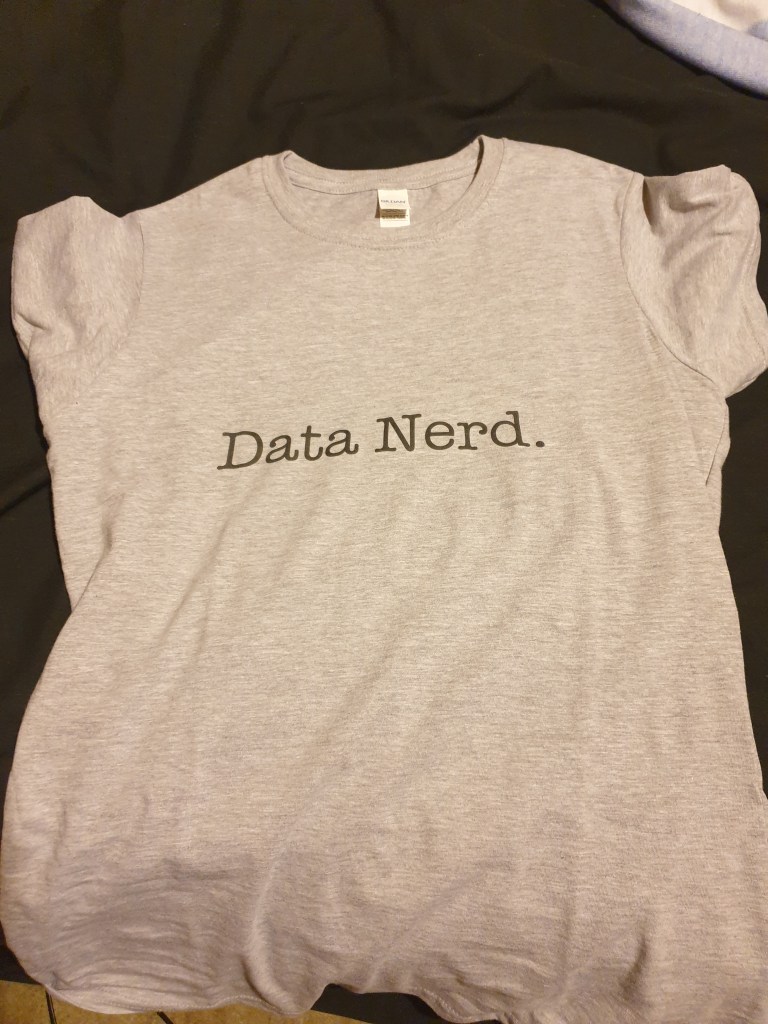
I am a bit of a data nerd and love a good spreadsheet or set of facts to chew through.

Recording multiple metrics shows whether our processes are good enough for our service users and plots us against our peers and across the whole NHS Acute Trust sector.

This will be handy in identifying what is system related, operational or corruption data from elsewhere.

I can feel my nerdity peaking. I shall spend the day tomorrow fully immersed.

And to go with it, a special delivery arrived today from a #bellringing friend as a thank you gift, which I’m absolutely loving 👇

Wonder what else we could measure and benchmark in our everyday lives?

A Fortunate Find

As you know I’ve moved to a new role and a new office. The desk I’m now occupying used to be inhabited by someone else.

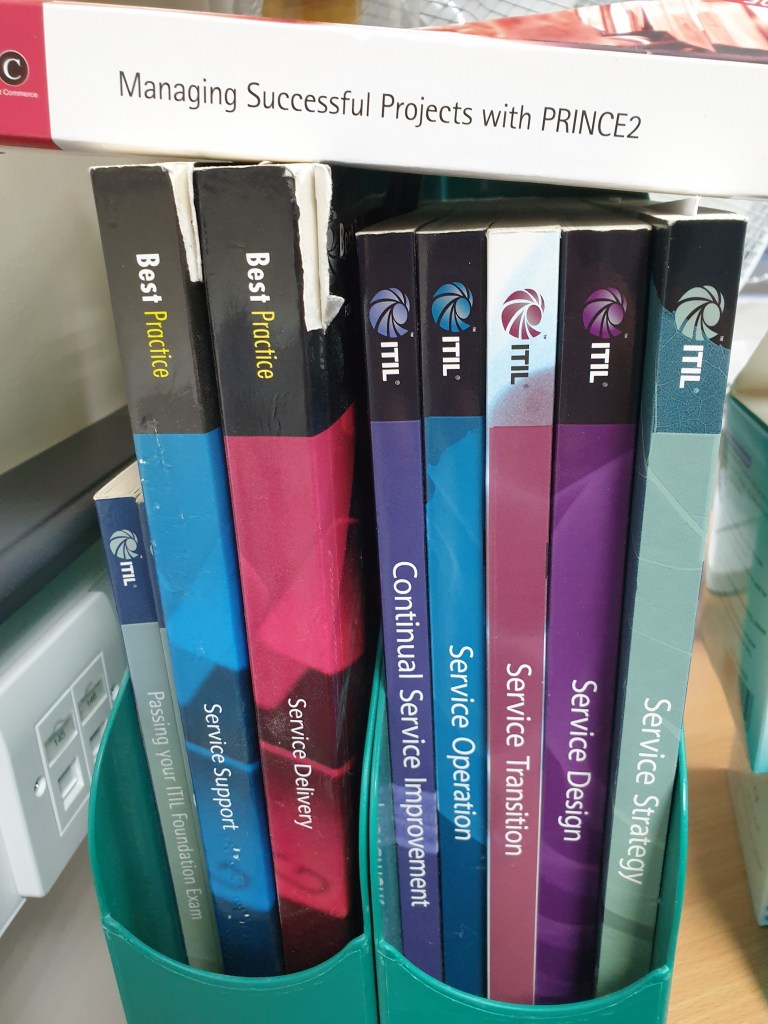
I was reluctant at first to move anything that belonged to the previous inhabitant, as I wasn’t sure whether they’d ever be back, or swoop in one day to reclaim their territory. However, I have since found out that said person has left the organisation altogether. Therefore, the assumption can be made that they no longer wish to claim their abandoned items. I felt vindicated then for going through it all and taking mugs and coffee pots to the kitchen and sorting through some papers and books. Amongst the books were a Prince 2 manual, slightly more up to date than my 25 year old copy, and a set of books on service strategy design, transition, operation and implementation.

Such a fortuitous find as I am now in the world of writing service strategies!!

I’ve been having a bit of a read through them and they will definitely come in handy. One book has already helped me formulate a number questions to ask. I’m sure they will become very useful in the next few months.

Is it a sign of the “meant to be”? Only if you believe in that sort of thing.

Questions, questions

This coming week is going to be a week full of asking questions. As part of my new role I need to understand the detail of what I’m being asked to deliver and how what else is going on will impact, or vice versa.

I will be asking a LOT of silly questions I’m sure. But a silly question is not a silly question if it has to be asked. It is because there might be no immediate, obvious answer to the questioner. One might learn a lot through observation but in this time where we are barely meeting in person, it makes it difficult to observe.

Google provides many an answer and I’m not afraid to put that to good use. Then there’s the stuff that I already know or have some familiarity with. By targeting questions from a How? or Who? starting point, I’m more likely to get a better answer, or even framing it as a suggestion “I thought I might …” It might be off the mark a bit, but at least it would show some thought process. Framing a question correctly will make the question seem a little less silly.

Most colleagues are really helpful and are happy to give advice and support. Some are even willing to help further. It doesn’t matter how far you climb you won’t know everything and at some point, will need to ask that silly question.

Today I shall fully embrace that.