I was reading an article about how a woman and her child walked round and round in circles in the deep snow like Winnie the Pooh and Piglet. It had no purpose, barely counted as exercise and once more snow fell they’d do it all again. Sometimes for over an hour. #bellringing can be a bit like that. We can go ringing, be it practice night, a quarter peal or peal attempt, a training day or service ringing. Sometimes #bellringing can have no real purpose but we do it anyway. When the child was asked why she was trudging in circles in the snow for ages, seemingly pointlessly, her simple answer was because it’s fun. #bellringing can be like that too!
Ask people who make sand sculptures, or balance stones, why they do that when they know their efforts will be lost to the elements, and they’ll tell you that it helps them shed stress, entertain others and in some cases “mess with people’s heads”. #bellringing can be like that too! Once we’ve rung our bells, the sound is lost for ever (unless you’ve recorded it and uploaded it to YouTube). It was transitory; there and now gone. But we do it for the fleeting joy of the activity itself.
We can spend a lot of time obsessing over personal goals and problems, feeling the weight of expectation and the fears that go with them. #bellringing can trick us into take a break from all of that. I often consider it therapy after a bad day at the office. To be able to do something physical, that requires my full attention, and stretches my brain. It can become a meditation, a moment to be in the present. When we ring with others we can feel that we are part of something bigger but it’s equally as transient as our few moments or hours of #bellringing itself.
When we think of #bellringing vanishing into the larger scheme of space and time, along with any method mistakes we may make, we needn’t be afraid to try a new bell, a new method, have a go at conducting something for the first time. In the few moments that follow, it becomes ephemeral and consigned to history.
That quote is possibly attributed to Henry Ford. In the context I want to explore it is about thinking creatively about #bellringing publicity and recruitment opportunities. As part of a talk I did last year, I then wrote out the main points of the talk and they can be read in sections as part of the joint Association of Ringing Teachers (ART) and Central Council’s Recovery & Survival Toolkit. If you’re a real insomniac you can also watch a recording of my talk.
Sometimes as bell ringers we are not terribly inventive with how we reach out. We trot out the same talk, or the same set of generic display boards that don’t appeal directly to the audience we are trying to engage with. Here were my thoughts on thinking creatively for publicity and recruitment opportunities.
Basically, to start with, anything goes. You might have to rule some of it out due to cost, or health and safety etc, but don’t let that stop your creative juices from flowing. Try to get out of the habit of “We already tried that and it didn’t work”. It didn’t work then, but things and people have moved on, so it might work now. And the other one is “We don’t do things like that around here”.
Be imaginative with imagery, don’t be afraid to use something contemporary and different from the usual picture of someone pulling on the end of a rope that doesn’t appear to be attached to anything, or a bell that looks seems disconnected to the action. Do we want to continue to use the same stuffy images of bell ringers and ringing as we’ve always done, or are we trying to reach new audiences by using evocative images that connect to our objective?
Make sure that you know what the project goals are and keep them in mind. Are you trying to recruit, are you trying to raise funds?
Make sure you have all the facts to hand. If you are raising funds for a restoration project, make sure that you know how much you need to raise, what the project actually entails and so on.
Use your own experiences and expertise to fill in the story, you know the people, the bells, the local community, previous momentous events and inspired.
Look for combinations that tie in with what your objectives are:
Is the local school having a fete if so could you take along some handbells or a mini ring? Is the town centre having a celebratory day?
Did you know that a lot of counties have a County Day? Could you use this day to organise ringing in all your local towers or your whole Guild with have a go sessions included as a mass recruitment opportunity?
If you find yourself stuck for ideas, or going over the same thing again and again, sleep on it, take a break, do something else for a while. They say our best ideas often come when we least expect them.
Keep a checklist of all your ideas and the pros and cons of each. You can extend it to include the activities involved in each idea, the costs and time associated with each idea.
Always run your ideas by someone else. Preferably someone not connected with it or a non-ringer:
Does it make sense?
Does it grab attention?
Particularly if you are writing an article or producing a leaflet or other materials, always get someone to proofread it before sending it off.
Come up with ideas together. Creativity sparks creativity. Someone may have the nub of an idea but someone else may be able to see how that could develop and become a bigger and better idea, but be careful, don’t make the team too large otherwise you’ll never get anything done and may spin around in “group think” where no new ideas are generated.
For the first time in about 7 months we are looking forward to having other ringers in the tower with us for Sunday service #bellringing. There is still only likely to be 4 of us this week but it will make a real change to hear more bells than the usual ding and dong C and I have been doing.
Sticking to the guidance issued by the Central Council the most we can have in the tower is 6 people for no longer than 45 minutes, with masks and good ventilation.
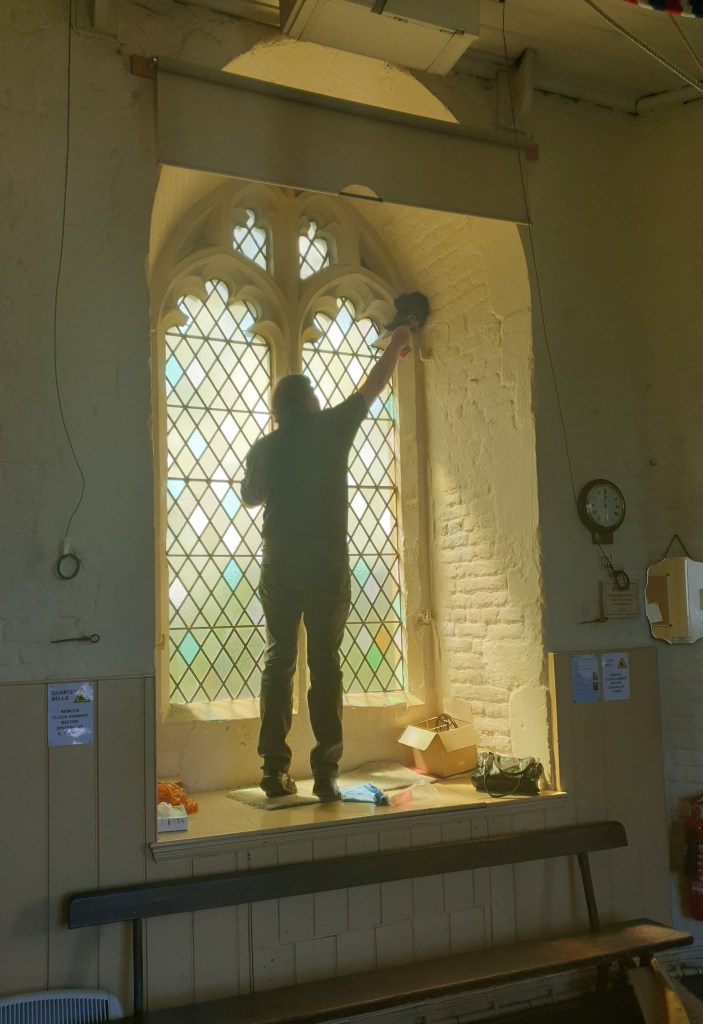
In preparation C and I did a bit of a spring clean. We took some cleaning equipment with us, including the ostrich feather duster I blagged from conference about 6 years ago. C was in charge of the high dusting on account of his longer reach.
Whilst he did that I tackled the spiral staircase from the ringing room down to ground level, some 52 steps. That job hadn’t been done for a very long time indeed. Probably not since our deputy tower captain’s late wife last did it. I wore a mask and had glasses on to protect from breathing too much dust and cobwebs in.
I left C to do the rest of the vacuuming whilst I did my best to resemble a chimney sweep.
When I came back upstairs I hadn’t realised how dirty I’d got until I happened to see myself in the mirror. I was filthy. It was in my hair, all over my face, on my glasses and some had got through the mask so my face was covered. My neck and decolletage were covered. I had to blow my nose a dozen times before the black stuff stopped coming out.
It took us nearly an hour to complete our mission but we were very pleased to have done it.
Afterwards we bought some lunch and strawberries, cherries, grapes and raspberries from the High Street farmers market and sat in the park in the sunshine. A well earned repost.
Hopefully we’ll be up to six ringers next week but for now I’m excited at the prospect of four.
You will have read before about this virtual #bellringing platform called Ringing Room that enables bell ringers from all over the world to ring together in a virtual world, given we have not been able to ring much in the real world.
I started using Ringing Room in May 2020. It had been around for a few months already by then and the developers were still making changes to it, enhancing the user experience, fixing bugs etc. I even managed to get it featured on the BBC 10pm News in June. It has revolutionised ringing from being able to ring with our friends, meeting new friends, ringing with people from anywhere and everywhere, and ringing things we never thought we could in a tower. There are even several groups of new ringers who have only ever rung in Ringing Room and never stepped foot in a tower and tried real bells.
The development is ongoing, and Wheatley was introduced more recently. Wheatley is basically a bot that will ring all of the others bells unassigned to people, so if you want to ring something on 8 bells but only 6 people are there, Wheatley will fill in the gaps. I think Wheatley will be greatly missed when we go back to tower ringing and meet one or two short!
The developers were rightly rewarded earlier this year by winning a large financial prize at the Association of Ringing Teachers awards. And still the platform goes from strength to strength. What started off as a big of a hobby experience rapidly has been the saving grace of ringers everywhere. It has 5 servers in 4 different countries. I ring in 2 or 3 regular sessions per week, with the occasional extra practice every now and then, so get good use out of it.
Ringing Room is free to use. It doesn’t spam you with emails once you’ve signed up. It doesn’t bug you if you haven’t visited the site in a while. It quietly sits there, ready when you are. Every now and then I remember to send a donation. There is a facility to do this on the Ringing Room site, but again, it’s a button that quietly sits there, doesn’t shout out at you, doesn’t draw your attention to it, makes no expectation and there’s no pressure.
I was about to make a donation again when I saw a new option – to become a Patron by making a regular contribution. Being able to donate regularly would be easier for me, so I wouldn’t forget, but also provide the developers with a more regular stream of income to support the platform and future developments. There were 3 options, £3 per month, £10 per month and £20 per month. There was still the option to make a one of donation of any amount. I had no hesitation in supporting the £20 per month option. The value I get out of it is more than worth it. Patrons would also get access to exclusive voting privileges on new features to be added to the platform.
There are I don’t know how many thousands of users of Ringing Room now, and if each of them made a small contribution to the upkeep and development of the platform, it would be a small way towards thanking the developers for the extraordinary work they have done in creating Ringing Room.
Some people might think that Ringing Room will have its day once we are able to get back into towers to ring real bells, but I for one fully intend to keep using it, even if its for my own practice. I don’t think I’m alone in that thought.
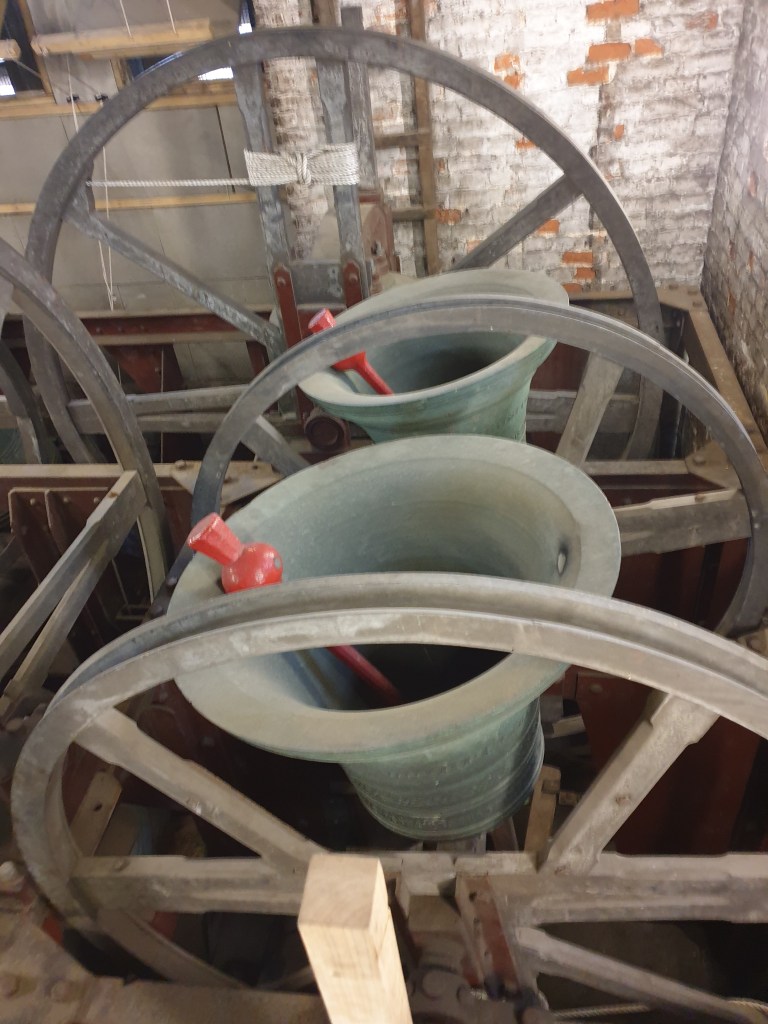
Although there has been no group #bellringing for such a long time now C and I have been going to the Cathedral and ringing two bells just to keep things going.
This week however we are away visiting E&M so not able to go to ring. In ordinary times we would go with E&M to their tower to ring on Sunday bit as they’re not back ringing yet either, we had the morning off.
An odd feeling to not go ringing but after yesterday’s marathon walk around Hardwick Hall we were all exhausted and enjoyed a couple of extra hours sleep.
I am looking forward to returning to the Cathedral next weekend when we will have a couple of extra of ringers for the first time in many, many months. The rules still only allow six people with social distancing, masks and good ventilation but it will be fantastic to hear more than ding and dong and try real ringing methods.
As we head into June and the possibility of no restrictions after the 21st (fingers tightly crossed) we may also be able to start practices again. I know many towers already have but because we are very reliant on people from other towers supporting our practice we’ve decided to hold off for a while.
It will be interesting to see and hear how we get on when trying to raise and ring the heavy bells for the first time in 16 months. Managing people’s expectations of what they could and should ring might be a challenge.
From what I’ve read on social media from other towers it seems that there has been a positive community reaction to bells being rung again but then I upoose no one is going to share any negative responses they’ve had.
I always share details of what ringing we are planning and what we’ve done on our Twitter account and tag local radio, the diocrsan office, the cathedral, local city sites as well. Some are really positive and like and share our posts which is lovely.
I want to build a closer relationship with the cathedral and diocesan offices and local community sites so that they start to fully consider the advantages that bellringers bring to church and community.
I’ve already had conversations with the cathedral office about a diocesan wide ring to mark the enthronement of our new Diocesan Bishop later on in the year and look forward to some closer links.
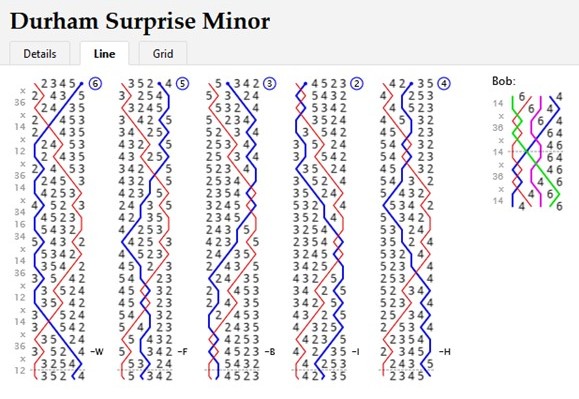
C and I were invited to ring in a virtual quarter peal with some friends to welcome a new grandchild for one of the ringers that we ring with every other week. The method of choice was Durham Surprise Minor.
I have never rung this method on tower bells and have only learned it as a result of virtual #bellringing sessions and working our way through the standard surprise minor methods. I did do my usual trick of volunteering for the treble to start with, but then thought that I had learned the method and should really try ringing it on an inside bell. I opted for my next favourite starting position of the second.
I was rather pleased with my performance, as I knew where I was throughout the quarter peal and even knew when other bells should be dodging or elsewhere in the change. At one point it got a bit hesitant, but I knew that I was dodging at the back and therefore two other bells needed to ring before me. C was conducting it, and sitting next to me, heard me say that I was at the back (all other mics were on mute). He was then able to sort the jumble out. I feel that I acquitted myself well and was rather pleased to have achieved a quarter peal in a new method. This is now the 6th virtual quarter peal I’ve rung.
Being able to use Ringing Room for practicing old and new methods has been an absolute godsend during lockdown and I’ve been really chuffed that I’ve been able to learn methods that I wouldn’t get to ring in a tower usually. This is generally because we don’t ring 6 very often and when we do, the people we ring with don’t tend to know many minor methods. However, with a core of us now ringing these regularly in Ringing Room, maybe we can translate that into the tower when the time comes to returning to ringing properly.
For now, we have to be content with ringing a couple of real bells in our tower on a Sunday morning and ringing all sorts of interesting things in the virtual world.
Annual Report delivery day #3 took us to the NE of the County and to the home of the NE District Secretary to delivery the reports for the NE District members. One the way back we stopped off at Brightlingsea for our picnic lunch. Neither of us has ever been to Brightlingsea before, and to be honest, are not likely to ever go there again.
However, as you go into the town, there a large church, All Saints, at the top of the hill. We know that there are no bells in there (not for full circle ringing anyway) however the structure of the church and tower could easily take a decent set of 8 bells or event a set of 10. It pinged up on our Sat Nav which is loaded with the Doves Guide points of interest, so it must have a bell in there.
When we eventually got a signal, we checked the new and improved Doves Guide but Brightlingsea wasn’t listed at all. C did a google search and according to the church guide “the most striking external feature is the embattled tower, built of local flint in the last years of the 15th century. The tower stands 97 feet high, in three stages, with a minstrel gallery built into the lowest stage. The tower really is quite remarkable; with one of the finest examples of diagonal buttress bracing in East Anglia” https://www.britainexpress.com/counties/essex/churches/brightlingsea.htm
“the ringing chamber presents some curious features; in the belfry are frames for 5 or 6 bells, but only one of the ancient peal, dating from about A.D. 1450, now remains; there is also a small sanctus bell unhung: in 1889 a peal of 10 tubular bells was presented by M. Bayard Brown esq. an American gentleman visiting Brightlingsea in his steam yacht “Valfreyia:” https://ukga.org/churches.php?pageid=4444
Our route back home took us to drop off reports for Inworth (6 bells), Tollesbury (10 bells), Tolleshunt D’Arcy (6 bells), Great Totham (6 bells), Goldhanger (8 bells), Maldon St Mary (6 bells) and Maldon All Saints (8 bells).
So many bells and we didn’t even ring one of them.
Last night had a clash of #bellringing diaries. I should have been at an advanced district practice but also needed to be at a Central Council exec meeting.
This clash now happens very month. Last year it wasn’t a problem because we weren’t running the advanced practices. However we decided to put them back on the virtual agenda this year and try them out. Last month was the first one and as I set up the Zoom I kinda needed to be there so sent my apologies to the CC meeting.
This month though I needed to be at the CC meeting as I was on the Agenda. I did set up the advanced practice zoom session but needed to hand it over to someone else to run.
It was an interesting experiment. C attended the advanced practice on the PC next to me on my laptop attending the CC meeting. We both glanced over at the other several times and at one point were both talking to our respective meetings at the same time.
I missed out on practicing Little Bob Major and Yorkshire Surprise Major and the fact that they finished soon after 9pm. My meeting went on until 10:20pm.
Next month I’ll probably go to the advanced practice and give apologies to the CC meeting. I’ll probably end up alternating.
This morning C and I went #bellringing as usual. Just the 2 of us keeping things going during lockdown, making a noise and making sure the community doesn’t forget the church is there and the church doesn’t forget the bellringers are there.
When we arrived, we signed in as usual and there was an A4 enveloped waiting for us address to the Cathedral Bellringers, with a stamp on, so we know if wasn’t from the office. They’d usually email or phone me anyway.
First thoughts turn to it being a complaint. But about what? We’re only #bellringing for about 15 minutes, only 2 bells and only on a Sunday morning.
This particular letter had a covering letter and a covering, covering letter. It turns out that there’s someone from Berkshire who has severe autism, has written to us asking us to ring a full peal when lockdown ends. From the covering covering letter, which is from their parents, it seems that this person has been researching #bellringing, listening to #bellringing at churches that are local to them, and has even been looking around complib, the compositions library to find something suitable. Presumably the mathematics of it appeals to them.
The request is well worded and uses the correct terminology, although there are several things wrong with what they are actually asking us to do e.g., ring a full peal, un-muffled (both correct terminology), and the composition requested is 5040 Grandsire Triples composed by Alan S Burbidge (correct). Apparently, Burbidge’s composition is one of the trickier ones. The request has asked us to ring it on bells 2-9 of our 12 which would sound horrid. Not least to say that to ring a full peal will take some time to build up to, given that ringers haven’t been active for a year, we’ll need to build up some muscle tone and calluses again.
From the look of the letters, they appear to be photocopies, and given that its not from a local address, I’m assuming that other towers would have received something similar. It must have cost a small fortune in postage stamps.
Whilst there are many things that we cannot accommodate with the request, I have to say, that it was a lovely surprise receiving a request, in writing, the good old-fashioned way, asking for bells to be rung, rather than silenced.
I wonder how many other towers received a copy of the same letter?
We all go through life trying to do the best we can, and equating that to #bellringing, we all turn up at practice night, or Sunday service ringing, or for a wedding or special practice, or quarter or peal attempt or, at the moment virtual practice, with full intention to do the best we can. To ring the method accurately. To strike our bell in the right place. But at a practice night we’re there to try to learn new things as well and extend our repertoire (if we want to).
Briceno offers that sometimes, despite our best intentions we might not always get any better at the things we want to achieve, despite working hard at them. What he learned from his research is that we should deliberately alternate between two different zones.
Learning Zone: here the goal is to improve. So we undertake activities that help that improvement. This could be attending a training day, reading around the subject, watching YouTube videos, asking others for advice, standing behind someone while they ring, asking for feedback and so on. Here, we spend time concentrating on what we haven’t mastered yet, and expect to make mistakes along the way knowing that we will learn from them.
Performance Zone: is where the goal is to do something as best as we can, to execute it. Where we concentrate on what we already have mastered and try to minimise the mistakes. This might be ringing for a special event or a peal attempt, or a striking competition.
Briceno suggests that we should be deliberately alternating between the two zones to purposefully build our skills in the learning zone in order to apply them in the performance zone. Being clear about when we want to be in each of these zones, with what goal, focus and execution in mind helps us better perform and improve. The performance zone maximises our immediate performance, whilst our learning zone maximises our growth and future performance. The more time we spend in the learning zone the more we will improve in the performance zone.
To be able to spend more time in the learning zone we need to believe that we can improve, we must want to improve that particular skill, we must have an idea about what we can do to improve. Just performing the same method over and over again doesn’t necessarily help us improve. Without the process of practice, making mistakes, getting feedback and revision we will tend to stagnate in our current “safe” zone; methods that are familiar and easy, that we won’t feel like we’d be ridiculed for if we go wrong. My favourite is “if in doubt, ring the Treble”, that way I’ll stand a better change of not going wrong, or mucking it up for everyone else. The trouble with that is, I don’t progress myself.
In our #bellringing context this could be the difference between learning the theory of a new method and practicing it on a practice night on using an ringing simulator, in order to perform it to the best of our ability of a Sunday morning, or during a striking competition, or a quarter peal or peal. I also know that I’m really bad at this too. Often I might turn up to a practice having not put enough effort into the learning part, and then hash my way through it, or do enough to just get by without making too much of a pigs ear, but I haven’t learned it properly and will immediately forget it because I’ve not gone back over the bits I find difficult, or asked for help.
My latest thing is to try to learn to ring handbells. I don’t particularly want to ring handbells quarters or peals, but I want to be able to hold my own if I were asked if I could ring something simple. It’s been nearly 40 years since I learnt to ring a tower bell so going back to the beginning to ring handbells, to unlearn some of the things I’ve learned on tower bells and learn them in a different way, has been, so far, really quite difficult. However, I must persevere if I am to reach a decent performance zone. I must make that effort and spend that time in the learning zone, read, watch, listen, practice, make mistakes, get feedback, try again and eventually I will improve.






 Bells, Bakes & Bettering Myself