I’ve just completed a free, online 6 week course in Demystifying Mindfulness course via Future Learn (www.furturelearn.com). The course covered the “science of mindfulness, how it works and why from a political, psychological and philosophical perspective”. Throughout the course were a series of Mindfulness Labs, opportunities to practice a meditation technique. Something not so long ago I would have said was nonsense. One of the ones that resonated with me most was the one on Sitting with Adversity.
Usually throughout a meditation the participant is encouraged to let go of thoughts and feelings and concentrate on breath or sounds. In this particular one though we were actively encouraged to invite a difficult situation, thought or feeling and to acknowledge its existence, to sit alongside it, before considering “each in breath a new beginning and each out breath a letting go”.
So many situations to choose from. I may well have to come back to this meditation several times to get through them all. However, at the end of the 15 minutes or so, I felt much calmer about the situation I had been thinking about. I chose to lessen its hold over me and consider what was within my personal means of being able to do about it. In the end, I chose to let it be what it will be.
Even coming to terms with that simple statement of letting something be what it will be and making a conscious decision to not let it affect me in the way it had been, was enough to lighten to load.
I have done several short courses via Future Learn and would thoroughly recommend it as a way of broadening horizons and dipping into something before deciding whether or not its something you want to pursue further.
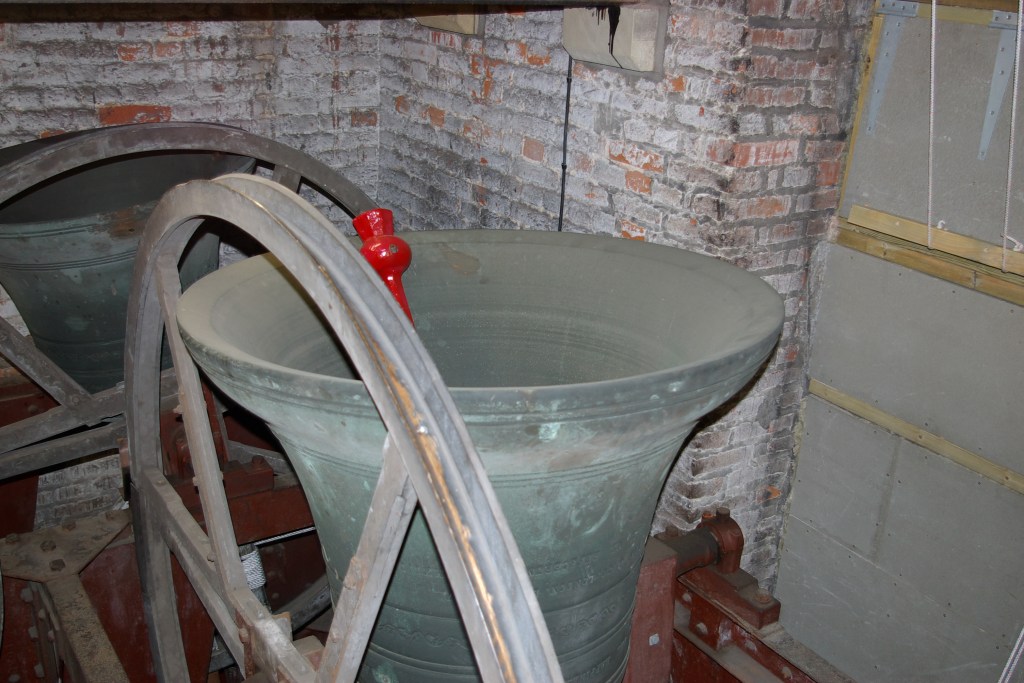
C and I having been ringing just 2 bells at the Cathedral on a Sunday morning now for exactly 4 months. Prior to that we could ring in 2 groups so long as we were socially distanced, but since the last increase in Tiers and lockdowns, we had to reduce it to just the 2 of us.
We’ve got ourselves into a very good routine by ringing 1 and 2, then make places and back, then 3 dodges, then 3 places again, and we just keep doing that. This means that you end up alternating dodging at handstrokes and backstrokes. It’s a good handling practice, but its surprising easy to lose count up to 3!
Each week I’ve been taking a video and uploading it to our #bellringing social media so my friends can see that we’re still alive and doing something. There are those who would ordinarily be ringing with us but can’t at the moment. The majority of towers still aren’t ringing at all, so we’re lucky that the 2 of us can at least do something. It seems to be well appreciated by the Cathedral, and we’ve had some comments from the public on our social media sites saying that they miss the sound of the bells, or that they heard us ringing our 2 bells.
We ring in short 5 or so minute bursts between about 10am and 10.30am, immediately prior to the morning service that is live streamed on the Cathedral’s social media. I don’t think that any of our ringing has featured at all, as we’ve generally finished and wound our way down the spiral stairs just as the service starts. We hope that the local community find some solace in the hearing of the bells and that the church is still “open”.
We will continue to do our bit as long we as are able, and we wait patiently for when the time comes that we are able to welcome our bellringing colleagues back and we can ring on more bells and make a joyful sound.
Nothing like a crisis to get the adrenaline going. Its all going a bit Pete Tong at the moment with former colleagues dying due to Covid-19 and staff off with either positive results or self-isolating, meaning that the service is about to fall on its knees. However, a few strategically placed phone calls and lots of toing and froing has resulted in a bit of a plan that should help the situation a bit. Also some positive clinical engagement, which was fantastic.
I’m not usually one that responds very well to instant and urgent changes, and trying to solve immediate problems. I like to ruminate over things, check all the facts, formulate a plan, get everyone involved. Time was not on our side so this week, and today in particular, have been very much making things up on the hoof, last minute conversations and plans, no time to overly consult, only with those that are critical, put a series of actions together and BAM! I can head in to the weekend slightly more relaxed about the prospects of the week ahead.
I feel surprisingly buzzy about it all to be honest. The time has flown by, I’ve not been wondering what task to do next. I’ve jumped from one conversation to the next, to the next and to the next. I don’t think I could sustain that level of activity or focus for too long, and admire those that do and those that work in environments that require that fast paced thinking and problem solving.
When adrenaline kicks in it stimulates our “flight or fight” responses. When the body is flooded with adrenaline it helps focus and engages the brain, improving cognitive responses. A bit like a massive caffeine hit. Apparently, it can improve your eye sight as the pupils dilate, and improves respiration. Even after the triggering event there can be a residual feeling of high vigilance and excitement and can intensify those feelings. As well as a burst of energy and strength the immune system gets a little boost too. (https://www.mentalfloss.com/article/71144/8-reasons-little-adrenaline-can-be-very-good-thing)
So, having started the day with the sad news of another colleague dying and not feeling like I wanted to really do much, at the end of the working day, I’m now bursting with energy and enthusiasm. Just as well as I’m hosting a virtual #bellringing session tonight and had better be on my A game.
Another one of those self-awareness quizzes (I’m getting quite in to them now) was all about what’s stopping you from letting things go and moving forward. This could be an incident that keeps holding you back, lack of self-confidence, lack of imagination, capability or opportunity.
So having answered the obligatory 10 questions – why do they feel the need after question 4 and question 8 to let you know that you are now 40% and 80% complete? – it spewed out my results:
Self-Awareness
Ruminating can become habitual, the go-to place for your mind to wander. But constantly rehashing old arguments, decisions or events keeps them live and fresh. Next time you find yourself sucked into an overthinking spiral, check in with how you feel. If your mood has taken a downturn or you’re feeling anxious, your thinking is not helping you resolve anything. Increasing self-awareness by making time every day to do a mindfulness exercise can help you get into the habit of observing the stories your mind is telling you without getting sucked into them. Try starting your day with a mindful shower – focus on feeling all the sensations and smells. When your mind wanders, observe where it has gone without comment or analysis, then bring yourself back to the present. It may also help to schedule daily ‘worry time’ and park your overthinking until a specific time of day, preferably when you’re relaxed and in a good frame of mind. If, when worry time comes around, you don’t want to go over old stuff, that’s a bonus.
I do actually go over things, again and again, and try to understand the different nuances of what has happened, why it happened, what could have been done differently, how I could have reacted differently. I also spend a lot of time thinking about why am I spending so much time thinking about it. I often tell myself to move on.
I guess that I’m one of those who constantly beats myself up about things. There’s always something I could have done better, or should have done that I didn’t, or did that I shouldn’t have, or that I really ought to give more time to. I replay conversations over in my mind multiple times. “What if I’d have said this”? or “if they’d have said that I could have…” and so on.
I’m not sure that I want to schedule a daily worry time, as there are some days when I don’t overly worry about anything in particular, and I’m not sure that you can necessarily schedule it. Things that will cause worry that are triggered by other things and can happen at any time. I might be in the middle of one thing and something on the radio or that I’ve read will trigger my brain to relive a previous worry.
I try to learn from previous errors and hope not to repeat them (not always necessarily successfully) however, I do find it really hard to forget about them and move on, even when a solution has been found, agreed and implemented. I will stew over it, even after some considerable time.
I guess I need to learn how to deal with it in the moment, resolve whatever it is, and then move on. Step away. Park it. Easier said than done.
I do not think I’m the adventurous type at all. I like home comforts. I like routine. I like to know what I’m doing and when so that I can plan around it. I’m not particularly great at trying new experiences. Although I did do an abseil once. I did go skiing when I was at school. I do like to travel and see different places. And I did make my husband do husky sledging a few years back. But I’m not spontaneous, or good at thinking of what others might see as exciting things to do.
So, I thought I’d try and find out what the experts say about whether I’m an adventurous sort or not and turned to one of those on line quizzes that thinks its gets to know all about you and your preferences by asking you a mere 10 multiple choice questions. According to the results:
You are excited by new experiences
Cosmopolitan, smart and savvy, above all, you get your kicks from interesting experiences. You flourish when your mind and senses are nourished and flounder in a cultural vacuum. The buzz of a new exhibit, the hush as the theatre curtain parts, or the flavours of a new cuisine all excite your palate and thrill your thoughts. For you, the conventional is dreary. Because you open yourself up to a wide array of artistic and intellectual interests, your world is ever expanding.
Well, as it happens, yes I do like the theatre. We do try to at least make an annual trip to see a West End show each Christmas time (2020 being the exception) and if anything else takes our fancy in the mean time we’d go along. I do like to learn new things and educate myself. I enjoy certain types of museums and exhibits and enjoy a good National Trust property or English Heritage site. I do like eating, so trying new things from time to time is good, and when we are on holiday abroad I do like to try something that might be considered local cuisine (so long as its not fish!).
So I might not be adventurous in the sense that I like to do extreme things like water sports (I have a phobia of water so that’s not going to work), or bungee jumping, or fast paced stuff, I’m more of a slow, steady adventurer. I’m less keen on the “let’s do something crazy” and go for more of the “let’s plan a nice trip out”.
A while back I did do a year (and am probably still doing it) of saying “yes” to everything that came my way. This was both exciting to take on new challenges but worrying as some of the things I was asked to do put me in the spotlight, somewhere I’m not comfortable with. However, it did give me a chance to connect with new people, and has stretched my own learning and capacity. The downside is that I now get involved in lots of things that I can’t always give sufficient time to. So there’s a fine balance needed.
So, maybe I am unconventionally adventurous and my world is ever expanding, just slowly.
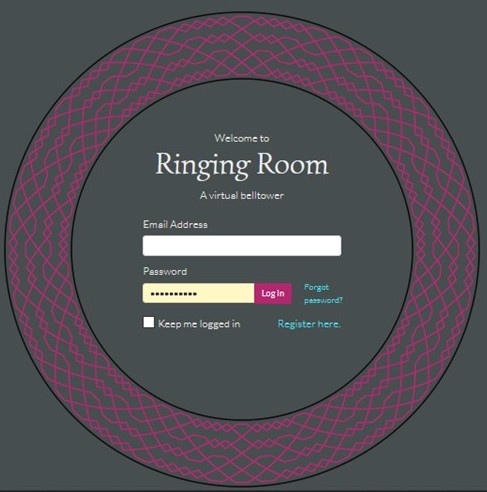
Today was an epic day of activity for me on Ringing Room. This time of year we would ordinarily be #bellringing with a group of friends that we meet up with twice a year. Without being able to meet up for real we decided to try holding a virtual tower grab through the wonders of Ringing Room. On Saturday we had five towers to log in and out of that virtually had us travelling from Oxfordshire to Essex and back again. There are more towers on Sunday from Essex, Portsmouth and Nottingham. We may also try some quarter peals on Sunday morning as well.
So having spent an hour and a half in and out of various towers ringing all sorts of random methods, I then had a Cast of 1000 session for an hour and a half, where I was one of the students practicing spliced Cambridge, Yorkshire and Superlative Surprise Major, and some Lessness and Bristol Surprise Major.
Bearing in mind I’m nursing a stinking cold now as well, my brain was well and truly fried by the end of it. There was very little time between my Cast of 1000 ringing and the evening social Zoom event as part of the ringing weekend, so we cheated and C grabbed a chinese takeaway whilst I was ringing. Just about had enough time to eat it before logging back in to Zoom again.
There were nearly 20 of us on a Zoom chat, catching up as we missed out on the summer tour. We had a short business meeting as well just to think about plans for the year ahead, although its still unlikely that we’ll be able to have the summer tour this year either.
Its quite marvellous how we are all able to continue to ring and meet up with with people, albeit virtually.
Things are always changing. How many of us has had a job description that bears no resemblance to the role that we actually do? How many times have we decided on a particular course of action then something has come along and meant that we had to go in a different direction, whether wanted or not? For those who project manage, how many times has the scope of your project changed, and resulted in having to adopt different technologies or processes or had to be scaled back or scaled up? How many times has our personal circumstances changed over the years? Change happens all the time. Its how we respond to those changes that makes the difference.
My personal circumstances have changed over the years from being a child, leaving school for the workplace, changing jobs, changing partners, becoming a wife and a mother, going back to higher education, becoming responsible for the delivery of projects, becoming responsible for the delivery of service, becoming responsible for a team of staff, being responsible for bellringing activities locally, nationally and internationally.
If you’re not used to change though it can be uncomfortable. Kubler Ross’s change cycle likens the change process to the same phases that a person might go through the grief cycle: first the shock that something might actually happen followed by the denial that it will happen, the “how many times have I heard that one” scenario. This is followed by the frustration and anger when we realise that things are going to be different and then the depression of things that are happening that may be out of our control and the lack of energy to get involved with it. But then things start to look up again when we start to engage with what’s going on and start to get curious. Then we start to feel more positive about the situation as we learn more about it and experiment with how the new situation is going to work then we become fully integrated with the new ways of life. Of course, how long we individually spend in each of these zones is a purely personal thing and we don’t move on until we are ready no matter how hard someone else pushes.
Some people struggle with change as they fear that they may be losing something. It might be that they will no longer be the acknowledged expert in that field, or that they may be replaced by technology or a younger, cheaper model, or that they might not be able to cope with the change, particularly where new technology is involved. Where regular routine is changing some people might be fearful of a change in security or safety. People are likely to be more resistant to change if they are not involved in the process from the start. As well as being anxious, they can become downright obstructive.
Having a positive attitude to change means that we spend less time in the frustration, anger and depressing phases because our mindset is already moving on to finding what the positives are and how we can be involved and engaged with the change, and learn what the benefits are going to be. Looking to the past and accepting it for what it was is only useful if we learn from it and move on. Accepting and embracing change early on allows you to adapt more quickly and be more flexible. The more often we encounter change, the easier it becomes to adjust.
I find that resisting change takes far too much energy. Even if I don’t necessarily agree with the change that is being put forward, more often that not, its going to happen anyway, so I may as well accept that and make the best out of it. Who knows where it could lead ?
Today was my first day back on the hospital site for 3 weeks. I was a little apprehensive about it I’ll be honest. Not particularly about being back at work after a week’s annual leave, but being on site, where there are people, lots of people and patients, lots of patients. I think I was more apprehensive about that than the fact that I actually had to go and sit in my old office to cover for my number two whilst she’s on annual leave, which meant being back with the team that I moved on from just over a month ago.
I went straight to my old office, and set up my laptop and settled back into the smells and sounds that are along that corridor. Then I went in to the main office where everyone else is and said hello. There were a few comments like “where have you been?” but some nice enquiries about how I was getting on in my secondment role. I asked after each of them and how they were getting on generally, and explained that I’d been sitting in my old office for a couple of days whilst V was on annual leave, so if there was anything they needed, to just shout. To be honest, they know what they are doing and are quite capable of getting on with it but every now and then someone throws a curve ball that puts things out of kilter so I was just here to make sure that they were ok. They don’t need me, and that’s fine.
I had occasion to walk through the hospital site where nothing much seemed to have changed since I was last here. Although there was the vaccine hub outside and new tented waiting area. There were fewer people wandering around, only people that absolutely should be here are being allowed in the front door.
At lunchtime I went for what used to be my usual walk around the perimetre of the hospital site. Sometimes that walk became a bit of a chore, doing it because I felt I ought to do some exercise, but also rather boring as you can’t go very far in half an hour. Today, it almost seemed like a brand new walk. The season has been marching on and buds are starting to sprout as the first throws of spring are imminent.
The sights and sounds of a busy hospital go on, with or without you. It was quite reassuring that there was some familiarity about it, even if it did feel a bit odd being here.
Its simple, right? You just stick a # in front of a word, job done. But what’s the point of the #?
The # is there for you to link your post, in whatever medium that might be, to a word that may connect you with others who might be interested in the same topic. It can help your post reach a myriad of different audiences. The hashtag became popular with Twitter, but you can use it on just about any social media platform. It means that anyone looking for a particular topic can search using the hashtag and find other sites and content of interest. Very useful if you are wanting to get a message out or share information with the masses. According to some sources you can get 45% more likes and 67% more comments on your content by using the right hashtag strategy.
I use a very small number of hashtags on my posts about bellringing, mainly because some social media platforms have a limit on the number of characters you can use, but mainly because I’m rubbish at thinking on synonyms, you know, those other words that are related to the one you’re using. For example, I use #bellringing a lot when I post about any bellringing activity, or sharing information. For some reason it took me ages to connect #bells, #bellringers, #ringing, #campanology. Search these hashtags and it opens up another world of bell related sites, some not so relevant to the type of bellringing I do, but means the posts has the potential to reach a whole new audience.
Up until recently, I’ve never really used a hashtag as a search function to find other like minded topics, but as I’ve got more into using social media, I’m finding out all sorts of useful tips. There’s a whole business made out of teaching people how to hashtag properly. I took the plunge a while back and purchased an e-book on how to make the most of hashtags, but only because it was going super cheap. And, I have to say, I’ve learned quite a bit from it.
The particular e-book I purchased was more specifically focussed on Instagram, the least of the main social media platforms that I’m familiar with but the ideas can be used across the other platforms too. I look after 3 different Instagram accounts, including my personal one. I had them open as I was going through the e-book and putting the suggestions into play immediately as I was reading through it.
I edited the profiles for each account to make them more appealing and relevant so that it instantly gives a viewer the information they need about the account. I looked at the hashtags that were suitable for the size of each account based on the number of followers each account already had. Using hashtags relating to topics where there are too many followers already means that our messages could get lost in amongst all the noise. I thought about the keywords that users might be searching for when they’re trying to find our information. I then used those words to search sites where the ideal audiences would also be looking at. I followed a number of those, then looked at the kind of hashtags they were using and jotted down any that I thought might be useful.
Then its about the engagement. Once you’ve found the top accounts in your topic of interest, by liking and commenting on their accounts regularly, this will help your visability too, amongst their followers.
I’ve made a list of all the hashtags that I think would be useful for each of the accounts I look after and now that I’m starting to use them, I’ll be able to look at the analytics to see how they are helping reach wider engagement.
Yesterday I ordered some books from Amazon which I hope arrive during the coming week, as I have some annual leave and therefore time to read them. Amazon told me that they should all arrive the following day.
Today Amazon tells me that my parcel should arrive today any time before 10pm. Thats going to be scary if the doorbell rings that late at night!
I have high hopes for these books. They will help me to understand and do better in the social media world. At least that’s what I’m hoping. I hope they are worth the wait.
According to logisticsmgepsupv.wordpress.com we spend around 6 months of our lives waiting in line for things, 43 days on hold with automated customer services, and 27 days waiting for a bus, 32 minutes per day waiting for a doctor, 28 minutes in a security line at the airport, 21 minutes for our significant other to get ready to go out, and 38 hours a year sitting in traffic. A Daily Mail survey suggested that we wait around 4 months of our lives waiting for the kettle to boil.
Sometimes the planning and experience associated with the waiting process can be extremely pleasurable. Like the smell around the house when you’re baking chocolate brownies. The creative processes of art, cooking, crafting, travel, and a myriad of other things can give as much pleasure during the creating or planning process as the final product does. And when you have that final product, it will be all the more sweet knowing the effort it took to create it.
As I’ve said before, I am an ongoing development as a human being and am trying to get as much pleasure out of the creation of the person I want to be, as much as what the end result might be.








 Bells, Bakes & Bettering Myself