Our Monday night #bellringing practices have been a little short of bodies recently, so we’ve been concentrating on ringing eight bell methods, with some triples for those in that learning zone.
This last Monday we had enough to ring some Surprise Major methods. We started with some Yorkshire to warm up with. Then rang some Bristol which proved a little too much for some, so it crashed out. C asked me what I’d like to ring so I suggested some simple spliced: Cambridge, Yorkshire, and Superlative. I did also want to throw in some Lincolnshire but others in the band were less confident, so we stuck to the three methods.
I’ve always been told that because I don’t learn methods by learning the place bells, I’ll never be any good at ringing spliced. That may be true to some extent. But if that was the case, how come I was one of the stronger ringers in that touch? I may not consciously know what place bell I am, or be able to quote lead end orders, but I can figure out what piece of work to do next.
My minor (forgive the pun) #bellringing ambition is to ring the standard eight to Eight Spliced. I’m not going to get into a debate here about Standard Eight versus Core Seven. They both have their place.
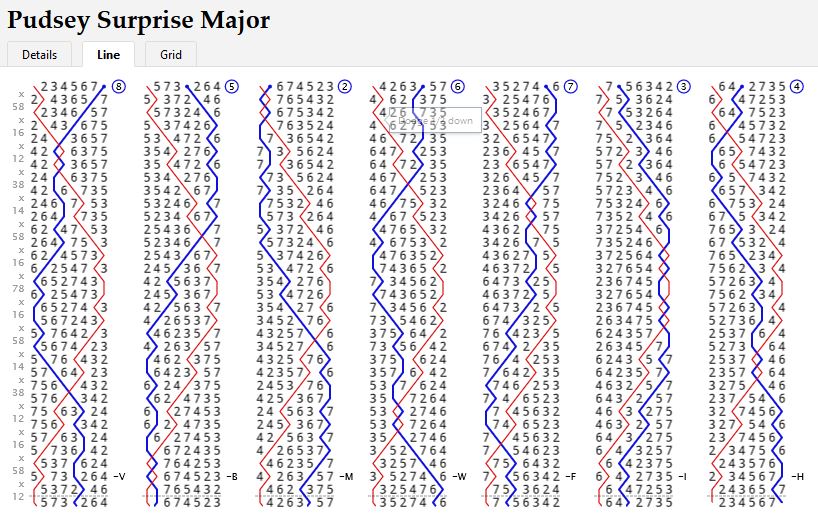
Of the Standard Eight methods I semi-regularly ring seven of them: Cambridge, Yorkshire, Superlative, Rutland, Lincolnshire, Bristol, and Pudsey. I think I’ve only ever rung London a couple of times. The most I have ever rung spliced together is probably four of them and probably not very well. We just don’t do it regularly enough, partly because the ability of the band.
The Education Column Series 2, Sheet 7 introduces the theme of splicing, describing it as a touch where you change methods at any lead end. The method changes could be accompanied by a Bob or Single too. As the treble leads, we finish the work of the old method, noting where we are at the backstroke, then start ringing that place bell’s work in the new method as the treble moves away from the lead. In the same Series, Sheet 10 it suggests deciding in advance what methods you’re going to splice and stick to the ones you are most familiar with to start.
My inability to learn methods by being able to quote place bells and being consciously aware of them has improved over lockdown where we’ve been practicing different methods on Ringing Room and as I’ve been coaching others through new methods, I’ve looked at them differently myself. Perhaps I have an unconscious ability to know what place bell I am. I can sometime see where the treble is and know what place I am at the backstroke; its just a case of know what work that place bell does!
I think through using Ringing Room I have become more aware of what other bells around me are doing and more aware of where the treble is and what piece of work I do next. So, without being able to say out loud what place bell I am, perhaps I do know after all. Maybe there’s hope that I’ll crack eight spliced soon.
 Bells, Bakes & Bettering Myself