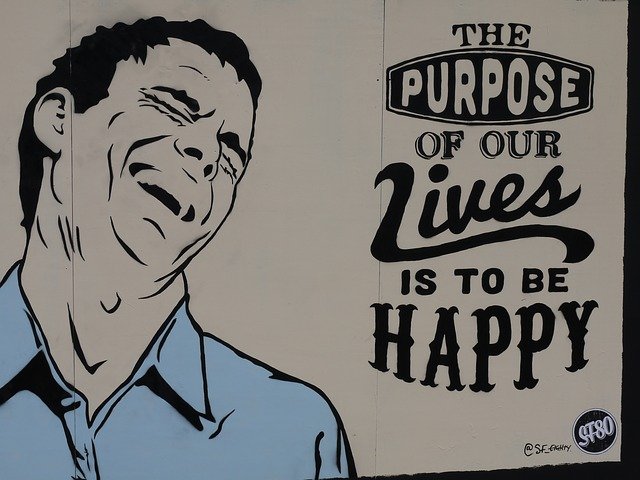
Or is there more to life?
There are certain things in life you may check off as achieved such as getting a good job, buying a house, being in a committed relationship, having kids, saving for pensions. If we achieve all those things we may feel lucky, and we are certainly luckier than some who for whatever reason are not able to achieve those things even if they wanted to. But is there more to life than the merry-go-round of work, house, shopping, meetings, kids, errands? Does there need to be?
I read stories about people who have turned their back on the rat race, moved to another country, set up their own business, live off the grid, and found their purpose. For me, I still wonder what my purpose is sometimes, and I’m not really sure where to start looking for it. I have the comfortable life, a good, well paid job, a well grounded adult child, a committed relationship, money saved for later life. But where do I go now?
In an article in Psychologies Magazine there was an exercise and ten questions to help you asses and begin to understand the changes necessary for you to build a life of meaning and purpose. The exercise was to picture yourself as an older person reflecting on your life, then imagine you were writing a letter to a good friend, you don’t need to actually send it, but it helps to have a real person in mind when you write it. As your ideal future self, write about the lessons you’ve learned, the positive changes you have made and all the incredible things you have done in your life. Tell you friend who you got to this point in your life now and how you cane to fulfilment and a sense of purpose. The idea is not to replan in your mind what you are going to write, just start writing, without editing or deleting, just let the words flow. Once you’ve finished writing, read it back and realise the person you want to have come and how you want to have lived your life. Next, consider the way you are living your life now and as what changes need to be made to experience more meaning and purpose.
Before making any changes, there are the ten questions to ask yourself:
- What do I want, and what will it give me I don’t already have?
- What could I lose by making this change?
- How can I make this change ad keep the good things from my current situation?
- How will this affect the wider system of my life and those around me?
- What is the reality of my life now, before I maek the change?
- What is the different between where I am now and where I want to be?
- How will I get there? Who and what do I need to help me achieve this?
- Is this decision coming from wisdom and courage or fear and doubt?
- How important is it to me to make this change?
- What will happen if I don’t make this change?
I think that to do this properly would take a bit of time to allow yourself to start the writing process. It might feel a bit stilted at first, but once you make a start, it should flow and become easier to recognise those things and note them all down.
I think its similar to considering how you want to be remembered in life after you’ve gone. Why was she here, what was her purpose, what was the point of her existence?
When I’m feeling a bit low I do sometimes think what is the point of me being here, I’m totally ineffectual and have made no difference to anyone’s life. Not to any dramatic sense, but wonder what I’m doing with my life. Then I realise what I have achieved. I have positioned myself well at work in a job that I mostly enjoy, with a decent salary, which means I can buy the things I want to. I have security, I have a solid family set up, I am safe and secure. I have a hobby that keeps my busy, almost to the point of overload, but that’s my choice to be involved as much as I want to be.
I hope somewhere along the way someone may have found something I’ve said helpful, something I’ve done useful and that for many years yet, I still have some purpose to share.
Have you found your purpose? If so, how?

 Bells, Bakes & Bettering Myself