Slave to the Rhythm

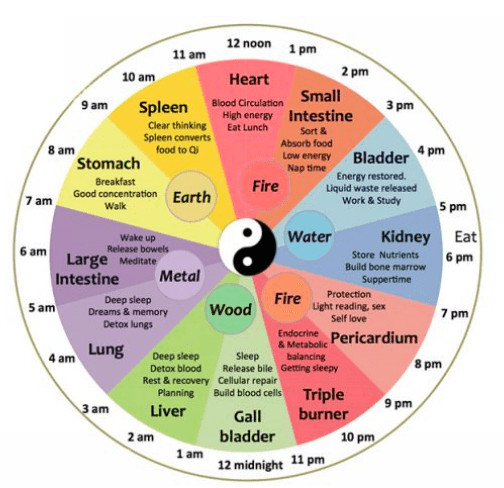
Having allowed myself the time to read some incredibly useful and illuminating books recently, I’m learning a lot about how the human body functions, it needs and ways in which to support it both physically and psychologically. The latest revelation was around the study of the traditional Chinese medicine understanding that you can make more out of your day by syncing your activities and energies with the times of the day that certain organs perform at their peak.

For example, the lungs peak performance time is between 3am and 5am, so this might be the best time for deep, restorative sleep, whereas the heart performs best between 11am and 1pm, so the ideal time for getting the blood circulating through exercise with high energy levels and eating a light lunch, so that come 1pm to 3pm your small intestine can sort and absorb food.

From about 7pm onwards the rhythm of the body clock is starting to wind down and the circulatory systems can focus on carrying nutrients around the body, a time to start to settle down for the evening. Sleeping between 9pm to 5am allows the gall bladder and liver to be most effective, cleansing the body of toxins, ready to start over when the lungs are preparing to restore oxygen to your muscles for the day ahead.

It was really interested to compare that clock to my daily routines. I get up around 6am, start work at 7.30am, have breakfast around 8.30-9am, just as my stomach is at peak efficiency and concentration levels should be highest. I go for a walk most lunch times, so that could be anywhere between 12noon and 2pm, at exactly the right time for my energy levels to be at their highest. I do suffer from the mid afternoon slumps, but being at work can’t partake of a short nap, but do feel that I need a sugar boost around 3pm, so cup of mint tea and a snack to keep me going. We do tend to eat our evening meal some time between 6pm and 7pm, so at the right time for my kidneys to be storing nutrients. Then, unless I have a meeting in the evening, or I’m at a virtual #bellringing session, I’m usually fairly zonked out on the sofa from then on in. I do have a bad habit of curling up with my sofa blanket, then falling asleep around 9.30pm, wake up again around midnight and head straight to bed where I can usually fall asleep fairly quickly and thoroughly until the alarm rips me awake again at 6am.

So, without realising it, I am actually quite in sync with my organ body clock. I am already a slave to the rhythm.
Why we do what we do

I have the next week off work as annual leave. I have no plans, and no real thoughts about what to do with my time. I have a couple of reports to write and could bake something but other than that, because we can’t go very far due to lockdown, no other real thoughts about what to do. That got me thinking about why we do what we do (or not).

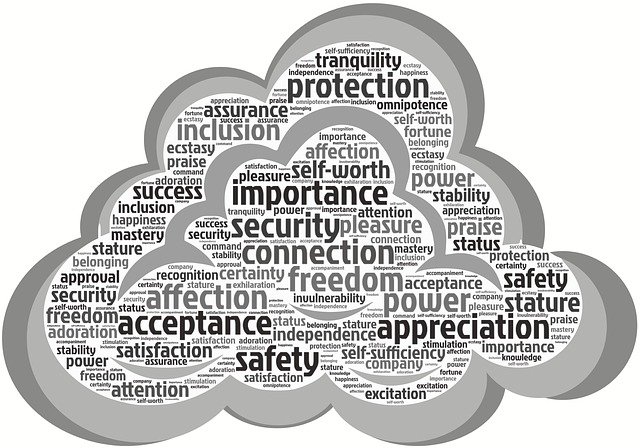
You could take Maslow’s hierarchy of needs and work through that systematically, but does that cover it? Yes, there are some basic needs that ought to be addressed: the need for food, shelter, sleep, company etc. We need our elements of security around employment, health and some material belongings. There is certainly a need for friendship, family, love and a sense of connection. But then we get on to the things that you could argue we don’t NEED, we just WANT. Respect, recognition, strength, and then self-actualisation – to be the best we can be.

There’s another school of thought that suggests a different solution to why we do what we do.

A sense of obligation – to share experience and knowledge, the obligation to serve others. A sense of duty, and pride – perhaps via volunteerism, a call to action, pride in a job well done and our want to succeed. We should be wary of the vice like self intention, cunningly disguised as “being in our best interests”, which only really offer temporary pleasure. Acts of kindness and our altruistic love for the benefit of others. Passion for our favourite activity or cause, our desire to do something. The desire to “tick the box”, perhaps something off our bucket list, but could lead on to somewhere else. Our destiny may be coloured by family tradition, a hobby or particular calling that other family members before us have excelled in. Yes, there’s a need to have a sense of fulfilment to keep us energised and empowered through our self-actualisation. But maybe we do it for others, to have something to share or for the “greater good”.

Tony Robbins, an author and podcaster, as well as being a mutli-billion dollar entrepreneur, in his TED Talk and book, describes 6 human needs – certainty, significance, variety, love/connection, growth and contribution – and how each influences our thoughts, feelings, behaviours and actions. By understanding what drives us, we can understand how to meet those needs. The same for people around us, once we know what drives them, we can help them meet their needs too.

At a very fundamental level, I know I need to be safe, secure, independent and have a sense of purpose. The narcissist in me does need some form of appreciation every now and then, but I certainly need feedback to make sure that I’m at least heading in the right direction and to help me achieve some personal growth. I need to be educated. I need to understand things and learn from them. I try to encompass all of that in my working, social and family life and am conscious that I don’t always get it right.

Surround sound

How often do we get an opportunity to just sit and listen, I mean REALLY listen to the sounds around us?

Both C and I were sat out our respective desks in the study, going about our business when it suddenly hit my ears there there was silence. Neither of us were speaking. At the time neither of us was hammering our keyboards or frantically clicking a mouse. But then I noticed the non-silence which actually became quite loud.

I could hear the birds twittering in the back garden, as clear as a bell. The hum from the fan on C’s PC, continual hum. The wall clock ticking, so loudly too that it beggers belief that sometimes you barely notice it at all. There was an occasional mouse click as one or other of us scrolled up whatever it was we were reading on the screen. There was a throat clearing after a glug of water. There was a chair squeaking under the pressure of shifting weight. There was an airplane outside on its way to, or from, who knows where. There was pen scratching on paper as I was making notes. There was a belly rumble and an over emphasised exhalation.

Within the space of somewhere between 5 to 10 minutes there were all these sounds surrounding me, but there was silence. Peaceful, gratifying, restorative. All of these amazing sounds that I might have missed had the radio in the kitchen been on, or had I been hammering away at documents or emails, or people talking.

Silence can provide us with so many benefits if we choose to allow them into our lives.

It can allow us to concentrate and focus, which apparently can be lost if the sound is over 80 decibels. Obviously the writer of that point has never been to a #bellringing practice where concentration is required despite the noise of the bells.

It can allow our minds to be more creative. Some eminent scientists did their best creative work after a period of solitude and quietness.

It can allow us to discover how we may improve our lives when attention is given to self awareness practices. Taking time to self reflect can help figure out what and where we want to be.

It can help relax us and reduce stress levels if we allow a period of silence.

It can affect our ability to learn. The more noise we are exposed to the worse we perform and find it harder to concentrate.

Doing nothing and remaining silent can increase productivity of new brain cells, which in turn supports greater productivity as much as tenfold.

Silence can help cultivate calmness and peacefulness when you regularly practice silence and patience.

If you are able to, I invite you to sit somewhere comfortable and just be silent for even just a few moments. Make a note of all the things that you can hear in the silence. You’ll be surprised how much surround sound there is.

The 6 Domains of Resilience

The #MSEBUDDYNETWORK I’m part of at work is a great resource for being able to support colleagues who just feel that they need someone to listen to them, for somewhere safe to spout off, or to just reflect and recoup.

There have been some great resources shared throughout the programme and another such example was shared yesterday. Available via the NHS Leadership Academy (through whom I did my Elizabeth Garrett Anderson Senior Healthcare Leadership MSc) are some bite size learning snippets around health and wellbeing conversations specially focusing on resilience.

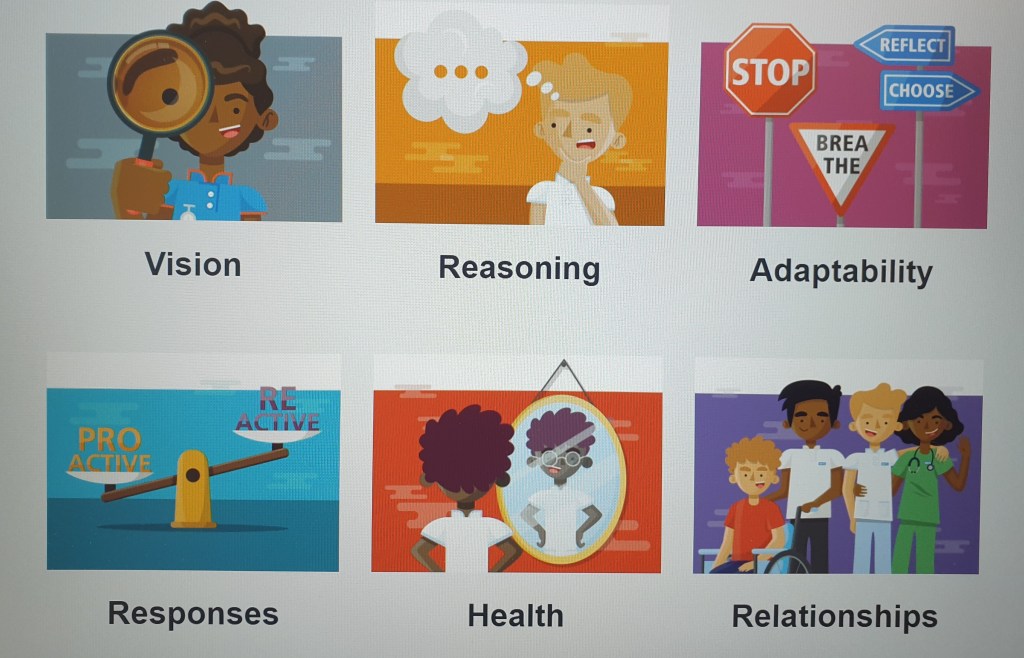
The resource was developed by Sonya Wallbank, a clinical psychologist and organisational development lead. It is broken down into 6 dimensions covering Vision, Reasoning,  Adaptability, Responses, Health and Relationships. Each dimension then goes on to explain its impact and offers suggestions to think about how we could focus our energies into improving them.

The resource is there to support facilitators of conversations and can be applied to your own experiences as well as used as a template to help others. My personal opinion is that we should not expect to help others where we cannot help ourselves first, so for me to support anyone else, I need to understand my own experience.

VISION: This is about setting personal goals and values and understanding why we do what we do and helping shift our anxieties and concerns into hope and curiosity. The questions posed are about asking yourself what you believe is your purpose in life, whether you are engaged in activities that bring out the best in you and inspire you, and what are your goals and how could you get nearer to them.

REASONING: This is our ability to problem solve, be resourceful and anticipate and plan for things and our reactions to set backs. The ask is to reflect on how you react to change in plans, what you need to be able to cope better with change or difficult circumstances, and how you could plan for a range of different potential scenaios.

ADAPTABILITY: Considering our ability to bounce back, be realistically optimistic and flexible about expectations and acceptance of change. You might need to consider how you adapt to last minute changes of plans, how to say “no” or “I could do that if…” instead of saying “yes“, and what could you achieve if you had a bit of extra help.

RESPONSES: How do we react emotionally, psychologically and biologically, to what’s going on around us. What are the things that you are worried about that you could do something about, what are the things that are outside of your control, do you need extra help to get you through this response?

HEALTH: How we feel plays a major part, how are we physically, financially and environmentally. Are there simple changes to lifestyle that could help, do you need help with controlling finances, are you OK in your work or home space?

RELATIONSHIPS: Our culture, team and other relationships all contribute to our resilience. Is there anything that leaders or colleagues could do to help make you feel safer in sharing ideas or opinions, where can you get support outside of your team, what networks and communities do you connect with and what will enable you to thrive.

Another great resource that enables us to help others. But as I said, in order to help others I need to be able to understand my own responses, so I’ll have a sit down and think.