Outsourcing our emotions

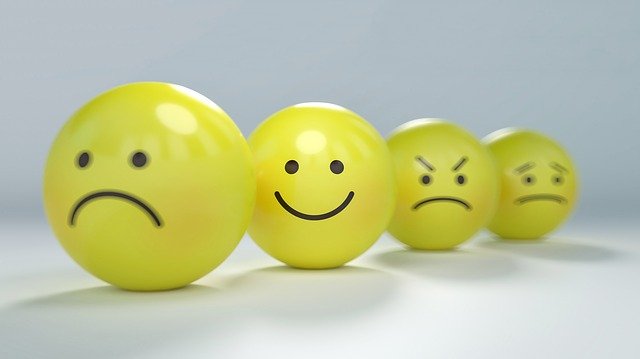
Image by Alexas_Fotos from Pixabay

If you are outsourcings your emotional life you’ll know because you’ll find yourself saying things like “I would be less stressed if the kids behaved”, “I’d be happier if I was respected more by this person”, “I’d feel better if this person stopped meddling in my business”.  Podcast fave Tonya Leigh defines outsourcing something as to obtain goods or services from an outside supplier, especially in place of an internal resource. When you are outsourcing your emotional life, you are trying to obtain an emotion from outside of yourself instead of creating it from within your own internal source.

If we are emotionally accountable, we are the one who is creating our emotional life. When we want someone else to behave differently so we can feel better, we have given all the emotional power to that person. When we are blaming someone else for the way we feel we have not taken responsibility for our own emotions.  If we are emotionally accountable and responsible for ourselves, it lets everyone else off the hook and we decide how we want to feel in every situation.

That doesn’t mean you don’t have boundaries, but you don’t make other people responsible for how you feel. When you decide how you want to feel you can set very clear boundaries with other people. When we outsource our emotions to someone else, often that person isn’t fully in control of their own emotions, yet we push more on them to change in order for us to feel better.

It can be really freeing to take control of our own emotions, take responsibility and accountability for them.  It can change relationships.  Other people don’t have to feel and think the same way we do. Let them be who they want to be.

It doesn’t mean you have to accept poor behaviour or become a doormat. It means you get to decide how you feel and set boundaries so that people can carry on doing what is not acceptable in your world but not in your space. 

Be honest, who are you outsourcing your emotions to right now?  Who do you want to behave differently so that you feel better? What would it be like for you if you released them from that responsibility and took ownership of your own emotions?

I have really focussed on this over the last year or so.  I am taking much more control of my emotional responses to things.  There have been certain things that triggered recently, and previous I would have gone into a bit of meltdown about it (I don’t take it out on anyone else, but internalise it all), however I chose to consider that what was causing me anxiety, was thinking about a situation which may never have happened.  I was taking a situation, blowing it out of proportion because I wasn’t comfortable with it.  But then I took stock and looked at it more objectively.  Was anything really going to happen?  What would be my response if this or that occurred?  Why was I wasting energy on churning this over and over in my head, when it may never have happened anyway? I decided to make the best of the situation and enjoy some time I got to spend doing what I wanted to instead and turned that energy into something more positive.  I didn’t fully ignore the niggles, but I chose not to let it dominate and not to shift it on to someone else.

When you learn to manage yourself instead of trying to manage other people, that’s when you get your emotional power back.
Mapping Meaningful Connections

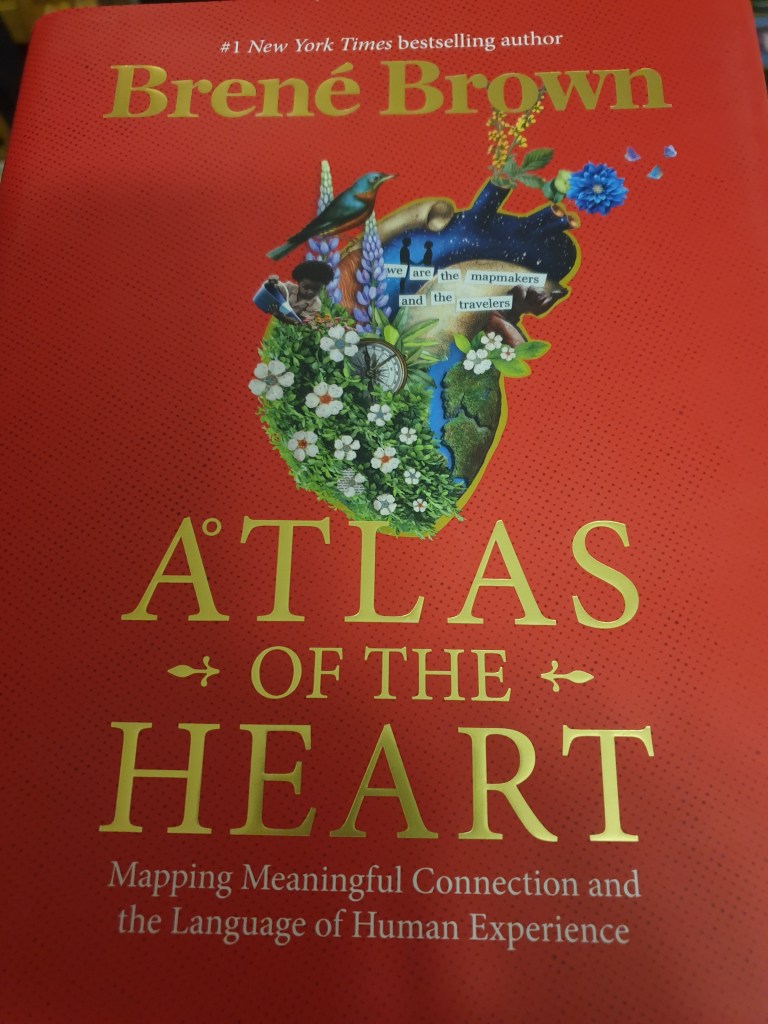
My latest read on my self-awareness and development fumble through life is Brene Brown’s Atlas of the Heart. Brown’s is a renound researcher and author of experiences that make us who we are. This book takes the reader through 87 emotions and experiences that define what it is to be human.

The back cover explanation says that Brown’s maps the necessary skills and an actionable framework for meaningful connection, giving us the language and tools to access new choices and second chances.

The book groups those 87 emotions and experiences into categories:

  1. Places we go when things are uncertain or too much – stress, overwhelm, anxiety, worry, avoidance, excitement, dread, fear, vulnerability
  2. Places we go when we compare – comparison, admiration, reverence, envy, jealousy, resentment, schadenfreude, freudenfreude
  3. Places we go when things don’t go as planned – boredom, disappointment, expectations, regret,discouragement, resignation, frustration
  4. Places we go when its beyond us – awe, wonder, confusion, curiosity, interest, surprise
  5. Places we go when things aren’t what they seem – amusement, bittersweetness, nostalgia, cognitive dissonance, paradox, irony, sarcasm
  6. Places we go when we’re hurting – anguish, hopelessness, despair, sadness, grief
  7. Places we go with others – compassion, pity, empathy, sympathy, boundaries, comparative suffering
  8. Places we go when we fall short – shame, self-compassion, perfectionism, guilt, humiliation, embarrassment
  9. Places we go when we search for connections – belonging, fitting in, connection, disconnection, insecurity, invisibility, loneliness
  10. Places we go when the heart is open – love, lovelessness, heartbreak, trust, self-trust, betrayal, defensiveness, flooding, hurt
  11. Places we go when life is good – joy, happiness, calm, contentment, gratitude, foreboding, joy, relief, tranquility
  12. Places we go when we feel wronged – anger, contempt, disgust, dehumanisation, hate, self-righteousness
  13. Places we go to self-assess – pride, hubris, humility

I haven’t really got into it yet but just reading through the introduction I get a sense of its going to be a good read. Brown is honest and open about her own life challenges and hope they shaped the person she is today. Its backed up with empirical research and real life examples.

I’ll keep you posted with what I learn.

Why are we so poor at dealing with our emotions?

Maybe you’re not, maybe its just me.  Is it because evolutionarily we worry about showing emotion as a sign of weakness that gives some imaginary power to others to hold over us? Or is it that we’re simply just not good at it?

When we are able to understand and name our emotions we are in a better position to tame them.  A study led by Matthew Lieberman looked at how people responded to looking at pictures of faces with different emotional expressions.  The act of naming the emotion reduced its impact on the participants.  It turned out that when naming the emotion the activity in part of the brain’s prefrontal cortex increased significantly (Bill Lucas, rEvolution, how to Thrive in Crazy Times).

People who routinely notice their emotions get better at picking up their early warning signals such as clenched fists or the pit in the stomach, or tight shoulders, or raising the voice, cutting across others when they speak, and so on. They are also better at recognising their negative inner voices and finding ways to banish them. 

By their very nature emotions consume energy.  Its all too easy not to recognise an emotion is emerging when we are in the moment.  It’s only as our self-awareness grows we become able to notice emotions as they occur.  From then we can take a step back and look at it from a different perspective as if it were happening to someone else.  The very act of noticing the emotion can help us separate us from it and create space for us to evaluate what’s going on.

When we are dealing with the inevitable transition through life, if we can notice our emotions and name them, we are better placed to be able to see them as part of a larger pattern and are more likely to be able to modify our behaviours in light of previous experiences.

I grew up in the era of suck-it-up.  If I fell over and hurt myself and cried, I’d be asked if I was dead yet, if not, stop grizzling.  It instilled a sense of no point talking about it, you’ll not get much sympathy.  I’m not berating my childhood experiences here, but those early lessons are the ones that shape who we become. 

Over the years and various life experiences, I have learned not to bother saying what I actually feel.  Either no one is going to listen, nobody cares, I’ll not get any sympathy and therefore nothing will change, so there’s no point saying anything.  What I’m finding now in later life, and it may be “woman of a certain age” related, is I get more emotional about things more easily. I cry more at sad movies.  I feel more desolate when I don’t get a hug from C when I need one (not because he refuses, but probably doesn’t even notice).  When I feel I want to talk about emotional stuff, I can’t find the words to use. I feel people will think I’ve lost the plot. I don’t know who to talk to about emotional stuff; its not necessarily appropriate to discuss with C and he doesn’t talk about his emotions either, so we’re as bad as each other. 

All this can lead to bottling up emotions over time, then when they explode, someone asks why you didn’t say anything or where did that come from.  Some may even think you’re having a midlife crisis because its out of character.  Sometimes, its just not that easy to say things, find the words, speak to the people you really need to speak to about what you’re feeling. Sometimes you still have to just suck it up.

What do you need to take control of your future?

Image by Gino Crescoli from Pixabay

This was the latest question posed in Psychologies Magazine with the usual ten questions to choose responses from.  One question put was “When you have to make a big decision, you tend to…”  the answer options were:

  • Ask other people’s advice
  • Put it off if you can
  • Worry about it
  • Do what’s expected of you

I chose “Do what’s expected of you” as the response that most resonated with me.  I often don’t necessarily do or respond the way I’d like to but go with what I think others want, or expect of me.  I go along with what everyone else wants, even if it really isn’t what I want to do, out of a sense of duty, out of a sense of not wanting to rock the boat, or it’s just less drama to do what the other person wants rather than what I want.  There is plenty, in all walks of life, that I would have rather done or not done, or said, that I’ve just kept quiet about.  Sometimes to the point where it has emotionally hurt me to go against what I would rather do.

The results from my answers to the ten questions suggested:

Try to think about how you feel.

There’s no doubt a stoic approach to life – ‘putting up and shutting up’ – can help you stick at things.  There are lots of upsides to having a high tolerance for discomfort, boredom or feeling ‘not quite right’, but the pay-off is often weeks and months spent ‘just getting on with it’, which can drift into years.  When your feelings come way down your list of priorities, it’s hard to justify making changes that might impact on others.  And, in a busy life, it’s easy to operate in ‘doing mode’, getting on with everyday commitments whilst switching off from how you feel.

Journaling may help you pin down your emotions and gain insight into your feelings.  At the end of each day, rate a list of categories of your choice out of 10 (achievement; happiness; peace of mind’ wellbeing’ purpose; sense of connection..) If your scores are consistently lower than five, you have proof that the way you are living is not working for you. There is much to be learned from being curious about your feelings, instated of burying anything that is difficult.

Through the work I’m doing to get to know myself better, I am starting to find that I have a wider range of emotional responses.  In the past, I would just shrug something off and try to ignore it.  I had been accused of being uncaring in the past, when actually I did care, I just didn’t dramatise it.

What I have found so far is that I am responding more openly about things that upset me, usually by crying (often shut away somewhere or in the dark).  I am becoming more decisive about things I don’t want to do, and vocalising it.  Sometimes I still have to do it but at least I can now say that I’m doing it under duress.  What I still haven’t really got to grips with is vocalising my emotions and feeling confident enough to tell other people exactly how I feel, or how they have made me feel. 

I think some of that comes from the fear of being ridiculed about feeling that way.  Some it from not wanting to come across as needy, pathetic, “over emotional” or even as hormonal being a woman of a certain age. 

Some of those around me are not great at sharing emotions either, so most of the time these things go unsaid.  I don’t think they necessarily go unnoticed, they are just not commented on or discussed, in the hope that it’ll blow over in a day or so. If I get grumpy about something someone has or hasn’t done, I usually just go into quiet mode, don’t say much.  Nothing is said back and it’s a case of leaving be until I get over it.  But that doesn’t resolve the issue.  It’s still sitting there in the dark waiting to surface again another time.

I know what I’m feeling, so I don’t think I need to keep a journal about it and score it. For me it’s about being able to communicate that with someone in a confident and supportive way. I am definitely in the ‘putting up and shutting up’ role, getting on with ‘doing mode’ rather than acknowledging how I feel, verbalising it and acting on it.

Something to work on.