Empathy, empathy, they’ve all got it empathy

OK, really bad pun on the Carry On film where Kenneth Williams plays Julius Caeser and utters those immortal words “infamy, infamy, they’ve all got it infamy”!

Anyone who has been on a leadership course will have been told that a leader needs to have multiple skills in order to be effective.  They must be good at influencing others, planning, building and maintaining relationships, finding ways to improve things, set the direction of the team, create the vision and delivery the strategy.  There are so many things that a leader must be good at or develop in order for perceived success.

With the sphere of building and maintaining good relationships comes the essential skill of empathy in order to achieve engagement, happiness and performance.

These days, especially post-pandemic (yes, I am aware it’s not over yet but the way people are behaving they seem to think it is), people are suffering more from the stresses of the workplace.  You could read this into any walk of life where there is a leadership role, e.g. a voluntary position.  There has been a decline in mental health with 67% of people in a global study experiencing increase anxiety and stress. People are more openly admitting to being sad, irritable, and having more trouble concentrating, taking longer to think things through and finding it harder to juggle their responsibilities. An article in Forbes by Tracy Brower stated that more people suffer from sleep deprivation due to stress and that people experience more negative feelings that spill over into their personal lives when they get an “off” email at work.  When people experience rudeness at work it can have a negative affect on performance, turnover and customer/patient experience.

Being more empathetic during tough times can be a powerful contribution to positive experiences both for individuals and teams.

When people receive more empathy from their leaders they are more innovative, engaged and less likely to want to leave the team or organisation. People feel more included and find a better work/life balance, and therefore more able to cope with juggling their responsibilities.

Brower stated that leaders can demonstrate empathy in two ways:

  1. Consider someone else’s thoughts through cognitive empathy. Think if you were in the other person’s position what would they be thinking.
  2. Use emotional empathy.  Think what it would feel like to be in the other person’s position.

Leaders don’t need to be experts in mental health.  Its enough to check in, ask questions and take cues from what’s being said, or not said.  Where there is alignment between what the leader says and does, there is a greater feeling of trust and engagement from others. Empathy in action is understanding someone else’s problems and doing something to help. Its considering another person’s perspective with compassion.

Empathy is something that I have awoken to more during the last couple of years.  Empathy, empathy, we can all show empathy.

Outsourcing our emotions

Image by Alexas_Fotos from Pixabay

If you are outsourcings your emotional life you’ll know because you’ll find yourself saying things like “I would be less stressed if the kids behaved”, “I’d be happier if I was respected more by this person”, “I’d feel better if this person stopped meddling in my business”.  Podcast fave Tonya Leigh defines outsourcing something as to obtain goods or services from an outside supplier, especially in place of an internal resource. When you are outsourcing your emotional life, you are trying to obtain an emotion from outside of yourself instead of creating it from within your own internal source.

If we are emotionally accountable, we are the one who is creating our emotional life. When we want someone else to behave differently so we can feel better, we have given all the emotional power to that person. When we are blaming someone else for the way we feel we have not taken responsibility for our own emotions.  If we are emotionally accountable and responsible for ourselves, it lets everyone else off the hook and we decide how we want to feel in every situation.

That doesn’t mean you don’t have boundaries, but you don’t make other people responsible for how you feel. When you decide how you want to feel you can set very clear boundaries with other people. When we outsource our emotions to someone else, often that person isn’t fully in control of their own emotions, yet we push more on them to change in order for us to feel better.

It can be really freeing to take control of our own emotions, take responsibility and accountability for them.  It can change relationships.  Other people don’t have to feel and think the same way we do. Let them be who they want to be.

It doesn’t mean you have to accept poor behaviour or become a doormat. It means you get to decide how you feel and set boundaries so that people can carry on doing what is not acceptable in your world but not in your space. 

Be honest, who are you outsourcing your emotions to right now?  Who do you want to behave differently so that you feel better? What would it be like for you if you released them from that responsibility and took ownership of your own emotions?

I have really focussed on this over the last year or so.  I am taking much more control of my emotional responses to things.  There have been certain things that triggered recently, and previous I would have gone into a bit of meltdown about it (I don’t take it out on anyone else, but internalise it all), however I chose to consider that what was causing me anxiety, was thinking about a situation which may never have happened.  I was taking a situation, blowing it out of proportion because I wasn’t comfortable with it.  But then I took stock and looked at it more objectively.  Was anything really going to happen?  What would be my response if this or that occurred?  Why was I wasting energy on churning this over and over in my head, when it may never have happened anyway? I decided to make the best of the situation and enjoy some time I got to spend doing what I wanted to instead and turned that energy into something more positive.  I didn’t fully ignore the niggles, but I chose not to let it dominate and not to shift it on to someone else.

When you learn to manage yourself instead of trying to manage other people, that’s when you get your emotional power back.

Coming Unstuck

Sometimes, I just don’t have any ideas.  I feel uninspired, unfocussed and generally “meh” about things.  Fortunately, this doesn’t happen frequently, but every now and then I feel like there’s nothing there.  I can talk with others, inspirational people, and still have nothing to contribute or feel that is worth sharing.

Clinical psychologist Dr Terry Singh suggests that to get unstuck we need to understand that getting unstuck is not the same as feeling better about something, or successfully changing, rather that is it the first step towards change. He suggests starting with focussing on the experience of being stuck, this could be something physiological, a tensing or chest tightening, that could lead on to feelings of anxiety. Knowing what you know about yourself, your feelings and experiences and so on is what helps you get unstuck. We need to delve deeply into those experiences; usually we only scratch the surface when we consider our experience of the moment. Think about what you are thinking, one or many thoughts, physical feelings, level of comfort/discomfort, emotions – present or absent and intensity.  Dr Singh says it’s important not to take shortcuts when we consider our experience.  Taking a closer look at the blind spots in our experience is the key to unlocking change. 

We need to look at our physical state and how that impacts our internal state and impacting our thoughts and emotions.  It could be something simple like drinking too much coffee first thing in the morning is not likely to help you if you have high anxiety levels. 

Getting unstuck is more nuanced.  Singh says “Paying attention to your experience is a skill just like riding a bike.  The more we practice paying attention to our experience in our daily lives, the better we get at it.  The better we get at it, the less likely we are to get stuck when faced with a problem”.

When I have moments of creative block I usually remove myself from the scene.  Take time out to do something else and forget about whatever it was I was stuck with and go back to it another time.  Some suggest that you should ignore your most creative time of day and do whatever it is you’re stuck on at your least creative time of day.  This might be because you could be more insightful at non-optimal times of the day.  The focused energy can sometimes crowd out the eureka moments.

For some, according to a study by researchers in Germany, turning lights down low helps with a sense of freedom and reduces inhibition, which in turn can increase creative and help us come up with new solutions.

One that I have done myself, so can testify to it actually working, is to share the idea with someone that you don’t always agree with.  They will be your harshest critic and argue and debate it with you.  Having to defend your ideas helps expose its weaknesses and offers different viewpoints. 

The best suggestion of all, not that I’m advocating we should all do it, is to get slightly tipsy.  Alcohol decreases focus, which would not be good if you had to do something highly analytical, but it’s great for brainstorming.  How many times have we heard that the “best ideas happen in the pub”.

Next time I get stuck for an idea, I crack open a beer!  Cheers.

A different frame of mind

I think I’ve probably mentioned this before, but how we choose to respond to outside stimuli, pressures and events is entirely within our own undertaking.  We can choose to get wound up by things, or we can choose to let it go.

My first day back at work this week was horrid.  By the end of the day I was absolutely sure that the conversation when I got home was going to be around how much longer I would have to put up with this.  C was his usual stoic self and confirmed my worst fear that I would have to stick it out for a few more years yet.  Damn.  I felt exhausted after just 1 day back in the office.  I felt dejected.  I felt well and truly fed up.  This has a physical impact as well.  I was unmotivated to do anything else and I stuffed my face with crisps and chocolate. I felt physically sick at the prospect of having to go back the next day and deal with it all, all over again.

Fast forward a few days and I’m in a much better frame of mind.  The plans I put in place on Monday have had a positive result and things are looking ok for the coming week.  I’ve also made the conscious observation, out loud to others, about what I am currently employed to do versus what I get dragged back in to, through necessity, but that I shouldn’t really, and the impact that is having both on trying to deliver what it is I’m supposed to be doing, but also providing the right kind of support to those in the department.  A fuller conversation as to how that plays out is happening later this week.

My point being, my mind-set had changed.  I had chosen to not allow the frustrations at the beginning of the week to overshadow the rest of the week.  I packed that day away and moved on.  I’m not pretending it was an easy transition.  I still woke up on the Tuesday really not wanting to go to work.

According to the Mayo Clinic (https://www.mayoclinic.org/healthy-lifestyle/stress-management/in-depth/positive-thinking/art-20043950), whether you are a pessimist or an optimist can have an effect on your longer term mental health, but also has physical manifestations too.  Being more positive doesn’t mean that you gloss over the difficult things but that by approaching them in a more positive way can be more productive.  Making the best out of a bad situation.  Thinking positively can improve life span, reduce depression and distress, provide greater resistance to colds and better psychological and physical wellbeing, cardiovascular health and general better coping skills.

By focusing on positive thinking we can identify areas of life that may need changing, stopping to check on our thinking and finding ways to put a positive spin on it.  By being open to allowing yourself to have a laugh during difficult times can help you feel less stressed.  Following a healthy lifestyle is often cited, and probably the one I do least of.  Surrounding yourself with positivity will rub off on you and practicing positive self-talk will help you realise that you have a lot to be thankful for.

I’m heading to the end of this week with a much more positive outlook that I had at the beginning.

What’s stopping you from letting go?

Another one of those self-awareness quizzes (I’m getting quite in to them now) was all about what’s stopping you from letting things go and moving forward. This could be an incident that keeps holding you back, lack of self-confidence, lack of imagination, capability or opportunity.

So having answered the obligatory 10 questions – why do they feel the need after question 4 and question 8 to let you know that you are now 40% and 80% complete? – it spewed out my results:

Self-Awareness

Ruminating can become habitual, the go-to place for your mind to wander. But constantly rehashing old arguments, decisions or events keeps them live and fresh. Next time you find yourself sucked into an overthinking spiral, check in with how you feel. If your mood has taken a downturn or you’re feeling anxious, your thinking is not helping you resolve anything. Increasing self-awareness by making time every day to do a mindfulness exercise can help you get into the habit of observing the stories your mind is telling you without getting sucked into them. Try starting your day with a mindful shower – focus on feeling all the sensations and smells. When your mind wanders, observe where it has gone without comment or analysis, then bring yourself back to the present. It may also help to schedule daily ‘worry time’ and park your overthinking until a specific time of day, preferably when you’re relaxed and in a good frame of mind. If, when worry time comes around, you don’t want to go over old stuff, that’s a bonus.

I do actually go over things, again and again, and try to understand the different nuances of what has happened, why it happened, what could have been done differently, how I could have reacted differently.  I also spend a lot of time thinking about why am I spending so much time thinking about it.  I often tell myself to move on. 

I guess that I’m one of those who constantly beats myself up about things.  There’s always something I could have done better, or should have done that I didn’t, or did that I shouldn’t have, or that I really ought to give more time to. I replay conversations over in my mind multiple times.  “What if I’d have said this”? or “if they’d have said that I could have…” and so on.

I’m not sure that I want to schedule a daily worry time, as there are some days when I don’t overly worry about anything in particular, and I’m not sure that you can necessarily schedule it.  Things that will cause worry that are triggered by other things and can happen at any time.  I might be in the middle of one thing and something on the radio or that I’ve read will trigger my brain to relive a previous worry.

I try to learn from previous errors and hope not to repeat them (not always necessarily successfully) however, I do find it really hard to forget about them and move on, even when a solution has been found, agreed and implemented.  I will stew over it, even after some considerable time. 

I guess I need to learn how to deal with it in the moment, resolve whatever it is, and then move on.  Step away.  Park it.  Easier said than done.

Making your voice heard

Have you ever felt like you’re talking to deaf ears?  You’ve been trying to tell someone something for ages and they’re just not listening?  And then they even have the cheek to say that you never told them?

Just lately, I feel that I’ve been telling people what’s been going on but the message just isn’t getting through.  Messages either aren’t being recognised for their content, or not being considered important enough to disseminate, therefore others aren’t finding out, and feel like nothing is being done.

Case in point today.  For the last, who knows how many months, I’ve been telling a group of people what I am doing to help alleviate a situation for a larger group of people.  That larger group of people have not had that information shared with them, so are getting up in arms about things appearing not to be happening. Because the larger group of people are getting irate, they’re taking it out on the smaller group, who are complaining that they are being got at.  I’ve explained so many times that if they bothered to share the information that I’d given them with the larger group, the larger group would be more satisfied and aware of what is happening on their behalf.

Other recent situations have involved one person complaining that things they are responsible for aren’t working properly, so I’ve given advice on things they might like to try instead to see if it improves things (and I know they do because those same things have been employed elsewhere and worked well).  They don’t bother doing anything different and come back again complaining still that things aren’t working right. 

Am I speaking Martian?

I’ve had times when I’ve felt that I’m just not being heard. What’s given me the strength to speak up was having read a book called “Thanks for the Feedback” by Douglas Stone and Sheila Heen.  It gave me some practical tools to apply which ultimately gave me the courage to speak up for myself and get my point across. 

Things that I have learned about trying to get my point across is that people need to be understood, be clear on what their own issues are, but also be clear on what my concerns are.  People need to be educated rather than blamed or accused of something.  It gets a far better response. Having clear expectations means that there should be no room for misunderstanding, and clearly people I’ve come in to contact with either need it repeating multiple times until it sinks in, or in writing so that I can refer them back to it.

Yet still some people don’t, or won’t listen.

Changing the Goal Posts

Things are always changing. How many of us has had a job description that bears no resemblance to the role that we actually do? How many times have we decided on a particular course of action then something has come along and meant that we had to go in a different direction, whether wanted or not? For those who project manage, how many times has the scope of your project changed, and resulted in having to adopt different technologies or processes or had to be scaled back or scaled up? How many times has our personal circumstances changed over the years? Change happens all the time. Its how we respond to those changes that makes the difference.

My personal circumstances have changed over the years from being a child, leaving school for the workplace, changing jobs, changing partners, becoming a wife and a mother, going back to higher education, becoming responsible for the delivery of projects, becoming responsible for the delivery of service, becoming responsible for a team of staff, being responsible for bellringing activities locally, nationally and internationally.

If you’re not used to change though it can be uncomfortable. Kubler Ross’s change cycle likens the change process to the same phases that a person might go through the grief cycle: first the shock that something might actually happen followed by the denial that it will happen, the “how many times have I heard that one” scenario. This is followed by the frustration and anger when we realise that things are going to be different and then the depression of things that are happening that may be out of our control and the lack of energy to get involved with it. But then things start to look up again when we start to engage with what’s going on and start to get curious. Then we start to feel more positive about the situation as we learn more about it and experiment with how the new situation is going to work then we become fully integrated with the new ways of life. Of course, how long we individually spend in each of these zones is a purely personal thing and we don’t move on until we are ready no matter how hard someone else pushes.

Some people struggle with change as they fear that they may be losing something. It might be that they will no longer be the acknowledged expert in that field, or that they may be replaced by technology or a younger, cheaper model, or that they might not be able to cope with the change, particularly where new technology is involved. Where regular routine is changing some people might be fearful of a change in security or safety. People are likely to be more resistant to change if they are not involved in the process from the start. As well as being anxious, they can become downright obstructive.

Having a positive attitude to change means that we spend less time in the frustration, anger and depressing phases because our mindset is already moving on to finding what the positives are and how we can be involved and engaged with the change, and learn what the benefits are going to be. Looking to the past and accepting it for what it was is only useful if we learn from it and move on. Accepting and embracing change early on allows you to adapt more quickly and be more flexible. The more often we encounter change, the easier it becomes to adjust.

I find that resisting change takes far too much energy. Even if I don’t necessarily agree with the change that is being put forward, more often that not, its going to happen anyway, so I may as well accept that and make the best out of it. Who knows where it could lead ?

Magazine Questionnaires

Do you ever do those questionnaires in magazines? You know, the ones that tell you, depending on your score, what is in store for you in the coming year, what your personality traits are, or what your love life will have in store?

I remember as a kid the only magazine I bought with any regularity was Smash Hits. The only questionnaires they did worked out which pop star you were likely to marry. Of course you had to do the quiz over and over again until you got the answer you wanted. BTW, the only legitimate answer was Simon le Bon 😍

As I progressed (?) on to mags like Cosmopolitan the questionnaires were more along the lines of “how to make him fancy you” and “why your friends don’t like you much”. I guess they thought they were some sort of attempt at self help.

In the workplace over the years I’ve done many, many psychometric tests like Belbin, designed to find out your fundamental personality traits, then try to convince you how you and your colleagues could all work together in perfect harmony despite your differences. I’ve done Belbin so many times for different reasons. I still come out as ISTJ, the logistician. Introverted, observant, thinking and judging. I like facts and data. I like methodology and practicality. It means I’m honest and direct, strong willed, dutiful, responsible, practical. But on the flip side I can be stubborn, insensitive, always by the book, judgy, and self blaming when things fail.

Because I’m not spontaneous or outgoing I find it hard to make friends or trust people’s motives, or express emotions freely (until really pushed). This is the area I’m working on hardest and the moment and I don’t mind telling you, its bloody hard.

I did a magazine questionnaire this week in Psychologies Magazine about what kind of comfort do you need. Each question has 4 options to choose from then you count the times you’ve selected a particular response and it tries to explain what area you need to search in order to find solace.

Have you ever noticed there’s always at least one question where none of the answers is applicable?

Apparently, according to the number of hearts, diamonds, circles and squares I ticked, I have equal measure of hearts and squares. That means that I need to be looking for something spiritual and relational.

By spiritual it doesn’t mean finding God or some mystical thing, but could be in the form of rituals that allow time for reflection, and to connect with others. It suggests that I should focus on treating everyone with kindness, respect and lack of judgement and increase deep listening, filter out the gossip.

Relational suggests investing in meaningful connections with people and changing the relationship I have with myself. Being more compassionate with myself will, apparently, help me find comfort from others.

So, take my intovertedness and difficulty in making friends, insensitivity, stubbornness and self deprecation and just go out there and make meaningful connections. Just like that. Easy. Not.

Suggestions welcome.

Why we do what we do

I have the next week off work as annual leave. I have no plans, and no real thoughts about what to do with my time. I have a couple of reports to write and could bake something but other than that, because we can’t go very far due to lockdown, no other real thoughts about what to do. That got me thinking about why we do what we do (or not).

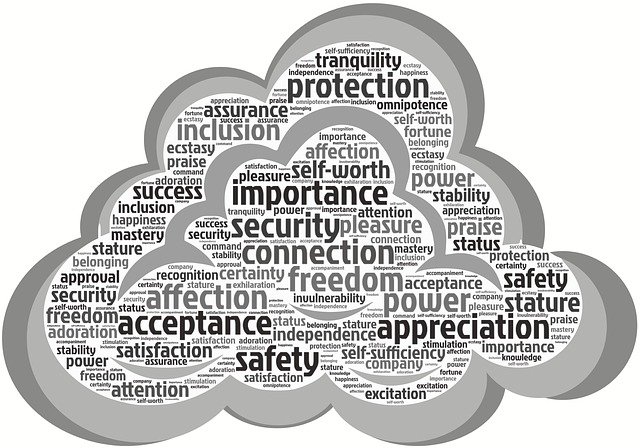
You could take Maslow’s hierarchy of needs and work through that systematically, but does that cover it? Yes, there are some basic needs that ought to be addressed: the need for food, shelter, sleep, company etc. We need our elements of security around employment, health and some material belongings. There is certainly a need for friendship, family, love and a sense of connection. But then we get on to the things that you could argue we don’t NEED, we just WANT. Respect, recognition, strength, and then self-actualisation – to be the best we can be.

There’s another school of thought that suggests a different solution to why we do what we do.

A sense of obligation – to share experience and knowledge, the obligation to serve others. A sense of duty, and pride – perhaps via volunteerism, a call to action, pride in a job well done and our want to succeed. We should be wary of the vice like self intention, cunningly disguised as “being in our best interests”, which only really offer temporary pleasure. Acts of kindness and our altruistic love for the benefit of others. Passion for our favourite activity or cause, our desire to do something. The desire to “tick the box”, perhaps something off our bucket list, but could lead on to somewhere else. Our destiny may be coloured by family tradition, a hobby or particular calling that other family members before us have excelled in. Yes, there’s a need to have a sense of fulfilment to keep us energised and empowered through our self-actualisation. But maybe we do it for others, to have something to share or for the “greater good”.

Tony Robbins, an author and podcaster, as well as being a mutli-billion dollar entrepreneur, in his TED Talk and book, describes 6 human needs – certainty, significance, variety, love/connection, growth and contribution – and how each influences our thoughts, feelings, behaviours and actions. By understanding what drives us, we can understand how to meet those needs. The same for people around us, once we know what drives them, we can help them meet their needs too.

At a very fundamental level, I know I need to be safe, secure, independent and have a sense of purpose. The narcissist in me does need some form of appreciation every now and then, but I certainly need feedback to make sure that I’m at least heading in the right direction and to help me achieve some personal growth. I need to be educated. I need to understand things and learn from them. I try to encompass all of that in my working, social and family life and am conscious that I don’t always get it right.

Understanding Emotional Intelligence

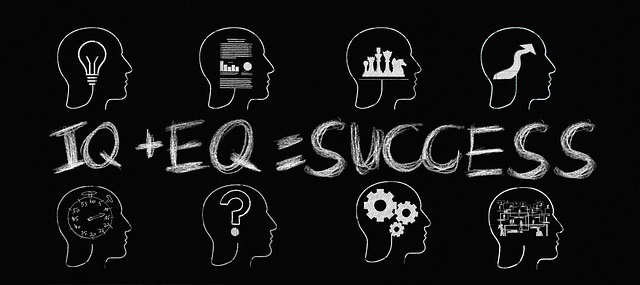
Emotional intelligence (EI), sometimes referred to as Emotional Quotient (EQ), is the ability to understand, manage and use your emotions in a positive way to help relieve stress, effectively communicate, empathise, overcome and difuse difficult situations.

This week’s #MSEBuddyNetwork focused on understanding our EI. We were asked to complete a questionnaire to determine our current state of EI in the 4 areas of self awareness, managing emotions, motivating oneself, empathy and social skill. At the end of the questionnaire you tot up the scores and there’s a brief descriptor of how to interpret the scores. If you score 10-17 this indicates a development priority, 18-34 suggests giving attention to the weaker areas and 35-50 indicates this area of strength.

Having an understanding of you EI affects your performance at work, your physical health and mental wellbeing, your relationships with others and social intelligence.

I scored 40, 37, 36, 37 and 29 in each area respectively. No surprises that the area I need to work on most is in social skills. I’m not a great mixer. I like my own space and am close to a very small group of people. I’m not an outgoing sort of person and not brilliant at networking. But this area is key to my every day work and some of the roles I occupy in a voluntary capacity. Its about persuasion, building rapport, collaboration. I’m OK at the reflection, change management and leadership side of social skills.

The Skillsyouneed.com website has some useful resources and suggestions on how to develop in these areas as well as suggestions on further reading.

The other thing I thought would be useful to do would be to get someone who knows you reasonably well to do the questionnaire but about you. That way it could validate your own perception of your strengths and weaknesses, or shed some light on your blind spots (Johari window).