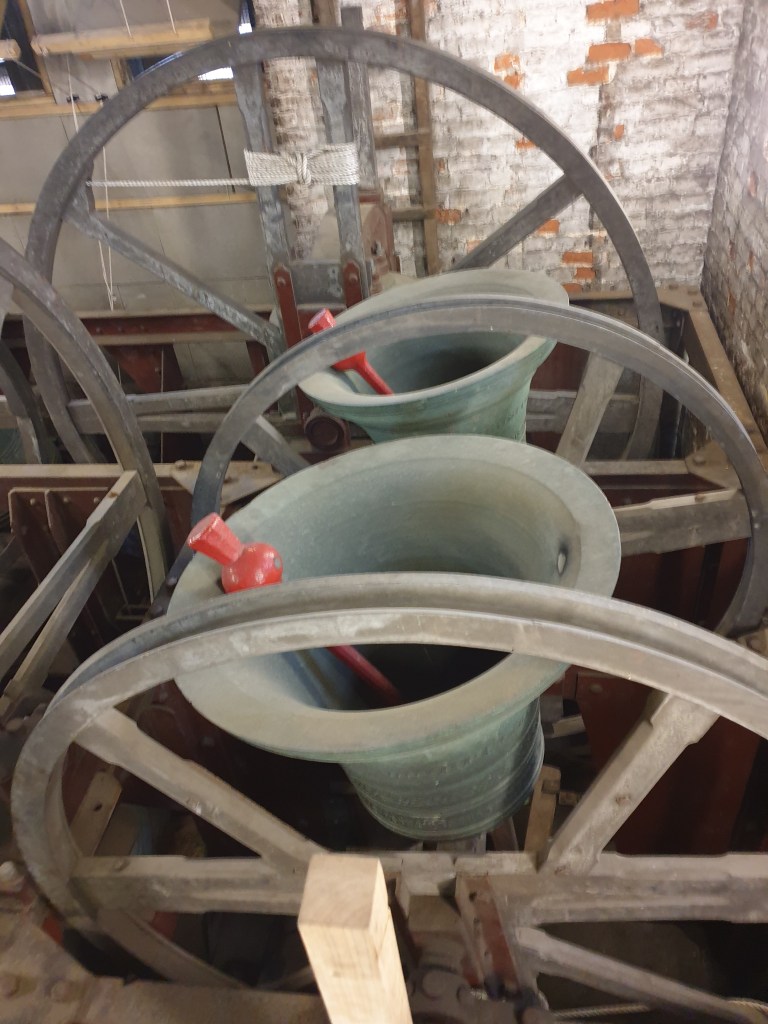
What no bells?

Although there has been no group #bellringing for such a long time now C and I have been going to the Cathedral and ringing two bells just to keep things going.

This week however we are away visiting E&M so not able to go to ring. In ordinary times we would go with E&M to their tower to ring on Sunday bit as they’re not back ringing yet either, we had the morning off.

An odd feeling to not go ringing but after yesterday’s marathon walk around Hardwick Hall we were all exhausted and enjoyed a couple of extra hours sleep.

I am looking forward to returning to the Cathedral next weekend when we will have a couple of extra of ringers for the first time in many, many months. The rules still only allow six people with social distancing, masks and good ventilation but it will be fantastic to hear more than ding and dong and try real ringing methods.

As we head into June and the possibility of no restrictions after the 21st (fingers tightly crossed) we may also be able to start practices again. I know many towers already have but because we are very reliant on people from other towers supporting our practice we’ve decided to hold off for a while.

It will be interesting to see and hear how we get on when trying to raise and ring the heavy bells for the first time in 16 months. Managing people’s expectations of what they could and should ring might be a challenge.

From what I’ve read on social media from other towers it seems that there has been a positive community reaction to bells being rung again but then I upoose no one is going to share any negative responses they’ve had.

I always share details of what ringing we are planning and what we’ve done on our Twitter account and tag local radio, the diocrsan office, the cathedral, local city sites as well. Some are really positive and like and share our posts which is lovely.

I want to build a closer relationship with the cathedral and diocesan offices and local community sites so that they start to fully consider the advantages that bellringers bring to church and community.

I’ve already had conversations with the cathedral office about a diocesan wide ring to mark the enthronement of our new Diocesan Bishop later on in the year and look forward to some closer links.
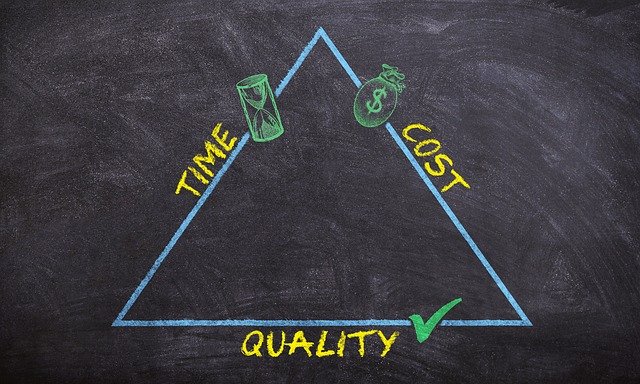
What is your unique leadership contribution?

An interesting question and one that does not reflect on your leadership style rather your leadership actions.

I’ve done many a leadership course, heck my entire BA (Hons) and MSc were based on leadership. A lot of literature covers the different leadership styles but I don’t recall at any point considering what my unique leadership contribution was.

We spent a lot of time dissecting Goleman’s Leadership Styles and deciding which most suited our personal style:

  1. Commanding – “do as I say”, driven to achieve, works best in a crisis.
  2. Visionary – “come with me” self-confident, empathetic, works best when changes need a new vision or clear direction.
  3. Affiliate – “people come first” creating harmony and building emotional bonds, great for healing rifts and motivating people during stressful situations.
  4. Democratic – “what do you think?” forging consensus from participation, inclusive, collaborative, great for getting buy-in and input from valuable sources.
  5. Pacesetting – “do at my pace” high standards setting, conscientious, driven to achieve, great for getting quick results from a highly motivated team.
  6. Coaching – “try this” developing others, empathetic and great for helping others improve and develop long-term strengths.

David Goleman “Leadership that Gets Results” Harvard Business Review March – April 2000

At some point during the exploration you come to realise that you are a bit of all of them and there’s a time and a place for each to come to the fore.

The difference with leadership contribution is not based on what leadership style you predominantly operate in, but what you actually do to contribute to the team/organisation etc.  Thinking about what contribution have you made this year/month/week, what contribution do you want to make in the coming year, what lasting contribution do you want to leave your team/organisation with when you move on? 

I would make that more simplistic by asking “how have I made things better”?

I have been with my currently employer for over 20 years now and have been fortunate enough to work in different departments that have given me different experiences and afforded me a wider understanding of how the whole organisation works.  I have been involved in fantastic project management teams responsible for building multi million pound new hospital wings and centralising services which gave me greater knowledge of clinical and support services. I have managed two very large teams, one with over 250 staff that operated 24/7 and another of over 65 staff who are crucial to clinical functions. 

During those opportunities, I would say that my unique contribution has been able to identify efficiencies from process mapping functions and designing out the bottlenecks that obstruct smooth operation of services.  I have written strategy documents (doing another one at the moment) that impact on multiple parts of the organisation.  I have written policies that support those strategies, and I have implemented changes to the way things are done that provide assurances, and make work practices more efficient and effective.

I am less keen on the managing people aspect of department/service management as I don’t think that’s where my strengths are.  I am happiest reading, interpreting, reviewing, pulling apart, rethinking and redesigning.  I do love a good process map, a set of statistics and a spreadsheet.

I still have a way to go before retirement but as I start to consider my latter working life and where I want to be in 5 or 10 years’ time I would prefer to utilise my unique contribution skills as several services that I connect with start to go through their restructure and consultations, to help define their purpose, strategy and policies.   I hope that when the times comes for me to hang up my spreadsheets, that my unique contribution will have benefitted my teams, the organisation and ultimately our patients.

What is your unique leadership contribution?