What’s stopping you from letting go?

Another one of those self-awareness quizzes (I’m getting quite in to them now) was all about what’s stopping you from letting things go and moving forward. This could be an incident that keeps holding you back, lack of self-confidence, lack of imagination, capability or opportunity.

So having answered the obligatory 10 questions – why do they feel the need after question 4 and question 8 to let you know that you are now 40% and 80% complete? – it spewed out my results:

Self-Awareness

Ruminating can become habitual, the go-to place for your mind to wander. But constantly rehashing old arguments, decisions or events keeps them live and fresh. Next time you find yourself sucked into an overthinking spiral, check in with how you feel. If your mood has taken a downturn or you’re feeling anxious, your thinking is not helping you resolve anything. Increasing self-awareness by making time every day to do a mindfulness exercise can help you get into the habit of observing the stories your mind is telling you without getting sucked into them. Try starting your day with a mindful shower – focus on feeling all the sensations and smells. When your mind wanders, observe where it has gone without comment or analysis, then bring yourself back to the present. It may also help to schedule daily ‘worry time’ and park your overthinking until a specific time of day, preferably when you’re relaxed and in a good frame of mind. If, when worry time comes around, you don’t want to go over old stuff, that’s a bonus.

I do actually go over things, again and again, and try to understand the different nuances of what has happened, why it happened, what could have been done differently, how I could have reacted differently.  I also spend a lot of time thinking about why am I spending so much time thinking about it.  I often tell myself to move on. 

I guess that I’m one of those who constantly beats myself up about things.  There’s always something I could have done better, or should have done that I didn’t, or did that I shouldn’t have, or that I really ought to give more time to. I replay conversations over in my mind multiple times.  “What if I’d have said this”? or “if they’d have said that I could have…” and so on.

I’m not sure that I want to schedule a daily worry time, as there are some days when I don’t overly worry about anything in particular, and I’m not sure that you can necessarily schedule it.  Things that will cause worry that are triggered by other things and can happen at any time.  I might be in the middle of one thing and something on the radio or that I’ve read will trigger my brain to relive a previous worry.

I try to learn from previous errors and hope not to repeat them (not always necessarily successfully) however, I do find it really hard to forget about them and move on, even when a solution has been found, agreed and implemented.  I will stew over it, even after some considerable time. 

I guess I need to learn how to deal with it in the moment, resolve whatever it is, and then move on.  Step away.  Park it.  Easier said than done.

How adventurous are you?

I do not think I’m the adventurous type at all.  I like home comforts. I like routine.  I like to know what I’m doing and when so that I can plan around it.  I’m not particularly great at trying new experiences.  Although I did do an abseil once.  I did go skiing when I was at school.  I do like to travel and see different places. And I did make my husband do husky sledging a few years back. But I’m not spontaneous, or good at thinking of what others might see as exciting things to do.

So, I thought I’d try and find out what the experts say about whether I’m an adventurous sort or not and turned to one of those on line quizzes that thinks its gets to know all about you and your preferences by asking you a mere 10 multiple choice questions.  According to the results:

You are excited by new experiences

Cosmopolitan, smart and savvy, above all, you get your kicks from interesting experiences. You flourish when your mind and senses are nourished and flounder in a cultural vacuum. The buzz of a new exhibit, the hush as the theatre curtain parts, or the flavours of a new cuisine all excite your palate and thrill your thoughts. For you, the conventional is dreary. Because you open yourself up to a wide array of artistic and intellectual interests, your world is ever expanding.

Well, as it happens, yes I do like the theatre.  We do try to at least make an annual trip to see a West End show each Christmas time (2020 being the exception) and if anything else takes our fancy in the mean time we’d go along.  I do like to learn new things and educate myself.  I enjoy certain types of museums and exhibits and enjoy a good National Trust property or English Heritage site.  I do like eating, so trying new things from time to time is good, and when we are on holiday abroad I do like to try something that might be considered local cuisine (so long as its not fish!).

So I might not be adventurous in the sense that I like to do extreme things like water sports (I have a phobia of water so that’s not going to work), or bungee jumping, or fast paced stuff, I’m more of a slow, steady adventurer. I’m less keen on the “let’s do something crazy” and go for more of the “let’s plan a nice trip out”. 

A while back I did do a year (and am probably still doing it) of saying “yes” to everything that came my way.  This was both exciting to take on new challenges but worrying as some of the things I was asked to do put me in the spotlight, somewhere I’m not comfortable with.  However, it did give me a chance to connect with new people, and has stretched my own learning and capacity. The downside is that I now get involved in lots of things that I can’t always give sufficient time to. So there’s a fine balance needed.

So, maybe I am unconventionally adventurous and my world is ever expanding, just slowly.

Slave to the Rhythm

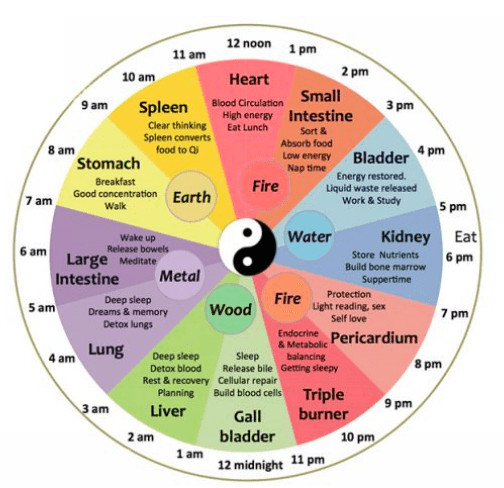
Having allowed myself the time to read some incredibly useful and illuminating books recently, I’m learning a lot about how the human body functions, it needs and ways in which to support it both physically and psychologically. The latest revelation was around the study of the traditional Chinese medicine understanding that you can make more out of your day by syncing your activities and energies with the times of the day that certain organs perform at their peak.

For example, the lungs peak performance time is between 3am and 5am, so this might be the best time for deep, restorative sleep, whereas the heart performs best between 11am and 1pm, so the ideal time for getting the blood circulating through exercise with high energy levels and eating a light lunch, so that come 1pm to 3pm your small intestine can sort and absorb food.

From about 7pm onwards the rhythm of the body clock is starting to wind down and the circulatory systems can focus on carrying nutrients around the body, a time to start to settle down for the evening. Sleeping between 9pm to 5am allows the gall bladder and liver to be most effective, cleansing the body of toxins, ready to start over when the lungs are preparing to restore oxygen to your muscles for the day ahead.

It was really interested to compare that clock to my daily routines. I get up around 6am, start work at 7.30am, have breakfast around 8.30-9am, just as my stomach is at peak efficiency and concentration levels should be highest. I go for a walk most lunch times, so that could be anywhere between 12noon and 2pm, at exactly the right time for my energy levels to be at their highest. I do suffer from the mid afternoon slumps, but being at work can’t partake of a short nap, but do feel that I need a sugar boost around 3pm, so cup of mint tea and a snack to keep me going. We do tend to eat our evening meal some time between 6pm and 7pm, so at the right time for my kidneys to be storing nutrients. Then, unless I have a meeting in the evening, or I’m at a virtual #bellringing session, I’m usually fairly zonked out on the sofa from then on in. I do have a bad habit of curling up with my sofa blanket, then falling asleep around 9.30pm, wake up again around midnight and head straight to bed where I can usually fall asleep fairly quickly and thoroughly until the alarm rips me awake again at 6am.

So, without realising it, I am actually quite in sync with my organ body clock. I am already a slave to the rhythm.

Getting back to it

We have almost got to the end of all the Christmas food and hampers that we were sent. Friday is weigh in day for me so when I got on the scales for the first time of 2021 I knew that I wasn’t going to like what they told me.

My problem is that I don’t like fruit, of any kind, and I’m not a massive fan of very many types of veg or salad. And who wants salad in winter anyway, right? And I have a sweet tooth. So how on earth am I going to diet? Oh, and I have a desk job and am fundamentally lazy so any kind of exertion is unlikely.

We do kind of follow Slimming World as far as evening meals go, and I do try with breakfasts and lunches too but I’m not very good at counting syns and limiting treats. Quite frankly life, particularly at the moment, is too short.

I’m sure I’ve said it before about understanding the benefits of a healthier lifestyle but why is it easier to get into a habit of bacon rolls for breakfast on a Saturday than it is to eat salad and exercise?

One good reason for not exercising is that I just don’t enjoy it. I certainly don’t like the prospect of group exercise or jumpy about videos. I’ve tried do it yourself yoga and home workouts but they just don’t make me feel any better.

When I was in my early 20s I had a Jane Fonda workout video that I used to do at about 5am before getting on a train to work. I did actually enjoy that and felt energised (ok, I was 30 years younger and 5 stone lighter then which probably helped). Sadly I lent that video to someone and never got it back. I’ve tried looking online to see if it could be reproduced but couldn’t find the right one.

I do try to get out for a walk every day, but now I’m only clocking up an average of 5,000 steps per day. I don’t have to walk to the car anymore or around the site, which all helped clock up some mileage, but my commute only goes from the lounge to the study.

I did start hula hooping during the summer which was fine when I could do it outside but when the weather turned and it started getting darker, it was less tempting and we don’t really have enough space indoors.

I guess like a lot of things its all about determination. If I’m going to do something about my weight and health I really must make more time and effort.

Brain Overload

I’ve been given the opportunity to participate in a #bellringing pilot program where exceptionally expert ringers give their time to help those like myself who are trying to master Surprise Major methods.

I’ve been on 2 sessions now mostly with different helpers, but a couple of familiar faces, and the same person has lead both sessions I’ve been on, which is helpful as they get to know your capabilities.

Its been a while since #bellringing has given me so much stress.

On both occasions I’ve spent all day stressing over it, then an hour or so practicing on Abel beforehand. Then trying hard not to use a crib sheet. It’s scary whilst it’s happening because you don’t want to come across as the village idiot. There were a couple of things said this week that I didn’t understand. I had to ask C about one before the session started, and then just laughed the other one off on the call. That’s the one thing I would say does need to be considered by these experts, not everybody will understand some of the terminology, or what difference it makes to the ringing.

Then, because of all the use of brain power, I started to get a headache and get very warm towards the end. Probably the warmest I’d been all day as its about 0 degrees at the moment.

Then there’s a sense of relief when it’s all over. Glad that RingingRoom exists. Glad not to have made a complete fool of myself. Glad to have the opportunity. Glad to have met and rung with ringers from all over, including one from New Zealand. Glad that C had cooked dinner whilst I was ringing and bought me up one of my bottles of prosecco left from my advent calendar. Glad its over … until next time 🤣

We did a thing… again

The wonders of technology and the inspiration of the inventors of Ringing Room means that we get to ring bells from the comfort of our own homes on our computers.

Bank Holiday Monday gave us another opportunity to try for another family quarter peal on Ringing Room with representation from Essex, North Lincolnshire and Nottingham.

Timed to start early enough in the morning so we have time to do other things during the day, but late enough for either a bit of a lay in and a lazy start to the day, or to get something done beforehand for those with more enthusiasm for that sort of thing.

Although not #bellringing on tower bells, I’m still counting these virtual quarters within my records as they still require the same level of concentration, take the same length of time to complete, and for some, require the same level of learning. I know some people are not counting them in their personal records as they are not rung on tower bells.

Both the Central Council of Church Bell Ringers and The Ringing World are counting them as “distributed” and therefore recognising their legitimacy but acknowledging that they don’t require the same physical exertion. 

This latest one brings my total for 2020 to 7 quarter peals. Not bad considering we’ve not been able to ring with others since March. We rang 4 tower bell quarters in the first 3 months then 3 Ringing Room quarters in the last couple of months.

My overall total is now 412 quarter peals. Considering how long I’ve been ringing you could argue that that’s not many but I think its a reasonable total when you consider opportunities. There was a whole period where I just didn’t ring any at all.

I actually enjoyed ringing the Ringing Room quarters and perhaps…. I could stretch to a peal. 🤔

Questions, questions

This coming week is going to be a week full of asking questions. As part of my new role I need to understand the detail of what I’m being asked to deliver and how what else is going on will impact, or vice versa.

I will be asking a LOT of silly questions I’m sure. But a silly question is not a silly question if it has to be asked. It is because there might be no immediate, obvious answer to the questioner. One might learn a lot through observation but in this time where we are barely meeting in person, it makes it difficult to observe.

Google provides many an answer and I’m not afraid to put that to good use. Then there’s the stuff that I already know or have some familiarity with. By targeting questions from a How? or Who? starting point, I’m more likely to get a better answer, or even framing it as a suggestion “I thought I might …” It might be off the mark a bit, but at least it would show some thought process. Framing a question correctly will make the question seem a little less silly.

Most colleagues are really helpful and are happy to give advice and support. Some are even willing to help further. It doesn’t matter how far you climb you won’t know everything and at some point, will need to ask that silly question.

Today I shall fully embrace that.

Training, learning, sharing

The Association training day was held on Saturday. In a parallel universe we would have been meeting together and physically ringing, with pub lunches and some great camaraderie.

With lockdown we’ve moved it to a digital format instead. Whilst we’re not all meeting together, or physically #bellringing, or having a lovely pub lunch, we have been able to meet in small virtual groups using Zoom, we were able to ring using RingingRoom and were able to offer both a lunchtime talk and an evening talk. We may not have been able to do that in the real world.

Considering that only a few months back we were feeling bereft about not being able to ring, the organisers were able to put a great programme together thanks to a few people’s efforts. Yes we’re not meeting face to face but there doesn’t seem to be anything that we can’t do online.

When we are able to get back to the tower together, our learning, experience sharing and skills will have helped us and will put us on a great place to move forward.

When we look at the survival and recovery of #bellringing there are some fantastic resources to support a safe return to the tower and much more to come.

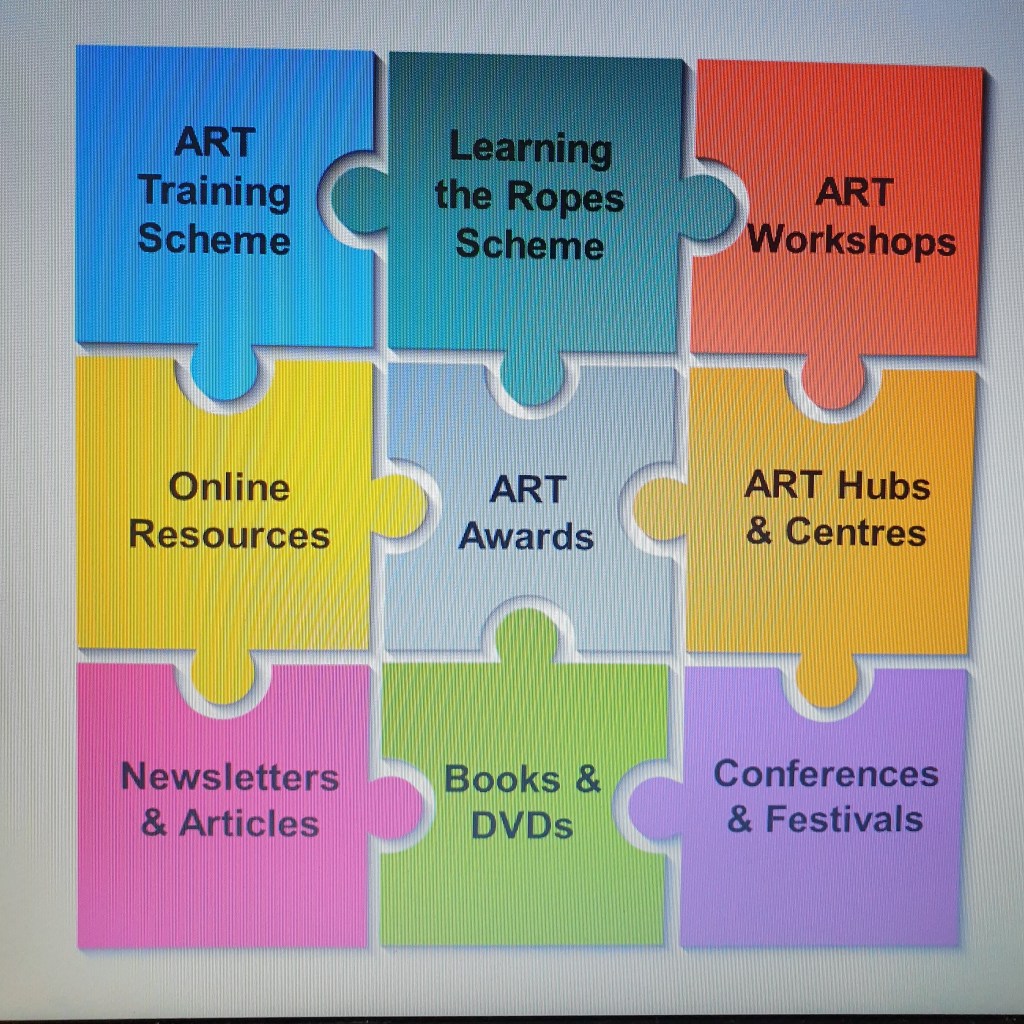
There were 2 fabulous talks during the day, the first on the Association of Ringing Teachers and Central Council of Church Bellringers collaboration on survival and recovery. The second was about the Birmingham School of Bellringing and how it teaches from bell handling up to method ringing. I recorded and uploaded both to our Youtube channel.

An excellent way to spend the day training, learning and sharing.

Reflexivity

A group of us picked up where we’d left off in the next session of a leadership course being run by the Trust, and spent a while discussing reflexivity: the examination of your own beliefs, judgement and practices, with the purpose to have a better understanding of what we do with that knowledge.

We were asked to consider what attributes of teams get the best out of us as leaders, and what attributes of ourselves bring out the worst in our team.

For me, the former requires focus, direction, lateral thinking, autonomy and timeliness.  For me to function at a higher cognitive level my team needs to be focused on the task at hand, to all be pulling in the same direction for the same purpose, to find solutions to problems using their own skills, experiences and initiative, and to keep to agreed timescales.  Then, I can fully support their needs, priorities and strategic direction.

I probably set some high expectations and then expect my team to deliver to the same level and quality of output, at the same pace, as me. Of course I’m heading for trouble there. I am a world away from their reality and have a very different skill set. I need to remember that and make concessions. Of course this is going to irritate them because if they are unable to deliver to my expectations,   they may feel under pressure, unsupported, or even like they had failed. And if I don’t get what I expected then I might feel let down and frustrated.

Having recognised this over the years I have tried hard to acknowledge different skill sets and work with people’s skills rather than against them. I try to ensure that people are comfortable with what is being asked of them but at the same time stretch them a bit and help them develop new skills.

Being able to do this will lead to my team being more autonomous,  focused and problem solving. Thus enabling me to be more strategically supportive.

Understanding Emotional Intelligence

Emotional intelligence (EI), sometimes referred to as Emotional Quotient (EQ), is the ability to understand, manage and use your emotions in a positive way to help relieve stress, effectively communicate, empathise, overcome and difuse difficult situations.

This week’s #MSEBuddyNetwork focused on understanding our EI. We were asked to complete a questionnaire to determine our current state of EI in the 4 areas of self awareness, managing emotions, motivating oneself, empathy and social skill. At the end of the questionnaire you tot up the scores and there’s a brief descriptor of how to interpret the scores. If you score 10-17 this indicates a development priority, 18-34 suggests giving attention to the weaker areas and 35-50 indicates this area of strength.

Having an understanding of you EI affects your performance at work, your physical health and mental wellbeing, your relationships with others and social intelligence.

I scored 40, 37, 36, 37 and 29 in each area respectively. No surprises that the area I need to work on most is in social skills. I’m not a great mixer. I like my own space and am close to a very small group of people. I’m not an outgoing sort of person and not brilliant at networking. But this area is key to my every day work and some of the roles I occupy in a voluntary capacity. Its about persuasion, building rapport, collaboration. I’m OK at the reflection, change management and leadership side of social skills.

The Skillsyouneed.com website has some useful resources and suggestions on how to develop in these areas as well as suggestions on further reading.

The other thing I thought would be useful to do would be to get someone who knows you reasonably well to do the questionnaire but about you. That way it could validate your own perception of your strengths and weaknesses, or shed some light on your blind spots (Johari window).