Is #bellringing the pursuit of aimless joy?

Image by Pexels from Pixabay

I was reading an article about how a woman and her child walked round and round in circles in the deep snow like Winnie the Pooh and Piglet.  It had no purpose, barely counted as exercise and once more snow fell they’d do it all again.  Sometimes for over an hour.  #bellringing can be a bit like that.  We can go ringing, be it practice night, a quarter peal or peal attempt, a training day or service ringing.  Sometimes #bellringing can have no real purpose but we do it anyway.  When the child was asked why she was trudging in circles in the snow for ages, seemingly pointlessly, her simple answer was because it’s fun. #bellringing can be like that too!

Ask people who make sand sculptures, or balance stones, why they do that when they know their efforts will be lost to the elements, and they’ll tell you that it helps them shed stress, entertain others and in some cases “mess with people’s heads”.  #bellringing can be like that too! Once we’ve rung our bells, the sound is lost for ever (unless you’ve recorded it and uploaded it to YouTube). It was transitory; there and now gone.  But we do it for the fleeting joy of the activity itself.

We can spend a lot of time obsessing over personal goals and problems, feeling the weight of expectation and the fears that go with them.  #bellringing can trick us into take a break from all of that.  I often consider it therapy after a bad day at the office.  To be able to do something physical, that requires my full attention, and stretches my brain.  It can become a meditation, a moment to be in the present.  When we ring with others we can feel that we are part of something bigger but it’s equally as transient as our few moments or hours of #bellringing itself.

When we think of #bellringing vanishing into the larger scheme of space and time, along with any method mistakes we may make, we needn’t be afraid to try a new bell, a new method, have a go at conducting something for the first time.  In the few moments that follow, it becomes ephemeral and consigned to history.

How does your anxiety manifest?

Image by Pete Linforth from Pixabay

In another Psychologies Magazine ten question quiz, it looked at what your worry weak spot is.  How anxiety manifests for you can highlight your emotional shaky areas.

The questions covered what you notice changes in you when life gets challenging, your go to stress reliever, how anxiety makes you feel, your priority when you are calm, how others see you when you’re anxious, how you feel when you are most resilient to anxiety, what you do after a period of anxiety, what you are when at your very best, what you lose perspective on when in the throws of anxiety and what you admire about others.

My responses from the four possible choices to each question put me, but only just, into focus being the thing that is most affected by my anxiety.  I’m not an overly anxious person really, I don’t think anyway, but here’s what it had to say:

“When your anxiety levels go up, you mainly struggle to keep all your plates spinning, especially if you normally only manage it by the skin of your teeth.  When your life is built like a house of cards, it doesn’t take much for it to come tumbling down.  Anxiety limits our ability to multitask for a reason – you need a narrow focus when you’re in survival mode. Tasks you normally fly through can take much longer, and you may find yourself stuck in procrastination mode.  You might not immediately attribute your lack of focus to anxiety, and start wondering if it’s time to move on, or question whether you are up to the job at hand. This kind of anxiety is often a first sign of burnout.  If you react by thinking you just need to work harder, you only make it worse.

Right now, you need to lower your expectations of yourself.  Focus on one important task at a time in short chunks, broken up be restorative breaks when you do something different, like enjoy a cup of tea outdoors or by a window.  You mind is telling you that it’s overloaded by are you ready to listen?”

I do have a lot going on most of the time.  I have a full-time job, a full-time hobby, I’m a district officer, and Association officer, and Central Council officer, and have a family. But I like to be busy.  There are times though when I recognise things are getting a little bit on top of me. 

My go to response is usually to shut down and not do any of it terribly effectively, or at all.  Fortunately, these bouts are few and far between, and are usually ended with a burst of efficient productivity.  I will put things off on the grounds that I’m not in the right frame of mind to deal with it right now.  But when I’m back on it, I’m on it with a vengeance. 

I am quite good at breaking tasks down into smaller pieces of work.  My process mapping type brain seems to be able to sort and filter the things that I can do now, and things that are interconnected so make sense to do at the same time, with those things that are not urgent or important, but can wait until I either have everything I need or am in the right frame of mind to deal with it, or the fallout it might generate.

How does your anxiety show up? And how do you recognise when it does?

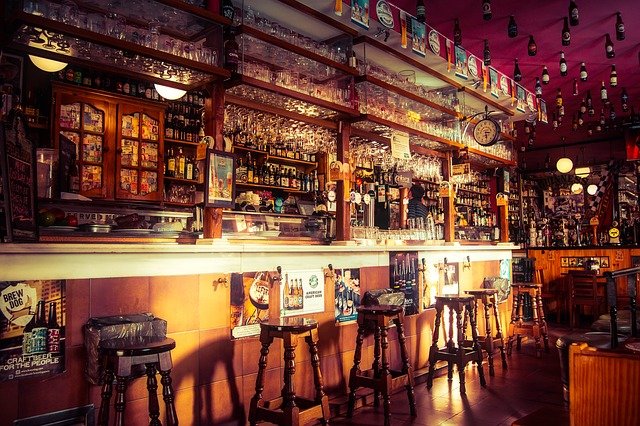
More anxious about the pub than the ringing

Image by David Mark from Pixabay

Monday evening saw the first #bellringing on all 12 of the Cathedral’s bells for the first time since the first lockdown in March 2020.  We had thirteen ringers present, and a CO2 monitor.  All the windows were open, the tower stairs door and we also opened the door that goes out on to the nave roof to make sure there was plenty of air movement.

We started off with some rounds on 12.  Nothing fancy, just a chance to get the back bells up and swinging and to try to get into a steady rhythm.  I rang the treble, which if you’ve ever pulled a treble to twelve bells off, can be quite a feat to ensure that the first backstroke doesn’t drop. Pleased to say that there was no dropping of backstrokes.

Feeling rather pleased with that, we moved on to a bob course of Grandsire Caters.  The first changes on more than eight bells since lockdown started.  It was lovely.  Some good striking, some not quite so good, but no method mistakes and no real disasters.  Started to get a feel for it again now.

Then some plain hunting on eleven.  A few scrappy leads from the odd struck bells, but none the less, good control and an opportunity for the slightly more anxious to count to more than eight.  

We rang some Little Bob Royal which when rather well at the second attempt.  And rang a plain course of Stedman Triples.  We dropped to eight bells to give those ringing the heavier bells a bit of a rest.

Then came what I thought was actually the best bit of ringing of the evening.  Half a course of Cambridge Surprise Royal.  I was surprised at how well it was struck, at how everyone coped with more bells that they’d been used to.  Personally, I found that easier than the previous week’s Cambridge Surprise Major.  I really enjoyed that piece of ringing.

After we’d got the bells down and locked up the Cathedral, a smaller number of us went to the local pub for refreshment.  That’s the first time I had been inside a pub since lockdown began.  I had been outside a pub a couple of times when they first opened, but not packed inside with the locals.  Luckily on a Monday night the pub isn’t usually that busy, but there were a couple of groups of people propping up the bar that we had to manoeuvre through.

It seemed a bit weird to be sitting inside without masks on, as we were drinking (well, blackcurrant and lemonade for me). Fortunately we could sit far enough away from others and we were in a small enough group of people we’d already spent the last hour and an half with.

We will still be limiting the numbers of ringers at our practice night for a little while yet, but I think early signs are good.  I guess I’ll just have to get used to going to the pub again.

Are you a social butterfly or does it fill you with anxiety?

Image by Ronny Overhate from Pixabay

Having spent a large proportion of this last weekend in company, socialising, meeting new people and being on my best behaviour, it’s been a baptism of fire getting back into the socialising game after the enforced absence by Covid-19.  As an introvert, not spending time in large groups, at parties and such has not been a hardship, but all of a sudden, I had to be out there, pleasant, polite and sociable, something I do struggle with sometimes.

In the latest quick fire Psychologies Magazine quiz, it looks at finding out the mind-set needed to reconnect with socialising. My responses to the ten questions gave equal score to hearts and squares meaning my results were a combination of self-criticism and perfectionism.

“Self-criticism

You care about others, which gives the impression that you’re a natural socialiser – but your compassion extends to everyone but yourself.  People may be surprised to learn how much you overthink your relationships and question whether people genuinely want to see you.  When you’re hard on yourself, it’s difficult to believe that other people aren’t also tuned into your perceived faults and failings. It’s no wonder you feel socially anxious, unless it’s with people you think accept you without judgment.  It’s good to question yourself and ask how you could have done things differently, but overthinking every interaction is not helpful, and setting unrealistic expectations of yourself sends a constant message that you’re not good enough.

You feel on safe ground when you know you’re needed or the focus is on someone else, so you may be the one who organises birthday gatherings for others.  You can feel frustrated when no one does the same for you, even when you insist that you don’t want a fuss.  Self-compassion is the key to adding ease to your interactions.  Turn your inner critic into your personal coach and venturing out of your social comfort zone – and asking for what you need – will feel possible.”

I do spend time thinking about how I interact with others, how I come across, but also whether I feel someone should be afforded my attention.  I agree with the final paragraph.  I usually find myself either organising the events, or things when I get there.  I am mostly found in the kitchen, clearing up.  I hold my hand up to saying I don’t want a fuss made for me, but then being disappointed that no-one bothers.  C did an excellent job of making my 50th birthday as good as it could have been during lockdown.  I am hoping that we’ll get to do it properly next year instead and I hope that I’ll be able to accept a fuss being made of me for a few days.

“Perfectionism

If perfectionism is your default mode, you may have always given more thought than most to how you come across to others, perhaps ruminating after social events about whether you said or did the right thing.  In the age of social media, those with perfectionist tendencies also have a way to compare and despair at their fingertips, fuelling social anxiety.  Part of you may know that scrolling through aspirational images is undermining your confidence about your life – but it’s addictive and an easy way to numb yourself if you’re not feeling great. You may also put effort into posting carefully curated images, only to worry that the real you will disappoint.

Comparing yourself with others is a natural instinct that helps give us perspective on where we’re at and how we’re doing – but comparing yourself with people you wouldn’t normally come across in real life is rarely helpful, and it can instil the message that you’re not good enough or that you need to change how you live your life.  Changing your relationship with yourself is the key to making socialising easier.  Start by asking how different your life would be if you decided to accept and love yourself for who you are.”

I made my brother and wife’s wedding cake and spent the whole time wondering whether they felt it was good enough, what other people genuinely thought about it, rather than just being nice.  I knew where all the imperfections were.  I don’t tend to compare myself with others particularly.  I appreciate that everyone has different experiences, different social and economic abilities and there is no point trying to keep up with someone else.  That’s doesn’t stop me looking at lifestyle magazines and how elegant ladies adorn themselves, those with fabulous homes are able to decorate.  I am very capable of recognising that it’s a different lifestyle to the one I have.  Whilst I could make some changes to my home or my appearance, I will only do so for my own benefit rather that attempt to keep up with some fashion or other.

Whilst I had a fabulous time at the wedding, I chatted with strangers and people I hadn’t seen in a long time, I danced and metaphorically let my hair down, I am still anxious about socialising and am keeping to social distancing and mask wearing wherever possible.  I don’t like people getting in my personal space and will leave that person or situation if I start to feel compromised.  Maybe I need to go to more parties and let my hair down more often.