Making your voice heard

Have you ever felt like you’re talking to deaf ears?  You’ve been trying to tell someone something for ages and they’re just not listening?  And then they even have the cheek to say that you never told them?

Just lately, I feel that I’ve been telling people what’s been going on but the message just isn’t getting through.  Messages either aren’t being recognised for their content, or not being considered important enough to disseminate, therefore others aren’t finding out, and feel like nothing is being done.

Case in point today.  For the last, who knows how many months, I’ve been telling a group of people what I am doing to help alleviate a situation for a larger group of people.  That larger group of people have not had that information shared with them, so are getting up in arms about things appearing not to be happening. Because the larger group of people are getting irate, they’re taking it out on the smaller group, who are complaining that they are being got at.  I’ve explained so many times that if they bothered to share the information that I’d given them with the larger group, the larger group would be more satisfied and aware of what is happening on their behalf.

Other recent situations have involved one person complaining that things they are responsible for aren’t working properly, so I’ve given advice on things they might like to try instead to see if it improves things (and I know they do because those same things have been employed elsewhere and worked well).  They don’t bother doing anything different and come back again complaining still that things aren’t working right. 

Am I speaking Martian?

I’ve had times when I’ve felt that I’m just not being heard. What’s given me the strength to speak up was having read a book called “Thanks for the Feedback” by Douglas Stone and Sheila Heen.  It gave me some practical tools to apply which ultimately gave me the courage to speak up for myself and get my point across. 

Things that I have learned about trying to get my point across is that people need to be understood, be clear on what their own issues are, but also be clear on what my concerns are.  People need to be educated rather than blamed or accused of something.  It gets a far better response. Having clear expectations means that there should be no room for misunderstanding, and clearly people I’ve come in to contact with either need it repeating multiple times until it sinks in, or in writing so that I can refer them back to it.

Yet still some people don’t, or won’t listen.

Historical inaccuracies

Being a bit of a history buff, particularly the Tudor period, I was interested to see Netflix advise me of a series available that is supposedly based on the life of Mary, Queen of Scots entitle Reign.  I thought, great, I’ll have a watch of that.  OMG, it drove me insane to the point of nearly switching off.  There were so many inaccuracies throughout it from the costume, to the set designs to the story lines.  For goodness sake, if you are going to base something on actual historical people, at least have some accuracy in what life was actually like at the time.

I’m ok with period dramas that are not based on actual historical characters, for example Bridgeton is not based on any person in history, it’s just set in a particular period of time, and at least the costume, sets and even the language was (mostly) of the right era. 

Reign seems to have so much wrong with it it’s laughable.  I say I nearly switched off because it was one of those things that it was so bad, that I wanted to watch just how bad it would get.  I’ve watched two episodes so far and just about stuck it out.

I remember when the Other Boleyn Girl film came out at the cinema.  I went to see it with my friend and before we got settled she said to me “I’m not sure I want to do this.  You’re going to go off on one when they get it wrong aren’t you”?  I’m sorry, I can’t help it.

I understand a bit of artistic licence with the storyline, but at least get the fundamental basics right.  They did not have carpets in the 1500s.  Nor did the women go around with out hoods, or wearing sleeveless, short dresses. I also get that they won’t necessarily have accents etc correct.  Mary, Queen of Scots, by all accounts had a strong French accent, hardly surprising since she was brought up there from a very young age.

It seems that this American “highly fictionalised” (no kidding) series was cancelled after four seasons as the ratings dropped.  As far as I can tell the end of series four leaves Mary married to Darnley, so it doesn’t quite complete the story of a queen who was brought up abroad, married three times, estranged from her children and forced to flee, hoping for mercy from her English queen cousin, only to be beheaded for plotting to take the English throne.

However sad Mary’s story was, it doesn’t really deserve being hashed in this attempt of storytelling.  I’ll probably stick it out watching the rest of the series, but I won’t be sorry that it didn’t conclude.

Travelling all over the Country

Today was an epic day of activity for me on Ringing Room. This time of year we would ordinarily be #bellringing with a group of friends that we meet up with twice a year. Without being able to meet up for real we decided to try holding a virtual tower grab through the wonders of Ringing Room. On Saturday we had five towers to log in and out of that virtually had us travelling from Oxfordshire to Essex and back again. There are more towers on Sunday from Essex, Portsmouth and Nottingham. We may also try some quarter peals on Sunday morning as well.

So having spent an hour and a half in and out of various towers ringing all sorts of random methods, I then had a Cast of 1000 session for an hour and a half, where I was one of the students practicing spliced Cambridge, Yorkshire and Superlative Surprise Major, and some Lessness and Bristol Surprise Major.

Bearing in mind I’m nursing a stinking cold now as well, my brain was well and truly fried by the end of it. There was very little time between my Cast of 1000 ringing and the evening social Zoom event as part of the ringing weekend, so we cheated and C grabbed a chinese takeaway whilst I was ringing. Just about had enough time to eat it before logging back in to Zoom again.

There were nearly 20 of us on a Zoom chat, catching up as we missed out on the summer tour. We had a short business meeting as well just to think about plans for the year ahead, although its still unlikely that we’ll be able to have the summer tour this year either.

Its quite marvellous how we are all able to continue to ring and meet up with with people, albeit virtually.

‘S not funny

Sure sign I’m coming down with a cold. The last couple of days I’ve had a headache, then yesterday woke up with a raging sore throat. For me, these are the early warning signs of a cold brewing. Then by early evening I’d developed sneezing and a snotty nose. Lovely.

Sneezing is really annoying. I had a fit of several sneezes on the trot and could barely draw breath between them. Apparently the force of a sneeze can reach 40mph. You can’t control a sneeze, it’ll happen without mercy. The signals to the brain causes a reflex in the face, nose and chest, which is what causes you to inhale. Then there’s the explosive expellation.

Clearly, I’m currently sneezing as I’m coming down with a cold, but there are other reasons that cause people to sneeze. My daughter sneezes every time she goes out in the sunshine.

There are many suggested remedies for colds and sneezing such as drinking hot teas, eating spicy food, using a facial steam bath. Then there’s the medication that contains paracetamol and other active ingredients.

I’m generally a “let it flow” kind of person. My observational experience has shown that those who try to stave off the symptoms by taking medicines tend to have their colds hanging around a lot longer. By not taking anything my cold is generally over and done with in a couple of days. C tends to take medication and his colds can go on for over a week, sometimes two.

As annoying as it was to have an uncontrollable sneezing fit during a zoom meeting, I know it’ll be over with in a day or so. Just hope I can get through the next full day of virtual #bellringing without too much bother.🤧

Slave to the Rhythm

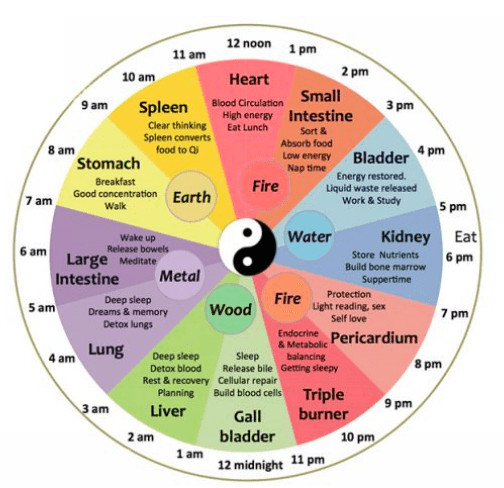
Having allowed myself the time to read some incredibly useful and illuminating books recently, I’m learning a lot about how the human body functions, it needs and ways in which to support it both physically and psychologically. The latest revelation was around the study of the traditional Chinese medicine understanding that you can make more out of your day by syncing your activities and energies with the times of the day that certain organs perform at their peak.

For example, the lungs peak performance time is between 3am and 5am, so this might be the best time for deep, restorative sleep, whereas the heart performs best between 11am and 1pm, so the ideal time for getting the blood circulating through exercise with high energy levels and eating a light lunch, so that come 1pm to 3pm your small intestine can sort and absorb food.

From about 7pm onwards the rhythm of the body clock is starting to wind down and the circulatory systems can focus on carrying nutrients around the body, a time to start to settle down for the evening. Sleeping between 9pm to 5am allows the gall bladder and liver to be most effective, cleansing the body of toxins, ready to start over when the lungs are preparing to restore oxygen to your muscles for the day ahead.

It was really interested to compare that clock to my daily routines. I get up around 6am, start work at 7.30am, have breakfast around 8.30-9am, just as my stomach is at peak efficiency and concentration levels should be highest. I go for a walk most lunch times, so that could be anywhere between 12noon and 2pm, at exactly the right time for my energy levels to be at their highest. I do suffer from the mid afternoon slumps, but being at work can’t partake of a short nap, but do feel that I need a sugar boost around 3pm, so cup of mint tea and a snack to keep me going. We do tend to eat our evening meal some time between 6pm and 7pm, so at the right time for my kidneys to be storing nutrients. Then, unless I have a meeting in the evening, or I’m at a virtual #bellringing session, I’m usually fairly zonked out on the sofa from then on in. I do have a bad habit of curling up with my sofa blanket, then falling asleep around 9.30pm, wake up again around midnight and head straight to bed where I can usually fall asleep fairly quickly and thoroughly until the alarm rips me awake again at 6am.

So, without realising it, I am actually quite in sync with my organ body clock. I am already a slave to the rhythm.

Changing the Goal Posts

Things are always changing. How many of us has had a job description that bears no resemblance to the role that we actually do? How many times have we decided on a particular course of action then something has come along and meant that we had to go in a different direction, whether wanted or not? For those who project manage, how many times has the scope of your project changed, and resulted in having to adopt different technologies or processes or had to be scaled back or scaled up? How many times has our personal circumstances changed over the years? Change happens all the time. Its how we respond to those changes that makes the difference.

My personal circumstances have changed over the years from being a child, leaving school for the workplace, changing jobs, changing partners, becoming a wife and a mother, going back to higher education, becoming responsible for the delivery of projects, becoming responsible for the delivery of service, becoming responsible for a team of staff, being responsible for bellringing activities locally, nationally and internationally.

If you’re not used to change though it can be uncomfortable. Kubler Ross’s change cycle likens the change process to the same phases that a person might go through the grief cycle: first the shock that something might actually happen followed by the denial that it will happen, the “how many times have I heard that one” scenario. This is followed by the frustration and anger when we realise that things are going to be different and then the depression of things that are happening that may be out of our control and the lack of energy to get involved with it. But then things start to look up again when we start to engage with what’s going on and start to get curious. Then we start to feel more positive about the situation as we learn more about it and experiment with how the new situation is going to work then we become fully integrated with the new ways of life. Of course, how long we individually spend in each of these zones is a purely personal thing and we don’t move on until we are ready no matter how hard someone else pushes.

Some people struggle with change as they fear that they may be losing something. It might be that they will no longer be the acknowledged expert in that field, or that they may be replaced by technology or a younger, cheaper model, or that they might not be able to cope with the change, particularly where new technology is involved. Where regular routine is changing some people might be fearful of a change in security or safety. People are likely to be more resistant to change if they are not involved in the process from the start. As well as being anxious, they can become downright obstructive.

Having a positive attitude to change means that we spend less time in the frustration, anger and depressing phases because our mindset is already moving on to finding what the positives are and how we can be involved and engaged with the change, and learn what the benefits are going to be. Looking to the past and accepting it for what it was is only useful if we learn from it and move on. Accepting and embracing change early on allows you to adapt more quickly and be more flexible. The more often we encounter change, the easier it becomes to adjust.

I find that resisting change takes far too much energy. Even if I don’t necessarily agree with the change that is being put forward, more often that not, its going to happen anyway, so I may as well accept that and make the best out of it. Who knows where it could lead ?

Surprise Surprise

There are a few of my former work colleagues, as well as myself, turning a certain age in the next month or so. The first of our little gang to celebrate this milestone happens this weekend. She doesn’t work Wednesdays and Thursdays and then has some annual leave that covers the actual day, so her colleagues and friends (?) surprised her today. When she arrived at work, her desk was surrounded by balloons, presents, cakes, cards and all manner of things. She’s not one for a fuss, but she did rather well in accepting the effort that people had gone to to celebrate with her. She did better than I would have done.

I hate surprises. It might be something to do with my ISTJ personality traits. It makes me feel very uneasy, nervous and not in control of what’s going on. If it had been me, I’d have either walked straight back out, or set about popping all the balloons. That’s not to say that I wouldn’t appreciate the effort of those who had done it had gone to, but if they knew me at all, they wouldn’t have done it in the first place. For me, I think it’s also a case of embarrassment, not knowing what to say or where to look, or what to do next. This is why I never work on my birthday.

At school my birthday was always either at the weekend or during a school half-term holiday so I never had to deal with my birthday at school with people either making a fuss or making fun of me. In most of my working life hardly anyone has ever known it was birthday anyway, and therefore a fuss was never made. Then I just started to book the week off that surrounds my birthday.

This year my significant birthday falls on a Saturday, so I’ve actually booked the week before and the week after off. The original thought was to have gone away somewhere with C and R and have a lovely break and experience somewhere else. However, in the current climate that’s not going to happen, and I’ll be unlikely to even be able to see R, so it’ll be a very quite affair instead. And I’m ok with that. I understand the situation we’re in and that there’s no point in going off about what I can’t do, or depressed about not being able to do what I want to. I’m still going to take the 2 weeks leave, got to use it up anyway, and I’m going to enjoy having some time off to recharge the batteries.

When the time comes that we can meet up with R, or that we can go away somewhere, then we’ll do what we might have done in the first place. I shall have that to look forward to.

The Unfamiliar Familiar

Today was my first day back on the hospital site for 3 weeks. I was a little apprehensive about it I’ll be honest. Not particularly about being back at work after a week’s annual leave, but being on site, where there are people, lots of people and patients, lots of patients. I think I was more apprehensive about that than the fact that I actually had to go and sit in my old office to cover for my number two whilst she’s on annual leave, which meant being back with the team that I moved on from just over a month ago.

I went straight to my old office, and set up my laptop and settled back into the smells and sounds that are along that corridor. Then I went in to the main office where everyone else is and said hello. There were a few comments like “where have you been?” but some nice enquiries about how I was getting on in my secondment role. I asked after each of them and how they were getting on generally, and explained that I’d been sitting in my old office for a couple of days whilst V was on annual leave, so if there was anything they needed, to just shout. To be honest, they know what they are doing and are quite capable of getting on with it but every now and then someone throws a curve ball that puts things out of kilter so I was just here to make sure that they were ok. They don’t need me, and that’s fine.

I had occasion to walk through the hospital site where nothing much seemed to have changed since I was last here. Although there was the vaccine hub outside and new tented waiting area. There were fewer people wandering around, only people that absolutely should be here are being allowed in the front door.

At lunchtime I went for what used to be my usual walk around the perimetre of the hospital site. Sometimes that walk became a bit of a chore, doing it because I felt I ought to do some exercise, but also rather boring as you can’t go very far in half an hour. Today, it almost seemed like a brand new walk. The season has been marching on and buds are starting to sprout as the first throws of spring are imminent.

The sights and sounds of a busy hospital go on, with or without you. It was quite reassuring that there was some familiarity about it, even if it did feel a bit odd being here.

Snow joke

All over the UK today people have been posting photos of snow scenes and hastily assembled snowmen. It all looks lovely.

Here though, we did get a quick flurry early afternoon but nothing settled. There is a threat of more snow overnight though.

Snowy scenes seem to make most people feel all magical. The silent fall, often overnight, create some mythical scene. Snow seems to bring a sense of clean calmness to most people. It may be that it instigates memories of childhood, snowball fights, building snowmen or keeping warm under many layers and drinking hot chocolate with marshmallows. A more innocent time perhaps. There’s almost something naive about it.

Last time I was anywhere near serious amounts of snow was when we went to Slovenia. We went husky sledging and snow shoe walking in the mountains. It was one of the best holidays I’ve experienced.

Being the first to leave footprints in the snow and hear the crisp crunch under foot. It makes nature look all the more beautiful.

Today though I was reminded that not everyone enjoys the snow. People don’t like snow for a number of reasons. Its frozen, damp and after a while gets dirty. It changes plans by preventing travel. It can be dangerous especwhen it turns to slush or ice. Some people find totally white landscapes depressing. For some its another reminder that spring isn’t here yet. Some people also find snowmen quite menacing.

Thankfully our flurry didn’t settle so hopefully my first drive back on site for 3 weeks won’t be a problem.

The importance of nothing

Life can be so full on sometimes. Even having a week off work doesn’t really give you the rest you sometimes need. I’ve written loads, researched loads, rung loads and had several meetings during my week off so I really haven’t felt any restorative benefit.

Today though, we had nowhere to be and nothing to do. C turned the alarm clock off so we woke up naturally and didn’t actually get out of bed until nearly 10am, which is unheard of. Some might say that that’s wasting so much of the day, but waking up naturally actually made me feel more awake and alert than being ripped from slumber by a screeching radio alarm.

Saturdays have seem to have got a new ritual of bacon butties for breakfast. C cooks them whilst I’m in the shower so its ready, with my coffee, when I’m dressed and ready to face the world. So grateful for that.

Both of us then just sat for a while, reading or catching up with social media. No need to rush.

We had no reason to go into town for anything and as we’d had a late breakfast didn’t feel the need for lunch.

I did do some food prep for breakfasts and lunches for the working week ahead as Sunday is full of ringing, family Skype and virtual meetings as well as the weekly ironing fun. But once that was all finished, I could get comfy on the sofa and read.

Haven’t spent so much time dedicated to just reading for ages. A cup of mint tea with the last slice of winter spice cake made it all a bit hygge. Both of us just sat on the sofa reading. For hours. No other distractions of TV or radio. Blissful.

Some might suggest that a day was wasted and we should have done some exercise or something more constructive with our day, but I actually feel more awake and positive having taken some time to just be.

It probably helped that the book I was reading, not one of the e-shorts I had intended to, was talking about quietening inner critics and self sabotage. It was helping me understand the ways to silence the inner brain chatter and believe that I’m good enough, when so much that has been going on lately has left me feeling totally inadequate.

Benefits of doing nothing include being mentally stronger and more compassionate by having opportunities to delve deeper into innermost feelings and convictions. It helps relieve stress and help you become more rested, happier, productive, creative and allows your brain to reboot by letting thoughts settle.

My step count for the day is hardly going to break the 1000 mark but it doesn’t matter for one day. Self healing and restoration was what was needed today and I’m glad to have given it space in my life.